Sharp v. Murphy
The Court, in a per curiam decision following McGirt v. Oklahoma, ruled that Congress never disestablished the Muscogee (Creek) Nation reservation, which remained Indian country for purposes of the Major Crimes Act.· AI-written
140 S. Ct. 2412 · No. 17-1107 · 2019 term · Roberts Court
Decided Jul 9, 2020 · argued Nov 27, 2018
Landmark · Native American law
The voteMajorityDissent
6–26 in the majority, 2 in dissent
2 dissents (7–2)
Affirmed. Sharp lost.
What this ruling means
Affirmed: the Supreme Court upheld the decision of the U.S. Court of Appeals, Tenth Circuit, so it stands (sometimes with changes the Court made to it).
Sharp was the petitioner, the side that asked the Supreme Court to review the case. “Lost” means the Court did not give that side the result it asked for.
From the Supreme Court Database. A justice who agreed with the result but not the reasoning counts in the majority.
Summary
The opening of the case’s Wikipedia article: what the case was about and what the Court held.
Sharp v. Murphy, 591 U.S. 977 (2020), was a Supreme Court of the United States case of whether Congress disestablished the Muscogee (Creek) Nation reservation. After holding the case from the 2018 term, the case was decided on July 9, 2020, in a per curiam decision following McGirt v. Oklahoma that, for the purposes of the Major Crimes Act, the reservations were never disestablished and remain Indian country.
In 1866, Congress established reservation boundaries for the Muscogee (Creek), Cherokee, Chickasaw, Choctaw, and Seminole Nations. The Muscogee (Creek) Nation boundaries composes three million acres in Eastern Oklahoma, including most of the city of Tulsa. The boundaries for all five nations consist of over 19 million acres and nearly the entire eastern half of Oklahoma. In 1907, Congress admitted Oklahoma to the Union as the 46th state and federal territorial courts immediately transferred all non-federal cases involving Native Americans to state courts. However, in the process, it has been found that Congress never officially disestablished the tribal reservations, a requirement for a tribal reservation to lose that status as demanded under Solem v. Bartlett (1984).
The situation arose following the appeal of a convicted murderer, Patrick Murphy, a member of the Muscogee-Creek tribe, with his crime taking place within the boundaries of Muscogee-Creek reservation as delimited by Congress in 1866. The appeal addressed whether the federal territorial courts had congressional authorization to make this transfer, as if the lands were still a tribal reservation, Murphy's crime would become subject to federal jurisdiction rather than Oklahoma. Although this case is specific to the Muscogee (Creek) Nation, the Court's decision is likely to also apply to reservations of the Cherokee, Choctaw, Chickasaw, and Seminole Nations because all five tribes have similar histories within the state of Oklahoma.
The case was first heard by the Supreme Court in its 2018–2019 term; Justice Neil Gorsuch recused himself due to having participated as a federal appellate judge when the case was heard in lower courts, which created a potential deadlock between the remaining eight Justices. The Supreme Court announced at the end of the term that it would hold additional oral arguments during the 2019 term. It also heard a second case, McGirt v. Oklahoma, in May 2020 involving similar matters and which Justice Gorsuch had no prior conflict with.
Data notes
The text is Wikipedia’s (CC BY-SA 4.0), matched to the case by its citation, docket number or name and year, and is not checked against the opinion. The site keeps the article’s opening section, ending on its last full sentence. The one-sentence summary under the title is the Decisions list’s: Wikipedia’s own ruling sentence, or, tagged “AI-written”, one Claude wrote from this opening.
How the justices voted
Each justice who took part, placed by their Martin–Quinn ideology score for the 2019 term. Filled: the 6 in the majority. Hollow: the 2 in dissent. Colour is the party of the president who appointed them.
Majority(6)
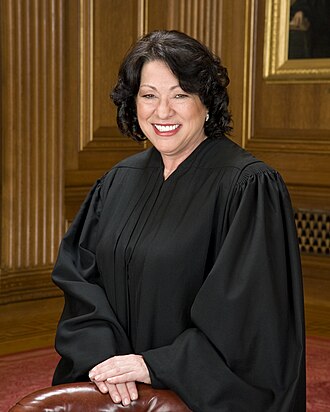 Sonia SotomayorJoined the majority
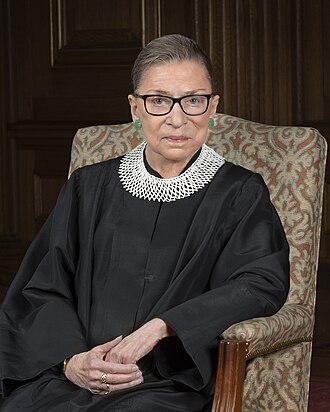 Ruth GinsburgJoined the majority
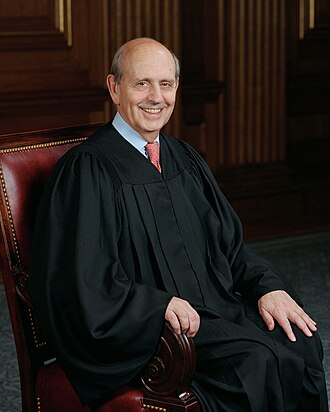 Stephen BreyerJoined the majority
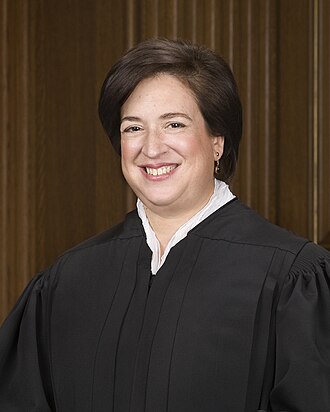 Elena KaganJoined the majority
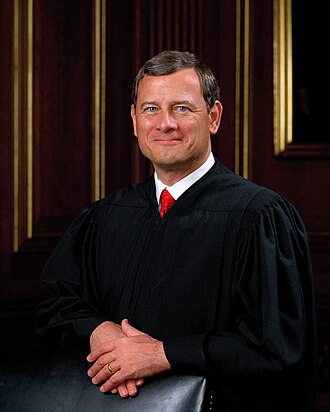 John RobertsJoined the majority
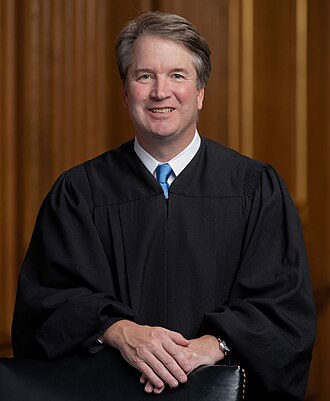 Brett KavanaughJoined the majority
Dissent(2)
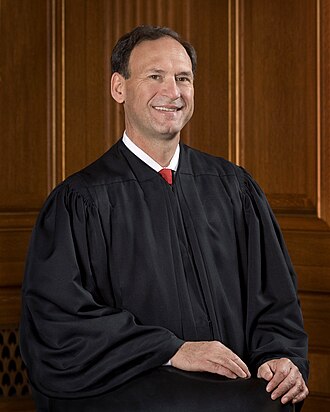 Samuel AlitoJoined a dissent
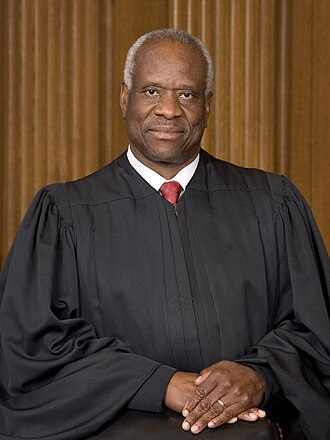 Clarence ThomasJoined a dissent
Did not take part: Neil Gorsuch.
Data notes
Each justice’s vote and what they wrote are from the justice-centered file of the Supreme Court Database. “Wrote a concurrence” means the justice sided with the majority and wrote separately; a justice who dissented in part is counted on the side they took overall. A justice who wrote nothing is listed as joining their side.
Positions are each justice’s Martin–Quinn score for the case’s term, the same scores as the Ideology page: negative is more liberal, positive more conservative. A score sums up a justice’s votes across the whole term, so it says where they usually sit, not why they voted as they did here. The median line is the Court’s median justice that term.
The parties
Who brought the case to the Court, who answered it, and how it got there.
- Petitioner
- SharpState (Oklahoma)
- Respondent
- MurphyIndian
- Reached the Court by
- Certiorari (the Court chose to hear it)
Data notes
The names are the two sides of the case’s title. The description under each is the Supreme Court Database’s category for that party, in its own wording. The petitioner is the side that asked the Supreme Court to review the decision below. “Why it was taken” appears only when the majority opinion says lower courts disagreed or were unsure about the question; reasons that would fit any case (“to resolve the question presented”, “an important question”) are left out.
The law at issue
The record codes no legal provision for this case.
Data notes
The Supreme Court Database codes the main constitutional provision, statute or court rule each case turned on, and the basis of the decision: judicial review of a federal or state law, interpreting a statute, supervising the lower courts, and so on. A case can rest on more than one. “Overruled” counts only where the majority opinion says so.
Timeline
What happened at the Court and how the case got there, newest first.
- Jul 9, 2020DecidedDecided · Decided 6–2: affirmed. Sharp lost.
- Nov 27, 2018ArguedArgued · Oral argument before the Court.
- Not datedTaken upTaken up · The Supreme Court agreed to hear the case (certiorari).
- Not datedCourt belowCourt below · Decided by the U.S. Court of Appeals, Tenth Circuit: reversed and remanded.
- Not datedBeganBegan · The case began in the Oklahoma Eastern U.S. District Court.
Data notes
From the Supreme Court Database: the court the case began in, the court whose decision the Supreme Court reviewed and what that court did, how the case came to the Court, and the dates of argument and decision. The database does not date the steps in the lower courts. Court names are the database’s.
Official record
Read the argument audio on Oyez and Wikipedia. Case data from the Supreme Court Database, Version 2026 Release 01, through the 2025 term.