Georgia v. Public.resource.org Inc.
The Court ruled that the Official Code of Georgia Annotated could not be copyrighted, because its annotations were authored by an arm of the legislature in the course of its legislative duties and so fell under the government edicts doctrine.· AI-written
140 S. Ct. 1498 · No. 18-1150 · 2019 term · Roberts Court
Decided Apr 27, 2020 · argued Dec 2, 2019
Economic activity · Patents and copyrights: copyright
Majority opinion: John Roberts
The voteMajorityDissent
5–45 in the majority, 4 in dissent
4 dissents (5–4)
Affirmed. Georgia lost.
What this ruling means
Affirmed: the Supreme Court upheld the decision of the U.S. Court of Appeals, Eleventh Circuit, so it stands (sometimes with changes the Court made to it).
Georgia was the petitioner, the side that asked the Supreme Court to review the case. “Lost” means the Court did not give that side the result it asked for.
From the Supreme Court Database. A justice who agreed with the result but not the reasoning counts in the majority.
Summary
The opening of the case’s Wikipedia article: what the case was about and what the Court held.
Georgia v. Public.Resource.Org, Inc., 590 U.S. 255 (2020), is a United States Supreme Court case regarding "whether the government edicts doctrine extends to—and thus renders uncopyrightable—works that lack the force of law, such as the annotations in the Official Code of Georgia Annotated" (OCGA). On April 27, 2020, the Court ruled 5–4 that the OCGA cannot be copyrighted because the OCGA's annotations were "authored by an arm of the legislature in the course of its legislative duties"; thus the Court found that the annotations fall under the government edicts doctrine and are ineligible for copyright.
Litigation began in 2013 after Carl Malamud published the OCGA on Public.Resource.Org (PRO). The state of Georgia filed a lawsuit in 2015. In March 2017, a federal court in the Northern District of Georgia ruled in the state's favor, after which in 2018 the Eleventh Circuit reversed the ruling. Both Georgia and PRO appealed to the Supreme Court, which heard arguments in December 2019.
Data notes
The text is Wikipedia’s (CC BY-SA 4.0), matched to the case by its citation, docket number or name and year, and is not checked against the opinion. The site keeps the article’s opening section, ending on its last full sentence. The one-sentence summary under the title is the Decisions list’s: Wikipedia’s own ruling sentence, or, tagged “AI-written”, one Claude wrote from this opening.
How the justices voted
Each justice who took part, placed by their Martin–Quinn ideology score for the 2019 term. Filled: the 5 in the majority. Hollow: the 4 in dissent. Colour is the party of the president who appointed them.
Majority(5)
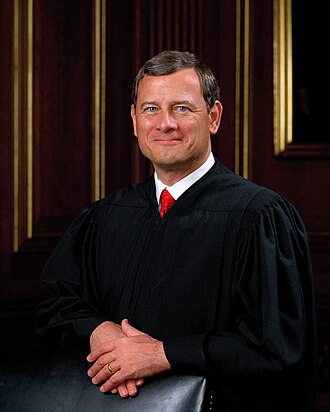 John RobertsWrote the majority opinion
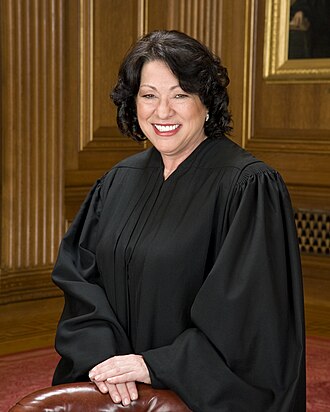 Sonia SotomayorJoined the majority
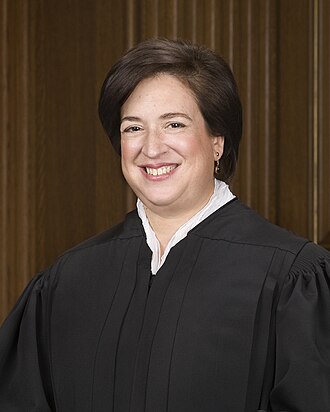 Elena KaganJoined the majority
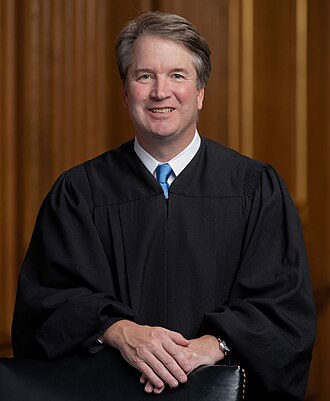 Brett KavanaughJoined the majority
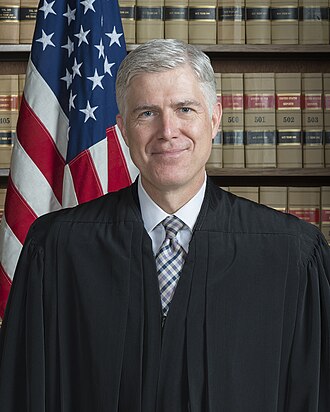 Neil GorsuchJoined the majority
Dissent(4)
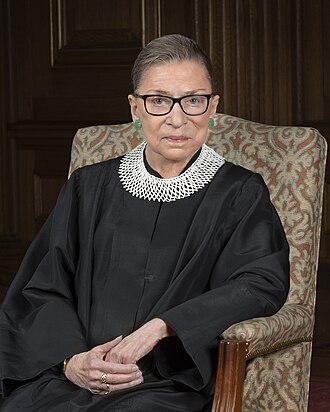 Ruth GinsburgWrote a dissent
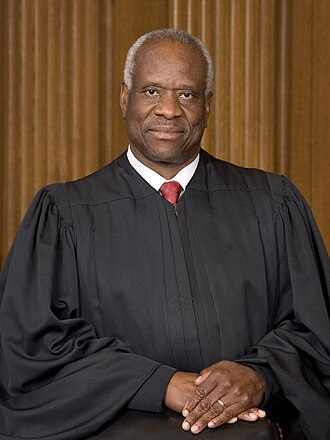 Clarence ThomasWrote a dissent
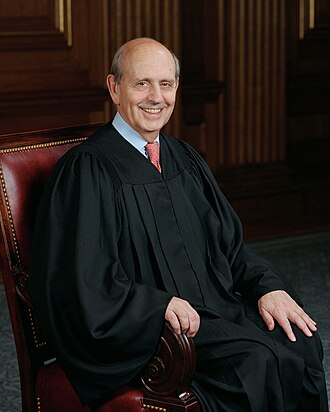 Stephen BreyerJoined a dissent
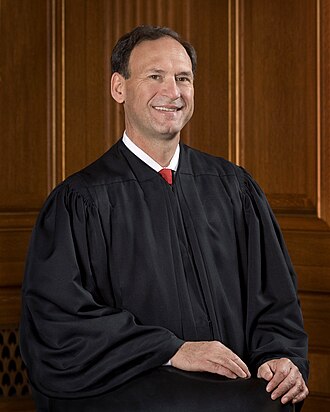 Samuel AlitoJoined a dissent
Data notes
Each justice’s vote and what they wrote are from the justice-centered file of the Supreme Court Database. “Wrote a concurrence” means the justice sided with the majority and wrote separately; a justice who dissented in part is counted on the side they took overall. A justice who wrote nothing is listed as joining their side.
Positions are each justice’s Martin–Quinn score for the case’s term, the same scores as the Ideology page: negative is more liberal, positive more conservative. A score sums up a justice’s votes across the whole term, so it says where they usually sit, not why they voted as they did here. The median line is the Court’s median justice that term.
The parties
Who brought the case to the Court, who answered it, and how it got there.
- Petitioner
- GeorgiaState (Georgia)
- Respondent
- Public.resource.org Inc.Nonprofit organization or business
- Reached the Court by
- Certiorari (the Court chose to hear it)
Data notes
The names are the two sides of the case’s title. The description under each is the Supreme Court Database’s category for that party, in its own wording. The petitioner is the side that asked the Supreme Court to review the decision below. “Why it was taken” appears only when the majority opinion says lower courts disagreed or were unsure about the question; reasons that would fit any case (“to resolve the question presented”, “an important question”) are left out.
The law at issue
The law the Court was asked to apply, and the kind of power it used to decide.
- Provision
- Copyright Act, 17 U.S.C 102
- Kind of law
- Infrequently litigated statutes
- Decided by
- Statutory construction
Data notes
The Supreme Court Database codes the main constitutional provision, statute or court rule each case turned on, and the basis of the decision: judicial review of a federal or state law, interpreting a statute, supervising the lower courts, and so on. A case can rest on more than one. “Overruled” counts only where the majority opinion says so.
Timeline
What happened at the Court and how the case got there, newest first.
- Apr 27, 2020DecidedDecided · Decided 5–4: affirmed. Georgia lost.
- Dec 2, 2019ArguedArgued · Oral argument before the Court.
- Not datedTaken upTaken up · The Supreme Court agreed to hear the case (certiorari).
- Not datedCourt belowCourt below · Decided by the U.S. Court of Appeals, Eleventh Circuit: reversed.
- Not datedBeganBegan · The case began in the Georgia Northern U.S. District Court.
Data notes
From the Supreme Court Database: the court the case began in, the court whose decision the Supreme Court reviewed and what that court did, how the case came to the Court, and the dates of argument and decision. The database does not date the steps in the lower courts. Court names are the database’s.
Other decisions on the same issue
36 other argued cases since 1946 on patents and copyrights: copyright, newest first.
- Cox Communications v. Sony Music Entm't607 U.S. 583Mar 25, 2026 · 607 U.S. 583Economic activity9–0Unanimous band
- Warner Chappell Music v. Neal601 U.S. 366May 9, 2024 · 601 U.S. 366Economic activity6–36–3 band
- Andy Warhol Foundation for the Visual Arts v. Goldsmith598 U.S. 508May 18, 2023 · 598 U.S. 508Economic activity7–27–2 band
- Unicolors, Inc v. H&M Hennes & Mauritz, LP145 S. Ct. 941Feb 24, 2022 · 145 S. Ct. 941Economic activity6–36–3 band
- Google LLC v. Oracle America Inc.Landmark141 S. Ct. 1163Apr 5, 2021 · 141 S. Ct. 1163Economic activityLandmark6–27–2 band
- Rimini Street Inc. v. Oracle USA Inc.139 S. Ct. 873Mar 4, 2019 · 139 S. Ct. 873Economic activity9–0Unanimous band
- Fourth Estate Public Benefit Corp. v. Wall-Street.com139 S. Ct. 881Mar 4, 2019 · 139 S. Ct. 881Economic activity9–0Unanimous band
- Star Athletica, L.L.C. v. Varsity Brands, Inc.137 S. Ct. 1002Mar 22, 2017 · 137 S. Ct. 1002Economic activity6–27–2 band
- American Broadcasting Cos. v. Aereo, Inc.573 U.S. 431Jun 25, 2014 · 573 U.S. 431Economic activity6–36–3 band
- Petrella v. Metro-Goldwyn-Mayer, Inc.572 U.S. 663May 19, 2014 · 572 U.S. 663Economic activity6–36–3 band
- Supap Kirtsaeng, dba Bluechristine99, Petitioner v. John Wiley & Sons, Inc.568 U.S. 519Mar 19, 2013 · 568 U.S. 519Economic activity6–36–3 band
- Lawrence Golan, et al. v. Eric H. Holder, Jr., Attorney General, et al.565 U.S. 302Jan 18, 2012 · 565 U.S. 302Economic activity6–27–2 band
- Costco Wholesale Corporation, Petitioner v. Omega, S.A.562 U.S. 40Dec 13, 2010 · 562 U.S. 40Economic activity4–45–4 band
- Reed Elsevier, Inc., et al., v. Irvin Muchnick et al.559 U.S. 154Mar 2, 2010 · 559 U.S. 154Economic activity8–0Unanimous band
- Metro-Goldwyn-Mayer Studios, Inc., et al. v. Grokster, Ltd., et al.545 U.S. 913Jun 27, 2005 · 545 U.S. 913Economic activity9–0Unanimous band
- Eric Eldred, et al. v. John D. Ashcroft, Attorney General537 U.S. 186Jan 15, 2003 · 537 U.S. 186Economic activity7–27–2 band
- New York Times Company, Inc., et al. v. Jonathan Tasini, et al.533 U.S. 483Jun 25, 2001 · 533 U.S. 483Economic activity7–27–2 band
- Traffix Devices, Inc. v. Marketing Displays, Inc.Landmark532 U.S. 23Mar 20, 2001 · 532 U.S. 23Economic activityLandmark9–0Unanimous band
- C. Elvin Feltner, Jr. v. Columbia Pictures Television, Inc.523 U.S. 340Mar 31, 1998 · 523 U.S. 340Economic activity9–0Unanimous band
- Quality King Distributors, Inc. v. L'Anza Research International, Inc.523 U.S. 135Mar 9, 1998 · 523 U.S. 135Economic activity9–0Unanimous band
- Lotus Development Corporation v. Borland International, Inc.516 U.S. 233Jan 16, 1996 · 516 U.S. 233Economic activity4–45–4 band
- Luther R. Campbell aka Luke Skyywalker, et al. v. Acuff-Rose Music, Inc.Landmark · Copyright/Patents510 U.S. 569Mar 7, 1994 · 510 U.S. 569Economic activityLandmark · Copyright/Patents9–0Unanimous band
- Feist Publications, Inc. v. Rural Telephone Service Co., Inc.Landmark · Copyright/Patents499 U.S. 340Mar 27, 1991 · 499 U.S. 340Economic activityLandmark · Copyright/Patents9–0Unanimous band
- Stewart et al. v. Abend, dba Authors Research Co.495 U.S. 207Apr 24, 1990 · 495 U.S. 207Economic activity6–36–3 band
- Community for Creative Non-Violence et al. v. Reid490 U.S. 730Jun 5, 1989 · 490 U.S. 730Economic activity9–0Unanimous band
- Harper & Row, Publishers, Inc., et al. v. Nation Enterprises et al.Landmark · Copyright/Patents471 U.S. 539May 20, 1985 · 471 U.S. 539Economic activityLandmark · Copyright/Patents6–36–3 band
- Mills Music, Inc. v. Snyder et al.469 U.S. 153Jan 8, 1985 · 469 U.S. 153Economic activity5–45–4 band
- Sony Corporation of America et al. v. Universal City Studios, Inc., et al.Landmark · Copyright/Patents464 U.S. 417Jan 17, 1984 · 464 U.S. 417Economic activityLandmark · Copyright/Patents5–45–4 band
- Twentieth Century Music Corp. et al. v. Aiken422 U.S. 151Jun 17, 1975 · 422 U.S. 151Economic activity7–27–2 band
- Teleprompter Corp. et al. v. Columbia Broadcasting System, Inc., et al.415 U.S. 394Mar 4, 1974 · 415 U.S. 394Economic activity6–36–3 band
- Goldstein et al. v. California412 U.S. 546Jun 18, 1973 · 412 U.S. 546Economic activity5–45–4 band
- Fortnightly Corp. v. United Artists Television, Inc.392 U.S. 390Jun 17, 1968 · 392 U.S. 390Economic activity5–18–1 band
- Public Affairs Associates, Inc., Trading As Public Affairs Press, v. Rickover369 U.S. 111Mar 5, 1962 · 369 U.S. 111Economic activity6–36–3 band
- Miller Music Corp. v. Charles N. Daniels, Inc.362 U.S. 373Apr 18, 1960 · 362 U.S. 373Economic activity5–45–4 band
- Columbia Broadcasting System, Inc., et al. v. Loew's Inc. et al.356 U.S. 43Mar 17, 1958 · 356 U.S. 43Economic activity4–45–4 band
- F. W. Woolworth Co. v. Contemporary Arts, Inc.344 U.S. 228Dec 22, 1952 · 344 U.S. 228Economic activity7–27–2 band
Data notes
Every other orally argued case with a clear vote, from the 1946 term on, that the Supreme Court Database files under the same issue as this one. The database gives each case one issue from a list of about 270 (abortion, search and seizure of vehicles, the death penalty, and so on), whatever law it turned on.
Official record
Read the argument audio on Oyez and Wikipedia. Case data from the Supreme Court Database, Version 2026 Release 01, through the 2025 term.