Trump v. Mazars USA, LLP
The Court held that courts must consider separation of powers in disputes over congressional subpoenas for the president's personal information, set out four non-exhaustive factors, and vacated the lower court's decision for not properly weighing those concerns.· AI-written
140 S. Ct. 2019 · No. 19-715 · 2019 term · Roberts Court
Decided Jul 9, 2020 · argued May 12, 2020
Miscellaneous · Executive authority vis-a-vis congress or the states
Landmark · Domestic
Majority opinion: John Roberts
The voteMajorityDissent
7–27 in the majority, 2 in dissent
2 dissents (7–2)
Vacated and remanded. Trump won.
What this ruling means
Vacated and remanded: the Supreme Court set aside the decision of the U.S. Court of Appeals, District of Columbia Circuit, wiping it out without necessarily saying the result was wrong, and sent the case back for that court to decide again under the right legal standard.
Trump was the petitioner, the side that asked the Supreme Court to review the case. “Won” means the Court gave that side the result it asked for.
From the Supreme Court Database. A justice who agreed with the result but not the reasoning counts in the majority.
Summary
The opening of the case’s Wikipedia article: what the case was about and what the Court held.
Trump v. Mazars USA, LLP, 591 U.S. ___ (2020) was a landmark US Supreme Court case involving subpoenas issued by committees of the US House of Representatives to obtain the tax returns of President Donald Trump, who had litigated against his personal accounting firm to prevent this disclosure, although the committees had been cleared by the United States Court of Appeals for the District of Columbia Circuit. Mazars was consolidated with Trump v. Deutsche Bank AG (591 U.S. ___, docket 19-760).
In a 7–2 decision issued on July 9, 2020, the Supreme Court held that courts must take into account separation of powers in resolving disputes over congressional subpoenas seeking the personal information of the president, and set out four factors (described as non-exhaustive) to consider in evaluating the worthiness of such subpoena requests. The Supreme Court ruled that the lower court had not properly considered the separation of powers concerns; it vacated the lower court's decision and remanded the case back to the Circuit Court for review. The Supreme Court decided that the case raised questions of separation of powers, rather than executive privilege. It also noted that to request presidential documents like tax returns, Congress needs a legislative reason and may not conduct a criminal investigation, which is a power of the executive branch. Before the lower court reviewed the case, the subpoenas in question expired with the end of the 116th Congress on January 3, 2021, and on February 23, 2021, the House Committee in the 117th Congress reissued the subpoena to Mazars for the same documents it had previously sought.
Legal scholar Marty Lederman described Mazars as more important than Trump v. Vance, which was decided the same day. Lederman described Trump's argument that Congress entirely lacks "constitutional authority to investigate a sitting President's possible conflicts of interest and violations of law" as an "alarming" assertion that "would, if credited, be a radical departure from our constitutional history and tradition."
Data notes
The text is Wikipedia’s (CC BY-SA 4.0), matched to the case by its citation, docket number or name and year, and is not checked against the opinion. The site keeps the article’s opening section, ending on its last full sentence. The one-sentence summary under the title is the Decisions list’s: Wikipedia’s own ruling sentence, or, tagged “AI-written”, one Claude wrote from this opening.
How the justices voted
Each justice who took part, placed by their Martin–Quinn ideology score for the 2019 term. Filled: the 7 in the majority. Hollow: the 2 in dissent. Colour is the party of the president who appointed them.
Majority(7)
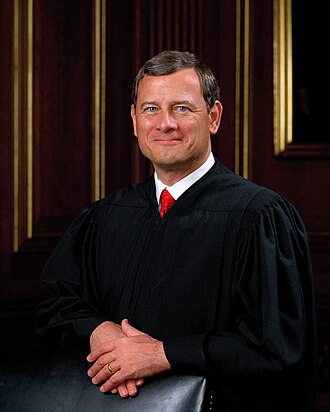 John RobertsWrote the majority opinion
 Sonia SotomayorJoined the majority
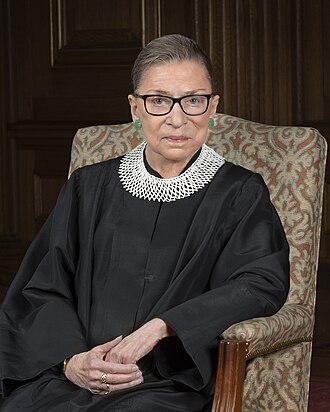 Ruth GinsburgJoined the majority
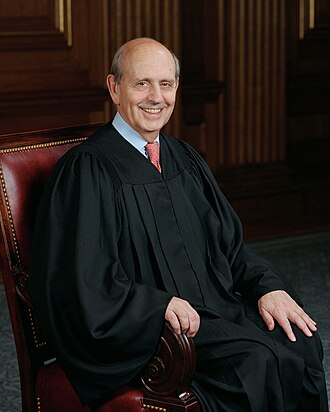 Stephen BreyerJoined the majority
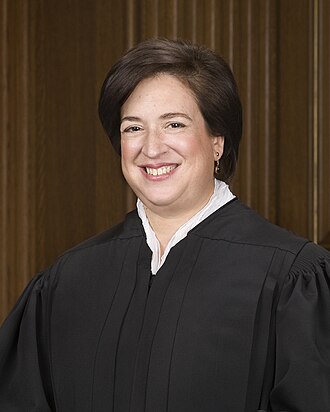 Elena KaganJoined the majority
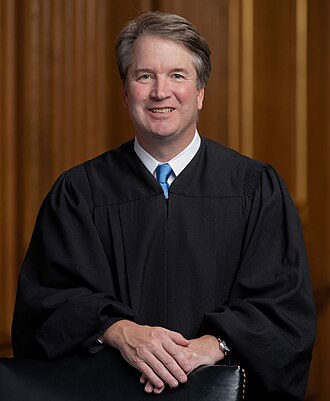 Brett KavanaughJoined the majority
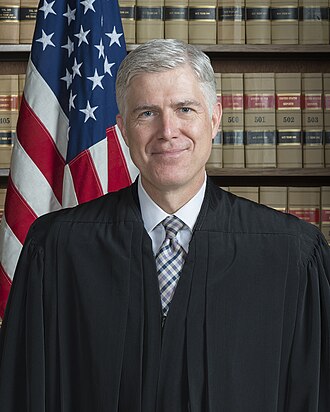 Neil GorsuchJoined the majority
Dissent(2)
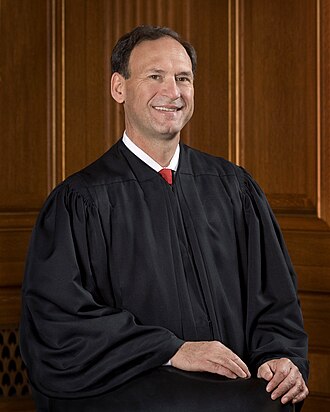 Samuel AlitoWrote a dissent
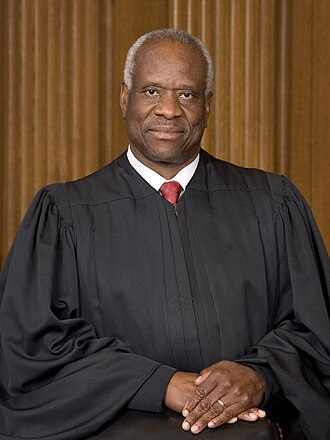 Clarence ThomasWrote a dissent
Data notes
Each justice’s vote and what they wrote are from the justice-centered file of the Supreme Court Database. “Wrote a concurrence” means the justice sided with the majority and wrote separately; a justice who dissented in part is counted on the side they took overall. A justice who wrote nothing is listed as joining their side.
Positions are each justice’s Martin–Quinn score for the case’s term, the same scores as the Ideology page: negative is more liberal, positive more conservative. A score sums up a justice’s votes across the whole term, so it says where they usually sit, not why they voted as they did here. The median line is the Court’s median justice that term.
The parties
Who brought the case to the Court, who answered it, and how it got there.
- Petitioner
- TrumpBusiness, corporation
- Respondent
- Mazars USA, LLPBusiness, corporation
- Reached the Court by
- Certiorari (the Court chose to hear it)
Data notes
The names are the two sides of the case’s title. The description under each is the Supreme Court Database’s category for that party, in its own wording. The petitioner is the side that asked the Supreme Court to review the decision below. “Why it was taken” appears only when the majority opinion says lower courts disagreed or were unsure about the question; reasons that would fit any case (“to resolve the question presented”, “an important question”) are left out.
The law at issue
The law the Court was asked to apply, and the kind of power it used to decide.
- Provision
- Article I, Section 1 (delegation of powers)
- Kind of law
- Constitution
- Decided by
- Supreme Court supervision of lower federal or state courts or original jurisdiction
Data notes
The Supreme Court Database codes the main constitutional provision, statute or court rule each case turned on, and the basis of the decision: judicial review of a federal or state law, interpreting a statute, supervising the lower courts, and so on. A case can rest on more than one. “Overruled” counts only where the majority opinion says so.
Timeline
What happened at the Court and how the case got there, newest first.
- Jul 9, 2020DecidedDecided · Decided 7–2: vacated and remanded. Trump won.
- May 12, 2020ArguedArgued · Oral argument before the Court.
- Not datedTaken upTaken up · The Supreme Court agreed to hear the case (certiorari).
- Not datedCourt belowCourt below · Decided by the U.S. Court of Appeals, District of Columbia Circuit: affirmed.
- Not datedBeganBegan · The case began in the District Of Columbia U.S. District Court.
Data notes
From the Supreme Court Database: the court the case began in, the court whose decision the Supreme Court reviewed and what that court did, how the case came to the Court, and the dates of argument and decision. The database does not date the steps in the lower courts. Court names are the database’s.
Other decisions on the same issue
11 other argued cases since 1946 on executive authority vis-a-vis congress or the states, newest first.
- Trump v. SlaughterLandmark · Separation of powers146 S. Ct. 2283Jun 29, 2026 · 146 S. Ct. 2283MiscellaneousLandmark · Separation of powers6–36–3 band
- Learning Resources v. TrumpLandmark · Foreign607 U.S. 229Feb 20, 2026 · 607 U.S. 229MiscellaneousLandmark · Foreign6–36–3 band
- Consumer Financial Protection Bureau v. Community Financial Services Association of America, Limited601 U.S. 416May 16, 2024 · 601 U.S. 416Miscellaneous7–27–2 band
- Collins v. Yellen141 S. Ct. 1761Jun 23, 2021 · 141 S. Ct. 1761Miscellaneous7–27–2 band
- United States v. Arthrex Inc.141 S. Ct. 1970Jun 21, 2021 · 141 S. Ct. 1970Miscellaneous5–45–4 band
- Seila Law LLC v. Consumer Financial Protection Bureau140 S. Ct. 2183Jun 29, 2020 · 140 S. Ct. 2183Miscellaneous5–45–4 band
- NLRB v. SW General, Inc.137 S. Ct. 929Mar 21, 2017 · 137 S. Ct. 929Miscellaneous6–27–2 band
- Zivotofsky v. KerryLandmark · Foreign576 U.S. 1Jun 8, 2015 · 576 U.S. 1MiscellaneousLandmark · Foreign6–36–3 band
- NLRB v. Noel CanningLandmark · Separation of powers573 U.S. 513Jun 26, 2014 · 573 U.S. 513MiscellaneousLandmark · Separation of powers9–0Unanimous band
- Menachem Binyamin Zivotofsky, by His Parents and Guardians, Ari Z. and Naomi Siegman Zivotofsky, Petitioner v. Hillary Rodham Clinton, Secretary of State566 U.S. 189Mar 26, 2012 · 566 U.S. 189Miscellaneous8–18–1 band
- Free Enterprise Fund and Beckstead and Watts, LLP v. Public Company Accounting Oversight Board et al.561 U.S. 477Jun 28, 2010 · 561 U.S. 477Miscellaneous5–45–4 band
Data notes
Every other orally argued case with a clear vote, from the 1946 term on, that the Supreme Court Database files under the same issue as this one. The database gives each case one issue from a list of about 270 (abortion, search and seizure of vehicles, the death penalty, and so on), whatever law it turned on.
Official record
Read the argument audio on Oyez and Wikipedia. Case data from the Supreme Court Database, Version 2026 Release 01, through the 2025 term.