Monasky v. Taglieri
In a case under the Hague Convention on the Civil Aspects of International Child Abduction, the Court held that a child's habitual residence is determined by the totality of the circumstances, not by categorical requirements such as a parental agreement.· AI-written
140 S. Ct. 719 · No. 18-935 · 2019 term · Roberts Court
Decided Feb 25, 2020 · argued Dec 11, 2019
Civil rights · Juveniles
Majority opinion: Ruth Ginsburg
The voteMajority
9–09 in the majority, 0 in dissent
No dissent (9–0)
Affirmed. Monasky lost.
What this ruling means
Affirmed: the Supreme Court upheld the decision of the U.S. Court of Appeals, Sixth Circuit, so it stands (sometimes with changes the Court made to it).
Monasky was the petitioner, the side that asked the Supreme Court to review the case. “Lost” means the Court did not give that side the result it asked for.
From the Supreme Court Database. A justice who agreed with the result but not the reasoning counts in the majority.
Summary
The opening of the case’s Wikipedia article: what the case was about and what the Court held.
Monasky v. Taglieri, 589 U.S. 68 (2020), is a United States Supreme Court case in which the court held that a child's "habitual residence" under the Hague Convention on the Civil Aspects of International Child Abduction should be determined based on the totality of the circumstances specific to the case, and should not be based on categorial requirements (e.g. such as an agreement between the parents).
This case is notable as the fourth case heard by the Supreme Court concerning the Hague Convention on the Civil Aspects of International Child Abduction. Previously, this case was only the second Hague International Child Abduction case heard en banc in history (by the entire panel of judges because of its exceptional public importance) by a US Court of Appeals.
Monasky was also the first case in which the United States Supreme Court substantively addressed the meaning of the definition of "habitual residence" as contemplated by The Hague Convention of 25 October 1980 on the Civil Aspects of International Child Abduction.
Data notes
The text is Wikipedia’s (CC BY-SA 4.0), matched to the case by its citation, docket number or name and year, and is not checked against the opinion. The site keeps the article’s opening section, ending on its last full sentence. The one-sentence summary under the title is the Decisions list’s: Wikipedia’s own ruling sentence, or, tagged “AI-written”, one Claude wrote from this opening.
How the justices voted
Each justice who took part, placed by their Martin–Quinn ideology score for the 2019 term. Filled: the 9 in the majority. Hollow: the 0 in dissent. Colour is the party of the president who appointed them.
Majority(9)
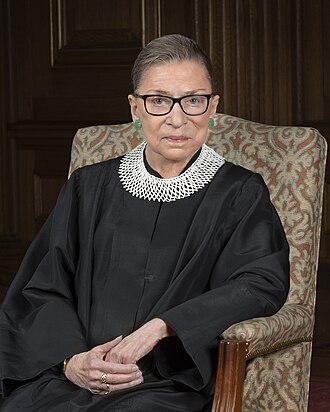 Ruth GinsburgWrote the majority opinion
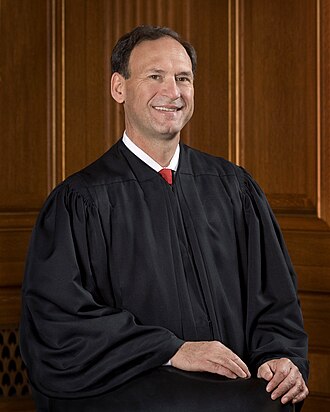 Samuel AlitoWrote a concurrence
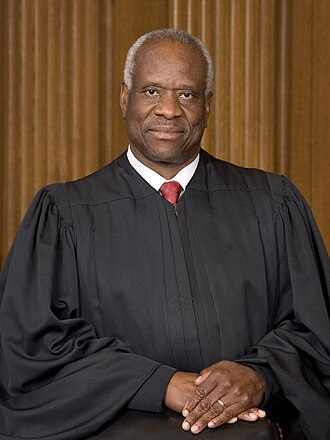 Clarence ThomasWrote a concurrence
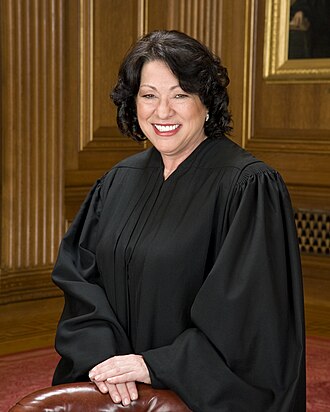 Sonia SotomayorJoined the majority
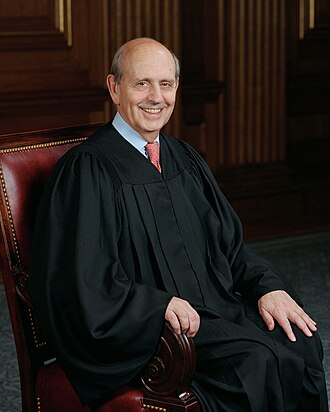 Stephen BreyerJoined the majority
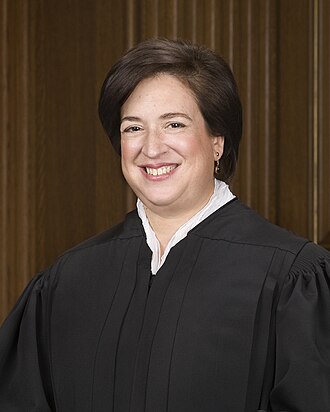 Elena KaganJoined the majority
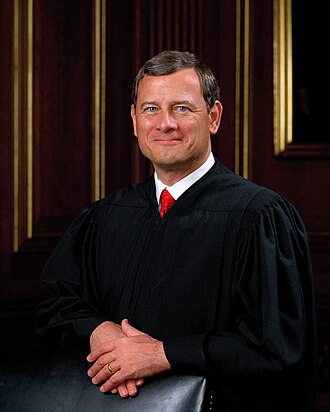 John RobertsJoined the majority
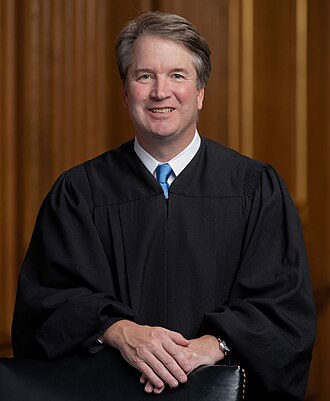 Brett KavanaughJoined the majority
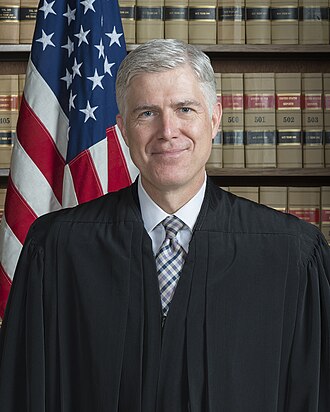 Neil GorsuchJoined the majority
Dissent(0)
- None.
Data notes
Each justice’s vote and what they wrote are from the justice-centered file of the Supreme Court Database. “Wrote a concurrence” means the justice sided with the majority and wrote separately; a justice who dissented in part is counted on the side they took overall. A justice who wrote nothing is listed as joining their side.
Positions are each justice’s Martin–Quinn score for the case’s term, the same scores as the Ideology page: negative is more liberal, positive more conservative. A score sums up a justice’s votes across the whole term, so it says where they usually sit, not why they voted as they did here. The median line is the Court’s median justice that term.
The parties
Who brought the case to the Court, who answered it, and how it got there.
- Petitioner
- MonaskyMother
- Respondent
- TaglieriFather
- Reached the Court by
- Certiorari (the Court chose to hear it)
- Why it was taken
- Federal appeals courts had ruled differently, and the question was important
Data notes
The names are the two sides of the case’s title. The description under each is the Supreme Court Database’s category for that party, in its own wording. The petitioner is the side that asked the Supreme Court to review the decision below. “Why it was taken” appears only when the majority opinion says lower courts disagreed or were unsure about the question; reasons that would fit any case (“to resolve the question presented”, “an important question”) are left out.
The law at issue
The law the Court was asked to apply, and the kind of power it used to decide.
- Provision
- Treaty
- Kind of law
- Other
- Decided by
- Statutory construction
Data notes
The Supreme Court Database codes the main constitutional provision, statute or court rule each case turned on, and the basis of the decision: judicial review of a federal or state law, interpreting a statute, supervising the lower courts, and so on. A case can rest on more than one. “Overruled” counts only where the majority opinion says so.
Timeline
What happened at the Court and how the case got there, newest first.
- Feb 25, 2020DecidedDecided · Decided 9–0: affirmed. Monasky lost.
- Dec 11, 2019ArguedArgued · Oral argument before the Court.
- Not datedTaken upTaken up · The Supreme Court agreed to hear the case (certiorari). Federal appeals courts had ruled differently, and the question was important.
- Not datedCourt belowCourt below · Decided by the U.S. Court of Appeals, Sixth Circuit: affirmed, with a dissent.
- Not datedBeganBegan · The case began in the Ohio Northern U.S. District Court.
Data notes
From the Supreme Court Database: the court the case began in, the court whose decision the Supreme Court reviewed and what that court did, how the case came to the Court, and the dates of argument and decision. The database does not date the steps in the lower courts. Court names are the database’s.
Other decisions on the same issue
25 other argued cases since 1946 on juveniles, newest first.
- Golan v. Saada142 S. Ct. 1880Jun 15, 2022 · 142 S. Ct. 1880Civil rights9–0Unanimous band
- Lozano v. Montoya Alvarez572 U.S. 1Mar 5, 2014 · 572 U.S. 1Civil rights9–0Unanimous band
- Jeffrey Lee Chafin, Petitioner v. Lynne Hales Chafin568 U.S. 165Feb 19, 2013 · 568 U.S. 165Civil rights9–0Unanimous band
- Michael J. Astrue, Commissioner of Social Security, Petitioner v. Karen K. Capato, on Behalf of B. N. C., et al.566 U.S. 541May 21, 2012 · 566 U.S. 541Civil rights9–0Unanimous band
- Timothy Mark Cameron Abbott v. Jacquelyn Vaye Abbott560 U.S. 1May 17, 2010 · 560 U.S. 1Civil rights6–36–3 band
- Jacob Winkelman, a Minor, by and Through His Parents and Legal Guardians, Jeff and Sandee Winkelman, et al. v. Parma City School District550 U.S. 516May 21, 2007 · 550 U.S. 516Civil rights7–27–2 band
- Washington State Department of Social and Health Services, et al. v. Guardianship Estate of Danny Keffeler et al.537 U.S. 371Feb 25, 2003 · 537 U.S. 371Civil rights9–0Unanimous band
- Carol Ankenbrandt, As Next Friend and Mother of L. R. and S. R. v. Jon A. Richards and Debra Kesler504 U.S. 689Jun 15, 1992 · 504 U.S. 689Civil rights9–0Unanimous band
- United States v. R. L. C.503 U.S. 291Mar 24, 1992 · 503 U.S. 291Civil rights7–27–2 band
- Deshaney, a Minor, by His Guardian Ad Litem, et al. v. Winnebago County Department of Social Services et al.489 U.S. 189Feb 22, 1989 · 489 U.S. 189Civil rights6–36–3 band
- Schall, Commissioner of New York City Department of Juvenile Justice v. Martin et al.467 U.S. 253Jun 4, 1984 · 467 U.S. 253Civil rights6–36–3 band
- Tuten v. United States460 U.S. 660Mar 30, 1983 · 460 U.S. 660Civil rights9–0Unanimous band
- Santosky et al. v. Kramer, Commissioner, Ulster County Department of Social Services, et al.455 U.S. 745Mar 24, 1982 · 455 U.S. 745Civil rights5–45–4 band
- Ralston, Warden v. Robinson454 U.S. 201Dec 2, 1981 · 454 U.S. 201Civil rights6–36–3 band
- Secretary of Public Welfare of Pennsylvania et al. v. Institutionalized Juveniles et al.442 U.S. 640Jun 20, 1979 · 442 U.S. 640Civil rights6–36–3 band
- Parham, Commissioner, Department of Human Resources of Georgia, et al. v. J.R. et al.442 U.S. 584Jun 20, 1979 · 442 U.S. 584Civil rights6–36–3 band
- Swisher, State's Attorney for Baltimore City, et al. v. Brady et al.438 U.S. 204Jun 26, 1978 · 438 U.S. 204Civil rights6–36–3 band
- Durst et al. v. United States434 U.S. 542Feb 22, 1978 · 434 U.S. 542Civil rights8–0Unanimous band
- Breed, Director, California Youth Authority v. Jones421 U.S. 519May 27, 1975 · 421 U.S. 519Civil rights9–0Unanimous band
- Dorszynski v. United States418 U.S. 424Jun 26, 1974 · 418 U.S. 424Civil rights9–0Unanimous band
- McKeiver et al. v. Pennsylvania403 U.S. 528Jun 21, 1971 · 403 U.S. 528Civil rights6–36–3 band
- In re Winship397 U.S. 358Mar 31, 1970 · 397 U.S. 358Civil rights5–36–3 band
- In re Whittington391 U.S. 341May 20, 1968 · 391 U.S. 341Civil rights7–27–2 band
- In re Gault et al.Landmark · Right to counsel387 U.S. 1May 15, 1967 · 387 U.S. 1Civil rightsLandmark · Right to counsel8–18–1 band
- Kent v. United States383 U.S. 541Mar 21, 1966 · 383 U.S. 541Civil rights5–45–4 band
Data notes
Every other orally argued case with a clear vote, from the 1946 term on, that the Supreme Court Database files under the same issue as this one. The database gives each case one issue from a list of about 270 (abortion, search and seizure of vehicles, the death penalty, and so on), whatever law it turned on.
Official record
Read the argument audio on Oyez and Wikipedia. Case data from the Supreme Court Database, Version 2026 Release 01, through the 2025 term.