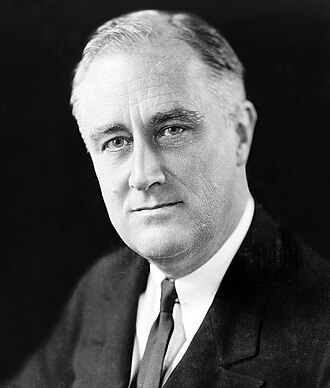
President
Franklin D. Roosevelt
32nd president · Democrat
March 4, 1933 – April 11, 1945
About
Franklin Delano Roosevelt, also known as FDR, was the 32nd president of the United States, serving from 1933 until his death in 1945. He is the longest-serving US president and the only one to have served more than two terms.
From Wikipedia (text may be abridged), licensed under CC BY-SA 4.0.
Who held power
Party control of Congress
Democrats held both chambers of Congress throughout the time in office.
- 79th Congress1945House: Dem.244 D · 189 R · 2 otherSenate: Dem.57 D · 38 R · 1 other
- 78th Congress1943–1945House: Dem.222 D · 209 R · 4 otherSenate: Dem.57 D · 38 R · 1 other
- 77th Congress1941–1943House: Dem.267 D · 162 R · 6 otherSenate: Dem.66 D · 28 R · 2 other
- 76th Congress1939–1941House: Dem.262 D · 169 R · 4 otherSenate: Dem.69 D · 23 R · 4 other
- 75th Congress1937–1939House: Dem.334 D · 88 R · 13 otherSenate: Dem.76 D · 16 R · 4 other
- 74th Congress1935–1937House: Dem.322 D · 103 R · 10 otherSenate: Dem.69 D · 25 R · 2 other
- 73rd Congress1933–1935House: Dem.313 D · 117 R · 5 otherSenate: Dem.59 D · 36 R · 1 other
Data notes
Each Congress is clipped to the days this president was in office; one that convened less than a month before the president left is left out. A chamber’s majority is the party that held it for most of those days; seat counts are at the start of the Congress, with independents counted with the party they caucused with. From the House and Senate historians’ party divisions.
Supreme Court appointments
Franklin D. Roosevelt appointed 8 justices and elevated one: Black (1937), Reed (1938), Frankfurter (1939), Douglas (1939), Murphy (1940), Jackson (1941), Byrnes (1941), Stone (elevated to chief justice, 1941) and Rutledge (1943).
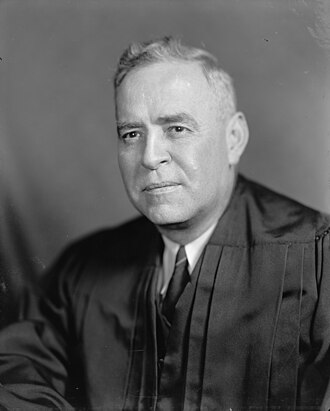 Wiley Rutledge · Associate justiceNominated Jan 11, 1943 · confirmed by voice vote
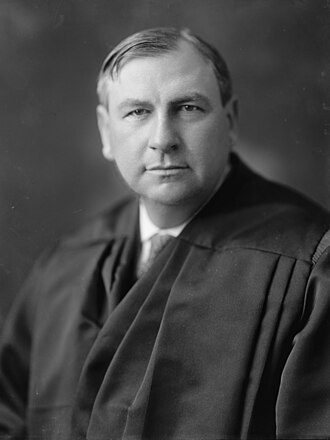 Harlan Stone · Elevated to chief justiceNominated Jun 12, 1941 · confirmed by voice vote
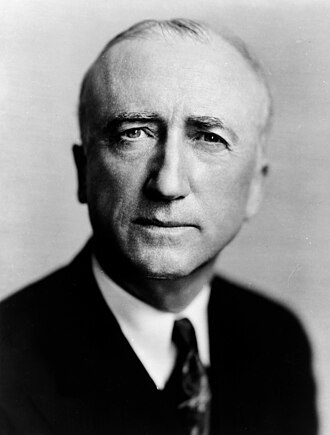 James Byrnes · Associate justiceNominated Jun 12, 1941 · confirmed by voice vote
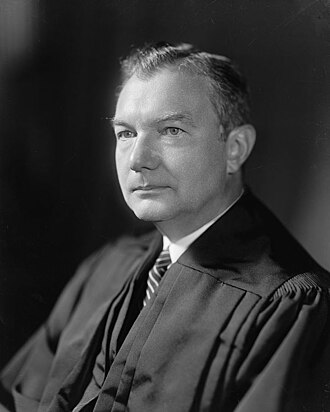 Robert Jackson · Associate justiceNominated Jun 12, 1941 · confirmed by voice vote
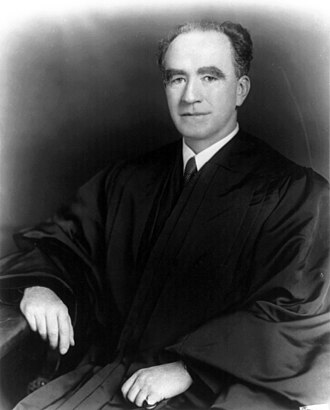 Frank Murphy · Associate justiceNominated Jan 4, 1940 · confirmed by voice vote
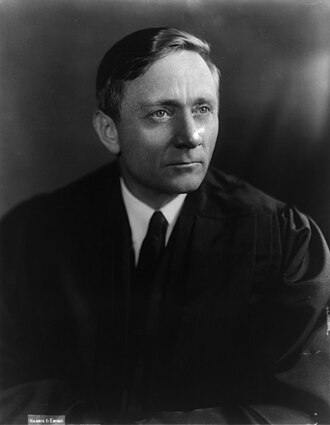 William Douglas · Associate justiceNominated Mar 20, 1939 · confirmed 62–4
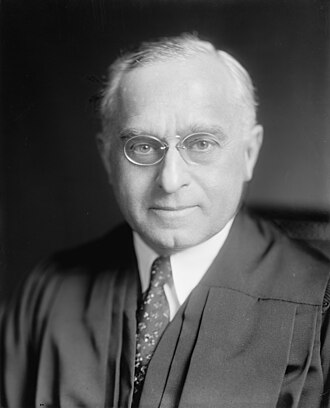 Felix Frankfurter · Associate justiceNominated Jan 5, 1939 · confirmed by voice vote
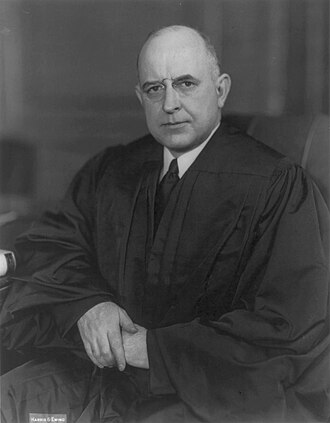 Stanley Reed · Associate justiceNominated Jan 15, 1938 · confirmed by voice vote
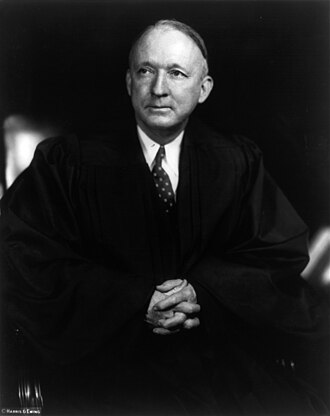 Hugo Black · Associate justiceNominated Aug 12, 1937 · confirmed 63–16
Data notes
A justice counts for the president who nominated them (a recess appointment from the day it began, if earlier). An associate justice later made chief by another president, like William Rehnquist, counts as an elevation for the second. Failed and withdrawn nominations are not listed. Dates and Senate votes from the Federal Judicial Center.
Laws and orders
Landmark laws signed
22 landmark laws signed in Roosevelt's time in office, newest first. Mayhew's lists of important enactments start in 1947, so this is the Timeline page's hand-picked list, not a count.
- 1944Servicemen's Readjustment Act (GI Bill) (Wikipedia, opens in a new tab)Paid for veterans' college, home loans and unemployment benefits.
- 1941Lend-Lease Act (Wikipedia, opens in a new tab)Let the U.S. lend or lease war supplies to Britain and other Allies.
- 1940Selective Training and Service Act (Wikipedia, opens in a new tab)Set up the first peacetime draft in U.S. history.
- 1938Fair Labor Standards Act (Wikipedia, opens in a new tab)Set a federal minimum wage and the 40-hour week, and limited child labour.
- 1937Housing Act of 1937 (Wikipedia, opens in a new tab)Created the U.S. Housing Authority to fund public housing.
- 1936Rural Electrification Act (Wikipedia, opens in a new tab)Funded loans to bring electricity to farms and rural areas.
- 1935Social Security Act (Wikipedia, opens in a new tab)Created old-age pensions and unemployment insurance.
- 1935National Labor Relations Act (Wikipedia, opens in a new tab)Guaranteed workers the right to organise and bargain collectively.
- 1935Emergency Relief Appropriation Act (Wikipedia, opens in a new tab)Funded the Works Progress Administration and other work-relief programmes.
- 1934Indian Reorganization Act (Wikipedia, opens in a new tab)Ended the division of tribal land and restored a measure of tribal self-government.
- 1934Reciprocal Trade Agreements Act (Wikipedia, opens in a new tab)Let the president negotiate tariff cuts with other countries.
- 1934Securities Exchange Act of 1934 (Wikipedia, opens in a new tab)Created the SEC to regulate stock exchanges and trading.
- 1934Gold Reserve Act (Wikipedia, opens in a new tab)Moved the nation's gold to the Treasury and revalued the dollar.
- 1933Banking Act of 1933 (Glass–Steagall) (Wikipedia, opens in a new tab)Separated commercial and investment banking and created the FDIC.
- 1933National Industrial Recovery Act (Wikipedia, opens in a new tab)Set industry codes on wages, prices and hours and funded public works.
- 1933Home Owners' Loan Act (Wikipedia, opens in a new tab)Created the Home Owners' Loan Corporation to refinance mortgages in default.
- 1933Securities Act of 1933 (Wikipedia, opens in a new tab)Required companies to register securities and disclose their finances before selling stock.
- 1933Tennessee Valley Authority Act (Wikipedia, opens in a new tab)Created the TVA to build dams and bring power to the Tennessee Valley.
- 1933Federal Emergency Relief Act (Wikipedia, opens in a new tab)Gave states federal grants for direct relief to the unemployed.
- 1933Agricultural Adjustment Act (Wikipedia, opens in a new tab)Paid farmers to cut production to raise crop prices.
- 1933Emergency Conservation Work Act (CCC) (Wikipedia, opens in a new tab)Created the Civilian Conservation Corps, which put young men to work on forests, parks and flood control.
- 1933Emergency Banking Act (Wikipedia, opens in a new tab)Reopened sound banks after the national bank holiday and let the Treasury back them.
Data notes
The laws picked as landmarks for the Timeline page, each with the year it was signed and a link to its Wikipedia article. It is an editorial list, not a count: David Mayhew’s lists of important enactments, which the other presidents’ pages use, start with the 80th Congress in 1947, so the 1933–46 laws have no list to count from and no law pages or vote tallies on this site.
Economy
Federal deficit and debt
The federal budget balance, as a share of GDP, was −5.4% in FY1934 and −20.9% in FY1945, with a high of −0.1% in FY1938.
Budget balance, % of GDP
Data notes
The budget balance is the federal surplus (above zero) or deficit (below) as a share of GDP, by fiscal year (July to June through 1976, October to September since); a year counts for the president in office for most of it, though its budget was usually passed the year before. Debt is total public debt as a share of GDP, quarterly from 1966, including debt the government holds in its own trust funds.
View as table
| Period | Value |
|---|---|
| FY1934 | −5.4% |
| FY1935 | −3.8% |
| FY1936 | −5.1% |
| FY1937 | −2.4% |
| FY1938 | −0.1% |
| FY1939 | −3% |
| FY1940 | −2.8% |
| FY1941 | −3.8% |
| FY1942 | −12.4% |
| FY1943 | −26.9% |
| FY1944 | −21.2% |
| FY1945 | −20.9% |
Data notes
Each card takes a series from one of the site’s Presidency, Congress or Supreme Court pages and shows only the time Roosevelt was in office. Monthly figures run from the month of the inauguration to the month the term ended; a fiscal or calendar year counts for the president who held office for most of its days. Cards whose data begins after 1933 say where it starts, and a card with no data for the term is left out.
These are conditions during a presidency, not a scorecard. Congress, the courts, the Federal Reserve, the business cycle and events abroad move every one of these numbers, and many policies take effect years after they are signed, so a change during a term is not a measure of what the president caused.
Source: the site’s Presidency, Congress and Supreme Court data, each named in its card’s Data notes; party control of Congress from the House and Senate historians; appointments from the Federal Judicial Center. Portrait: public domain, via Wikimedia Commons. Built October 20, 2026.