Association for Molecular Pathology, et al., Petitioners v. Myriad Genetics, Inc., et al.
The Court decided that "a naturally occurring DNA segment is a product of nature and not patent eligible merely because it has been isolated."
569 U.S. 576 · No. 12-398 · 2012 term · Roberts Court
Decided Jun 13, 2013 · argued Apr 15, 2013
Criminal procedure · Statutory construction of criminal laws: financial
Landmark · Copyright/Patents
Majority opinion: Clarence Thomas
The voteMajority
9–09 in the majority, 0 in dissent
No dissent (9–0)
Affirmed and reversed (or vacated) in part and remanded. Association for Molecular Pathology, et al., Petitioners won.
What this ruling means
Affirmed in part, reversed in part and remanded: the Supreme Court upheld part of the decision of the U.S. Court of Appeals, Federal Circuit, overturned or set aside the rest, and sent the case back for further proceedings that follow its ruling.
Association for Molecular Pathology, et al., Petitioners was the petitioner, the side that asked the Supreme Court to review the case. “Won” means the Court gave that side the result it asked for.
From the Supreme Court Database. A justice who agreed with the result but not the reasoning counts in the majority.
Summary
The opening of the case’s Wikipedia article: what the case was about and what the Court held.
Association for Molecular Pathology v. Myriad Genetics, Inc., 569 U.S. 576 (2013), was a Supreme Court case, which decided that "a naturally occurring DNA segment is a product of nature and not patent eligible merely because it has been isolated." However, the Court allowed patenting of complementary DNA, which contains exactly the same protein-coding base pair sequence as the natural DNA, albeit with introns removed.
The lawsuit in question challenged the validity of gene patents in the United States, specifically questioning certain claims in issued patents owned or controlled by Myriad Genetics that cover isolated DNA sequences, methods to diagnose propensity to cancer by looking for mutated DNA sequences, and methods to identify drugs using isolated DNA sequences. Prior to the case, the U.S. Patent Office accepted patents on isolated DNA sequences as a composition of matter. Diagnostic claims were already under question through the Supreme Court's prior holdings in Bilski v. Kappos and Mayo v. Prometheus. Drug screening claims were not seriously questioned prior to this case.
Notably, the original lawsuit in this case was not filed by a patent owner against a patent infringer, but by a public interest group (American Civil Liberties Union) on behalf of 20 medical organizations, researchers, genetic counselors, and patients as a declaratory judgement.
The case was originally heard in Southern District Court of New York. The District Court ruled that none of the challenged claims were patent eligible. The majority opinion called patenting isolated or purified natural products a “lawyer's trick” to circumvent the prohibitions on the direct patenting of products of nature.
Myriad then appealed to the United States Court of Appeals for the Federal Circuit (CAFC). The Federal Circuit reversed the district court in part and affirmed in part, ruling that isolated DNA, which does not occur by itself in nature, can be patented, and that the drug screening claims were valid, but that Myriad's diagnostic claims were not patentable. The CAFC considered the valid gene claims as directed toward compositions of matter rather than toward information, like the District Court did.
On appeal, the Supreme Court vacated and remanded the case back to the Federal Circuit to reconsider the issues in light of Mayo v. Prometheus.
Data notes
The text is Wikipedia’s (CC BY-SA 4.0), matched to the case by its citation, docket number or name and year, and is not checked against the opinion. The site keeps the article’s opening section, ending on its last full sentence. The one-sentence summary under the title is the Decisions list’s: Wikipedia’s own ruling sentence, or, tagged “AI-written”, one Claude wrote from this opening.
How the justices voted
Each justice who took part, placed by their Martin–Quinn ideology score for the 2012 term. Filled: the 9 in the majority. Hollow: the 0 in dissent. Colour is the party of the president who appointed them.
Majority(9)
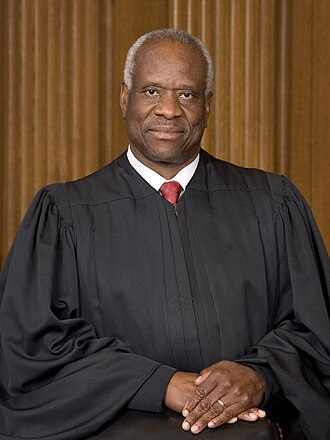 Clarence ThomasWrote the majority opinion
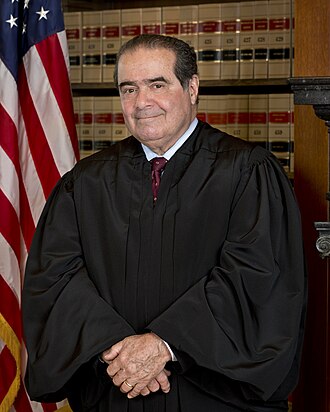 Antonin ScaliaWrote a concurrence
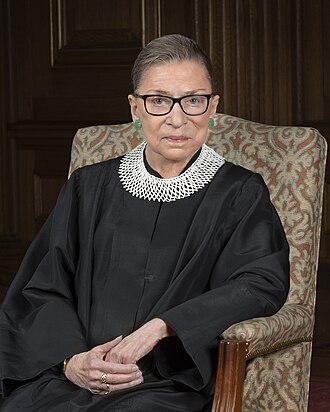 Ruth GinsburgJoined the majority
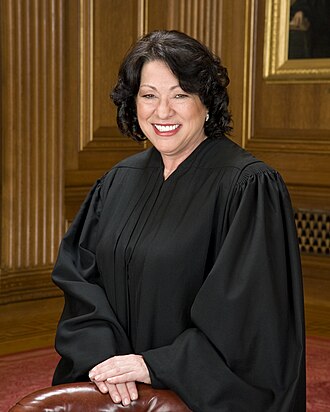 Sonia SotomayorJoined the majority
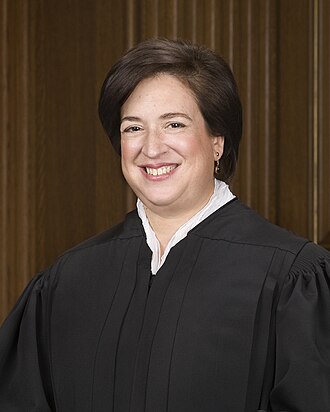 Elena KaganJoined the majority
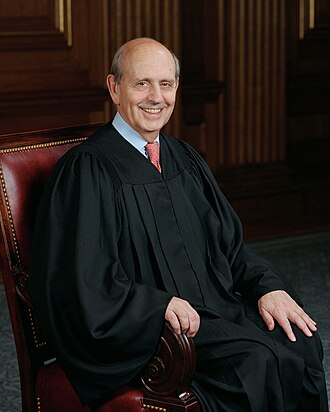 Stephen BreyerJoined the majority
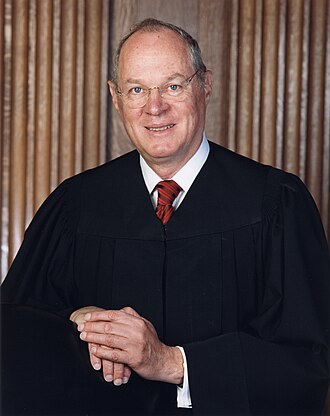 Anthony KennedyJoined the majority
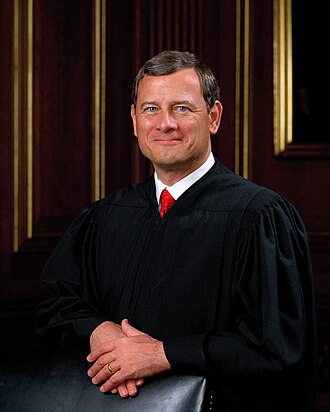 John RobertsJoined the majority
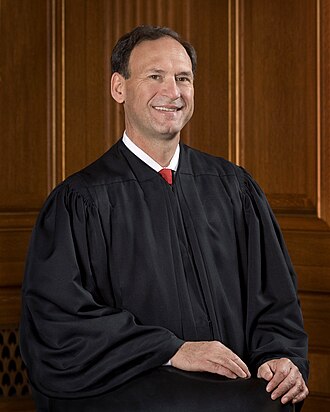 Samuel AlitoJoined the majority
Dissent(0)
- None.
Data notes
Each justice’s vote and what they wrote are from the justice-centered file of the Supreme Court Database. “Wrote a concurrence” means the justice sided with the majority and wrote separately; a justice who dissented in part is counted on the side they took overall. A justice who wrote nothing is listed as joining their side.
Positions are each justice’s Martin–Quinn score for the case’s term, the same scores as the Ideology page: negative is more liberal, positive more conservative. A score sums up a justice’s votes across the whole term, so it says where they usually sit, not why they voted as they did here. The median line is the Court’s median justice that term.
The parties
Who brought the case to the Court, who answered it, and how it got there.
- Petitioner
- Association for Molecular Pathology, et al., PetitionersHealth organization or person, nursing home, medical clinic or laboratory, chiropractor
- Respondent
- Myriad Genetics, Inc., et al.Health organization or person, nursing home, medical clinic or laboratory, chiropractor
- Reached the Court by
- Certiorari (the Court chose to hear it)
Data notes
The names are the two sides of the case’s title. The description under each is the Supreme Court Database’s category for that party, in its own wording. The petitioner is the side that asked the Supreme Court to review the decision below. “Why it was taken” appears only when the majority opinion says lower courts disagreed or were unsure about the question; reasons that would fit any case (“to resolve the question presented”, “an important question”) are left out.
The law at issue
The law the Court was asked to apply, and the kind of power it used to decide.
- Provision
- 35-101
- Kind of law
- Infrequently litigated statutes
- Decided by
- Statutory construction; Supreme Court supervision of lower federal or state courts or original jurisdiction
Data notes
The Supreme Court Database codes the main constitutional provision, statute or court rule each case turned on, and the basis of the decision: judicial review of a federal or state law, interpreting a statute, supervising the lower courts, and so on. A case can rest on more than one. “Overruled” counts only where the majority opinion says so.
Timeline
What happened at the Court and how the case got there, newest first.
- Jun 13, 2013DecidedDecided · Decided 9–0: affirmed and reversed (or vacated) in part and remanded. Association for Molecular Pathology, et al., Petitioners won.
- Apr 15, 2013ArguedArgued · Oral argument before the Court.
- Not datedTaken upTaken up · The Supreme Court agreed to hear the case (certiorari).
- Not datedCourt belowCourt below · Decided by the U.S. Court of Appeals, Federal Circuit: affirmed and reversed (or vacated) in part and remanded, with a dissent.
- Not datedBeganBegan · The case began in the New York Southern U.S. District Court.
Data notes
From the Supreme Court Database: the court the case began in, the court whose decision the Supreme Court reviewed and what that court did, how the case came to the Court, and the dates of argument and decision. The database does not date the steps in the lower courts. Court names are the database’s.
Other decisions on the same issue
17 other argued cases since 1946 on statutory construction of criminal laws: financial, newest first.
- Robers v. United States572 U.S. 639May 5, 2014 · 572 U.S. 639Criminal procedure9–0Unanimous band
- Federal Trade Commission, Petitioner v. Actavis, Inc., et al.570 U.S. 136Jun 17, 2013 · 570 U.S. 136Criminal procedure5–36–3 band
- Humberto Fidel Regalado Cuellar v. United States553 U.S. 550Jun 2, 2008 · 553 U.S. 550Criminal procedure9–0Unanimous band
- United States v. Efrain Santos and Benedicto Diaz553 U.S. 507Jun 2, 2008 · 553 U.S. 507Criminal procedure5–45–4 band
- H. J. Inc. et al. v. Northwestern Bell Telephone Co. et al.492 U.S. 229Jun 26, 1989 · 492 U.S. 229Criminal procedure9–0Unanimous band
- Bell v. United States462 U.S. 356Jun 13, 1983 · 462 U.S. 356Criminal procedure8–18–1 band
- Williams v. United States458 U.S. 279Jun 29, 1982 · 458 U.S. 279Criminal procedure5–45–4 band
- McElroy v. United States455 U.S. 642Mar 23, 1982 · 455 U.S. 642Criminal procedure8–18–1 band
- Chiarella v. United States445 U.S. 222Mar 18, 1980 · 445 U.S. 222Criminal procedure6–36–3 band
- United States v. Cook384 U.S. 257May 23, 1966 · 384 U.S. 257Criminal procedure9–0Unanimous band
- United States v. Braverman373 U.S. 405May 27, 1963 · 373 U.S. 405Criminal procedure9–0Unanimous band
- United States v. Sampson et al.371 U.S. 75Nov 19, 1962 · 371 U.S. 75Criminal procedure8–18–1 band
- Gilbert v. United States370 U.S. 650Jun 25, 1962 · 370 U.S. 650Criminal procedure4–36–3 band
- Arroyo v. United States359 U.S. 419May 4, 1959 · 359 U.S. 419Criminal procedure5–45–4 band
- Rodgers v. United States332 U.S. 371Nov 10, 1947 · 332 U.S. 371Criminal procedure7–27–2 band
- United States v. Sheridan329 U.S. 379Dec 23, 1946 · 329 U.S. 379Criminal procedure7–27–2 band
- United States v. Bruno329 U.S. 207Dec 9, 1946 · 329 U.S. 207Criminal procedure9–0Unanimous band
Data notes
Every other orally argued case with a clear vote, from the 1946 term on, that the Supreme Court Database files under the same issue as this one. The database gives each case one issue from a list of about 270 (abortion, search and seizure of vehicles, the death penalty, and so on), whatever law it turned on.
Official record
Read the full opinion on Justia, the argument audio on Oyez and Wikipedia. Case data from the Supreme Court Database, Version 2026 Release 01, through the 2025 term.