Trump v. Barbara
The Court held that children born in the United States, including to parents unlawfully or temporarily present, are "subject to the jurisdiction" of the United States and are citizens at birth under the Citizenship Clause of the Fourteenth Amendment to the United States Constitution (1868).
146 S. Ct. 2438 · No. 25-365 · 2025 term · Roberts Court
Decided Jun 30, 2026 · argued Apr 1, 2026
Civil rights · Immigration and naturalization: citizenship
Landmark · Citizenship
Majority opinion: John Roberts
The voteMajorityDissent
6–36 in the majority, 3 in dissent
3 dissents (6–3)
Affirmed. Trump lost.
What this ruling means
Affirmed: the Supreme Court upheld the decision of the New Hampshire U.S. District Court, so it stands (sometimes with changes the Court made to it).
Trump was the petitioner, the side that asked the Supreme Court to review the case. “Lost” means the Court did not give that side the result it asked for.
From the Supreme Court Database. A justice who agreed with the result but not the reasoning counts in the majority.
Summary
The opening of the case’s Wikipedia article: what the case was about and what the Court held.
Trump v. Barbara, 609 U.S. ___ (2026) is a landmark decision of the Supreme Court of the United States, which held that children born in the United States, including to parents unlawfully or temporarily present, are "subject to the jurisdiction" of the United States and are citizens at birth under the Citizenship Clause of the Fourteenth Amendment to the United States Constitution (1868). The Court invalidated President Donald Trump's Executive Order 14160 (2025), which would have effectively denied birthright citizenship to U.S.-born children whose parents lacked U.S. citizenship or permanent residency.
In the 6–3 ruling, Chief Justice John Roberts and Justices Sonia Sotomayor, Elena Kagan, Amy Coney Barrett, and Ketanji Brown Jackson agreed, and Brett Kavanaugh agreed in part, to strike down the executive order. The Court split 5–4 on the executive order's constitutionality, with Roberts writing for the majority that the Fourteenth Amendment guarantees birthright citizenship to nearly everyone born on U.S. soil and Kavanaugh concurring based on statute. Justices Clarence Thomas, Samuel Alito, and Neil Gorsuch dissented, arguing that the executive order was not inconsistent with the Fourteenth Amendment.
The case arose when a federal district court in New Hampshire certified a nationwide class of children affected by the executive order and issued a class-wide preliminary injunction preventing its enforcement, a remedy shaped by Trump v. CASA, Inc. (2025). The Supreme Court granted the Trump administration's request for certiorari before judgment to resolve the constitutional question directly. Barbara led headlines and was regarded as one of the most high-stakes tests of the scope of the Citizenship Clause since the decision in United States v. Wong Kim Ark (1898), which both sides cited as precedent and which discussed the domicile of Wong Kim Ark's parents.
The Court rejected the administration's argument that precedent limited birthright citizenship to children of U.S.-domiciled parents, holding that Wong Kim Ark's discussion of domicile described the case's facts without limiting the constitutional requirement. It also rejected the argument that the Fourteenth Amendment's ratifiers intended such a limitation. Drawing on English common law and precedent including Lynch v. Clarke (1844), it reaffirmed the long prevailing understanding of the Citizenship Clause.
Data notes
The text is Wikipedia’s (CC BY-SA 4.0), matched to the case by its citation, docket number or name and year, and is not checked against the opinion. The site keeps the article’s opening section, ending on its last full sentence. The one-sentence summary under the title is the Decisions list’s: Wikipedia’s own ruling sentence, or, tagged “AI-written”, one Claude wrote from this opening.
How the justices voted
Each justice who took part, placed by their provisional Martin–Quinn ideology score for the 2025 term. Filled: the 6 in the majority. Hollow: the 3 in dissent. Colour is the party of the president who appointed them.
Majority(6)
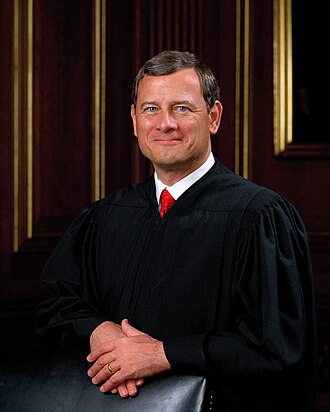 John RobertsWrote the majority opinion
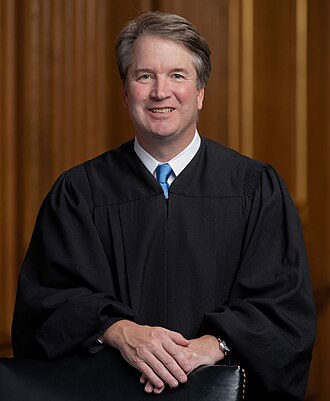 Brett KavanaughWrote a concurrence
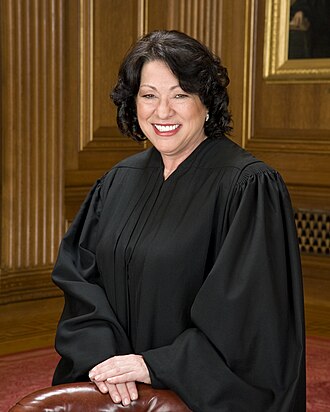 Sonia SotomayorJoined the majority
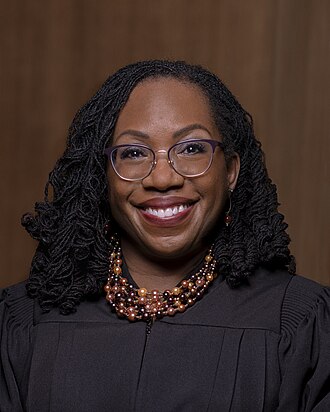 Ketanji JacksonJoined the majority
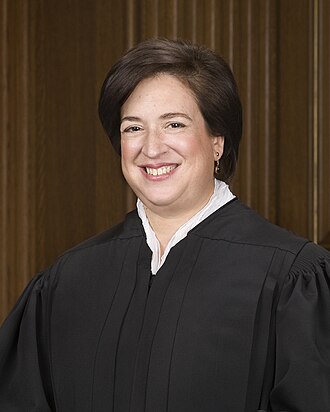 Elena KaganJoined the majority
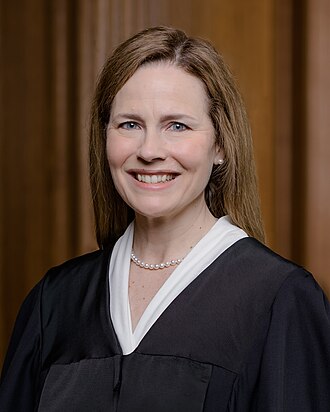 Amy BarrettJoined the majority
Dissent(3)
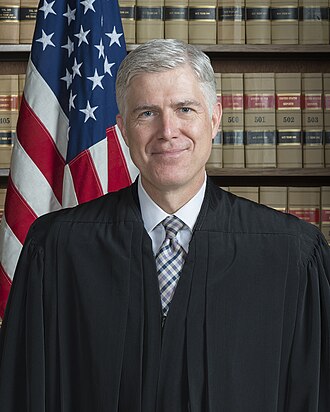 Neil GorsuchWrote a dissent
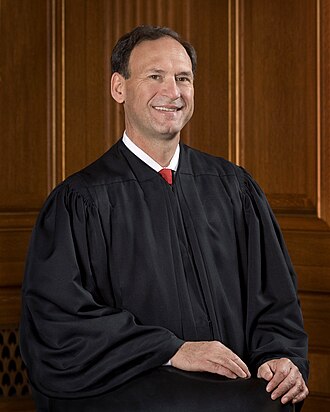 Samuel AlitoWrote a dissent
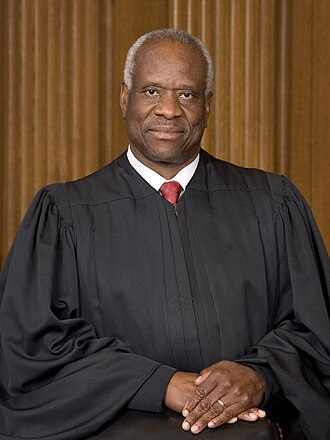 Clarence ThomasWrote a dissent
Data notes
Each justice’s vote and what they wrote are from the justice-centered file of the Supreme Court Database. “Wrote a concurrence” means the justice sided with the majority and wrote separately; a justice who dissented in part is counted on the side they took overall. A justice who wrote nothing is listed as joining their side.
Positions are each justice’s Martin–Quinn score for the case’s term: negative is more liberal, positive more conservative. A score sums up a justice’s votes across the whole term, so it says where they usually sit, not why they voted as they did here. The median line is the Court’s median justice that term.
The 2025 scores are provisional. The official Martin–Quinn release does not cover this term yet, so the scores are copied from Lee Epstein, Andrew D. Martin & Michael J. Nelson, Provisional Data Report on the U.S. Supreme Court's 2025 Term, Table 3.1 (scores by Kevin Quinn), published 2026-06-30. They will be replaced by the official scores when those come out, and may change. The median line is the middle of these nine scores.
The parties
Who brought the case to the Court, who answered it, and how it got there.
- Petitioner
- TrumpGovernmental official, or an official of an agency established under an interstate compact (United States)
- Respondent
- BarbaraAlien, person subject to a denaturalization proceeding, or one whose citizenship is revoked
- Reached the Court by
- Certiorari (the Court chose to hear it)
Data notes
The names are the two sides of the case’s title. The description under each is the Supreme Court Database’s category for that party, in its own wording. The petitioner is the side that asked the Supreme Court to review the decision below. “Why it was taken” appears only when the majority opinion says lower courts disagreed or were unsure about the question; reasons that would fit any case (“to resolve the question presented”, “an important question”) are left out.
The law at issue
The law the Court was asked to apply, and the kind of power it used to decide.
- Provision
- Fourteenth Amendment (citizenship clause)
- Kind of law
- Constitutional Amendment
- Decided by
- Judicial review (national level)
Data notes
The Supreme Court Database codes the main constitutional provision, statute or court rule each case turned on, and the basis of the decision: judicial review of a federal or state law, interpreting a statute, supervising the lower courts, and so on. A case can rest on more than one. “Overruled” counts only where the majority opinion says so.
Timeline
What happened at the Court and how the case got there, newest first.
- Jun 30, 2026DecidedDecided · Decided 6–3: affirmed. Trump lost.
- Apr 1, 2026ArguedArgued · Oral argument before the Court.
- Not datedTaken upTaken up · The Supreme Court agreed to hear the case (certiorari).
- Not datedCourt belowCourt below · Began in and was decided by the New Hampshire U.S. District Court: stay, petition, or motion granted.
Data notes
From the Supreme Court Database: the court the case began in, the court whose decision the Supreme Court reviewed and what that court did, how the case came to the Court, and the dates of argument and decision. The database does not date the steps in the lower courts. Court names are the database’s.
Other decisions on the same issue
8 other argued cases since 1946 on immigration and naturalization: citizenship, newest first.
- Sessions, Att'y Gen. v. Morales-Santana137 S. Ct. 1678Jun 12, 2017 · 137 S. Ct. 1678Civil rights8–0Unanimous band
- Ruben Flores-Villar, Petitioner v. United States564 U.S. 210Jun 13, 2011 · 564 U.S. 210Civil rights4–45–4 band
- Immigration and Naturalization Service v. Pangilinan et al.486 U.S. 875Jun 17, 1988 · 486 U.S. 875Civil rights8–0Unanimous band
- Astrup v. Immigration and Naturalization Service402 U.S. 509May 24, 1971 · 402 U.S. 509Civil rights9–0Unanimous band
- Berenyi v. District Director, Immigration and Naturalization Service385 U.S. 630Jan 23, 1967 · 385 U.S. 630Civil rights6–36–3 band
- Montana v. Kennedy, Attorney General366 U.S. 308May 22, 1961 · 366 U.S. 308Civil rights8–18–1 band
- Tak Shan Fong v. United States359 U.S. 102Mar 23, 1959 · 359 U.S. 102Civil rights6–36–3 band
- Moser v. United States341 U.S. 41Apr 9, 1951 · 341 U.S. 41Civil rights9–0Unanimous band
Data notes
Every other orally argued case with a clear vote, from the 1946 term on, that the Supreme Court Database files under the same issue as this one. The database gives each case one issue from a list of about 270 (abortion, search and seizure of vehicles, the death penalty, and so on), whatever law it turned on.
Official record
Read the argument audio on Oyez and Wikipedia. Case data from the Supreme Court Database, Version 2026 Release 01, through the 2025 term.