Bost v. Illinois Bd. of Elections
The court held that a candidate for federal office has standing to challenge time, place, and manner regulations created by a state that affect the candidate's federal election.
607 U.S. 71 · No. 24-568 · 2025 term · Roberts Court
Decided Jan 14, 2026 · argued Oct 8, 2025
Civil rights · Voting
Majority opinion: John Roberts
The voteMajorityDissent
7–27 in the majority, 2 in dissent
2 dissents (7–2)
Reversed and remanded. Bost won.
What this ruling means
Reversed and remanded: the Supreme Court overturned the decision of the U.S. Court of Appeals, Seventh Circuit and sent the case back to that court for further proceedings that follow the Supreme Court’s ruling.
Bost was the petitioner, the side that asked the Supreme Court to review the case. “Won” means the Court gave that side the result it asked for.
From the Supreme Court Database. A justice who agreed with the result but not the reasoning counts in the majority.
Summary
The opening of the case’s Wikipedia article: what the case was about and what the Court held.
Bost v. Illinois State Board of Elections, 607 U.S. 71 (2026), is a United States Supreme Court case, in which the court held that a candidate for federal office has standing to challenge time, place, and manner regulations created by a state that affect the candidate's federal election.
Data notes
The text is Wikipedia’s (CC BY-SA 4.0), matched to the case by its citation, docket number or name and year, and is not checked against the opinion. The site keeps the article’s opening section, ending on its last full sentence. The one-sentence summary under the title is the Decisions list’s: Wikipedia’s own ruling sentence, or, tagged “AI-written”, one Claude wrote from this opening.
How the justices voted
Each justice who took part, placed by their provisional Martin–Quinn ideology score for the 2025 term. Filled: the 7 in the majority. Hollow: the 2 in dissent. Colour is the party of the president who appointed them.
Majority(7)
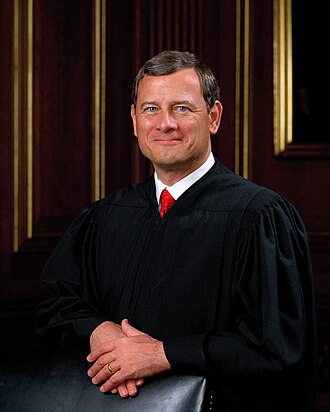 John RobertsWrote the majority opinion
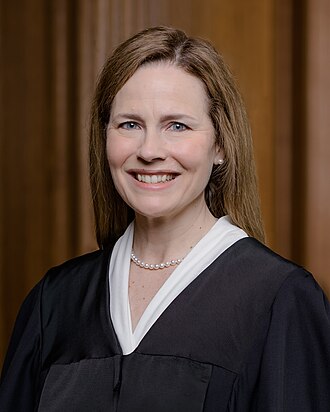 Amy BarrettWrote a concurrence
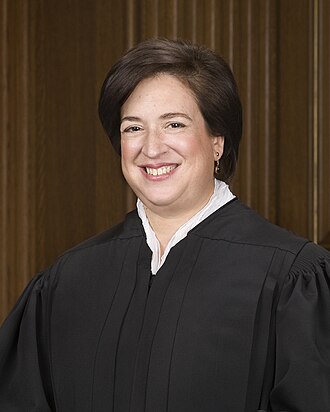 Elena KaganJoined the majority
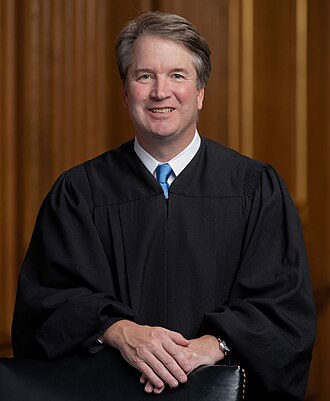 Brett KavanaughJoined the majority
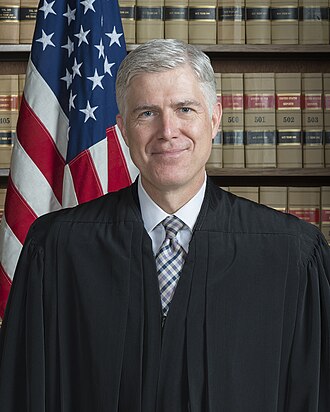 Neil GorsuchJoined the majority
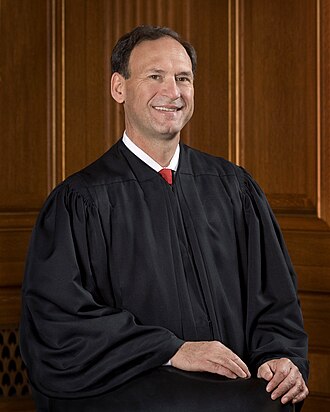 Samuel AlitoJoined the majority
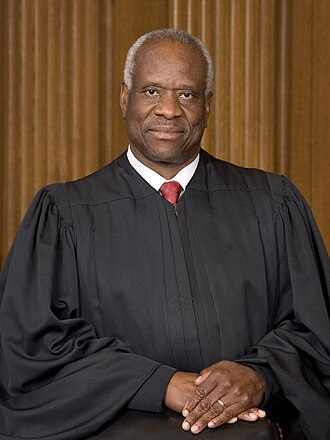 Clarence ThomasJoined the majority
Dissent(2)
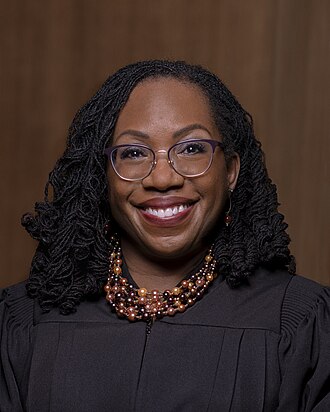 Ketanji JacksonWrote a dissent
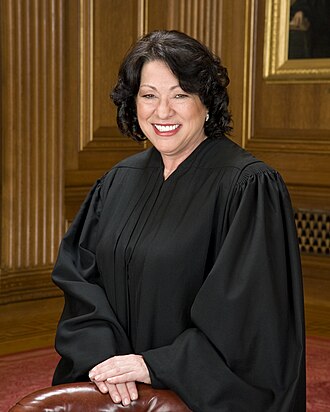 Sonia SotomayorJoined a dissent
Data notes
Each justice’s vote and what they wrote are from the justice-centered file of the Supreme Court Database. “Wrote a concurrence” means the justice sided with the majority and wrote separately; a justice who dissented in part is counted on the side they took overall. A justice who wrote nothing is listed as joining their side.
Positions are each justice’s Martin–Quinn score for the case’s term: negative is more liberal, positive more conservative. A score sums up a justice’s votes across the whole term, so it says where they usually sit, not why they voted as they did here. The median line is the Court’s median justice that term.
The 2025 scores are provisional. The official Martin–Quinn release does not cover this term yet, so the scores are copied from Lee Epstein, Andrew D. Martin & Michael J. Nelson, Provisional Data Report on the U.S. Supreme Court's 2025 Term, Table 3.1 (scores by Kevin Quinn), published 2026-06-30. They will be replaced by the official scores when those come out, and may change. The median line is the middle of these nine scores.
The parties
Who brought the case to the Court, who answered it, and how it got there.
- Petitioner
- BostPolitical candidate, activist, committee, party, party member, organization, or elected official
- Respondent
- Illinois Bd. of ElectionsState commission, board, committee, or authority (Illinois)
- Reached the Court by
- Certiorari (the Court chose to hear it)
Data notes
The names are the two sides of the case’s title. The description under each is the Supreme Court Database’s category for that party, in its own wording. The petitioner is the side that asked the Supreme Court to review the decision below. “Why it was taken” appears only when the majority opinion says lower courts disagreed or were unsure about the question; reasons that would fit any case (“to resolve the question presented”, “an important question”) are left out.
The law at issue
The law the Court was asked to apply, and the kind of power it used to decide.
- Provision
- 2 U.S. Code § 7 Time of Election
- Kind of law
- Infrequently litigated statutes
- Decided by
- Judicial review (state level)
Data notes
The Supreme Court Database codes the main constitutional provision, statute or court rule each case turned on, and the basis of the decision: judicial review of a federal or state law, interpreting a statute, supervising the lower courts, and so on. A case can rest on more than one. “Overruled” counts only where the majority opinion says so.
Timeline
What happened at the Court and how the case got there, newest first.
- Jan 14, 2026DecidedDecided · Decided 7–2: reversed and remanded. Bost won.
- Oct 8, 2025ArguedArgued · Oral argument before the Court.
- Not datedTaken upTaken up · The Supreme Court agreed to hear the case (certiorari).
- Not datedCourt belowCourt below · Decided by the U.S. Court of Appeals, Seventh Circuit: affirmed, with a dissent.
- Not datedBeganBegan · The case began in the Illinois Northern U.S. District Court.
Data notes
From the Supreme Court Database: the court the case began in, the court whose decision the Supreme Court reviewed and what that court did, how the case came to the Court, and the dates of argument and decision. The database does not date the steps in the lower courts. Court names are the database’s.
Other decisions on the same issue
49 other argued cases since 1946 on voting, newest first.
- Watson v. Republican National Committee146 S. Ct. 2165Jun 29, 2026 · 146 S. Ct. 2165Civil rights5–45–4 band
- Alexander v. South Carolina State Conference of the NAACP144 S. Ct. 1221May 23, 2024 · 144 S. Ct. 1221Civil rights6–36–3 band
- Berger v. North Carolina State Conference of the NAACP142 S. Ct. 2191Jun 23, 2022 · 142 S. Ct. 2191Civil rights8–18–1 band
- Colorado Dept. of State v. Baca140 S. Ct. 2316Jul 6, 2020 · 140 S. Ct. 2316Civil rights8–0Unanimous band
- Chiafalo v. WashingtonLandmark · Voting and redistricting140 S. Ct. 2316Jul 6, 2020 · 140 S. Ct. 2316Civil rightsLandmark · Voting and redistricting9–0Unanimous band
- Rucho v. Common CauseLandmark · Voting and redistricting139 S. Ct. 2484Jun 27, 2019 · 139 S. Ct. 2484Civil rightsLandmark · Voting and redistricting5–45–4 band
- Husted v. A. Philip Randolph Institute138 S. Ct. 1833Jun 11, 2018 · 138 S. Ct. 1833Civil rights5–45–4 band
- Bethune-Hill v. Va Bd. of Elections137 S. Ct. 788Mar 1, 2017 · 137 S. Ct. 788Civil rights8–0Unanimous band
- Harris v. Arizona Independent Redistricting Commission578 U.S. 253Apr 20, 2016 · 578 U.S. 253Civil rights8–0Unanimous band
- Evenwel v. Abbott578 U.S. 54Apr 4, 2016 · 578 U.S. 54Civil rights8–0Unanimous band
- Arizona, et al., Petitioners v. the Inter Tribal Council of Arizona, Inc., et al.570 U.S. 1Jun 17, 2013 · 570 U.S. 1Civil rights7–27–2 band
- William Crawford, et al., Petitioners v. Marion County Election Board et al.553 U.S. 181Apr 28, 2008 · 553 U.S. 181Civil rights6–36–3 band
- George W. Bush and Richard Cheney v. Albert Gore, Jr., et al.Landmark · Voting and redistricting531 U.S. 98Dec 12, 2000 · 531 U.S. 98Civil rightsLandmark · Voting and redistricting5–45–4 band
- Harold F. Rice v. Benjamin J. Cayetano, Governor of Hawaii528 U.S. 495Feb 23, 2000 · 528 U.S. 495Civil rights7–27–2 band
- Carl T. C. Gutierrez and Madeleine Z. Bordallo v. Joseph F. Ada and Felix P. Camacho528 U.S. 250Jan 19, 2000 · 528 U.S. 250Civil rights9–0Unanimous band
- Murphy J. Foster, Jr., Governor of Louisiana, et al. v. G. Scott Love, Paul S. Bergeron, Kathleen B. Balhoff, and Bennie Baker-Bourgeois522 U.S. 67Dec 2, 1997 · 522 U.S. 67Civil rights9–0Unanimous band
- Hunter et al. v. Underwood et al.471 U.S. 222Apr 16, 1985 · 471 U.S. 222Civil rights8–0Unanimous band
- Rogers et al. v. Lodge et al.458 U.S. 613Jul 1, 1982 · 458 U.S. 613Civil rights6–36–3 band
- Rodriguez et al. v. Popular Democratic Party et al.457 U.S. 1Jun 7, 1982 · 457 U.S. 1Civil rights9–0Unanimous band
- Williams et al. v. Brown et al.446 U.S. 236Apr 22, 1980 · 446 U.S. 236Civil rights6–36–3 band
- City of Mobile, Alabama, et al. v. Bolden et al.446 U.S. 55Apr 22, 1980 · 446 U.S. 55Civil rights6–36–3 band
- Holt Civic Club et al. v. City of Tuscaloosa et al.439 U.S. 60Nov 28, 1978 · 439 U.S. 60Civil rights6–36–3 band
- Hill, Attorney General of Texas v. Stone et al.421 U.S. 289May 12, 1975 · 421 U.S. 289Civil rights5–36–3 band
- Richardson, County Clerk and Registrar of Voters of Mendocino County v. Ramirez et al.Landmark · Fourteenth Amendment rights418 U.S. 24Jun 24, 1974 · 418 U.S. 24Civil rightsLandmark · Fourteenth Amendment rights6–36–3 band
- O'Brien et al. v. Skinner, Sheriff, et al.414 U.S. 524Jan 16, 1974 · 414 U.S. 524Civil rights7–27–2 band
- Goosby et al. v. Osser et al.409 U.S. 512Jan 17, 1973 · 409 U.S. 512Civil rights9–0Unanimous band
- Roudebush v. Hartke et al.405 U.S. 15Feb 23, 1972 · 405 U.S. 15Civil rights5–27–2 band
- Gordon et al. v. Lance et al.403 U.S. 1Jun 7, 1971 · 403 U.S. 1Civil rights7–27–2 band
- Oregon v. Mitchell, Attorney GeneralLandmark · Federalism400 U.S. 112Dec 21, 1970 · 400 U.S. 112Civil rightsLandmark · Federalism5–45–4 band
- City of Phoenix et al. v. Kolodziejski399 U.S. 204Jun 23, 1970 · 399 U.S. 204Civil rights5–36–3 band
- Evans et al. v. Cornman et al.398 U.S. 419Jun 15, 1970 · 398 U.S. 419Civil rights8–0Unanimous band
- Cipriano v. City of Houma et al.395 U.S. 701Jun 16, 1969 · 395 U.S. 701Civil rights8–0Unanimous band
- Kramer v. Union Free School District No. 15 et al.395 U.S. 621Jun 16, 1969 · 395 U.S. 621Civil rights5–36–3 band
- McDonald et al. v. Board of Election Commissioners of Chicago et al.394 U.S. 802Apr 28, 1969 · 394 U.S. 802Civil rights9–0Unanimous band
- Harper et al. v. Virginia Board of Elections et al.Landmark · Voting and redistricting383 U.S. 663Mar 24, 1966 · 383 U.S. 663Civil rightsLandmark · Voting and redistricting6–36–3 band
- Harman et al. v. Forssenius et al.380 U.S. 528Apr 27, 1965 · 380 U.S. 528Civil rights9–0Unanimous band
- United States v. Mississippi et al.380 U.S. 128Mar 8, 1965 · 380 U.S. 128Civil rights9–0Unanimous band
- Louisiana et al. v. United States380 U.S. 145Mar 8, 1965 · 380 U.S. 145Civil rights9–0Unanimous band
- Carrington v. Rash et al.380 U.S. 89Mar 1, 1965 · 380 U.S. 89Civil rights7–18–1 band
- Anderson et al. v. Martin375 U.S. 399Jan 13, 1964 · 375 U.S. 399Civil rights9–0Unanimous band
- Gomillion et al. v. Lightfoot, Mayor of Tuskegee, et al.Landmark · Discrimination based on race and ethnicity364 U.S. 339Nov 14, 1960 · 364 U.S. 339Civil rightsLandmark · Discrimination based on race and ethnicity9–0Unanimous band
- United States v. Alabama et al.362 U.S. 602May 16, 1960 · 362 U.S. 602Civil rights9–0Unanimous band
- United States v. Thomas, Registrar of Voters of Washington Parish, Louisiana, et al.362 U.S. 58Feb 29, 1960 · 362 U.S. 58Civil rights9–0Unanimous band
- United States v. Raines et al.362 U.S. 17Feb 29, 1960 · 362 U.S. 17Civil rights9–0Unanimous band
- Lassiter v. Northampton County Board of Elections360 U.S. 45Jun 8, 1959 · 360 U.S. 45Civil rights9–0Unanimous band
- Terry et al. v. Adams et al.345 U.S. 461May 4, 1953 · 345 U.S. 461Civil rights8–18–1 band
- Ray, Chairman of the State Democratic Executive Committee of Alabama, v. Blair343 U.S. 214Apr 15, 1952 · 343 U.S. 214Civil rights5–27–2 band
- Ray, Chairman of the State Democratic Executive Committee of Alabama, v. Blair343 U.S. 154Apr 3, 1952 · 343 U.S. 154Civil rights5–27–2 band
- Day-Brite Lighting, Inc. v. Missouri342 U.S. 421Mar 3, 1952 · 342 U.S. 421Civil rights8–18–1 band
Data notes
Every other orally argued case with a clear vote, from the 1946 term on, that the Supreme Court Database files under the same issue as this one. The database gives each case one issue from a list of about 270 (abortion, search and seizure of vehicles, the death penalty, and so on), whatever law it turned on.
Official record
Read the full opinion on Justia, the argument audio on Oyez and Wikipedia. Case data from the Supreme Court Database, Version 2026 Release 01, through the 2025 term.