Manuel Lujan, Jr., Secretary of the Interior v. Defenders of Wildlife, et al.
The Court held that a group of American wildlife conservation and other environmental organizations lacked standing to challenge regulations jointly issued by the Secretaries of the Interior and Commerce.· AI-written
504 U.S. 555 · No. 90-1424 · 1991 term · Rehnquist Court
Decided Jun 12, 1992 · argued Dec 3, 1991
Judicial power · Standing to sue: direct injury
Landmark
Majority opinion: Antonin Scalia
The voteMajorityDissent
6–36 in the majority, 3 in dissent
3 dissents (6–3)
Reversed and remanded. Manuel Lujan, Jr., Secretary of the Interior won.
What this ruling means
Reversed and remanded: the Supreme Court overturned the decision of the U.S. Court of Appeals, Eighth Circuit and sent the case back to that court for further proceedings that follow the Supreme Court’s ruling.
Manuel Lujan, Jr., Secretary of the Interior was the petitioner, the side that asked the Supreme Court to review the case. “Won” means the Court gave that side the result it asked for.
From the Supreme Court Database. A justice who agreed with the result but not the reasoning counts in the majority.
Summary
The opening of the case’s Wikipedia article: what the case was about and what the Court held.
Lujan v. Defenders of Wildlife, 504 U.S. 555 (1992), is a landmark Supreme Court of the United States decision that heightened standing requirements under Article III of the United States Constitution. It is "one of the most influential cases in modern environmental standing jurisprudence."
Lily Henning of the Legal Times stated that:
In [this] decision, hailed by the right and attacked by the left as well as by a broad swath of legal scholars, the Court made clear that plaintiffs must suffer a concrete, discernible injury—not a "conjectural or hypothetical one"—to be able to bring suit in federal court. It, in effect, made it more difficult for plaintiffs to challenge the actions of a government agency when the actions don't directly affect them.
In Lujan, the Court held that a group of American wildlife conservation and other environmental organizations lacked standing to challenge regulations jointly issued by the U.S. Secretaries of the Interior and Commerce, regarding the geographic area to which a particular section of the Endangered Species Act of 1973 applied. The case arose over issues of US funding of development projects in Aswan, Egypt and Mahaweli, Sri Lanka that could harm endangered species in the affected areas. The government declared that the act did not apply to projects outside of the United States and Defenders of Wildlife sued.
Data notes
The text is Wikipedia’s (CC BY-SA 4.0), matched to the case by its citation, docket number or name and year, and is not checked against the opinion. The site keeps the article’s opening section, ending on its last full sentence. The one-sentence summary under the title is the Decisions list’s: Wikipedia’s own ruling sentence, or, tagged “AI-written”, one Claude wrote from this opening.
How the justices voted
Each justice who took part, placed by their Martin–Quinn ideology score for the 1991 term. Filled: the 6 in the majority. Hollow: the 3 in dissent. Colour is the party of the president who appointed them.
Majority(6)
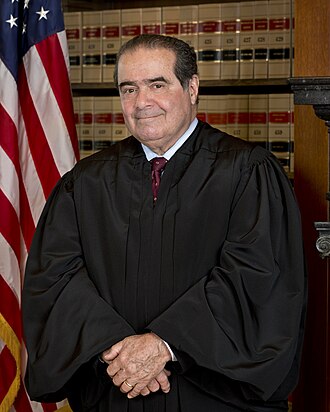 Antonin ScaliaWrote the majority opinion
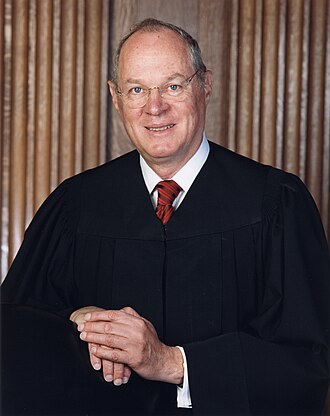 Anthony KennedyWrote a concurrence
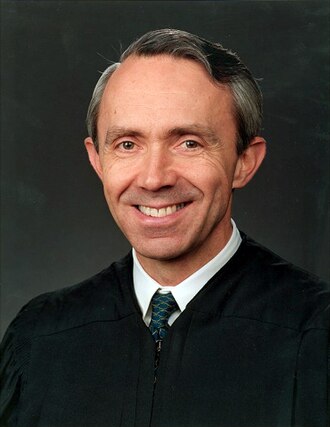 David SouterJoined the majority
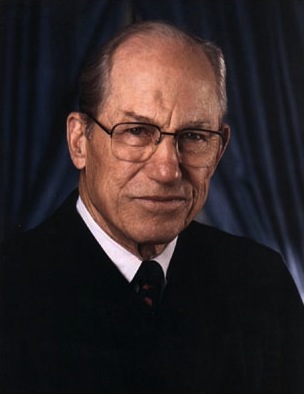 Byron WhiteJoined the majority
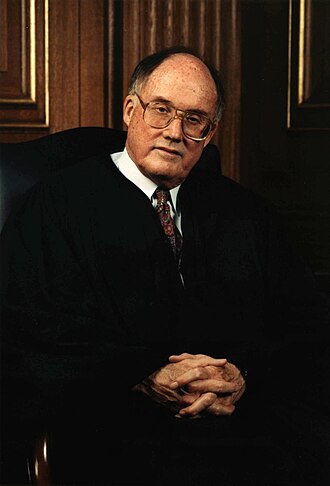 William RehnquistJoined the majority
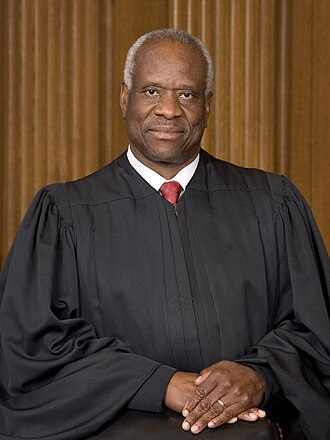 Clarence ThomasJoined the majority
Dissent(3)
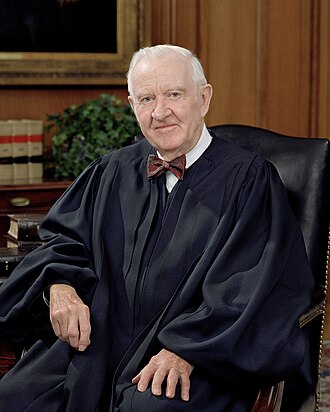 John StevensWrote a dissent
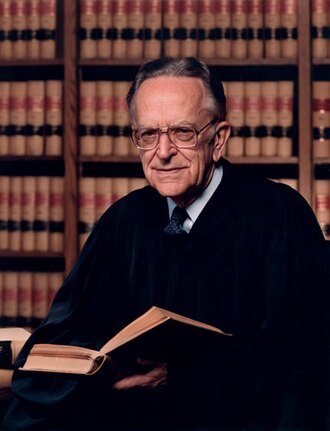 Harry BlackmunWrote a dissent
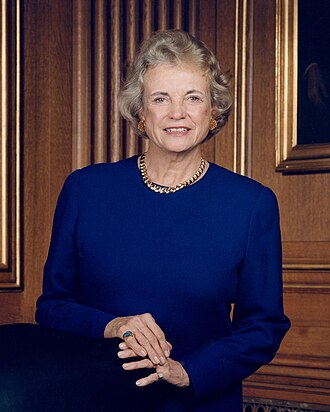 Sandra O'ConnorJoined a dissent
Data notes
Each justice’s vote and what they wrote are from the justice-centered file of the Supreme Court Database. “Wrote a concurrence” means the justice sided with the majority and wrote separately; a justice who dissented in part is counted on the side they took overall. A justice who wrote nothing is listed as joining their side.
Positions are each justice’s Martin–Quinn score for the case’s term, the same scores as the Ideology page: negative is more liberal, positive more conservative. A score sums up a justice’s votes across the whole term, so it says where they usually sit, not why they voted as they did here. The median line is the Court’s median justice that term.
The parties
Who brought the case to the Court, who answered it, and how it got there.
- Petitioner
- Manuel Lujan, Jr., Secretary of the InteriorDepartment or Secretary of the Interior
- Respondent
- Defenders of Wildlife, et al.Environmental organization
- Reached the Court by
- Certiorari (the Court chose to hear it)
Data notes
The names are the two sides of the case’s title. The description under each is the Supreme Court Database’s category for that party, in its own wording. The petitioner is the side that asked the Supreme Court to review the decision below. “Why it was taken” appears only when the majority opinion says lower courts disagreed or were unsure about the question; reasons that would fit any case (“to resolve the question presented”, “an important question”) are left out.
The law at issue
The law the Court was asked to apply, and the kind of power it used to decide.
- Provision
- Article III, Section 2, Paragraph 1 (case or controversy requirement)
- Kind of law
- Constitution
- Decided by
- Judicial review (national level)
Data notes
The Supreme Court Database codes the main constitutional provision, statute or court rule each case turned on, and the basis of the decision: judicial review of a federal or state law, interpreting a statute, supervising the lower courts, and so on. A case can rest on more than one. “Overruled” counts only where the majority opinion says so.
Timeline
What happened at the Court and how the case got there, newest first.
- Jun 12, 1992DecidedDecided · Decided 6–3: reversed and remanded. Manuel Lujan, Jr., Secretary of the Interior won.
- Dec 3, 1991ArguedArgued · Oral argument before the Court.
- Not datedTaken upTaken up · The Supreme Court agreed to hear the case (certiorari).
- Not datedCourt belowCourt below · Decided by the U.S. Court of Appeals, Eighth Circuit: affirmed, with a dissent.
- Not datedBeganBegan · The case began in the Minnesota U.S. District Court.
Data notes
From the Supreme Court Database: the court the case began in, the court whose decision the Supreme Court reviewed and what that court did, how the case came to the Court, and the dates of argument and decision. The database does not date the steps in the lower courts. Court names are the database’s.
Other decisions on the same issue
13 other argued cases since 1946 on standing to sue: direct injury, newest first.
- First Choice Women’s Resource Centers v. Davenport146 S. Ct. 1114Apr 29, 2026 · 146 S. Ct. 1114Judicial power9–0Unanimous band
- Carney v. Adams141 S. Ct. 493Dec 10, 2020 · 141 S. Ct. 493Judicial power8–0Unanimous band
- Gill v. Whitford138 S. Ct. 1916Jun 18, 2018 · 138 S. Ct. 1916Judicial power9–0Unanimous band
- Spokeo, Inc. v. Robins578 U.S. 330May 16, 2016 · 578 U.S. 330Judicial power6–27–2 band
- Susan B. Anthony List v. Driehaus573 U.S. 149Jun 16, 2014 · 573 U.S. 149Judicial power9–0Unanimous band
- James R. Clapper, Jr., Director of National Intelligence, et al., Petitioners v. Amnesty International USA et al.568 U.S. 398Feb 26, 2013 · 568 U.S. 398Judicial power5–45–4 band
- Carol Anne Bond, Petitioner v. United StatesLandmark · Federalism564 U.S. 211Jun 16, 2011 · 564 U.S. 211Judicial powerLandmark · Federalism9–0Unanimous band
- Arizona Christian School Tuition Organization, Petitioner v. Kathleen M. Winn et al.563 U.S. 125Apr 4, 2011 · 563 U.S. 125Judicial power5–45–4 band
- Vermont Agency of Natural Resources v. United States, ex rel., Jonathan Stevens529 U.S. 765May 22, 2000 · 529 U.S. 765Judicial power9–0Unanimous band
- Steel Company, aka Chicago Steel and Pickling Company v. Citizens for a Better Environment523 U.S. 83Mar 4, 1998 · 523 U.S. 83Judicial power9–0Unanimous band
- Virginia v. American Booksellers Association, Inc., et al.484 U.S. 383Jan 25, 1988 · 484 U.S. 383Judicial power8–0Unanimous band
- Simon, Secretary of the Treasury, et al. v. Eastern Kentucky Welfare Rights Organization et al.426 U.S. 26Jun 1, 1976 · 426 U.S. 26Judicial power8–0Unanimous band
- Warth et al. v. Seldin et al.422 U.S. 490Jun 25, 1975 · 422 U.S. 490Judicial power5–45–4 band
Data notes
Every other orally argued case with a clear vote, from the 1946 term on, that the Supreme Court Database files under the same issue as this one. The database gives each case one issue from a list of about 270 (abortion, search and seizure of vehicles, the death penalty, and so on), whatever law it turned on.
Official record
Read the full opinion on Justia, the argument audio on Oyez and Wikipedia. Case data from the Supreme Court Database, Version 2026 Release 01, through the 2025 term.