Credit Union Membership Access Act
Public Law 105-219 · H.R. 1151 · 105th Congress · began in the House
Signed by Bill Clinton (D) on Aug 7, 1998 · Finance and Financial Sector
Sponsor: Rep. Steven LaTourette (R-OH-19)
Cosponsors (207): Rep. Paul Kanjorski, Rep. Gerald Solomon,
Passage votesYeaNay
- HouseVoice vote
- SenateRecorded vote: 92 yea, 6 nay92–6
Data notes
The final version of the law, as each chamber passed it. A chamber that passed it by voice vote or unanimous consent has no count. “Method not stated” means the record does not say how the chamber voted. Where the record has a member-by-member vote, the “Who voted for it” section shows who voted yea.
Summary
The Congressional Research Service’s plain-language summary of what the law does.
TABLE OF CONTENTS:
Title I: Credit Union Membership
Title II: Regulation of Credit Unions
Title III: Capitalization and Net Worth of Credit Unions
Title IV: Miscellaneous Provisions
Credit Union Membership Access Act - Title I: Credit Union Membership - Amends the Federal Credit Union Act (FCUA) to add multiple common bond credit unions to the current permissible categories of single common bond and community credit unions.
(Sec. 101) Grandfathers membership status for: (1) members of any existing credit union as of the date of enactment of this Act; and (2) members of any group which constituted a portion of Federal credit union membership as of the date of enactment of this Act.
Limits a multiple common-bond credit union group to less than 3,000 members, except for: (1) certain larger groups incapable of supporting and operating a single-group credit union; and (2) any group transferred in connection with a voluntary merger, having received conditional approval but not having consummated the merger before October 25, 1996, if such merger is consummated within 180 days after enactment of this Act.
Limits eligibility for additional membership to immediate family or household members.
(Sec. 102) Sets forth approval criteria for membership expansion of multiple common-bond credit unions.
(Sec. 103) Directs the National Credit Union Administration Board to prescribe regulations defining "well-defined local community, neighborhood, or rural district" for purposes of membership criteria.
Title II: Regulation of Credit Unions - Requires accounting principles for credit union financial statements to be uniform and consistent with generally accepted accounting principles, or with any no less stringent but more appropriate accounting principle the Board may prescribe. Exempts from this requirement any insured credit union with less than $10 million total assets, unless the Board or an appropriate State credit union supervisor makes it mandatory.
(Sec. 201) Requires each insured credit union with total assets of $500 million or more to have an annual independent audit. States that voluntary audits conducted through an independent auditor by certain credit unions with total assets of more than $10 million shall be performed consistent with the accountancy laws of the appropriate State or jurisdiction, including licensing requirements.
(Sec. 202) Authorizes conversion of an insured credit union to a mutual savings bank or savings association without prior Board approval, subject to specified requirements and the laws and regulations governing mutual savings banks and savings associations. Removes the converted credit union from FCUA coverage following such conversion. Delimits the compensation of senior management officials in connection with such conversion. Requires the Board to promulgate final charter conversion rules consistent with those promulgated by other financial regulators, and that are no more or less restrictive than by other financial institutions.
(Sec. 203) Restricts to specified net worth limits member business loans made by an insured credit union. Exempts from such limitations a credit union that: (1) is chartered for the purpose of making, or that has a history of primarily making, member business loans to its members; (2) serves predominantly low-income members; or (3) is a community development financial institution.
Mandates that existing member business loans which exceed such statutory limitation be reduced within three years to comply with this Act.
Instructs the Board to consult and seek to work cooperatively with State officials having jurisdiction over State-chartered insured credit unions.
Directs the Secretary of the Treasury (Secretary) to study and report to the Congress on specified aspects of member business lending by insured credit unions.
(Sec. 204) Revises Board membership criteria to require the President to consider appointing individuals especially qualified to serve by virtue of their background in a broad range of financial services, financial services regulation, or financial policy. Prohibits the appointment to the Board of more than one member from among individuals recently involved as a credit union committee member, director, officer, employee, or other institution-affiliated party.
(Sec. 205) States that any Board regulation to define or amend the definition of "immediate family or household," or of "well-defined local community, neighborhood, or rural district," shall be treated as a major rule for purposes of Federal administrative law.
Title III: Capitalization and Net Worth of Credit Unions - Instructs the Board to promulgate implementing regulations designed to: (1) take prompt corrective action to resolve the problems of insured credit unions in order to achieve the least possible long-term loss to the National Credit Union Share Insurance Fund; (2) prescribe a system of such action that takes into account that credit unions are not-for-profit cooperatives that issue no capital stock, have boards of directors consisting primarily of volunteers, and must rely on retained earnings to build net worth; and (3) prescribe a separate prompt corrective action system for new credit unions.
(Sec. 301) Sets forth net worth categories for credit unions within the framework of prompt corrective action regulation. Mandates that such regulatory framework include: (1) risk-based net worth requirements for complex credit unions; (2) an earnings-retention requirement (0.4 percent of total assets) for credit unions that are not well-capitalized; (3) mandatory net worth restoration plans by undercapitalized insured credit unions; (4) restrictions on undercapitalized insured credit unions; and (5) specified actions addressing critically undercapitalized credit unions. Exempts corporate credit unions from the regulatory framework. Authorizes the Board to close a credit union for liquidation and appoint itself or another as liquidating agent upon its determination of significant or critical undercapitalization with no reasonable prospect of becoming adequately capitalized.
Requires the Board to explain specifically in its report to the Congress following promulgation of the implementing regulations: (1) how the regulations implement this Act with respect to the cooperative character of credit unions; and (2) how the regulations differ from the prompt corrective action prescriptions of the Federal Deposit Insurance Act.
(Sec. 302) Requires each insured credit union (except newly insured credit unions) with less than $50 million in total assets to file with the Board annually, and each insured credit union (except newly insured credit unions) with more than $50 million in total assets to file semi-annually, a certified statement showing the total amount of insured shares and both the amount of its deposit or adjustment of deposit and the amount of the insurance charge due to the fund for that period.
Requires annual adjustment for credit unions with total assets of less than $50 million, and semi-annual adjustment for credit unions with total assets of $50 million or more, of the amount of each insured credit union's deposit in the National Credit Union Share Insurance Fund to reflect changes in its insured shares.
Authorizes the Board to assess premiums on insured credit unions only if the insurance fund's equity ratio is less than 1.3 percent, and the charge does not exceed the amount necessary to restore the equity ratio to 1.3 percent. Requires the Board to assess a premium charge sufficient to restore the fund's equity ratio to 1.2 percent if it falls below such percentage.
Requires the Board to effect a pro rata distribution to insured credit unions after each calendar year if, at the end of the year, any Federal loans to the fund have been repaid with interest, the fund's equity ratio exceeds the normal operating level (as specified by the Board, but not less than 1.2 percent nor more than 1.5 percent), and the fund's available assets ratio exceeds 1.0 percent. Sets the amount of the distribution at the maximum possible amount that does not reduce the fund's equity ratio below the normal operating level, and does not reduce the fund's available assets ratio below 1.0 percent.
(Sec. 303) Instructs the Board to: (1) periodically assess the potential liquidity needs of insured credit unions, individually and as a group, and the options available for meeting such needs; and (2) make information available to the Federal reserve banks in order to facilitate insured credit unions' access to liquidity.
Title IV: Miscellaneous Provisions - Directs the Secretary to study and report to the Congress on: (1) the differences between credit unions and other federally insured financial institutions, including regulatory differences with respect to regulations enforced by specified banking regulatory agencies; and (2) the potential effects of the application of Federal laws (including tax laws) to credit unions in the same manner as they are applied to other federally insured financial institutions.
(Sec. 402) Requires the Federal banking agencies to present a detailed status report to the Congress within one year of enactment of this Act regarding their implementation of the mandate of the Riegle Community Development and Regulatory Improvement Act of 1994 to streamline and modify regulatory requirements.
(Sec. 403) Requires the Secretary to report to the Congress any recommendations for legislative and administrative action to reduce and simplify the tax burden for: (1) insured depository institutions having less than $1 billion in assets; and (2) banks having total assets of not less than $1 billion nor more than $10 billion.
Who voted for it
Every senator of the 105th Congress on the ideology compass. Highlighted: the 92 who voted yea on final passage. Faded: everyone else, including those who voted nay, did not vote, or had not yet taken office.
92 yea6 nay2 present or did not vote
Democrats who voted yea(44)
- Sen. Paul WellstoneD-MN
 Sen. Ted KennedyD-MA
- Sen. Paul SarbanesD-MD
 Sen. Jack ReedD-RI
- Sen. Dale BumpersD-AR
 Sen. Richard DurbinD-IL
 Sen. Daniel AkakaD-HI
 Sen. Russell FeingoldD-WI
 Sen. Frank LautenbergD-NJ
 Sen. Carl LevinD-MI
 Sen. Barbara BoxerD-CA
 Sen. John KerryD-MA
- Sen. John GlennD-OH
 Sen. Barbara MikulskiD-MD
 Sen. Byron DorganD-ND
 Sen. Patty MurrayD-WA
- Sen. Tom DaschleD-SD
 Sen. Kent ConradD-ND
 Sen. Daniel InouyeD-HI
 Sen. Tim JohnsonD-SD
 Sen. Patrick LeahyD-VT
 Sen. Jay RockefellerD-WV
- Sen. Carol Moseley BraunD-IL
 Sen. Christopher DoddD-CT
 Sen. Ron WydenD-OR
 Sen. Jeff BingamanD-NM
- Sen. Robert TorricelliD-NJ
- Sen. Fritz HollingsD-SC
 Sen. Robert ByrdD-WV
- Sen. Wendell FordD-KY
 Sen. Herb KohlD-WI
- Sen. Maxwell ClelandD-GA
 Sen. Dianne FeinsteinD-CA
 Sen. Harry ReidD-NV
 Sen. Joseph BidenD-DE
- Sen. Robert KerreyD-NE
- Sen. Richard BryanD-NV
- Sen. Daniel MoynihanD-NY
 Sen. Mary LandrieuD-LA
 Sen. Max BaucusD-MT
- Sen. Bob GrahamD-FL
- Sen. Charles RobbD-VA
 Sen. Joseph LiebermanD-CT
- Sen. John BreauxD-LA
Republicans who voted yea(48)
 Sen. Arlen SpecterR-PA
- Sen. Jim JeffordsR-VT
- Sen. John ChafeeR-RI
 Sen. Olympia SnoweR-ME
- Sen. Alfonse D’AmatoR-NY
 Sen. Susan CollinsR-ME
 Sen. Ted StevensR-AK
- Sen. William RothR-DE
 Sen. Gordon SmithR-OR
 Sen. Pete DomeniciR-NM
- Sen. Ben CampbellR-CO
 Sen. Thad CochranR-MS
 Sen. Robert BennettR-UT
- Sen. Slade GortonR-WA
 Sen. Richard LugarR-IN
- Sen. Mike DeWineR-OH
 Sen. Kit BondR-MO
 Sen. Orrin HatchR-UT
 Sen. John WarnerR-VA
- Sen. Bill FristR-TN
- Sen. Frank MurkowskiR-AK
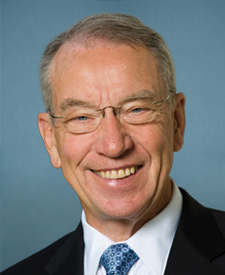 Sen. Chuck GrassleyR-IA
- Sen. Rick SantorumR-PA
- Sen. Spencer AbrahamR-MI
 Sen. John McCainR-AZ
- Sen. Conrad BurnsR-MT
 Sen. Kay HutchisonR-TX
- Sen. Paul CoverdellR-GA
- Sen. Strom ThurmondR-SC
 Sen. Trent LottR-MS
 Sen. Judd GreggR-NH
 Sen. Richard ShelbyR-AL
- Sen. Dirk KempthorneR-ID
- Sen. Fred ThompsonR-TN
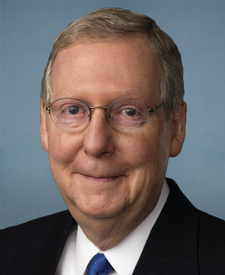 Sen. Mitch McConnellR-KY
- Sen. Craig ThomasR-WY
 Sen. Larry CraigR-ID
 Sen. Michael EnziR-WY
- Sen. Rod GramsR-MN
 Sen. Sam BrownbackR-KS
- Sen. Tim HutchinsonR-AR
 Sen. Wayne AllardR-CO
 Sen. Jon KylR-AZ
 Sen. Jeff SessionsR-AL
- Sen. Phil GrammR-TX
- Sen. Lauch FairclothR-NC
- Sen. John AshcroftR-MO
- Sen. Bob SmithR-NH
Data notes
The Senate’s recorded vote on the final version of the law (roll call 537 in Voteview), matched to the vote the record cites and checked against its totals. Positions are each member’s DW-NOMINATE score for that Congress, as on the Ideology page; left to right is more liberal to more conservative. Paired and announced yea votes count as yea. Lists follow the compass, most liberal first. A name links to a profile only for members of the current Congress. A law passed by voice vote or unanimous consent has no member list, and neither does a vote Voteview has not yet recorded.
Committees
The committees the bill was sent to, and what each did with it.
 Financial Services Committee · House · markup by, referred to, reported bySubcommittee: Consumer Protection and Financial Institutions Subcommittee

Data notes
A committee links to its page only where it exists in the current Congress; older and renamed committees are named without a link.
Timeline
From introduction to signing, newest first: the committees, the floor and the president. 25 actions.
- Aug 7, 1998Became lawBecame law · Became Public Law No: 105-219.
- Became lawBecame law · Signed by President.
- Aug 5, 1998PresidentPresident · Presented to President.
- Aug 4, 1998Resolving differencesResolving differences · Motion to reconsider laid on the table Agreed to without objection.
- Resolving differencesResolving differences · On motion that the House suspend the rules and agree to the Senate amendment Agreed to by voice vote.
- Resolving differencesResolving differences · Mr. Leach moved that the House suspend the rules and agree to the Senate amendment.
- Jul 28, 1998FloorFloor · Passed Senate with amendments by Yea-Nay Vote. 92-6. Record Vote No: 239.Senate roll call 239
- FloorFloor · Amendment SP 3339 agreed to in Senate by Voice Vote.
- FloorFloor · Amendment SP 3336 agreed to in Senate by Voice Vote.
- FloorFloor · Motion to table SP 3338 agreed to in Senate by Yea-Nay Vote. 59-39. Record Vote No: 238.Senate roll call 238
- Jul 27, 1998FloorFloor · Motion to table SP 3337 agreed to in Senate by Yea-Nay Vote. 53-42. Record Vote No: 237.Senate roll call 237
- FloorFloor · Motion to table SP 3336 rejected in Senate by Yea-Nay Vote. 44-50. Record Vote No: 236.Senate roll call 236
- Jul 24, 1998FloorFloor · Measure laid before Senate by unanimous consent.
- May 21, 1998CommitteeCommittee · Reported by Senate Banking, Housing, and Urban Affairs Committee
- Apr 30, 1998CommitteeCommittee · Markup by Senate Banking, Housing, and Urban Affairs Committee
- Apr 20, 1998CommitteeCommittee · Referred to Senate Banking, Housing, and Urban Affairs Committee
- Apr 1, 1998FloorFloor · Motion to reconsider laid on the table Agreed to without objection.
- FloorFloor · The title of the measure was amended. Agreed to without objection.
- FloorFloor · On motion to suspend the rules and pass the bill, as amended Agreed to by the Yeas and Nays: (2/3 required): 411 - 8 (Roll No. 92).House roll call 92
- FloorFloor · Mr. Leach moved to suspend the rules and pass the bill, as amended.
- Mar 30, 1998CommitteeCommittee · Reported by House Financial Services Committee
- Mar 26, 1998CommitteeCommittee · Markup by House Financial Services Committee
- Apr 14, 1997CommitteeCommittee · Referred to Consumer Protection and Financial Institutions Subcommittee of the House Financial Services Committee
- Mar 20, 1997CommitteeCommittee · Referred to House Financial Services Committee
- IntroducedIntroduced · Introduced in the House
Data notes
Shows the introduction, each committee and subcommittee step the source dates (referral, hearings, markup, report, discharge), and the floor, conference, presidential and became-law steps. Calendar placements, messages between the chambers, amendments and committee report numbers are not shown for laws before the 108th Congress. Two entries the source lists twice are shown once.
Official record
The bill’s full text and every action, including introduction and committee steps, are on Congress.gov. Data through Oct 7, 2026.