Lobbying Disclosure Act of 1995
Public Law 104-65 · S. 1060 · 104th Congress · began in the Senate
Signed by Bill Clinton (D) on Dec 19, 1995 · Government Operations and Politics
Major law
Sponsor: Sen. Carl Levin (D-MI)
Cosponsors (7): Sen. William Cohen, Sen. John Glenn,
Passage votesYeaNay
- HouseVoice vote
- SenateRecorded vote: 98 yea, 0 nay98–0
Data notes
The final version of the law, as each chamber passed it. A chamber that passed it by voice vote or unanimous consent has no count. “Method not stated” means the record does not say how the chamber voted. Where the record has a member-by-member vote, the “Who voted for it” section shows who voted yea.
Summary
The Congressional Research Service’s plain-language summary of what the law does.
Lobbying Disclosure Act of 1995 - Requires registration with the Secretary of the Senate and the Clerk of the House of Representatives (appropriate congressional officials) by any individual lobbyist (or the individual's employer if it employs one or more lobbyists) within 45 days after the individual first makes, or is employed or retained to make, a lobbying contact with either the President, the Vice President, a Member of Congress, or any other specified Federal officer or employee, including certain high-ranking members of the uniformed services. Defines a lobbyist as any individual employed or retained by a client for financial or other compensation for services that include more than one lobbying contact (but not an individual whose lobbying activities constitute less than twenty percent of the time engaged in the services provided to that client over a six month period).
(Sec. 4) Provides for: (1) special registration filing rules in cases involving multiple clients and contacts; and (2) registration termination in cases where a registrant is no longer employed or retained by a client to conduct lobbying activities and does not anticipate any additional lobbying activities for such client. Specifies the contents of such registration.
Provides for exemptions from registration requirements above in cases involving lobbying income of $5,000 or less (for a particular client) or total expenses of $20,000 or less (in the case of an organization whose employees engage in lobbying activities on the organization's behalf) (adjusted periodically for inflation) for the semiannual period.
(Sec. 5) Requires registrants to file semiannual lobbying activity reports with the appropriate congressional officials.
(Sec. 6) Specifies the contents of such reports. officials for carrying out this Act, including reviewing registrations and reports filed under it, and making copies of them available to the public.
(Sec. 7) Sets forth penalties for violations involving the requirements of this Act.
(Sec. 9) Amends the Foreign Agents Registration Act of 1938 to: (1) replace references to political propaganda with references to informational materials; and (2) add to the exemption from registration requirements under such Act for certain lawyers providing legal representation to disclosed foreign principals to apply it to such representative actions as judicial proceedings and criminal or civil law enforcement inquiries, investigations, or proceedings.
Exempts from the requirements of the Foreign Agents Registration Act of 1938 any agent of a foreign government, foreign political party, or other foreign entity not organized for business that registers under this Act.
(Sec. 10) Revises (Byrd Amendment) limitations on use of appropriated funds to influence certain Federal contracting and financial transactions, removing obsolete reporting requirements, among other changes.
(Sec. 11) Repeals the Federal Regulation of Lobbying Act.
Repeals provisions under the Department of Housing and Urban Development Act and the Housing Act of 1949 relating to lobbyist activities.
(Sec. 14) Sets forth special rules for the identification of: (1) foreign and other clients on whose behalf lobbying contacts are made with a covered legislative or executive branch official; and (2) such covered officials.
(Sec. 15) Permits tax-exempt charitable organizations required to report lobbying expenses by the Internal Revenue Code to report, under this Act, only good faith estimates of such expenses in order to meet specified reporting (including exemption from such reporting) requirements of this Act.
(Sec. 16) Amends provisions of Federal law known as the Ramspeck Act to repeal authority extending competitive status to certain legislative and judicial branch employees involuntarily separated without prejudice from their respective branch, entitling them to transfer to the competitive service in the executive branch.
(Sec. 17) Requires the Office of Personnel Management (OPM) to promulgate regulations on the manner and extent that experience in a position other than a competitive one may be considered in making appointments to a competitive position. Prohibits the grant, in such regulations, of any preference based on the fact of service in the legislative or judicial branch. Directs OPM to study excepted service considerations for competitive service appointments relating to this Act.
(Sec. 18) Makes certain civic leagues or organizations not organized for profit but operated exclusively for the promotion of social welfare, and certain local associations of employees whose net earnings are devoted exclusively to charitable, educational, or recreational purposes, ineligible for Federal funds in any form if they engage in lobbying activities.
(Sec. 19) Amends the Foreign Agents Registration Act of 1938 to require the Attorney General to report to Congress semiannually on administrative matters (currently from "time to time") including registration filings.
(Sec. 20) Amends the Ethics in Government Act of 1978 to: (1) augment the dollar value categories for required disclosure of income, assets, and liabilities of subject individuals, but limiting disclosure requirements for their spouses and dependent children to income, assets, and liabilities held jointly with the subject individual, and leaving unspecified any such amounts or values exceeding $1 million; and (2) require the financial disclosure reports of subject individuals to include the category of the total cash value of any interest of the reporting individual in a qualified blind trust, except under certain circumstances.
(Sec. 21) Amends the Federal criminal code to apply to the Deputy United States Trade Representative (Deputy USTR) the same three-year prohibition against representing, aiding, or advising a foreign entity after leaving Government service as applies to the United States Trade Representative (USTR).
Amends the Trade Act of 1974 to prohibit any person who has directly represented, aided, or advised a foreign entity in any trade negotiation, or trade dispute, with the United States from being appointed as USTR or Deputy USTR.
(Sec. 23) Expresses the sense of the Senate that lobbying expenses should not be tax deductible.
Who voted for it
Every senator of the 104th Congress on the ideology compass. Highlighted: the 98 who voted yea on final passage. Faded: everyone else, including those who voted nay, did not vote, or had not yet taken office.
98 yea0 nay2 present or did not vote
Democrats who voted yea(45)
- Sen. Paul WellstoneD-MN
 Sen. Barbara BoxerD-CA
 Sen. Ted KennedyD-MA
 Sen. Daniel AkakaD-HI
- Sen. Paul SarbanesD-MD
 Sen. Carl LevinD-MI
- Sen. Dale BumpersD-AR
 Sen. Russell FeingoldD-WI
 Sen. Frank LautenbergD-NJ
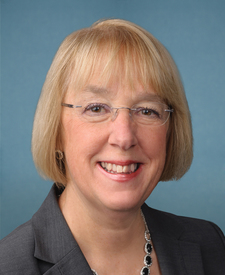 Sen. Patty MurrayD-WA
 Sen. Patrick LeahyD-VT
- Sen. Tom DaschleD-SD
- Sen. David PryorD-AR
- Sen. Paul SimonD-IL
 Sen. Tom HarkinD-IA
- Sen. Claiborne PellD-RI
 Sen. Kent ConradD-ND
 Sen. John KerryD-MA
- Sen. Carol Moseley BraunD-IL
 Sen. Byron DorganD-ND
- Sen. Bill BradleyD-NJ
 Sen. Jay RockefellerD-WV
- Sen. Daniel MoynihanD-NY
 Sen. Barbara MikulskiD-MD
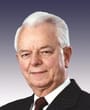 Sen. Robert ByrdD-WV
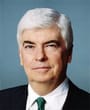 Sen. Christopher DoddD-CT
- Sen. John GlennD-OH
 Sen. Daniel InouyeD-HI
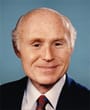 Sen. Herb KohlD-WI
 Sen. Jeff BingamanD-NM
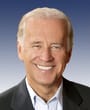 Sen. Joseph BidenD-DE
- Sen. Wendell FordD-KY
- Sen. Richard BryanD-NV
- Sen. Fritz HollingsD-SC
 Sen. Dianne FeinsteinD-CA
- Sen. Robert KerreyD-NE
 Sen. Harry ReidD-NV
- Sen. John JohnstonD-LA
- Sen. John BreauxD-LA
- Sen. Charles RobbD-VA
- Sen. James ExonD-NE
 Sen. Joseph LiebermanD-CT
 Sen. Max BaucusD-MT
- Sen. Samuel NunnD-GA
- Sen. Howell HeflinD-AL
Republicans who voted yea(53)
- Sen. Jim JeffordsR-VT
 Sen. Arlen SpecterR-PA
- Sen. William CohenR-ME
 Sen. Olympia SnoweR-ME
- Sen. John ChafeeR-RI
- Sen. Mark HatfieldR-OR
- Sen. Ben CampbellD-CO
- Sen. Nancy KassebaumR-KS
- Sen. Robert PackwoodR-OR
- Sen. Alan SimpsonR-WY
- Sen. Alfonse D’AmatoR-NY
 Sen. Ted StevensR-AK
- Sen. Mike DeWineR-OH
 Sen. Pete DomeniciR-NM
- Sen. Slade GortonR-WA
- Sen. William RothR-DE
 Sen. Richard LugarR-IN
 Sen. Kit BondR-MO
 Sen. John WarnerR-VA
 Sen. Thad CochranR-MS
- Sen. Larry PresslerR-SD
- Sen. Spencer AbrahamR-MI
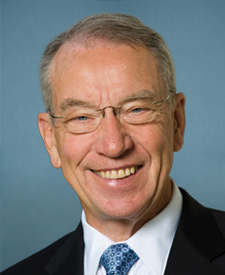 Sen. Chuck GrassleyR-IA
- Sen. Bill FristR-TN
- Sen. Rick SantorumR-PA
 Sen. Orrin HatchR-UT
- Sen. Conrad BurnsR-MT
 Sen. Richard ShelbyR-AL
- Sen. Frank MurkowskiR-AK
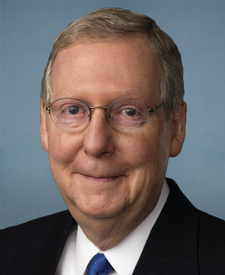 Sen. Mitch McConnellR-KY
- Sen. Robert DoleR-KS
- Sen. Fred ThompsonR-TN
 Sen. Judd GreggR-NH
- Sen. Strom ThurmondR-SC
 Sen. Kay HutchisonR-TX
- Sen. Connie MackR-FL
- Sen. Craig ThomasR-WY
- Sen. Paul CoverdellR-GA
 Sen. Daniel CoatsR-IN
- Sen. Dirk KempthorneR-ID
 Sen. Trent LottR-MS
 Sen. Larry CraigR-ID
 Sen. John McCainR-AZ
- Sen. Rod GramsR-MN
- Sen. John AshcroftR-MO
- Sen. Don NicklesR-OK
- Sen. Hank BrownR-CO
- Sen. Phil GrammR-TX
 Sen. Jim InhofeR-OK
 Sen. Jon KylR-AZ
- Sen. Bob SmithR-NH
- Sen. Jesse HelmsR-NC
- Sen. Lauch FairclothR-NC
Data notes
The Senate’s recorded vote on the final version of the law (roll call 328 in Voteview), matched to the vote the record cites and checked against its totals. Positions are each member’s DW-NOMINATE score for that Congress, as on the Ideology page; left to right is more liberal to more conservative. Paired and announced yea votes count as yea. Lists follow the compass, most liberal first. A name links to a profile only for members of the current Congress. A law passed by voice vote or unanimous consent has no member list, and neither does a vote Voteview has not yet recorded.
Committees
The committees the bill was sent to, and what each did with it.
 Oversight and Accountability Committee · House · discharged from, referred toSubcommittee: Civil Service and Agency Organization Subcommittee
- Judiciary Committee · House · discharged from, referred toSubcommittee: Constitution and Limited Government Subcommittee
Data notes
A committee links to its page only where it exists in the current Congress; older and renamed committees are named without a link.
Timeline
From introduction to signing, newest first: the committees, the floor and the president. 21 actions.
- Dec 19, 1995Became lawBecame law · Became Public Law No: 104-65.
- Became lawBecame law · Signed by President.
- Dec 16, 1995PresidentPresident · Presented to President.
- Nov 29, 1995FloorFloor · A similar measure H.R. 2564 was laid on the table without objection.
- FloorFloor · Motion to reconsider laid on the table Agreed to without objection.
- FloorFloor · On passage Passed by voice vote.
- FloorFloor · Rule provides for consideration of H.R. 2564 with 2 hours of general debate. Previous question shall be considered as ordered without intervening motions except motion to recommit. Upon adoption of this resolution, it shall be in order for the Speaker to declare the House resolv…
- CommitteeCommittee · Discharged from House Oversight and Government Reform Committee
- CommitteeCommittee · Discharged from House Judiciary Committee
- CommitteeCommittee · Discharged from House Rules Committee
- CommitteeCommittee · Discharged from House Ways and Means Committee
- Nov 1, 1995CommitteeCommittee · Referred to Constitution and Limited Government Subcommittee of the House Judiciary Committee
- Oct 31, 1995CommitteeCommittee · Referred to House Oversight and Government Reform Committee
- CommitteeCommittee · Referred to Civil Service and Agency Organization Subcommittee of the House Oversight and Government Reform Committee
- CommitteeCommittee · Referred to House Judiciary Committee
- CommitteeCommittee · Referred to House Rules Committee
- CommitteeCommittee · Referred to House Ways and Means Committee
- Jul 25, 1995FloorFloor · Passed Senate with amendments by Yea-Nay Vote. 98-0. Record Vote No: 328.Senate roll call 328
- Jul 24, 1995FloorFloor · Section 6 of the bill was stricken by Unanimous Consent.
- FloorFloor · Measure laid before Senate by unanimous consent.
- Jul 21, 1995IntroducedIntroduced · Introduced in the Senate
Data notes
Shows the introduction, each committee and subcommittee step the source dates (referral, hearings, markup, report, discharge), and the floor, conference, presidential and became-law steps. Calendar placements, messages between the chambers, amendments and committee report numbers are not shown for laws before the 108th Congress. Two entries the source lists twice are shown once.
Official record
The bill’s full text and every action, including introduction and committee steps, are on Congress.gov. Data through Oct 7, 2026.