Public Telecommunications Act of 1992
Public Law 102-356 · H.R. 2977 · 102nd Congress · began in the House
Signed by George H. W. Bush (R) on Aug 26, 1992 · Government Operations and Politics
Sponsor: Rep. Ed Markey (D-MA-7)
Cosponsors (16): Rep. Matthew Rinaldo, Rep. James Scheuer,
Passage votesYeaNay
- HouseVoice vote
- SenateRecorded vote: 84 yea, 11 nay84–11
Data notes
The final version of the law, as each chamber passed it. A chamber that passed it by voice vote or unanimous consent has no count. “Method not stated” means the record does not say how the chamber voted. Where the record has a member-by-member vote, the “Who voted for it” section shows who voted yea.
Summary
The Congressional Research Service’s plain-language summary of what the law does.
Public Telecommunications Act of 1992 - Amends the Communications Act of 1934 to authorize appropriations for the public telecommunications facilities program for FY 1992 through 1994 and for the Corporation for Public Broadcasting (CPB) for FY 1994 through 1996.
Reduces from ten to nine the number of CPB board members, lengthens the terms of each member from five to six years, and staggers the terms of the members.
Makes a prohibition on the receipt of compensation from other sources by CPB officers inapplicable to compensation for services on boards of directors of other organizations that do not receive CPB funds. Subjects service on such boards to annual advance approval by the CPB board.
Permits CPB funds to be allocated for training programs for employees of public broadcast stations.
Directs CPB, in recognition of the importance of educational programs and services, and the expansion of public radio services, to unserved and underserved audiences, to prepare and submit to the Congress an annual report for FY 1994 through 1996 on its activities and expenditures relating to those programs and services.
Requires an annual report for FY 1992 through 1995 concerning the performance of the CPB independent production service.
Prohibits CPB funding for any public broadcast station licensee that fails to certify to the CPB that it is in compliance with certain Federal regulations concerning equal employment or that fails to submit (in the case of licensees with more than five full-time employees) a certain statistical report identifying employees in specified job categories by race and sex and the annual number of job openings.
Permits a public telecommunications entity receiving CPB funding to submit financial statements in lieu of required biennial (currently, biannual) audits if the CPB determines that the cost burden of audits is excessive in light of the entity's financial condition.
Directs CPB, subsequent to the award of funds for the production or acquisition of national broadcast programming, to make the following available for public inspection: (1) grant and solicitation guidelines for programming proposals; (2) the reasons for selecting the proposal for which the award was made; (3) information on each program for which the award was made, including the names of the awardee and producer, the monetary amount, and the title and description of the program; (4) a report based on the final audit findings from any award audit by the CPB or Comptroller General; and (5) reports required to be provided by the awardee relating to national public broadcasting programming funded, produced, or acquired by the awardee with such funds.
Makes available for public inspection: (1) the final report required by CPB annually from each recipient of funds; and (2) an annual list of national programs distributed by public broadcasting entities that receive national public broadcasting programming funds and are engaged primarily in the national distribution of public television or radio programs.
Prohibits CPB from contracting to provide funds to any independent production service unless such service agrees to comply with specified public inspection requirements.
Directs the Federal Communications Commission (FCC) to promulgate regulations to prohibit the broadcasting of indecent programming between six a.m. and: (1) ten p.m. on any day by any public radio or television station that goes off the air at or before 12 midnight; and (2) 12 midnight on any day for any other station.
Repeals a provision of the Departments of Commerce, Justice, and State, the Judiciary, and Related Agencies Appropriations Act, 1989 that requires the FCC to promulgate regulations to enforce a prohibition on the broadcasting of obscene language 24 hours a day.
Requires CPB to report to the Congress on: (1) the most effective way to establish and implement a ready-to-learn public television channel; and (2) the most effective use of existing telecommunications facilities to establish and implement distance learning projects in rural areas.
Directs the CPB board of directors to: (1) establish a policy and set of procedures to provide for public comment on public broadcast programming and for reviews of programming for quality, objectivity, and balance; and (2) report to the President annually, summarizing efforts to achieve quality, objectivity, and balance in programming.
Requires CPB to develop guidelines to assure that program credits for public television programs that receive CPB production funding adequately disclose that the cost of producing the program was paid for by CPB funding and indicate that CPB is partially funded from Federal tax revenues.
Who voted for it
Every senator of the 102nd Congress on the ideology compass. Highlighted: the 84 who voted yea on final passage. Faded: everyone else, including those who voted nay, did not vote, or had not yet taken office.
84 yea11 nay5 present or did not vote
Democrats who voted yea(54)
- Sen. Paul WellstoneD-MN
- Sen. Howard MetzenbaumD-OH
- Sen. Brock AdamsD-WA
 Sen. Tom HarkinD-IA
- Sen. Paul SarbanesD-MD
 Sen. Ted KennedyD-MA
- Sen. James SasserD-TN
- Sen. Paul SimonD-IL
- Sen. Donald RiegleD-MI
- Sen. Alan CranstonD-CA
 Sen. Frank LautenbergD-NJ
 Sen. Patrick LeahyD-VT
 Sen. John KerryD-MA
- Sen. David PryorD-AR
- Sen. Bill BradleyD-NJ
 Sen. Jay RockefellerD-WV
 Sen. Kent ConradD-ND
- Sen. George MitchellD-ME
- Sen. Tom DaschleD-SD
 Sen. Carl LevinD-MI
- Sen. Albert GoreD-TN
- Sen. Claiborne PellD-RI
 Sen. Daniel AkakaD-HI
- Sen. Quentin BurdickD-ND
 Sen. Barbara MikulskiD-MD
- Sen. Timothy WirthD-CO
 Sen. Robert ByrdD-WV
- Sen. Wyche FowlerD-GA
- Sen. Daniel MoynihanD-NY
 Sen. Max BaucusD-MT
 Sen. Jeff BingamanD-NM
- Sen. Dale BumpersD-AR
- Sen. James SanfordD-NC
- Sen. Dennis DeConciniD-AZ
- Sen. Robert KerreyD-NE
- Sen. Wendell FordD-KY
 Sen. Christopher DoddD-CT
 Sen. Daniel InouyeD-HI
 Sen. Herb KohlD-WI
 Sen. Harry ReidD-NV
- Sen. James ExonD-NE
- Sen. Richard BryanD-NV
- Sen. Lloyd BentsenD-TX
- Sen. Samuel NunnD-GA
- Sen. Alan DixonD-IL
- Sen. Bob GrahamD-FL
 Sen. Joseph LiebermanD-CT
- Sen. John JohnstonD-LA
- Sen. Fritz HollingsD-SC
- Sen. Charles RobbD-VA
- Sen. John BreauxD-LA
- Sen. David BorenD-OK
- Sen. Howell HeflinD-AL
 Sen. Richard ShelbyD-AL
Republicans who voted yea(30)
- Sen. Jim JeffordsR-VT
- Sen. Mark HatfieldR-OR
 Sen. Arlen SpecterR-PA
- Sen. Robert PackwoodR-OR
- Sen. John ChafeeR-RI
- Sen. William CohenR-ME
- Sen. David DurenbergerR-MN
- Sen. Alfonse D’AmatoR-NY
- Sen. John DanforthR-MO
- Sen. Nancy KassebaumR-KS
- Sen. Robert KastenR-WI
 Sen. Ted StevensR-AK
- Sen. Slade GortonR-WA
- Sen. Warren RudmanR-NH
 Sen. John WarnerR-VA
 Sen. Chuck GrassleyR-IA
 Sen. Pete DomeniciR-NM
 Sen. Kit BondR-MO
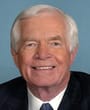 Sen. Thad CochranR-MS
- Sen. Frank MurkowskiR-AK
 Sen. John McCainR-AZ
- Sen. Alan SimpsonR-WY
 Sen. Mitch McConnellR-KY
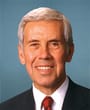 Sen. Richard LugarR-IN
- Sen. Strom ThurmondR-SC
- Sen. Conrad BurnsR-MT
- Sen. Larry PresslerR-SD
 Sen. Orrin HatchR-UT
- Sen. William RothR-DE
 Sen. Trent LottR-MS
Data notes
The Senate’s recorded vote on the final version of the law (roll call 394 in Voteview), matched to the vote the record cites and checked against its totals. Positions are each member’s DW-NOMINATE score for that Congress, as on the Ideology page; left to right is more liberal to more conservative. Paired and announced yea votes count as yea. Lists follow the compass, most liberal first. A name links to a profile only for members of the current Congress. A law passed by voice vote or unanimous consent has no member list, and neither does a vote Voteview has not yet recorded.
Committees
The committees the bill was sent to, and what each did with it.
 Energy and Commerce Committee · House · markup by, referred to, reported bySubcommittee: Telecommunications and Finance Subcommittee

Data notes
A committee links to its page only where it exists in the current Congress; older and renamed committees are named without a link.
Timeline
From introduction to signing, newest first: the committees, the floor and the president. 21 actions.
- Aug 26, 1992Became lawBecame law · Became Public Law No: 102-356.
- Became lawBecame law · Signed by President.
- Aug 17, 1992PresidentPresident · Presented to President.
- Aug 4, 1992Resolving differencesResolving differences · Motion to reconsider laid on the table Agreed to without objection.
- Resolving differencesResolving differences · On motion that the House agree to the Senate amendment Agreed to by voice vote.
- Resolving differencesResolving differences · The previous question was ordered pursuant to the rule.
- Resolving differencesResolving differences · Pursuant to the provisions of H. Res. 535, Mr. Dingell moved to take from the Speaker's table and agree to the Senate amendment.
- FloorFloor · DEBATE - Pursuant to the provisions of H. Res. 535, the House proceeded with one hour of debate on the motion to agree to the Senate amendment.
- Jun 3, 1992FloorFloor · Passed Senate in lieu of S. 1504 with an amendment by Yea-Nay Vote. 84-11. Record Vote No: 114.Senate roll call 114
- CommitteeCommittee · Discharged from Senate Commerce, Science, and Transportation Committee
- Nov 28, 1991CommitteeCommittee · Referred to Senate Commerce, Science, and Transportation Committee
- Nov 25, 1991FloorFloor · Motion to reconsider laid on the table Agreed to without objection.
- FloorFloor · On motion to suspend the rules and pass the bill, as amended Agreed to by voice vote.
- FloorFloor · Mr. Markey moved to suspend the rules and pass the bill, as amended.
- Nov 23, 1991CommitteeCommittee · Reported by House Energy and Commerce Committee
- Jul 30, 1991CommitteeCommittee · Markup by House Energy and Commerce Committee
- Jul 25, 1991CommitteeCommittee · Markup by Telecommunications and Finance Subcommittee of the House Energy and Commerce Committee
- CommitteeCommittee · Referred to Telecommunications and Finance Subcommittee of the House Energy and Commerce Committee
- CommitteeCommittee · Reported by Telecommunications and Finance Subcommittee of the House Energy and Commerce Committee
- Jul 23, 1991CommitteeCommittee · Referred to House Energy and Commerce Committee
- IntroducedIntroduced · Introduced in the House
Data notes
Shows the introduction, each committee and subcommittee step the source dates (referral, hearings, markup, report, discharge), and the floor, conference, presidential and became-law steps. Calendar placements, messages between the chambers, amendments and committee report numbers are not shown for laws before the 108th Congress. Two entries the source lists twice are shown once.
Official record
The bill’s full text and every action, including introduction and committee steps, are on Congress.gov. Data through Oct 7, 2026.