303 Creative LLC v. Elenis
In a 6–3 decision, the Court ruled in favor of a website designer, ruling that the state of Colorado cannot compel the designer to create work that violates her values.
600 U.S. 570 · No. 21-476 · 2022 term · Roberts Court
Decided Jun 30, 2023 · argued Dec 5, 2022
Civil rights · Sex discrimination
Landmark · Freedom of speech and of the press
Majority opinion: Neil Gorsuch
The voteMajorityDissent
6–36 in the majority, 3 in dissent
3 dissents (6–3)
Reversed. 303 Creative LLC won.
What this ruling means
Reversed: the Supreme Court overturned the decision of the U.S. Court of Appeals, Tenth Circuit, and its own ruling ends the case.
303 Creative LLC was the petitioner, the side that asked the Supreme Court to review the case. “Won” means the Court gave that side the result it asked for.
From the Supreme Court Database. A justice who agreed with the result but not the reasoning counts in the majority.
Summary
The opening of the case’s Wikipedia article: what the case was about and what the Court held.
303 Creative LLC v. Elenis, 600 U.S. 570 (2023), is a United States Supreme Court decision that dealt with the intersection of anti-discrimination law in public accommodations and the Free Speech Clause of the First Amendment to the United States Constitution. In a 6–3 decision, the Court ruled in favor of a website designer, ruling that the state of Colorado cannot compel the designer to create work that violates her values. The case follows from Masterpiece Cakeshop v. Colorado Civil Rights Commission, 584 U.S. 617 (2018), which had dealt with similar conflict between free speech rights and Colorado's anti-discrimination laws but had been decided on narrower grounds.
Both Masterpiece Cakeshop and 303 Creative involved questions of whether a U.S. state's anti-discrimination laws can require designers to create works that recognize same-sex marriages, when same-sex marriage conflicts with those designers' beliefs. The decision in 303 Creative was seen by some as a victory for free speech rights as well as religious liberty and by others as a setback for LGBTQ rights and an assertion of discrimination as a type of free speech.
Data notes
The text is Wikipedia’s (CC BY-SA 4.0), matched to the case by its citation, docket number or name and year, and is not checked against the opinion. The site keeps the article’s opening section, ending on its last full sentence. The one-sentence summary under the title is the Decisions list’s: Wikipedia’s own ruling sentence, or, tagged “AI-written”, one Claude wrote from this opening.
How the justices voted
Each justice who took part, placed by their Martin–Quinn ideology score for the 2022 term. Filled: the 6 in the majority. Hollow: the 3 in dissent. Colour is the party of the president who appointed them.
Majority(6)
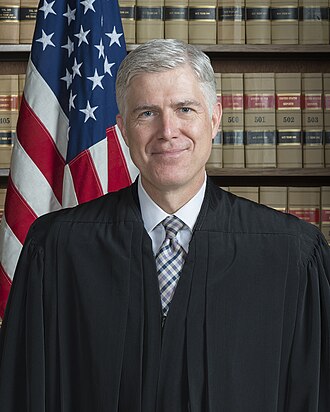 Neil GorsuchWrote the majority opinion
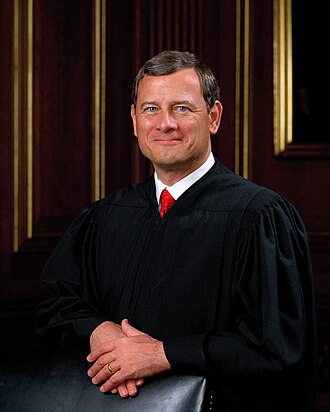 John RobertsJoined the majority
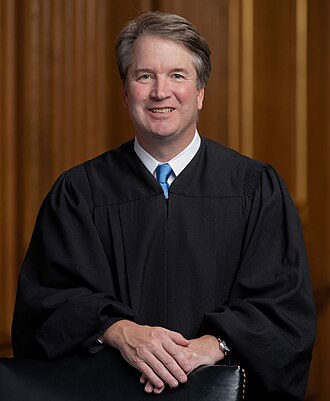 Brett KavanaughJoined the majority
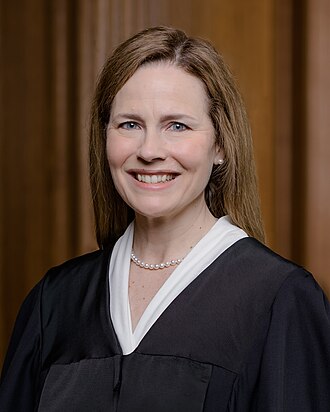 Amy BarrettJoined the majority
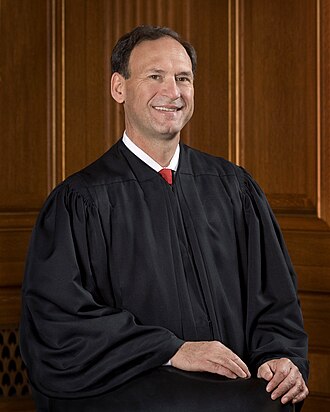 Samuel AlitoJoined the majority
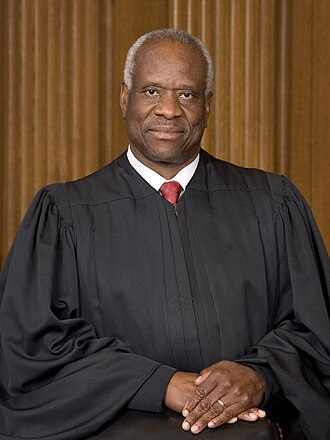 Clarence ThomasJoined the majority
Dissent(3)
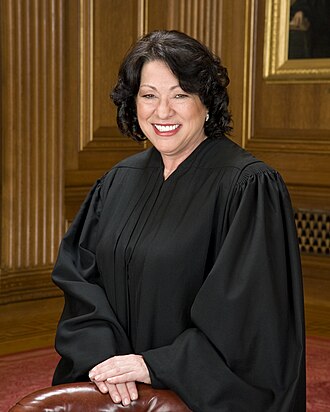 Sonia SotomayorWrote a dissent
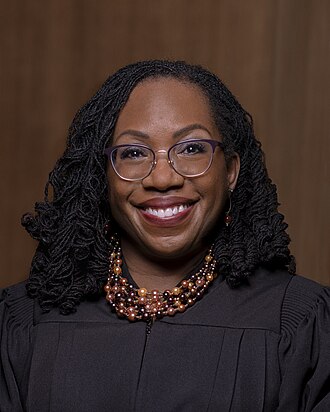 Ketanji JacksonJoined a dissent
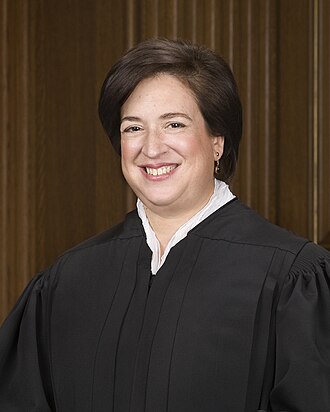 Elena KaganJoined a dissent
Data notes
Each justice’s vote and what they wrote are from the justice-centered file of the Supreme Court Database. “Wrote a concurrence” means the justice sided with the majority and wrote separately; a justice who dissented in part is counted on the side they took overall. A justice who wrote nothing is listed as joining their side.
Positions are each justice’s Martin–Quinn score for the case’s term, the same scores as the Ideology page: negative is more liberal, positive more conservative. A score sums up a justice’s votes across the whole term, so it says where they usually sit, not why they voted as they did here. The median line is the Court’s median justice that term.
The parties
Who brought the case to the Court, who answered it, and how it got there.
- Petitioner
- 303 Creative LLCBusiness, corporation
- Respondent
- ElenisState commission, board, committee, or authority (Colorado)
- Reached the Court by
- Certiorari (the Court chose to hear it)
Data notes
The names are the two sides of the case’s title. The description under each is the Supreme Court Database’s category for that party, in its own wording. The petitioner is the side that asked the Supreme Court to review the decision below. “Why it was taken” appears only when the majority opinion says lower courts disagreed or were unsure about the question; reasons that would fit any case (“to resolve the question presented”, “an important question”) are left out.
The law at issue
The law the Court was asked to apply, and the kind of power it used to decide.
- Provision
- First Amendment (speech, press, and assembly)
- Kind of law
- Constitutional Amendment
- Decided by
- Judicial review (state level)
Data notes
The Supreme Court Database codes the main constitutional provision, statute or court rule each case turned on, and the basis of the decision: judicial review of a federal or state law, interpreting a statute, supervising the lower courts, and so on. A case can rest on more than one. “Overruled” counts only where the majority opinion says so.
Timeline
What happened at the Court and how the case got there, newest first.
- Jun 30, 2023DecidedDecided · Decided 6–3: reversed. 303 Creative LLC won.
- Dec 5, 2022ArguedArgued · Oral argument before the Court.
- Not datedTaken upTaken up · The Supreme Court agreed to hear the case (certiorari).
- Not datedCourt belowCourt below · Decided by the U.S. Court of Appeals, Tenth Circuit: affirmed, with a dissent.
- Not datedBeganBegan · The case began in the Colorado U.S. District Court.
Data notes
From the Supreme Court Database: the court the case began in, the court whose decision the Supreme Court reviewed and what that court did, how the case came to the Court, and the dates of argument and decision. The database does not date the steps in the lower courts. Court names are the database’s.
Other decisions on the same issue
44 other argued cases since 1946 on sex discrimination, newest first.
- West Virginia v. B.P.J.146 S. Ct. 2356Jun 30, 2026 · 146 S. Ct. 2356Civil rights6–36–3 band
- United States v. Skrmetti145 S. Ct. 1816Jun 18, 2025 · 145 S. Ct. 1816Civil rights6–36–3 band
- Fulton v. City of Philadelphia, Pennsylvania141 S. Ct. 1868Jun 17, 2021 · 141 S. Ct. 1868Civil rights9–0Unanimous band
- Masterpiece Cakeshop, Ltd. v. Colorado Civil Rights Commission138 S. Ct. 1719Jun 4, 2018 · 138 S. Ct. 1719Civil rights7–27–2 band
- Lisa Fitzgerald, et vir v. Barnstable School Committee et al.555 U.S. 246Jan 21, 2009 · 555 U.S. 246Civil rights9–0Unanimous band
- Roderick Jackson v. Birmingham Board of Education544 U.S. 167Mar 29, 2005 · 544 U.S. 167Civil rights5–45–4 band
- Tuan Anh Nguyen and Joseph Boulais v. Immigration and Naturalization Service533 U.S. 53Jun 11, 2001 · 533 U.S. 53Civil rights5–45–4 band
- Boy Scouts of America and Monmouth Council, et al. v. James DaleLandmark · Freedom of association530 U.S. 640Jun 28, 2000 · 530 U.S. 640Civil rightsLandmark · Freedom of association5–45–4 band
- Aurelia Davis, As Next Friend of Lashonda D. v. Monroe County Board of Education et al.526 U.S. 629May 24, 1999 · 526 U.S. 629Civil rights5–45–4 band
- National Collegiate Athletic Association v. R. M. Smith525 U.S. 459Feb 23, 1999 · 525 U.S. 459Civil rights9–0Unanimous band
- Alida Star Gebser and Alida Jean McCullough v. Lago Vista Independent School District524 U.S. 274Jun 22, 1998 · 524 U.S. 274Civil rights5–45–4 band
- United States v. Virginia et al.Landmark · Discrimination based on sex518 U.S. 515Jun 26, 1996 · 518 U.S. 515Civil rightsLandmark · Discrimination based on sex7–18–1 band
- J. E. B. v. Alabama ex rel. T. B.Landmark · Discrimination based on sex511 U.S. 127Apr 19, 1994 · 511 U.S. 127Civil rightsLandmark · Discrimination based on sex6–36–3 band
- Christine Franklin v. Gwinnett County Public Schools and William Prescott.503 U.S. 60Feb 26, 1992 · 503 U.S. 60Civil rights9–0Unanimous band
- New York State Club Association, Inc. v. City of New York et al.487 U.S. 1Jun 20, 1988 · 487 U.S. 1Civil rights9–0Unanimous band
- Board of Directors of Rotary International et al. v. Rotary Club of Duarte et al.481 U.S. 537May 4, 1987 · 481 U.S. 537Civil rights7–0Unanimous band
- Heckler, Secretary of Health and Human Services v. Mathews et al.465 U.S. 728Mar 5, 1984 · 465 U.S. 728Civil rights9–0Unanimous band
- Grove City College et al. v. Bell, Secretary of Education, et al.465 U.S. 555Feb 28, 1984 · 465 U.S. 555Civil rights7–27–2 band
- Lehr v. Robertson et al.463 U.S. 248Jun 27, 1983 · 463 U.S. 248Civil rights6–36–3 band
- Mississippi University for Women et al. v. HoganLandmark · Discrimination based on sex458 U.S. 718Jul 1, 1982 · 458 U.S. 718Civil rightsLandmark · Discrimination based on sex5–45–4 band
- Rostker, Director of Selective Service v. Goldberg et al.453 U.S. 57Jun 25, 1981 · 453 U.S. 57Civil rights6–36–3 band
- Michael M. v. Superior Court of Sonoma County (California, Real Party in Interest)450 U.S. 464Mar 23, 1981 · 450 U.S. 464Civil rights5–45–4 band
- Kirchberg v. Feenstra et al.450 U.S. 455Mar 23, 1981 · 450 U.S. 455Civil rights9–0Unanimous band
- Wengler v. Druggists Mutual Insurance Co. et al.446 U.S. 142Apr 22, 1980 · 446 U.S. 142Civil rights8–18–1 band
- Personnel Administrator of Massachusetts et al. v. Feeney442 U.S. 256Jun 5, 1979 · 442 U.S. 256Civil rights7–27–2 band
- Caban v. Mohammed et ux.441 U.S. 380Apr 24, 1979 · 441 U.S. 380Civil rights5–45–4 band
- Parham v. Hughes441 U.S. 347Apr 24, 1979 · 441 U.S. 347Civil rights5–45–4 band
- Orr v. Orr440 U.S. 268Mar 5, 1979 · 440 U.S. 268Civil rights6–36–3 band
- Duren v. Missouri439 U.S. 357Jan 9, 1979 · 439 U.S. 357Civil rights8–18–1 band
- Quilloin v. Walcott et vir434 U.S. 246Jan 10, 1978 · 434 U.S. 246Civil rights9–0Unanimous band
- Vorchheimer v. School District of Philadelphia et al.430 U.S. 703Apr 19, 1977 · 430 U.S. 703Civil rights4–45–4 band
- Califano, Secretary of Health, Education, and Welfare v. Goldfarb430 U.S. 199Mar 2, 1977 · 430 U.S. 199Civil rights5–45–4 band
- Craig et al. v. Boren, Governor of Oklahoma, et al.Landmark · Discrimination based on sex429 U.S. 190Dec 20, 1976 · 429 U.S. 190Civil rightsLandmark · Discrimination based on sex7–27–2 band
- Mathews, Secretary of Health, Education, and Welfare v. de Castro429 U.S. 181Dec 13, 1976 · 429 U.S. 181Civil rights9–0Unanimous band
- Stanton v. Stanton421 U.S. 7Apr 15, 1975 · 421 U.S. 7Civil rights8–18–1 band
- Weinberger, Secretary of Health, Education, and Welfare v. Wiesenfeld420 U.S. 636Mar 19, 1975 · 420 U.S. 636Civil rights8–0Unanimous band
- Taylor v. LouisianaLandmark · Discrimination based on sex419 U.S. 522Jan 21, 1975 · 419 U.S. 522Civil rightsLandmark · Discrimination based on sex8–18–1 band
- Schlesinger, Secretary of Defense, et al. v. Ballard419 U.S. 498Jan 15, 1975 · 419 U.S. 498Civil rights5–45–4 band
- Kahn v. Shevin, Attorney General of Florida, et al.416 U.S. 351Apr 24, 1974 · 416 U.S. 351Civil rights6–36–3 band
- Frontiero et vir v. Richardson, Secretary of Defense, et al.Landmark · Discrimination based on sex411 U.S. 677May 14, 1973 · 411 U.S. 677Civil rightsLandmark · Discrimination based on sex8–18–1 band
- Stanley v. IllinoisLandmark · Discrimination based on sex405 U.S. 645Apr 3, 1972 · 405 U.S. 645Civil rightsLandmark · Discrimination based on sex5–27–2 band
- Reed v. Reed, AdministratorLandmark · Discrimination based on sex404 U.S. 71Nov 22, 1971 · 404 U.S. 71Civil rightsLandmark · Discrimination based on sex7–0Unanimous band
- Hoyt v. Florida368 U.S. 57Nov 20, 1961 · 368 U.S. 57Civil rights9–0Unanimous band
- Ballard et al. v. United States329 U.S. 187Dec 9, 1946 · 329 U.S. 187Civil rights6–36–3 band
Data notes
Every other orally argued case with a clear vote, from the 1946 term on, that the Supreme Court Database files under the same issue as this one. The database gives each case one issue from a list of about 270 (abortion, search and seizure of vehicles, the death penalty, and so on), whatever law it turned on.
Official record
Read the full opinion on Justia, the argument audio on Oyez and Wikipedia. Case data from the Supreme Court Database, Version 2026 Release 01, through the 2025 term.