Haaland v. Brackeen
In a challenge by Texas, Louisiana, Indiana and individual plaintiffs to the Indian Child Welfare Act, the Court held the Act consistent with congressional powers, rejected the state commandeering claims, and made no ruling on the Fourteenth Amendment claims for lack of standing.· AI-written
599 U.S. 255 · No. 21-376 · 2022 term · Roberts Court
Decided Jun 15, 2023 · argued Nov 9, 2022
Civil rights · Indians
Majority opinion: Amy Barrett
The voteMajorityDissent
7–27 in the majority, 2 in dissent
2 dissents (7–2)
Affirmed and reversed (or vacated) in part and remanded. Haaland lost.
What this ruling means
Affirmed in part, reversed in part and remanded: the Supreme Court upheld part of the decision of the U.S. Court of Appeals, Fifth Circuit, overturned or set aside the rest, and sent the case back for further proceedings that follow its ruling.
Haaland was the petitioner, the side that asked the Supreme Court to review the case. “Lost” means the Court did not give that side the result it asked for.
From the Supreme Court Database. A justice who agreed with the result but not the reasoning counts in the majority.
Summary
The opening of the case’s Wikipedia article: what the case was about and what the Court held.
Haaland v. Brackeen, 599 U.S. 255 (2023), was a Supreme Court of the United States case brought by the states of Texas, Louisiana, and Indiana, and individual plaintiffs, that sought to declare the Indian Child Welfare Act (ICWA) unconstitutional. In addition to Haaland v. Brackeen (Docket No. 21-376), three additional cases were consolidated to be heard at the same time: Cherokee Nation v. Brackeen (Docket No. 21-377), Texas v. Haaland (Docket No. 21-378), and Brackeen v. Haaland (Docket No. 21-380).
The matter originally came up in a Texas District Court on an adoption petition filed by Chad and Jennifer Brackeen. After their effort was challenged by the Navajo Nation, the Brackeens brought suit in the U.S. District Court in Fort Worth. The Cherokee Nation, Oneida Nation, Quinault Indian Nation, and Morongo Band of Mission Indians intervened in the case. The U.S. District Court declared that the ICWA was unconstitutional and the case was appealed.
The Fifth Circuit Court of Appeals reversed the District Court in a panel opinion. The full court, on rehearing the case en banc, held that parts of the law, that set federal standards for lower and state courts, were constitutional, but that the parts of the law that required state agencies to perform certain acts were unconstitutional as a violation of the Tenth Amendment.
The Supreme Court heard the case on November 9, 2022, and the decision was handed down on June 15, 2023. In a 7–2 ruling, the Supreme Court affirmed the Fifth Circuit's determination that the ICWA is consistent with congressional powers. The appellant claims of state commandeering were rejected, reversing the Fifth Circuit's decision. No determinations were made as to the appellant's Fourteenth Amendment claims, due to lack of standing.
Data notes
The text is Wikipedia’s (CC BY-SA 4.0), matched to the case by its citation, docket number or name and year, and is not checked against the opinion. The site keeps the article’s opening section, ending on its last full sentence. The one-sentence summary under the title is the Decisions list’s: Wikipedia’s own ruling sentence, or, tagged “AI-written”, one Claude wrote from this opening.
How the justices voted
Each justice who took part, placed by their Martin–Quinn ideology score for the 2022 term. Filled: the 7 in the majority. Hollow: the 2 in dissent. Colour is the party of the president who appointed them.
Majority(7)
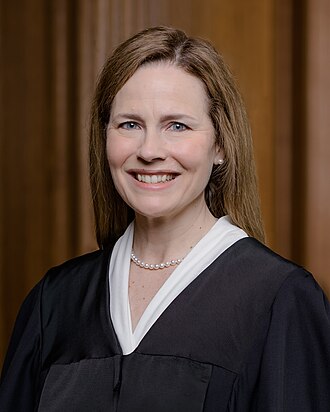 Amy BarrettWrote the majority opinion
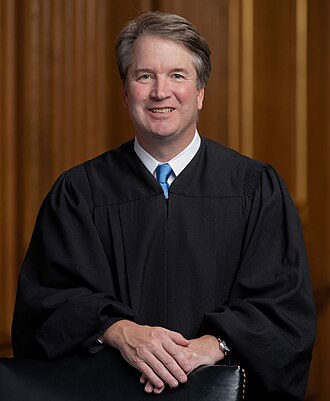 Brett KavanaughWrote a concurrence
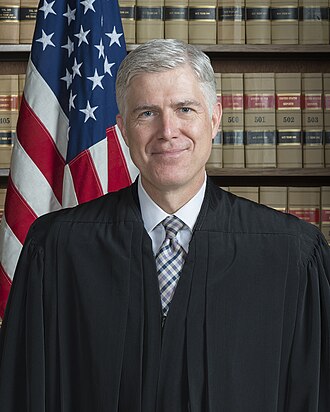 Neil GorsuchWrote a concurrence
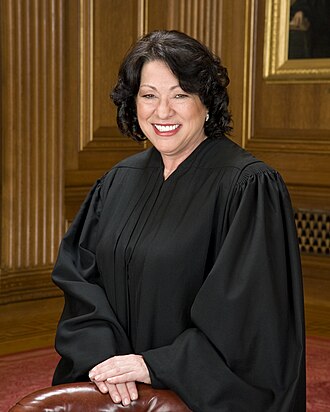 Sonia SotomayorJoined the majority
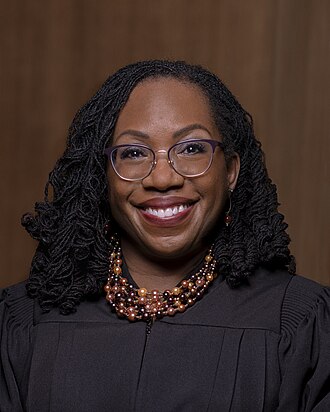 Ketanji JacksonJoined the majority
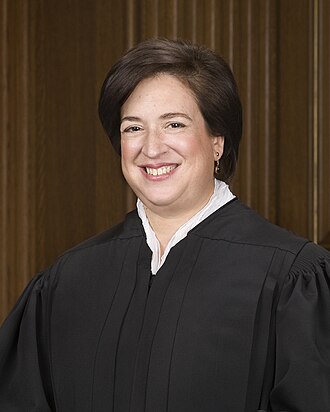 Elena KaganJoined the majority
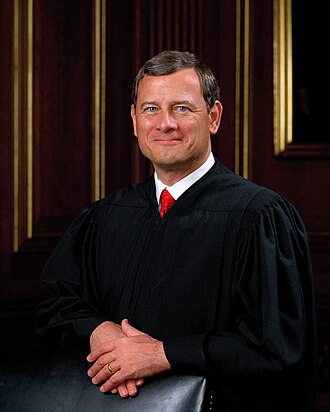 John RobertsJoined the majority
Dissent(2)
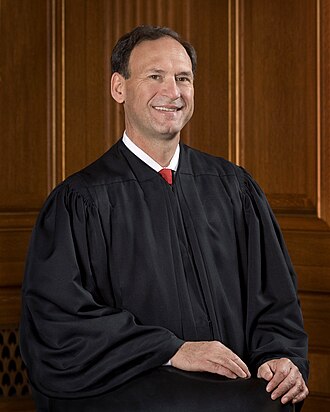 Samuel AlitoWrote a dissent
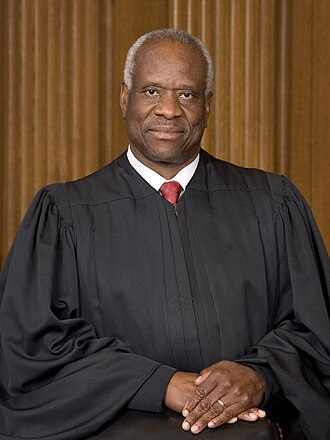 Clarence ThomasWrote a dissent
Data notes
Each justice’s vote and what they wrote are from the justice-centered file of the Supreme Court Database. “Wrote a concurrence” means the justice sided with the majority and wrote separately; a justice who dissented in part is counted on the side they took overall. A justice who wrote nothing is listed as joining their side.
Positions are each justice’s Martin–Quinn score for the case’s term, the same scores as the Ideology page: negative is more liberal, positive more conservative. A score sums up a justice’s votes across the whole term, so it says where they usually sit, not why they voted as they did here. The median line is the Court’s median justice that term.
The parties
Who brought the case to the Court, who answered it, and how it got there.
- Petitioner
- HaalandDepartment or Secretary of the Interior
- Respondent
- BrackeenParent or parents
- Reached the Court by
- Certiorari (the Court chose to hear it)
Data notes
The names are the two sides of the case’s title. The description under each is the Supreme Court Database’s category for that party, in its own wording. The petitioner is the side that asked the Supreme Court to review the decision below. “Why it was taken” appears only when the majority opinion says lower courts disagreed or were unsure about the question; reasons that would fit any case (“to resolve the question presented”, “an important question”) are left out.
The law at issue
The law the Court was asked to apply, and the kind of power it used to decide.
- Provision
- Article I, Section 8, Paragraph 3 (interstate commerce clause)
- Kind of law
- Constitution
- Decided by
- Judicial review (national level)
Data notes
The Supreme Court Database codes the main constitutional provision, statute or court rule each case turned on, and the basis of the decision: judicial review of a federal or state law, interpreting a statute, supervising the lower courts, and so on. A case can rest on more than one. “Overruled” counts only where the majority opinion says so.
Timeline
What happened at the Court and how the case got there, newest first.
- Jun 15, 2023DecidedDecided · Decided 7–2: affirmed and reversed (or vacated) in part and remanded. Haaland lost.
- Nov 9, 2022ArguedArgued · Oral argument before the Court.
- Not datedTaken upTaken up · The Supreme Court agreed to hear the case (certiorari).
- Not datedCourt belowCourt below · Decided by the U.S. Court of Appeals, Fifth Circuit: affirmed and reversed (or vacated) in part, with a dissent.
- Not datedBeganBegan · The case began in the Texas Northern U.S. District Court.
Data notes
From the Supreme Court Database: the court the case began in, the court whose decision the Supreme Court reviewed and what that court did, how the case came to the Court, and the dates of argument and decision. The database does not date the steps in the lower courts. Court names are the database’s.
Other decisions on the same issue
49 other argued cases since 1946 on indians, newest first.
- Becerra v. San Carlos Apache Tribe144 S. Ct. 1428Jun 6, 2024 · 144 S. Ct. 1428Civil rights5–45–4 band
- Arizona v. Navajo Nation599 U.S. 555Jun 22, 2023 · 599 U.S. 555Civil rights5–45–4 band
- Yellen v. Confederated Tribes of the Chehalis Reservation141 S. Ct. 2434Jun 25, 2021 · 141 S. Ct. 2434Civil rights6–36–3 band
- United States v. CooleyLandmark · Native American law141 S. Ct. 1638Jun 1, 2021 · 141 S. Ct. 1638Civil rightsLandmark · Native American law9–0Unanimous band
- Dollar General Corporation v. Mississippi Band of Choctaw Indians579 U.S. 545Jun 23, 2016 · 579 U.S. 545Civil rights4–45–4 band
- Menominee Indian Tribe of Wisconsin v. United States577 U.S. 250Jan 25, 2016 · 577 U.S. 250Civil rights9–0Unanimous band
- Adoptive Couple v. Baby Girl570 U.S. 637Jun 25, 2013 · 570 U.S. 637Civil rights5–45–4 band
- Salazar v. Ramah Navajo Chapter567 U.S. 182Jun 18, 2012 · 567 U.S. 182Civil rights5–45–4 band
- United States, Petitioner v. Jicarilla Apache Nation564 U.S. 162Jun 13, 2011 · 564 U.S. 162Civil rights7–18–1 band
- United States, Petitioner v. Tohono O'Odham Nation563 U.S. 307Apr 26, 2011 · 563 U.S. 307Civil rights7–18–1 band
- United States v. Navajo Nation556 U.S. 287Apr 6, 2009 · 556 U.S. 287Civil rights9–0Unanimous band
- Plains Commerce Bank v. Long Family Land & Cattle Co.554 U.S. 316Jun 25, 2008 · 554 U.S. 316Civil rights5–45–4 band
- United States v. Billy Jo LaraLandmark · Native American law541 U.S. 193Apr 19, 2004 · 541 U.S. 193Civil rightsLandmark · Native American law7–27–2 band
- Inyo County, California, et al. v. Paiute-Shoshone Indians of the Bishop Community of the Bishop Colony et al.538 U.S. 701May 19, 2003 · 538 U.S. 701Civil rights9–0Unanimous band
- United States v. Navajo Nation537 U.S. 488Mar 4, 2003 · 537 U.S. 488Civil rights6–36–3 band
- United States v. White Mountain Apache Tribe537 U.S. 465Mar 4, 2003 · 537 U.S. 465Civil rights5–45–4 band
- Chickasaw Nation v. United States534 U.S. 84Nov 27, 2001 · 534 U.S. 84Civil rights7–27–2 band
- Atkinson Trading Company, Inc. v. Joe Shirley, Jr., et al.532 U.S. 645May 29, 2001 · 532 U.S. 645Civil rights9–0Unanimous band
- State of Arizona v. State of California, et al.530 U.S. 392Jun 19, 2000 · 530 U.S. 392Civil rights6–36–3 band
- El Paso Natural Gas Company, et al. v. Laura Neztsosie et al.526 U.S. 473May 3, 1999 · 526 U.S. 473Civil rights9–0Unanimous band
- Minnesota, et al. v. Mille Lacs Band of Chippewa Indians et al.526 U.S. 172Mar 24, 1999 · 526 U.S. 172Civil rights5–45–4 band
- Duro v. Reina, Chief of Police, Salt River Department of Public Safety, Salt River Pima-Maricopa Indian Community, et al.495 U.S. 676May 29, 1990 · 495 U.S. 676Civil rights7–27–2 band
- California et al. v. United States et al.490 U.S. 920Jun 12, 1989 · 490 U.S. 920Civil rights4–45–4 band
- United States v. Mottaz476 U.S. 834Jun 11, 1986 · 476 U.S. 834Civil rights9–0Unanimous band
- United States v. Dion476 U.S. 734Jun 11, 1986 · 476 U.S. 734Civil rights9–0Unanimous band
- Mountain States Telephone & Telegraph Co. v. Pueblo of Santa Ana472 U.S. 237Jun 10, 1985 · 472 U.S. 237Civil rights5–36–3 band
- Kerr-Mcgee Corp. v. Navajo Tribe of Indians et al.471 U.S. 195Apr 16, 1985 · 471 U.S. 195Civil rights8–0Unanimous band
- United States v. Dann et al.470 U.S. 39Feb 20, 1985 · 470 U.S. 39Civil rights9–0Unanimous band
- Escondido Mutual Water Co. et al. v. la Jolla Band of Mission Indians et al.466 U.S. 765May 15, 1984 · 466 U.S. 765Civil rights9–0Unanimous band
- Merrion et al., dba Merrion & Bayless, et al. v. Jicarilla Apache Tribe et al.455 U.S. 130Jan 25, 1982 · 455 U.S. 130Civil rights6–36–3 band
- United States v. Sioux Nation of Indians et al.448 U.S. 371Jun 30, 1980 · 448 U.S. 371Civil rights8–18–1 band
- Andrus, Secretary of the Interior, et al. v. Glover Construction Co.446 U.S. 608May 27, 1980 · 446 U.S. 608Civil rights9–0Unanimous band
- Santa Clara Pueblo et al. v. Martinez et al.Landmark · Native American law436 U.S. 49May 15, 1978 · 436 U.S. 49Civil rightsLandmark · Native American law7–18–1 band
- United States v. Antelope et al.430 U.S. 641Apr 19, 1977 · 430 U.S. 641Civil rights9–0Unanimous band
- Rosebud Sioux Tribe v. Kneip, Governor of South Dakota, et al.430 U.S. 584Apr 4, 1977 · 430 U.S. 584Civil rights6–36–3 band
- Delaware Tribal Business Committee et al. v. Weeks et al.430 U.S. 73Feb 23, 1977 · 430 U.S. 73Civil rights8–18–1 band
- Northern Cheyenne Tribe v. Hollowbreast et al.425 U.S. 649May 19, 1976 · 425 U.S. 649Civil rights9–0Unanimous band
- United States v. Mazurie et al.419 U.S. 544Jan 21, 1975 · 419 U.S. 544Civil rights9–0Unanimous band
- Morton, Secretary of the Interior v. Ruiz et ux.415 U.S. 199Feb 20, 1974 · 415 U.S. 199Civil rights9–0Unanimous band
- Keeble v. United States412 U.S. 205May 29, 1973 · 412 U.S. 205Civil rights6–36–3 band
- United States v. Southern Ute Tribe Or Band of Indians402 U.S. 159Apr 26, 1971 · 402 U.S. 159Civil rights8–18–1 band
- Peoria Tribe of Indians of Oklahoma et al. v. United States390 U.S. 468Apr 1, 1968 · 390 U.S. 468Civil rights8–0Unanimous band
- Poafpybitty et al. v. Skelly Oil Co.390 U.S. 365Mar 18, 1968 · 390 U.S. 365Civil rights8–0Unanimous band
- Squire, Collector of Internal Revenue, v. Capoeman et ux.351 U.S. 1Apr 23, 1956 · 351 U.S. 1Civil rights7–18–1 band
- United States v. Alcea Band of Tillamooks et al.341 U.S. 48Apr 9, 1951 · 341 U.S. 48Civil rights8–0Unanimous band
- Hynes, Regional Director, Fish and Wildlife Service, Department of the Interior, v. Grimes Packing Co. et al.337 U.S. 86May 31, 1949 · 337 U.S. 86Civil rights5–45–4 band
- Shade v. Downing et al.333 U.S. 586Apr 5, 1948 · 333 U.S. 586Civil rights6–36–3 band
- Confederated Bands of Ute Indians v. United States330 U.S. 169Feb 17, 1947 · 330 U.S. 169Civil rights6–36–3 band
- United States v. Alcea Band of Tillamooks et al.329 U.S. 40Nov 25, 1946 · 329 U.S. 40Civil rights5–36–3 band
Data notes
Every other orally argued case with a clear vote, from the 1946 term on, that the Supreme Court Database files under the same issue as this one. The database gives each case one issue from a list of about 270 (abortion, search and seizure of vehicles, the death penalty, and so on), whatever law it turned on.
Official record
Read the full opinion on Justia, the argument audio on Oyez and Wikipedia. Case data from the Supreme Court Database, Version 2026 Release 01, through the 2025 term.