Brnovich v. Democratic National Committee
The Supreme Court ruled in a 6–3 decision in July 2021 that neither of Arizona's election policies violated the VRA or had a racially discriminatory purpose.
141 S. Ct. 2321 · No. 19-1257 · 2020 term · Roberts Court
Decided Jul 1, 2021 · argued Mar 2, 2021
Civil rights · Voting Rights Act of 1965, plus amendments
Landmark · Voting and redistricting
Majority opinion: Samuel Alito
The voteMajorityDissent
6–36 in the majority, 3 in dissent
3 dissents (6–3)
Reversed and remanded. Brnovich won.
What this ruling means
Reversed and remanded: the Supreme Court overturned the decision of the U.S. Court of Appeals, Ninth Circuit and sent the case back to that court for further proceedings that follow the Supreme Court’s ruling.
Brnovich was the petitioner, the side that asked the Supreme Court to review the case. “Won” means the Court gave that side the result it asked for.
From the Supreme Court Database. A justice who agreed with the result but not the reasoning counts in the majority.
Summary
The opening of the case’s Wikipedia article: what the case was about and what the Court held.
Brnovich v. Democratic National Committee, 594 U.S. 647 (2021), was a United States Supreme Court case related to voting rights established by the Voting Rights Act of 1965 (VRA), and specifically the applicability of Section 2's general provision barring discrimination against minorities in state and local election laws in the wake of the 2013 Supreme Court decision Shelby County v. Holder, which effectively removed the requirement that jurisdictions covered under Section 4(b) get preclearance to change their election procedures. Brnovich v. Democratic National Committee involved two of Arizona's election policies: one outlawing ballot collection and another banning out-of-precinct voting. The Supreme Court ruled in a 6–3 decision in July 2021 that neither of Arizona's election policies violated the VRA or had a racially discriminatory purpose.
Data notes
The text is Wikipedia’s (CC BY-SA 4.0), matched to the case by its citation, docket number or name and year, and is not checked against the opinion. The site keeps the article’s opening section, ending on its last full sentence. The one-sentence summary under the title is the Decisions list’s: Wikipedia’s own ruling sentence, or, tagged “AI-written”, one Claude wrote from this opening.
How the justices voted
Each justice who took part, placed by their Martin–Quinn ideology score for the 2020 term. Filled: the 6 in the majority. Hollow: the 3 in dissent. Colour is the party of the president who appointed them.
Majority(6)
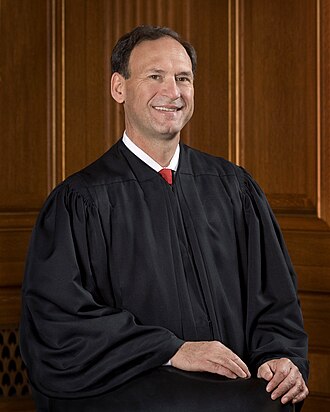 Samuel AlitoWrote the majority opinion
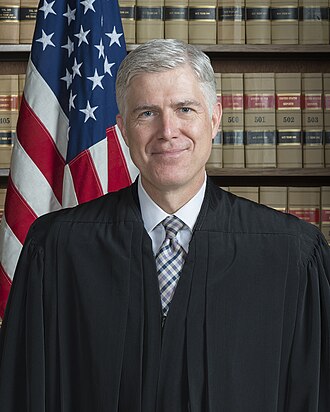 Neil GorsuchWrote a concurrence
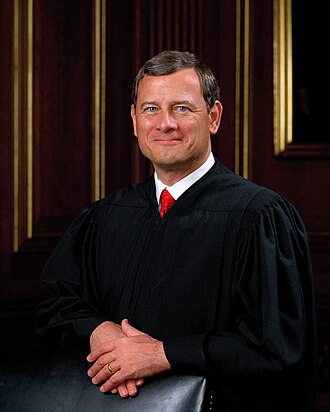 John RobertsJoined the majority
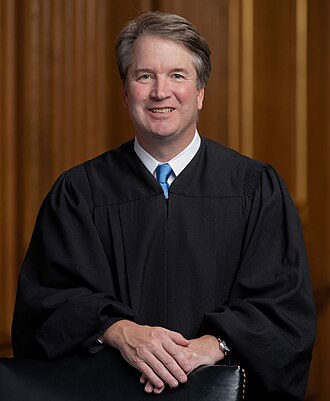 Brett KavanaughJoined the majority
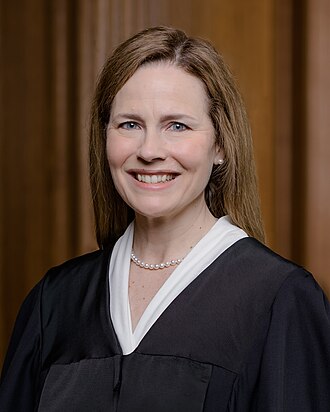 Amy BarrettJoined the majority
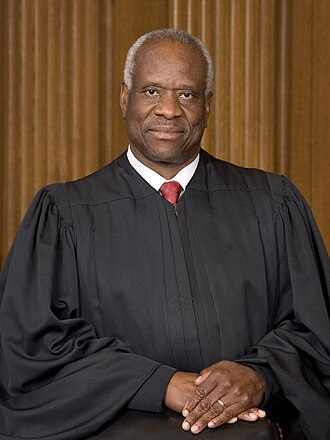 Clarence ThomasJoined the majority
Dissent(3)
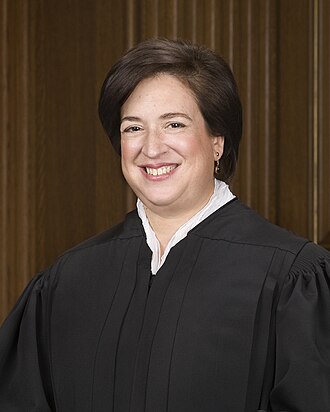 Elena KaganWrote a dissent
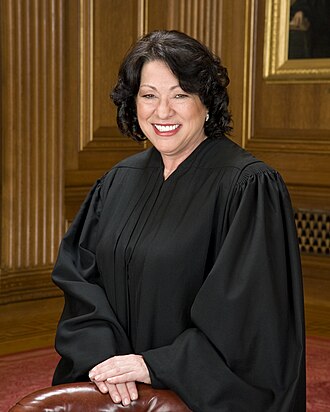 Sonia SotomayorJoined a dissent
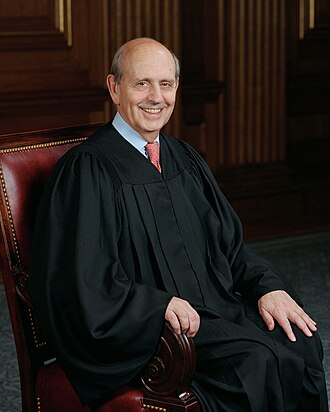 Stephen BreyerJoined a dissent
Data notes
Each justice’s vote and what they wrote are from the justice-centered file of the Supreme Court Database. “Wrote a concurrence” means the justice sided with the majority and wrote separately; a justice who dissented in part is counted on the side they took overall. A justice who wrote nothing is listed as joining their side.
Positions are each justice’s Martin–Quinn score for the case’s term, the same scores as the Ideology page: negative is more liberal, positive more conservative. A score sums up a justice’s votes across the whole term, so it says where they usually sit, not why they voted as they did here. The median line is the Court’s median justice that term.
The parties
Who brought the case to the Court, who answered it, and how it got there.
- Petitioner
- BrnovichState department or agency (Arizona)
- Respondent
- Democratic National CommitteePolitical candidate, activist, committee, party, party member, organization, or elected official
- Reached the Court by
- Certiorari (the Court chose to hear it)
Data notes
The names are the two sides of the case’s title. The description under each is the Supreme Court Database’s category for that party, in its own wording. The petitioner is the side that asked the Supreme Court to review the decision below. “Why it was taken” appears only when the majority opinion says lower courts disagreed or were unsure about the question; reasons that would fit any case (“to resolve the question presented”, “an important question”) are left out.
The law at issue
The law the Court was asked to apply, and the kind of power it used to decide.
- Provision
- Voting Rights Act of 1965, plus amendments
- Kind of law
- Federal Statute
- Decided by
- Statutory construction
Data notes
The Supreme Court Database codes the main constitutional provision, statute or court rule each case turned on, and the basis of the decision: judicial review of a federal or state law, interpreting a statute, supervising the lower courts, and so on. A case can rest on more than one. “Overruled” counts only where the majority opinion says so.
Timeline
What happened at the Court and how the case got there, newest first.
- Jul 1, 2021DecidedDecided · Decided 6–3: reversed and remanded. Brnovich won.
- Mar 2, 2021ArguedArgued · Oral argument before the Court.
- Not datedTaken upTaken up · The Supreme Court agreed to hear the case (certiorari).
- Not datedCourt belowCourt below · Decided by the U.S. Court of Appeals, Ninth Circuit: reversed and remanded, with a dissent.
- Not datedBeganBegan · The case began in the Arizona U.S. District Court.
Data notes
From the Supreme Court Database: the court the case began in, the court whose decision the Supreme Court reviewed and what that court did, how the case came to the Court, and the dates of argument and decision. The database does not date the steps in the lower courts. Court names are the database’s.
Other decisions on the same issue
45 other argued cases since 1946 on voting Rights Act of 1965, plus amendments, newest first.
- Louisiana v. CallaisLandmark · Voting and redistricting146 S. Ct. 1131Apr 29, 2026 · 146 S. Ct. 1131Civil rightsLandmark · Voting and redistricting6–36–3 band
- Allen v. Milligan599 U.S. 1Jun 8, 2023 · 599 U.S. 1Civil rights5–45–4 band
- Abbott v. Perez138 S. Ct. 2305Jun 25, 2018 · 138 S. Ct. 2305Civil rights5–45–4 band
- Shelby County v. HolderLandmark · Power of Congress to enforce civil rights570 U.S. 529Jun 25, 2013 · 570 U.S. 529Civil rightsLandmark · Power of Congress to enforce civil rights5–45–4 band
- Northwest Austin Municipal Utility District Number One v. Eric H. Holder, Jr., Attorney General, et al.557 U.S. 193Jun 22, 2009 · 557 U.S. 193Civil rights8–18–1 band
- Gary Bartlett, Executive Director of the North Carolina State Board of Elections et al. v. Dwight Strickland et al.556 U.S. 1Mar 9, 2009 · 556 U.S. 1Civil rights5–45–4 band
- Bob Riley, Governor of Alabama v. Yvonne Kennedy et al553 U.S. 406May 27, 2008 · 553 U.S. 406Civil rights7–27–2 band
- League of United Latin American Citizens, et al. v. Rick Perry, Governor of Texas, et al.548 U.S. 399Jun 28, 2006 · 548 U.S. 399Civil rights5–45–4 band
- Georgia v. John Ashcroft, Attorney General, et al.539 U.S. 461Jun 26, 2003 · 539 U.S. 461Civil rights5–45–4 band
- Beatrice Branch, et al. v. John Robert Smith et al.538 U.S. 254Mar 31, 2003 · 538 U.S. 254Civil rights7–27–2 band
- Janet Reno, Attorney General v. Bossier Parish School Board528 U.S. 320Jan 24, 2000 · 528 U.S. 320Civil rights5–45–4 band
- Vicky M. Lopez, et al. v. Monterey County et al.525 U.S. 266Jan 20, 1999 · 525 U.S. 266Civil rights8–18–1 band
- Lucious Abrams, Jr., G. L. Avery, William Gary Chambers, Sr., and Karen Watson v. Davida Johnson et al.521 U.S. 74Jun 19, 1997 · 521 U.S. 74Civil rights5–45–4 band
- Janet Reno, Attorney General v. Bossier Parish School Board et al.520 U.S. 471May 12, 1997 · 520 U.S. 471Civil rights7–27–2 band
- Thomas Young, et al. v. Kirk Fordice et al.520 U.S. 273Mar 31, 1997 · 520 U.S. 273Civil rights9–0Unanimous band
- Vicky M. Lopez, et al. v. Monterey County, California, et al.519 U.S. 9Nov 6, 1996 · 519 U.S. 9Civil rights9–0Unanimous band
- Fortis Morse, Kenneth Curtis Bartholomew and Kimberly J. Enderson v. Republican Party of Virginia et al.517 U.S. 186Mar 27, 1996 · 517 U.S. 186Civil rights5–45–4 band
- Bolley Johnson, Speaker of the Florida House of Representatives, et al. v. Miguel de Grandy et al.512 U.S. 997Jun 30, 1994 · 512 U.S. 997Civil rights7–27–2 band
- Jackie Holder, etc., et al. v. E. K. Hall, Sr., et al.512 U.S. 874Jun 30, 1994 · 512 U.S. 874Civil rights5–45–4 band
- Lawrence C. Presley, etc. v. Etowah County Commission et al.502 U.S. 491Jan 27, 1992 · 502 U.S. 491Civil rights6–36–3 band
- Houston Lawyers' Association, et al. v. Attorney General of Texas, et al.501 U.S. 419Jun 20, 1991 · 501 U.S. 419Civil rights6–36–3 band
- Ronald Chisom, et al. v. Charles E. Roemer, Governor of Louisiana, et al.501 U.S. 380Jun 20, 1991 · 501 U.S. 380Civil rights6–36–3 band
- Janice G. Clark et al. v. Charles 'Buddy' Roemer, Governor of Louisiana, et al.500 U.S. 646Jun 3, 1991 · 500 U.S. 646Civil rights9–0Unanimous band
- City of Pleasant Grove v. United States479 U.S. 462Jan 21, 1987 · 479 U.S. 462Civil rights6–36–3 band
- Thornburg, Attorney General of North Carolina, et al. v. Gingles et al.478 U.S. 30Jun 30, 1986 · 478 U.S. 30Civil rights9–0Unanimous band
- National Association for the Advancement of Colored People et al. v. Hampton County Election Commission et al.470 U.S. 166Feb 27, 1985 · 470 U.S. 166Civil rights9–0Unanimous band
- McCain et al. v. Lybrand et al.465 U.S. 236Feb 21, 1984 · 465 U.S. 236Civil rights9–0Unanimous band
- City of Lockhart v. United States et al.460 U.S. 125Feb 23, 1983 · 460 U.S. 125Civil rights6–36–3 band
- City of Port Arthur, Texas v. United States et al.459 U.S. 159Dec 13, 1982 · 459 U.S. 159Civil rights6–36–3 band
- Hathorn et al. v. Lovorn et al.457 U.S. 255Jun 15, 1982 · 457 U.S. 255Civil rights8–18–1 band
- McDaniel et al. v. Sanchez et al.452 U.S. 130Jun 1, 1981 · 452 U.S. 130Civil rights7–27–2 band
- City of Rome et al. v. United States et al.446 U.S. 156Apr 22, 1980 · 446 U.S. 156Civil rights6–36–3 band
- Dougherty County, Georgia, Board of Education et al. v. White439 U.S. 32Nov 28, 1978 · 439 U.S. 32Civil rights5–45–4 band
- United States v. Board of Commissioners of Sheffield, Alabama, et al.435 U.S. 110Mar 6, 1978 · 435 U.S. 110Civil rights6–36–3 band
- Morris et al. v. Gressette, President Pro Tem, South Carolina Senate, et al.432 U.S. 491Jun 20, 1977 · 432 U.S. 491Civil rights6–36–3 band
- Briscoe, Governor of Texas, et al. v. Bell, Attorney General, et al.432 U.S. 404Jun 20, 1977 · 432 U.S. 404Civil rights9–0Unanimous band
- Beer et al. v. United States et al.425 U.S. 130Mar 30, 1976 · 425 U.S. 130Civil rights5–36–3 band
- City of Richmond, Virginia v. United States et al.422 U.S. 358Jun 24, 1975 · 422 U.S. 358Civil rights5–36–3 band
- National Association for the Advancement of Colored People, New York City Region of New York Conference of Branches, et al. v. New York et al.413 U.S. 345Jun 21, 1973 · 413 U.S. 345Civil rights6–27–2 band
- Georgia et al. v. United States411 U.S. 526May 7, 1973 · 411 U.S. 526Civil rights6–36–3 band
- Perkins et al. v. Matthews, Mayor of the City of Canton, et al.400 U.S. 379Jan 14, 1971 · 400 U.S. 379Civil rights8–18–1 band
- Gaston County, North Carolina v. United States395 U.S. 285Jun 2, 1969 · 395 U.S. 285Civil rights7–18–1 band
- Hadnott et al. v. Amos, Secretary of State of Alabama, et al.394 U.S. 358Mar 25, 1969 · 394 U.S. 358Civil rights6–27–2 band
- Katzenbach, Attorney General, et al. v. Morgan et ux.Landmark · Power of Congress to enforce civil rights384 U.S. 641Jun 13, 1966 · 384 U.S. 641Civil rightsLandmark · Power of Congress to enforce civil rights7–27–2 band
- South Carolina v. Katzenbach, Attorney GeneralLandmark · Power of Congress to enforce civil rights383 U.S. 301Mar 7, 1966 · 383 U.S. 301Civil rightsLandmark · Power of Congress to enforce civil rights8–18–1 band
Data notes
Every other orally argued case with a clear vote, from the 1946 term on, that the Supreme Court Database files under the same issue as this one. The database gives each case one issue from a list of about 270 (abortion, search and seizure of vehicles, the death penalty, and so on), whatever law it turned on.
Official record
Read the argument audio on Oyez and Wikipedia. Case data from the Supreme Court Database, Version 2026 Release 01, through the 2025 term.