Torcaso v. Watkins, Clerk
The Court reaffirmed that the Constitution prohibits states and the federal government from requiring any kind of religious test for public office, including the office of notary public.· AI-written
367 U.S. 488 · No. 373 · 1960 term · Warren Court
Decided Jun 19, 1961 · argued Apr 24, 1961
First Amendment · Establishment of religion
LandmarkStruck down a state law
Majority opinion: Hugo Black
The voteMajority
9–09 in the majority, 0 in dissent
No dissent (9–0)
Reversed and remanded. Torcaso won.
What this ruling means
Reversed and remanded: the Supreme Court overturned the decision of the Maryland Supreme Court and sent the case back to that court for further proceedings that follow the Supreme Court’s ruling.
Torcaso was the petitioner, the side that asked the Supreme Court to review the case. “Won” means the Court gave that side the result it asked for.
From the Supreme Court Database. A justice who agreed with the result but not the reasoning counts in the majority.
Summary
The opening of the case’s Wikipedia article: what the case was about and what the Court held.
Torcaso v. Watkins, 367 U.S. 488 (1961), was a landmark United States Supreme Court case in which the Court reaffirmed that the United States Constitution prohibits states and the federal government from requiring any kind of religious test for public office, in this case as a notary public.
Data notes
The text is Wikipedia’s (CC BY-SA 4.0), matched to the case by its citation, docket number or name and year, and is not checked against the opinion. The site keeps the article’s opening section, ending on its last full sentence. The one-sentence summary under the title is the Decisions list’s: Wikipedia’s own ruling sentence, or, tagged “AI-written”, one Claude wrote from this opening.
How the justices voted
Each justice who took part, placed by their Martin–Quinn ideology score for the 1960 term. Filled: the 9 in the majority. Hollow: the 0 in dissent. Colour is the party of the president who appointed them.
Majority(9)
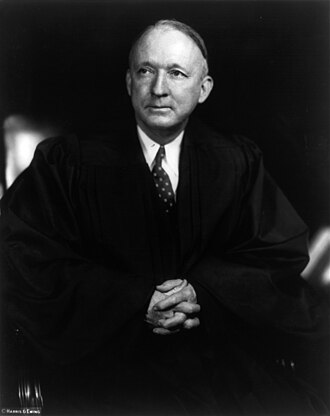 Hugo BlackWrote the majority opinion
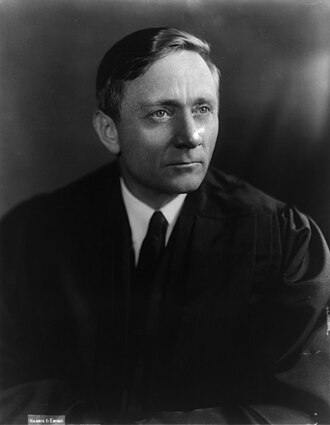 William DouglasJoined the majority
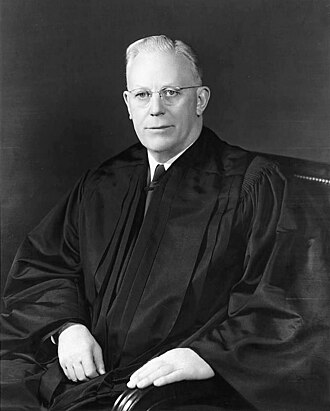 Earl WarrenJoined the majority
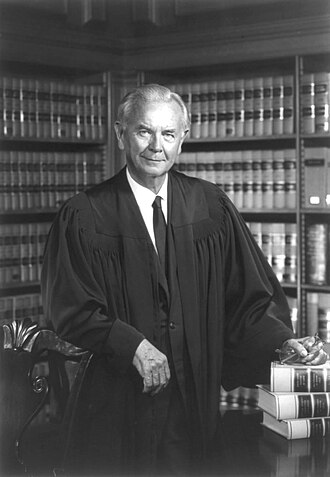 William BrennanJoined the majority
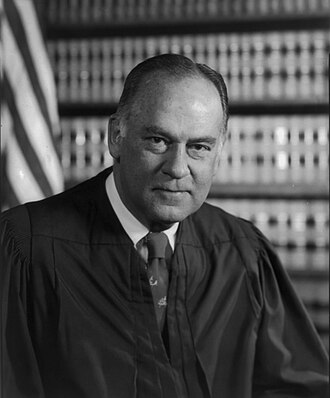 Potter StewartJoined the majority
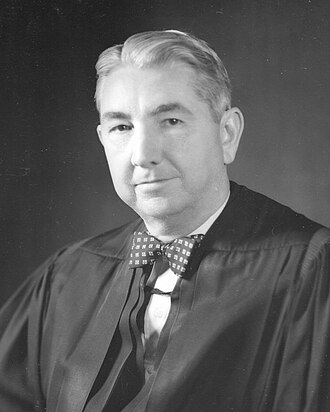 Tom ClarkJoined the majority
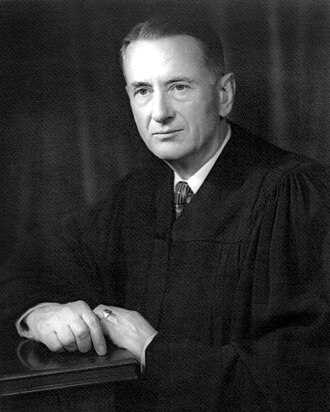 Charles WhittakerJoined the majority
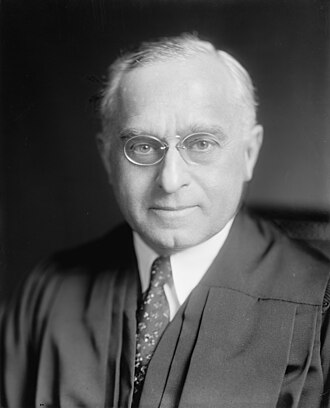 Felix FrankfurterJoined the majority
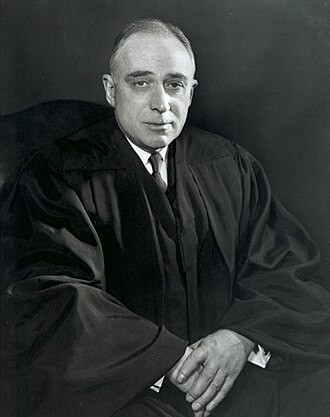 John HarlanJoined the majority
Dissent(0)
- None.
Data notes
Each justice’s vote and what they wrote are from the justice-centered file of the Supreme Court Database. “Wrote a concurrence” means the justice sided with the majority and wrote separately; a justice who dissented in part is counted on the side they took overall. A justice who wrote nothing is listed as joining their side.
Positions are each justice’s Martin–Quinn score for the case’s term, the same scores as the Ideology page: negative is more liberal, positive more conservative. A score sums up a justice’s votes across the whole term, so it says where they usually sit, not why they voted as they did here. The median line is the Court’s median justice that term.
The parties
Who brought the case to the Court, who answered it, and how it got there.
- Petitioner
- TorcasoGovernmental official, or an official of an agency established under an interstate compact (Maryland)
- Respondent
- Watkins, ClerkGovernmental official, or an official of an agency established under an interstate compact (Maryland)
- Reached the Court by
- Appeal (the Court was required to hear it)
Data notes
The names are the two sides of the case’s title. The description under each is the Supreme Court Database’s category for that party, in its own wording. The petitioner is the side that asked the Supreme Court to review the decision below. “Why it was taken” appears only when the majority opinion says lower courts disagreed or were unsure about the question; reasons that would fit any case (“to resolve the question presented”, “an important question”) are left out.
The law at issue
The law the Court was asked to apply, and the kind of power it used to decide.
- Provision
- First Amendment (establishment of religion)
- Kind of law
- Constitutional Amendment
- Decided by
- Judicial review (state level)
- Struck down
- A state law, as unconstitutional
Data notes
The Supreme Court Database codes the main constitutional provision, statute or court rule each case turned on, and the basis of the decision: judicial review of a federal or state law, interpreting a statute, supervising the lower courts, and so on. A case can rest on more than one. “Overruled” counts only where the majority opinion says so.
Timeline
What happened at the Court and how the case got there, newest first.
- Jun 19, 1961DecidedDecided · Decided 9–0: reversed and remanded. Torcaso won.
- Apr 24, 1961ArguedArgued · Oral argument before the Court.
- Not datedTaken upTaken up · Reached the Supreme Court on appeal, which the Court had to hear.
- Not datedCourt belowCourt below · Decided by the Maryland Supreme Court: affirmed.
- Not datedBeganBegan · The case began in the Maryland trial court.
Data notes
From the Supreme Court Database: the court the case began in, the court whose decision the Supreme Court reviewed and what that court did, how the case came to the Court, and the dates of argument and decision. The database does not date the steps in the lower courts. Court names are the database’s.
Other decisions on the same issue
32 other argued cases since 1946 on establishment of religion, newest first.
- Catholic Charities Bureau v. Wisconsin Labor & Industry Review Commission605 U.S. 238Jun 5, 2025 · 605 U.S. 238First Amendment9–0Unanimous band
- Kennedy v. Bremerton School DistrictLandmark · Freedom of religion142 S. Ct. 2407Jun 27, 2022 · 142 S. Ct. 2407First AmendmentLandmark · Freedom of religion6–36–3 band
- American Legion v. American Humanist AssociationLandmark · Freedom of religion139 S. Ct. 2067Jun 20, 2019 · 139 S. Ct. 2067First AmendmentLandmark · Freedom of religion7–27–2 band
- Town of Greece v. GallowayLandmark · Freedom of religion572 U.S. 565May 5, 2014 · 572 U.S. 565First AmendmentLandmark · Freedom of religion5–45–4 band
- Ken L. Salazar, Secretary of the Interior, et al. v. Frank Buono559 U.S. 700Apr 28, 2010 · 559 U.S. 700First Amendment5–45–4 band
- McCreary County, Kentucky, et al. v. American Civil Liberties Union of Kentucky et al.545 U.S. 844Jun 27, 2005 · 545 U.S. 844First Amendment5–45–4 band
- Thomas Van Orden v. Rick Perry, in His Official Capacity As Governor of Texas and Chairman, State Preservation Board, et al.545 U.S. 677Jun 27, 2005 · 545 U.S. 677First Amendment5–45–4 band
- Jon B. Cutter, et al. v. Reginald Wilkinson, Director, Ohio Department of Rehabilitation and Correction, et al.544 U.S. 709May 31, 2005 · 544 U.S. 709First Amendment9–0Unanimous band
- Good News Club, et al. v. Milford Central School533 U.S. 98Jun 11, 2001 · 533 U.S. 98First Amendment6–36–3 band
- Santa Fe Independent School District v. Jane Doe, Individually and As Next Friend for Her Minor Children, Jane and John Doe, et al.Landmark · Freedom of religion530 U.S. 290Jun 19, 2000 · 530 U.S. 290First AmendmentLandmark · Freedom of religion6–36–3 band
- Ronald W. Rosenberger, et al. v. Rector and Visitors of the University of Virginia et al.Landmark · Freedom of religion515 U.S. 819Jun 29, 1995 · 515 U.S. 819First AmendmentLandmark · Freedom of religion5–45–4 band
- Capitol Square Review and Advisory Board, et al. v. Vincent J. Pinette, Donnie A. Carr and Knights of the Ku Klux Klan515 U.S. 753Jun 29, 1995 · 515 U.S. 753First Amendment7–27–2 band
- Robert E. Lee, Individually and As Principal of Nathan Bishop Middle School, et al. v. Daniel Weisman etc.Landmark · Freedom of religion505 U.S. 577Jun 24, 1992 · 505 U.S. 577First AmendmentLandmark · Freedom of religion5–45–4 band
- County of Allegheny et al. v. American Civil Liberties Union, Greater Pittsburgh Chapter, et al.492 U.S. 573Jul 2, 1989 · 492 U.S. 573First Amendment5–45–4 band
- Texas Monthly, Inc. v. Bullock, Comptroller of Public Accounts of State of Texas, et al.489 U.S. 1Feb 21, 1989 · 489 U.S. 1First Amendment6–36–3 band
- Bowen, Secretary of Health and Human Services v. Kendrick et al.487 U.S. 589Jun 27, 1988 · 487 U.S. 589First Amendment5–45–4 band
- Corporation of the Presiding Bishop of the Church of Jesus Christ of Latter-Day Saints et al. v. Amos et al.Landmark · Freedom of religion483 U.S. 327Jun 24, 1987 · 483 U.S. 327First AmendmentLandmark · Freedom of religion9–0Unanimous band
- Bender et al. v. Williamsport Area School District et al.475 U.S. 534Mar 25, 1986 · 475 U.S. 534First Amendment5–45–4 band
- Estate of Thornton et al. v. Caldor, Inc.472 U.S. 703Jun 26, 1985 · 472 U.S. 703First Amendment8–18–1 band
- Board of Trustees of the Village of Scarsdale, et al. v. Kathleen S. McCreary et al.471 U.S. 83Mar 27, 1985 · 471 U.S. 83First Amendment4–45–4 band
- Lynch, Mayor of Pawtucket, et al. v. Donnelly et al.465 U.S. 668Mar 5, 1984 · 465 U.S. 668First Amendment5–45–4 band
- Marsh, Nebraska State Treasurer, et al. v. ChambersLandmark · Freedom of religion463 U.S. 783Jul 5, 1983 · 463 U.S. 783First AmendmentLandmark · Freedom of religion6–36–3 band
- Larkin et al. v. Grendel's Den, Inc.459 U.S. 116Dec 13, 1982 · 459 U.S. 116First Amendment8–18–1 band
- Larson, Commissioner of Securities, Minnesota Department of Commerce, et al. v. Valente et al.456 U.S. 228Apr 21, 1982 · 456 U.S. 228First Amendment5–45–4 band
- Widmar et al. v. Vincent et al.454 U.S. 263Dec 8, 1981 · 454 U.S. 263First Amendment8–18–1 band
- Walz v. Tax Commission of the City of New York397 U.S. 664May 4, 1970 · 397 U.S. 664First Amendment7–18–1 band
- Epperson et al. v. ArkansasLandmark · Freedom of religion393 U.S. 97Nov 17, 1968 · 393 U.S. 97First AmendmentLandmark · Freedom of religion9–0Unanimous band
- School District of Abington Township, Pennsylvania, et al. v. Schempp et al.Landmark · Freedom of religion374 U.S. 203Jun 17, 1963 · 374 U.S. 203First AmendmentLandmark · Freedom of religion8–18–1 band
- Engel et al. v. Vitale et al.Landmark · Freedom of religion370 U.S. 421Jun 25, 1962 · 370 U.S. 421First AmendmentLandmark · Freedom of religion6–18–1 band
- Two Guys From Harrison-Allentown, Inc., v. McGinley, District Attorney, Lehigh County, Pennsylvania, et al.366 U.S. 582May 29, 1961 · 366 U.S. 582First Amendment8–18–1 band
- McGowan et al. v. Maryland366 U.S. 420May 29, 1961 · 366 U.S. 420First Amendment8–18–1 band
- Everson v. Board of Education of the Township of Ewing et al.Landmark · Freedom of religion330 U.S. 1Feb 10, 1947 · 330 U.S. 1First AmendmentLandmark · Freedom of religion5–45–4 band
Data notes
Every other orally argued case with a clear vote, from the 1946 term on, that the Supreme Court Database files under the same issue as this one. The database gives each case one issue from a list of about 270 (abortion, search and seizure of vehicles, the death penalty, and so on), whatever law it turned on.
Official record
Read the full opinion on Justia, the argument audio on Oyez and Wikipedia. Case data from the Supreme Court Database, Version 2026 Release 01, through the 2025 term.