Brown et al. v. Board of Education of Topeka et al.
The Court ruled that U.S. state laws establishing racial segregation in public schools violate the Equal Protection Clause of the Fourteenth Amendment, even if the segregated facilities are equal in quality.
347 U.S. 483 · No. 1 · 1953 term · Warren Court
Decided May 17, 1954 · argued Dec 8, 1952, reargued Dec 7, 1953
Civil rights · Desegregation, schools
Landmark · Discrimination based on race and ethnicityOverruled precedentStruck down a state law
Majority opinion: Earl Warren
The voteMajority
9–09 in the majority, 0 in dissent
No dissent (9–0)
Stay, petition, or motion granted. Brown et al. won.
What this ruling means
Granted: the Supreme Court gave the party what it asked for, such as a stay or an order.
Brown et al. was the petitioner, the side that asked the Supreme Court to review the case. “Won” means the Court gave that side the result it asked for.
From the Supreme Court Database. A justice who agreed with the result but not the reasoning counts in the majority.
Summary
The opening of the case’s Wikipedia article: what the case was about and what the Court held.
Brown v. Board of Education of Topeka, 347 U.S. 483 (1954), is a landmark decision of the United States Supreme Court that ruled that U.S. state laws establishing racial segregation in public schools violate the Equal Protection Clause of the Fourteenth Amendment, even if the segregated facilities are equal in quality. The decision partially overruled the Court's 1896 decision Plessy v. Ferguson, which had ruled that racial segregation laws were constitutional as long as the facilities for each race were equal, a doctrine that had come to be known as "separate but equal". The Court's unanimous decision in Brown and its related cases paved the way for integration and was a major victory of the civil rights movement, and it became a model for many future impact litigation cases.
The case involved the public school system in Topeka, Kansas. In 1951, it had refused to enroll the daughter of local black resident Oliver Brown at the school closest to her home, instead requiring her to ride a bus to a segregated black school farther away. The Browns and twelve other local black families in similar situations filed a class action lawsuit in U.S. federal court against the Topeka Board of Education, alleging its segregation policy was unconstitutional. A special three-judge court of the U.S. District Court for the District of Kansas heard the case and ruled against them, relying on the precedent of Plessy and its "separate but equal" doctrine. The Browns, represented by NAACP chief counsel Thurgood Marshall, appealed the ruling directly to the Supreme Court, where it was heard with other similar cases from the South. In May 1954, the Court issued a unanimous 9–0 decision in their favor. However, the Court's 14-page opinion did not spell out any specific method for ending racial segregation in schools, and the Court's second decision in Brown II (1955) only ordered states to desegregate "with all deliberate speed".
In the Southern United States, the reaction to Brown among most white people was "noisy and stubborn", especially in the Deep South where racial segregation was deeply entrenched in society. Many Southern governmental and political leaders embraced a plan known as "massive resistance", created by Senator Harry F. Byrd, in order to frustrate attempts to force them to de-segregate their school systems, most notably immortalized by the Little Rock crisis.
Data notes
The text is Wikipedia’s (CC BY-SA 4.0), matched to the case by its citation, docket number or name and year, and is not checked against the opinion. The site keeps the article’s opening section, ending on its last full sentence. The one-sentence summary under the title is the Decisions list’s: Wikipedia’s own ruling sentence, or, tagged “AI-written”, one Claude wrote from this opening.
How the justices voted
Each justice who took part, placed by their Martin–Quinn ideology score for the 1953 term. Filled: the 9 in the majority. Hollow: the 0 in dissent. Colour is the party of the president who appointed them.
Majority(9)
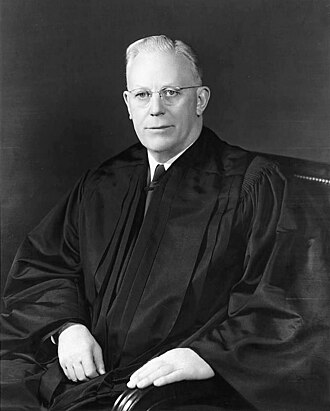 Earl WarrenWrote the majority opinion
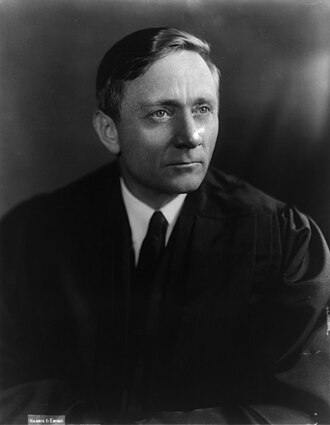 William DouglasJoined the majority
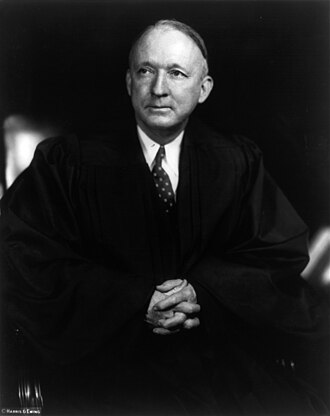 Hugo BlackJoined the majority
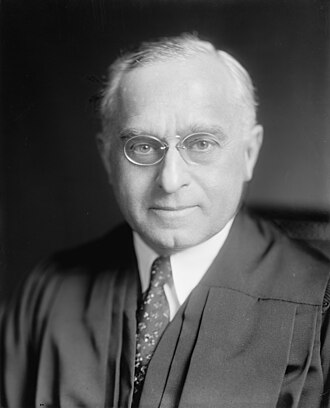 Felix FrankfurterJoined the majority
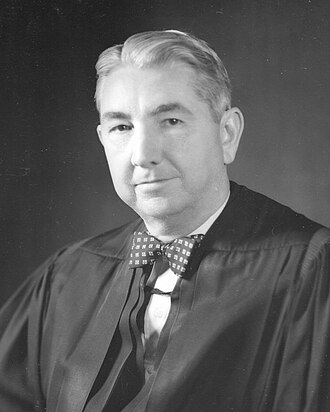 Tom ClarkJoined the majority
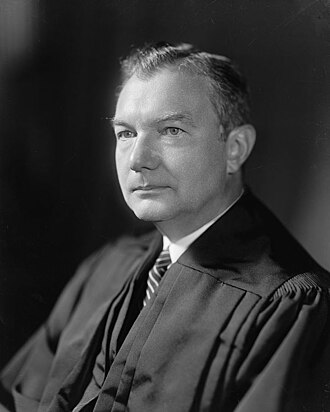 Robert JacksonJoined the majority
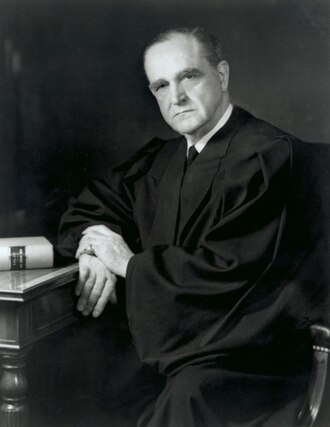 Sherman MintonJoined the majority
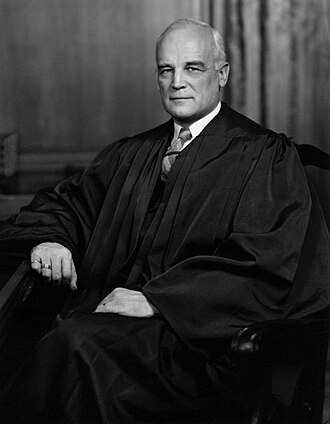 Harold BurtonJoined the majority
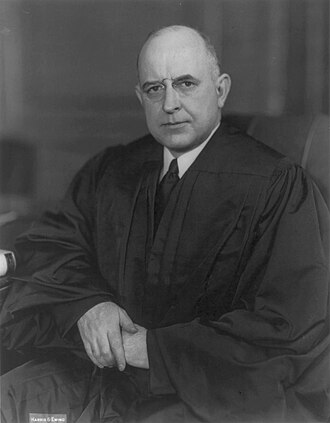 Stanley ReedJoined the majority
Dissent(0)
- None.
Data notes
Each justice’s vote and what they wrote are from the justice-centered file of the Supreme Court Database. “Wrote a concurrence” means the justice sided with the majority and wrote separately; a justice who dissented in part is counted on the side they took overall. A justice who wrote nothing is listed as joining their side.
Positions are each justice’s Martin–Quinn score for the case’s term, the same scores as the Ideology page: negative is more liberal, positive more conservative. A score sums up a justice’s votes across the whole term, so it says where they usually sit, not why they voted as they did here. The median line is the Court’s median justice that term.
The parties
Who brought the case to the Court, who answered it, and how it got there.
- Petitioner
- Brown et al.Racial or ethnic minority student or applicant for admission to an educational institution
- Respondent
- Board of Education of Topeka et al.Local school district or board of education (Kansas)
- Reached the Court by
- Appeal (the Court was required to hear it)
Data notes
The names are the two sides of the case’s title. The description under each is the Supreme Court Database’s category for that party, in its own wording. The petitioner is the side that asked the Supreme Court to review the decision below. “Why it was taken” appears only when the majority opinion says lower courts disagreed or were unsure about the question; reasons that would fit any case (“to resolve the question presented”, “an important question”) are left out.
The law at issue
The law the Court was asked to apply, and the kind of power it used to decide.
- Provision
- Fourteenth Amendment (equal protection)
- Kind of law
- Constitutional Amendment
- Decided by
- Judicial review (state level)
- Struck down
- A state law, as unconstitutional
- Precedent
- The Court overruled one of its own earlier decisions.
Data notes
The Supreme Court Database codes the main constitutional provision, statute or court rule each case turned on, and the basis of the decision: judicial review of a federal or state law, interpreting a statute, supervising the lower courts, and so on. A case can rest on more than one. “Overruled” counts only where the majority opinion says so.
Timeline
What happened at the Court and how the case got there, newest first.
- May 17, 1954DecidedDecided · Decided 9–0: stay, petition, or motion granted. Brown et al. won.
- Dec 7, 1953RearguedReargued · The Court heard the case argued a second time.
- Dec 8, 1952ArguedArgued · Oral argument before the Court.
- Not datedTaken upTaken up · Reached the Supreme Court on appeal, which the Court had to hear.
- Not datedCourt belowCourt below · Began in and was decided by the Kansas U.S. District Court.
Data notes
From the Supreme Court Database: the court the case began in, the court whose decision the Supreme Court reviewed and what that court did, how the case came to the Court, and the dates of argument and decision. The database does not date the steps in the lower courts. Court names are the database’s.
Other decisions on the same issue
45 other argued cases since 1946 on desegregation, schools, newest first.
- Thomas C. Horne, Superintendent, Arizona Public Instruction v. Miriam Flores et al.557 U.S. 433Jun 25, 2009 · 557 U.S. 433Civil rights5–45–4 band
- Parents Involved in Community Schools v. Seattle School District No. 1 et al.551 U.S. 701Jun 28, 2007 · 551 U.S. 701Civil rights5–45–4 band
- Missouri, et al. v. Kalima Jenkins, et al.515 U.S. 70Jun 12, 1995 · 515 U.S. 70Civil rights5–45–4 band
- United States v. Kirk Fordice, Governor of Mississippi, et al.505 U.S. 717Jun 26, 1992 · 505 U.S. 717Civil rights8–18–1 band
- Robert R. Freeman, et al. v. Willie Eugene Pitts, et al.Landmark503 U.S. 467Mar 31, 1992 · 503 U.S. 467Civil rightsLandmark8–0Unanimous band
- Board of Education of Oklahoma City Public Schools, Independent School District No. 89, Oklahoma County, Oklahoma v. Robert L. Dowell et al.498 U.S. 237Jan 15, 1991 · 498 U.S. 237Civil rights5–36–3 band
- Missouri et al. v. Jenkins et al.495 U.S. 33Apr 18, 1990 · 495 U.S. 33Civil rights9–0Unanimous band
- Bob Jones University v. United States461 U.S. 574May 24, 1983 · 461 U.S. 574Civil rights8–18–1 band
- Crawford et al. v. Board of Education of the City of Los Angeles et al.458 U.S. 527Jun 30, 1982 · 458 U.S. 527Civil rights8–18–1 band
- Washington et al. v. Seattle School District No. 1 et al.458 U.S. 457Jun 30, 1982 · 458 U.S. 457Civil rights5–45–4 band
- Board of Education of the City School District of New York et al. v. Harris, Secretary of Health, Education, and Welfare, et al.444 U.S. 130Nov 28, 1979 · 444 U.S. 130Civil rights6–36–3 band
- Dayton Board of Education et al. v. Brinkman et al.443 U.S. 526Jul 2, 1979 · 443 U.S. 526Civil rights5–45–4 band
- Columbus Board of Education et al. v. Penick et al.443 U.S. 449Jul 2, 1979 · 443 U.S. 449Civil rights7–27–2 band
- Dayton Board of Education et al. v. Brinkman et al.433 U.S. 406Jun 27, 1977 · 433 U.S. 406Civil rights8–0Unanimous band
- Milliken, Governor of Michigan, et al. v. Bradley et al.433 U.S. 267Jun 27, 1977 · 433 U.S. 267Civil rights9–0Unanimous band
- Runyon et ux., dba Bobbe's School v. McCrary et al.Landmark · Discrimination based on race and ethnicity427 U.S. 160Jun 25, 1976 · 427 U.S. 160Civil rightsLandmark · Discrimination based on race and ethnicity7–27–2 band
- Milliken, Governor of Michigan, et al. v. Bradley et al.418 U.S. 717Jul 25, 1974 · 418 U.S. 717Civil rights5–45–4 band
- Gilmore et al. v. City of Montgomery, Alabama, et al.417 U.S. 556Jun 17, 1974 · 417 U.S. 556Civil rights5–45–4 band
- Lau et al. v. Nichols et al.Landmark · Discrimination based on race and ethnicity414 U.S. 563Jan 21, 1974 · 414 U.S. 563Civil rightsLandmark · Discrimination based on race and ethnicity9–0Unanimous band
- Norwood et al. v. Harrison et al.413 U.S. 455Jun 25, 1973 · 413 U.S. 455Civil rights9–0Unanimous band
- Keyes et al. v. School District No. 1, Denver, Colorado, et al.413 U.S. 189Jun 21, 1973 · 413 U.S. 189Civil rights7–18–1 band
- School Board of City of Richmond, Virginia, et al. v. State Board of Education of Virginia et al.412 U.S. 92May 21, 1973 · 412 U.S. 92Civil rights4–45–4 band
- United States v. Scotland Neck City Board of Education et al.407 U.S. 484Jun 22, 1972 · 407 U.S. 484Civil rights9–0Unanimous band
- Wright et al. v. Council of the City of Emporia et al.407 U.S. 451Jun 22, 1972 · 407 U.S. 451Civil rights5–45–4 band
- North Carolina State Board of Education et al. v. Swann et al.402 U.S. 43Apr 20, 1971 · 402 U.S. 43Civil rights9–0Unanimous band
- McDaniel, Superintendent of Schools, et al. v. Barresi et al.402 U.S. 39Apr 20, 1971 · 402 U.S. 39Civil rights9–0Unanimous band
- Davis et al. v. Board of School Commissioners of Mobile County et al.402 U.S. 33Apr 20, 1971 · 402 U.S. 33Civil rights9–0Unanimous band
- Swann et al. v. Charlotte-Mecklenburg Board of Education et al.Landmark · Discrimination based on race and ethnicity402 U.S. 1Apr 20, 1971 · 402 U.S. 1Civil rightsLandmark · Discrimination based on race and ethnicity9–0Unanimous band
- Alexander et al. v. Holmes County Board of Education et al.396 U.S. 19Oct 29, 1969 · 396 U.S. 19Civil rights8–0Unanimous band
- United States v. Montgomery County Board of Education et al.395 U.S. 225Jun 2, 1969 · 395 U.S. 225Civil rights8–0Unanimous band
- Monroe et al. v. Board of Commissioners of the City of Jackson et al.391 U.S. 450May 27, 1968 · 391 U.S. 450Civil rights9–0Unanimous band
- Raney et al. v. Board of Education of the Gould School District et al.391 U.S. 443May 27, 1968 · 391 U.S. 443Civil rights9–0Unanimous band
- Green et al. v. County School Board of New Kent County et al.Landmark391 U.S. 430May 27, 1968 · 391 U.S. 430Civil rightsLandmark9–0Unanimous band
- Calhoun et al. v. Latimer et al.377 U.S. 263May 25, 1964 · 377 U.S. 263Civil rights9–0Unanimous band
- Griffin et al. v. County School Board of Prince Edward County et al.377 U.S. 218May 25, 1964 · 377 U.S. 218Civil rights7–27–2 band
- Goss et al. v. Board of Education of Knoxville, Tennessee, et al.373 U.S. 683Jun 3, 1963 · 373 U.S. 683Civil rights9–0Unanimous band
- McNeese et al. v. Board of Education for Community Unit School District 187, Cahokia, Illinois, et al.373 U.S. 668Jun 3, 1963 · 373 U.S. 668Civil rights8–18–1 band
- Cooper et al., Members of the Board of Directors of the Little Rock, Arkansas, Independent School District, et al. v. Aaron et al.Landmark · Federalism358 U.S. 1Sep 12, 1958 · 358 U.S. 1Civil rightsLandmark · Federalism9–0Unanimous band
- Aaron et al. v. Cooper et al., Members of the Board of Directors of the Little Rock, Arkansas, Independent School District, et al.358 U.S. 27Sep 12, 1958 · 358 U.S. 27Civil rights9–0Unanimous band
- Brown et al. v. Board of Education of Topeka et al.Landmark349 U.S. 294May 31, 1955 · 349 U.S. 294Civil rightsLandmark9–0Unanimous band
- Bolling et al. v. Sharpe et al.Landmark · Discrimination based on race and ethnicity347 U.S. 497May 17, 1954 · 347 U.S. 497Civil rightsLandmark · Discrimination based on race and ethnicity9–0Unanimous band
- McLaurin v. Oklahoma State Regents for Higher Education et al.339 U.S. 637Jun 5, 1950 · 339 U.S. 637Civil rights9–0Unanimous band
- Sweatt v. Painter et al.Landmark · Discrimination based on race and ethnicity339 U.S. 629Jun 5, 1950 · 339 U.S. 629Civil rightsLandmark · Discrimination based on race and ethnicity9–0Unanimous band
- Fisher v. Hurst, Chief Justice, et al.333 U.S. 147Feb 16, 1948 · 333 U.S. 147Civil rights7–27–2 band
- Sipuel v. Board of Regents of the University of Oklahoma et al.332 U.S. 631Jan 12, 1948 · 332 U.S. 631Civil rights9–0Unanimous band
Data notes
Every other orally argued case with a clear vote, from the 1946 term on, that the Supreme Court Database files under the same issue as this one. The database gives each case one issue from a list of about 270 (abortion, search and seizure of vehicles, the death penalty, and so on), whatever law it turned on.
Official record
Read the full opinion on Justia and Wikipedia. Case data from the Supreme Court Database, Version 2026 Release 01, through the 2025 term.