Bus Regulatory Reform Act of 1982
Public Law 97-261 · H.R. 3663 · 97th Congress · began in the House
Signed by Ronald Reagan (R) on Sep 20, 1982 · Transportation and Public Works
Sponsor: Rep. Glenn Anderson (D-CA-32)
Cosponsors (1): Rep. Bud Shuster
Passage votesYeaNay
- HouseVoice vote
- SenateRecorded vote: 84 yea, 8 nay84–8
Data notes
The final version of the law, as each chamber passed it. A chamber that passed it by voice vote or unanimous consent has no count. “Method not stated” means the record does not say how the chamber voted. Where the record has a member-by-member vote, the “Who voted for it” section shows who voted yea.
Summary
The Congressional Research Service’s plain-language summary of what the law does.
Bus Regulatory Reform Act of 1982 - Sets forth the findings of Congress in regard to the need for a safe, competitive, and fuel-efficient motor bus system.
Requires the appropriate congressional committees to conduct periodic oversight hearings on the effects of this Act not less than annually until July 1, 1985.
Amends the Interstate Commerce Act to include the interstate motor carrier transportation of passengers in the overall transportation policy of the United States.
Revises the entry policy for motor carriers of passengers, motor contract carriers, and brokers of passengers.
Prohibits the Interstate Commerce Commission (ICC) from issuing a certificate to a motor common carrier, or permit to a motor contract carrier, owned or controlled by persons of a contiguous country, or domiciled in such a country, for a period of two years after the date of enactment of this Act. Authorizes the President to remove or modify such restriction if it is determined that such removal or modification is in the national interest.
Declares that on the effective date of this Act a certificate to provide interstate transportation of passengers shall be deemed to authorize (but not require): (1) round-trip operations where only one-way authority exists; and (2) special and charter transportation from all points in a political subdivision where points of origin are limited. Authorizes the ICC, upon the request of a certificate holder, to remove operating restrictions on intermediate points on a route when such removal does not adversely affect commuter bus service.
Allows a motor common carrier of passengers to transport special or charter passengers in the same motor vehicle with regular-route passengers.
Describes ratemaking procedures and the use of rate bureaus by motor carriers of passengers.
Amends the Motor Carrier Act of 1980 to increase the membership of the Motor Carrier Ratemaking Study Commission. Extends to January 1, 1984, the due date of such Commission's final report on the collective ratemaking process. Increases the authorized appropriations for such Commission. Requires the Study Commission to conduct an investigation and study of the impact of the implementation of this Act (especially the potential termination of bus routes) on persons over 60 years of age, including those who reside in rural areas and small communities. Requires the Study Commission to notify Congress immediately if it finds conditions that jeopardize the viability of continued intrastate services.
Sets forth the zone of pricing freedom for motor carriers of passengers. Permits the ICC to increase rates within specified percentage ranges. Declares that rates and fares implemented pursuant to this Act shall be subject to specified antitrust laws. Removes the ICC authority to suspend rates after three years of the effective date of this Act, except on ratemaking actions where antitrust immunity is retained or where any rate is predatory or discriminatory.
Prohibits ICC investigation or suspension of rates proposed by motor common carriers of passengers applicable to special or charter transportation except when such rates constitute certain predatory practices.
Sets forth procedures by which carriers may discontinue or substantially reduce service on the intrastate portion of a route for which they have interstate and intrastate authority. Prohibits States from enacting laws relating to the discontinuance or reduction of service except to the extent of requiring notice of discontinuance or reduction, not in excess of 30 days.
Authorizes the ICC to prescribe rates, rules, or practices applicable to intrastate transportation provided by a motor common carrier of passengers under specified conditions. Establishes a rebuttable presumption that such rates, rules, or practices impose an unreasonable burden on interstate commerce if: (1) such a rate, rule, or practice results in intrastate rates lower than comparable interstate rates; (2) a carrier's revenues fall below the variable costs of providing such intrastate service; (3) the State agency having jurisdiction over the rate, rule, or practice failed to act on a carrier's request within a specified time. Prohibits States from enacting laws relating to scheduling of interstate or intrastate transportation except to the extent of requiring notice of rescheduling not in excess of 30 days. Makes such prohibition inapplicable to intrastate commuter service.
Requires the ICC to prescribe such a rate whenever it finds that a reduction in a rate charged for intrastate service on an authorized interstate route constitutes a predatory practice in contravention of established transportation policy. Directs the ICC to report to Congress on the results of its efforts to establish uniform standards and procedures applicable to carrier rates, rules, and practices.
Directs the Secretary of Transportation to establish minimum levels of financial responsibility for any motor vehicle operated in interstate or international commerce by a motor carrier of passengers.
Establishes civil penalties for violations of such financial responsibility provisions. Exempts school buses, taxicabs, and certain roundtrip commuter vehicles from such provisions.
Amends the Securities Act of 1933 to grant jurisdiction over the issuance of securities by motor carriers of passengers to the Securities and Exchange Commission.
Prohibits a State or subdivision thereof from levying a discriminatory or unreasonably burdensome tax on interstate motor carrier transportation.
Authorizes the ICC to exempt motor carriers of property from merger, consolidation, and acquisition of control transaction provisions of law. Sets forth criteria which the ICC must consider in such proceedings for motor carriers of passengers. Requires an applicant for exemption to give the ICC and the public 60 days advance notice before an exemption takes effect.
Authorizes the ICC, upon petition by the Secretary of Transportation, to suspend a motor carrier certificate or permit if the Commission finds that such carrier has been conducting unsafe operations which are an imminent hazard to public health or property.
Sets forth civil penalties for persons illegally providing transportation of passengers.
Permits the Commission to provide administrative assistance to small motor common carriers of passengers and local governments preparing for certain ICC proceedings.
Directs the Secretary to contract with the National Academy of Sciences to study the use of citizen band radios by the bus operator on motor vehicles providing intercity motor carrier passenger transportation. Requests the Academy to report to the Secretary and to Congress on such study.
Requires the Secretary and the ICC to report to the President and to Congress on the ownership, location, and adequacy of bus terminals.
Provides specified protection to employees whose employment is terminated by a motor carrier of passengers (other than for cause) within ten years after enactment of this Act. Directs the ICC to maintain a list of jobs available with class I motor carriers of passengers.
Allows the ICC to adopt, after a rulemaking proceeding, a special procedure for providing interested parties notice of entry or restriction removal applications, in lieu of using the Federal Register. Eliminates the statutory requirement that State regulatory commissions be notified of the filing of new applications.
Declares that the ICC has no jurisdiction over transportation by a motor carrier operating solely within the State of Hawaii, except over transportation of household goods. Declares that Hawaii has jurisdiction over all such exempt transportation.
Who voted for it
Every senator of the 97th Congress on the ideology compass. Highlighted: the 84 who voted yea on final passage. Faded: everyone else, including those who voted nay, did not vote, or had not yet taken office.
84 yea8 nay8 present or did not vote
Democrats who voted yea(36)
 Sen. Ted KennedyD-MA
- Sen. Howard MetzenbaumD-OH
- Sen. Donald RiegleD-MI
- Sen. Paul SarbanesD-MD
 Sen. Carl LevinD-MI
- Sen. Thomas EagletonD-MO
 Sen. Christopher DoddD-CT
- Sen. Gary HartD-CO
 Sen. Patrick LeahyD-VT
- Sen. Paul TsongasD-MA
- Sen. Spark MatsunagaD-HI
- Sen. William ProxmireD-WI
- Sen. Wendell FordD-KY
 Sen. Daniel InouyeD-HI
- Sen. Bill BradleyD-NJ
- Sen. Claiborne PellD-RI
- Sen. Daniel MoynihanD-NY
- Sen. David PryorD-AR
- Sen. James SasserD-TN
- Sen. Dee HuddlestonD-KY
- Sen. Howard CannonD-NV
- Sen. Scoop JacksonD-WA
- Sen. Quentin BurdickD-ND
- Sen. James ExonD-NE
- Sen. Fritz HollingsD-SC
- Sen. John GlennD-OH
- Sen. Dennis DeConciniD-AZ
- Sen. Alan DixonD-IL
- Sen. Howell HeflinD-AL
- Sen. David BorenD-OK
- Sen. Samuel NunnD-GA
- Sen. John JohnstonD-LA
- Sen. Edward ZorinskyD-NE
- Sen. Russell LongD-LA
- Sen. John StennisD-MS
- Sen. Harry ByrdD-VA
Republicans who voted yea(48)
- Sen. Charles MathiasR-MD
- Sen. Lowell WeickerR-CT
 Sen. Arlen SpecterR-PA
- Sen. Henry HeinzR-PA
- Sen. John ChafeeR-RI
- Sen. David DurenbergerR-MN
- Sen. Mark AndrewsR-ND
- Sen. Robert StaffordR-VT
- Sen. William RothR-DE
- Sen. Paula HawkinsR-FL
- Sen. Nancy KassebaumR-KS
- Sen. Mark HatfieldR-OR
- Sen. Robert PackwoodR-OR
- Sen. John DanforthR-MO
- Sen. Alfonse D’AmatoR-NY
- Sen. Charles PercyR-IL
- Sen. Robert KastenR-WI
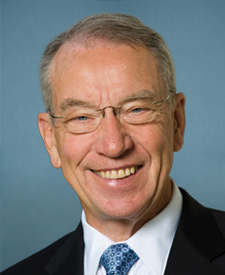 Sen. Chuck GrassleyR-IA
- Sen. Harrison SchmittR-NM
- Sen. Slade GortonR-WA
- Sen. Warren RudmanR-NH
 Sen. Thad CochranR-MS
- Sen. Roger JepsenR-IA
 Sen. Pete DomeniciR-NM
 Sen. Ted StevensR-AK
- Sen. Alan SimpsonR-WY
- Sen. Frank MurkowskiR-AK
 Sen. Richard LugarR-IN
 Sen. John WarnerR-VA
- Sen. Mack MattinglyR-GA
- Sen. Nicholas BradyR-NJ
 Sen. Orrin HatchR-UT
- Sen. Howard BakerR-TN
- Sen. Robert DoleR-KS
- Sen. William ArmstrongR-CO
- Sen. Strom ThurmondR-SC
- Sen. Malcolm WallopR-WY
- Sen. Paul LaxaltR-NV
- Sen. Jeremiah DentonR-AL
- Sen. John TowerR-TX
- Sen. Jake GarnR-UT
- Sen. Don NicklesR-OK
- Sen. Samuel HayakawaR-CA
- Sen. Jesse HelmsR-NC
- Sen. Dan QuayleR-IN
- Sen. Gordon HumphreyR-NH
- Sen. John EastR-NC
- Sen. Barry GoldwaterR-AZ
Data notes
The Senate’s recorded vote on the final version of the law (roll call 835 in Voteview), matched to the vote the record cites and checked against its totals. Positions are each member’s DW-NOMINATE score for that Congress, as on the Ideology page; left to right is more liberal to more conservative. Paired and announced yea votes count as yea. Lists follow the compass, most liberal first. A name links to a profile only for members of the current Congress. A law passed by voice vote or unanimous consent has no member list, and neither does a vote Voteview has not yet recorded.
Committees
The committees the bill was sent to, and what each did with it.
 Transportation and Infrastructure Committee · House · markup by, referred to, reported bySubcommittee: Surface Transportation Subcommittee
 Commerce, Science, and Transportation Committee · Senate · markup by, referred to, reported bySubcommittee: Surface Transportation and Merchant Marine Subcommittee
Data notes
A committee links to its page only where it exists in the current Congress; older and renamed committees are named without a link.
Timeline
From introduction to signing, newest first: the committees, the floor and the president. 30 actions.
- Sep 20, 1982Became lawBecame law · Became Public Law No: 97-261.
- Became lawBecame law · Signed by President.
- Sep 8, 1982PresidentPresident · Presented to President.
- Aug 20, 1982Resolving differencesResolving differences · Senate agreed to conference report by Yea-Nay Vote. 84-8. Record Vote No: 338.Senate roll call 338
- Resolving differencesResolving differences · Conference report agreed to in Senate: Senate agreed to conference report by Yea-Nay Vote. 84-8. Record Vote No: 338.Senate roll call 338
- Aug 19, 1982Resolving differencesResolving differences · House Agreed to Conference Report by Voice Vote.
- Resolving differencesResolving differences · Conference report agreed to in House: House Agreed to Conference Report by Voice Vote.
- Resolving differencesResolving differences · Conference Report 97-780 Filed in House.
- Resolving differencesResolving differences · Conference report filed: Conference Report 97-780 Filed in House.
- Resolving differencesResolving differences · Senate agreed to request for conference. Appointed conferees. Packwood; Danforth; Cannon.
- Resolving differencesResolving differences · House Requested a Conference and Speaker Appointed Conferees: Howard, Anderson, Rodino, Clausen, Shuster.
- Resolving differencesResolving differences · House Disagreed to Senate Amendments.
- FloorFloor · Senate insists on its amendments by Unanimous Consent.
- Jun 30, 1982FloorFloor · Passed Senate with an amendment by Yea-Nay Vote. 85-10. Record Vote No: 206.Senate roll call 206
- FloorFloor · Measure laid before Senate by unanimous consent.
- May 20, 1982CommitteeCommittee · Reported by Senate Commerce, Science, and Transportation Committee
- May 11, 1982CommitteeCommittee · Markup by Senate Commerce, Science, and Transportation Committee
- Mar 8, 1982CommitteeCommittee · Hearings by Surface Transportation and Merchant Marine Subcommittee of the Senate Commerce, Science, and Transportation Committee
- Nov 20, 1981CommitteeCommittee · Referred to Senate Commerce, Science, and Transportation Committee
- Nov 19, 1981FloorFloor · Passed House (Amended) by Yea-Nay Vote: 305 - 83 (Record Vote No: 325).House roll call 325
- FloorFloor · House Agreed to Amendments Adopted by the Committee of the Whole.
- FloorFloor · Rule Passed House.
- Nov 17, 1981CommitteeCommittee · Reported by House Transportation and Infrastructure Committee
- CommitteeCommittee · Markup by House Transportation and Infrastructure Committee
- Nov 16, 1981CommitteeCommittee · Reported by Surface Transportation Subcommittee of the House Transportation and Infrastructure Committee
- CommitteeCommittee · Markup by Surface Transportation Subcommittee of the House Transportation and Infrastructure Committee
- Jun 27, 1981CommitteeCommittee · Hearings by Surface Transportation Subcommittee of the House Transportation and Infrastructure Committee
- May 26, 1981CommitteeCommittee · Referred to Surface Transportation Subcommittee of the House Transportation and Infrastructure Committee
- May 21, 1981CommitteeCommittee · Referred to House Transportation and Infrastructure Committee
- IntroducedIntroduced · Introduced in the House
Data notes
Shows the introduction, each committee and subcommittee step the source dates (referral, hearings, markup, report, discharge), and the floor, conference, presidential and became-law steps. Calendar placements, messages between the chambers, amendments and committee report numbers are not shown for laws before the 108th Congress. Two entries the source lists twice are shown once.
Official record
The bill’s full text and every action, including introduction and committee steps, are on Congress.gov. Data through Oct 7, 2026.