PROTECT Act
Public Law 108-21 · S. 151 · 108th Congress · began in the Senate
Signed by George W. Bush (R) on Apr 30, 2003 · Crime and Law Enforcement
Sponsor: Sen. Orrin Hatch (R-UT)
Cosponsors (9): Sen. Patrick Leahy, Sen. Robert Bennett,
Passage votesYeaNay
- HouseRecorded vote: 400 yea, 25 nay400–25
- SenateRecorded vote: 98 yea, 0 nay98–0
Data notes
The final version of the law, as each chamber passed it. A chamber that passed it by voice vote or unanimous consent has no count. “Method not stated” means the record does not say how the chamber voted. Where the record has a member-by-member vote, the “Who voted for it” section shows who voted yea.
Summary
The Congressional Research Service’s plain-language summary of what the law does.
Prosecutorial Remedies and Other Tools to end the Exploitation of Children Today Act of 2003 or PROTECT Act - Title I: Sanctions and Offenses - (Sec. 101) Amends the Federal criminal code to: (1) make the authorized term of supervised release after imprisonment any term of years or life for kidnaping involving a minor and for other specified felony offenses (aggravated sexual abuse, sexual abuse, abusive sexual contact, sexual exploitation of children, selling or buying of children, certain activities relating to material involving the sexual exploitation of minors and material constituting or containing child pornography, production of sexually explicit depictions of a minor for importation into the United States, transportation for illegal sexual activity, coercion and enticement to engage in criminal sexual activity, transportation of minors with intent to engage in criminal sexual activity or in a sexual act with a juvenile, or use of interstate facilities to transmit information about a minor with intent to solicit any person to engage in criminal sexual activity) (listed offenses); (2) include aggravated child abuse and child torture murders within the scope of the definition of first degree murder; and (3) increase penalties for sexual exploitation and other abuse of children, for transportation for illegal sexual activity and related crimes, and for kidnaping children.
(Sec. 105) Expands the prohibitions on, and increases penalties for, traveling in or into the United States or in foreign commerce to engage in illicit sexual conduct.
(Sec. 106) Provides for mandatory life imprisonment of a person convicted of a Federal sex offense against a minor if the person has a prior sex conviction in which a minor was the victim, unless a death sentence is imposed. Provides an exception if: (1) the sexual act or activity was consensual and not for commercial or pecuniary gain; (2) the act or activity would not be punishable by more than one year imprisonment under the law of that State; or (3) no sexual act or activity occurred.
(Sec.107) Establishes criminal liability for attempting to remove a child from the United States with intent to obstruct the lawful exercise of parental rights.
(Sec. 108) Directs the Attorney General to establish a pilot program for volunteer organizations to obtain national and State criminal history background checks on their volunteers through a 10-fingerprint check utilizing State criminal records and the Integrated Automated Finger Print Identification System of the Federal Bureau of Investigation. Requires the Attorney General to designate three States as participants in an 18-month State pilot program. Outlines program procedures.
Directs the Attorney General to establish an 18-month Child Safety Pilot Program for processing 100,000 10-fingerprint check requests from eligible organizations. Outlines Program procedures, requiring the volunteer organizations to eventually determine whether a child care provider or child services volunteer has a criminal history record that renders the person unfit to provide such care or services. Allows each volunteer submitting to a fingerprint check to: (1) obtain a copy of their criminal history record report; and (2) challenge its accuracy and completeness. Authorizes appropriations to the National Center for Missing and Exploited Children for FY 2004 and 2005.
Requires the Attorney General to: (1) conduct a feasibility study for a system of background checks on volunteers, employees, and other individuals; and (2) provide Congress an interim and final report, the latter of which may include a proposal for grants to develop or improve programs to collect fingerprints and perform background checks on individuals that seek to volunteer with organizations that work with children, the elderly, or the disabled.
Title II: Investigations and Prosecutions - (Sec. 201) Authorizes the interception of wire, oral, or electronic communications in the investigation of kidnaping, sex trafficking, specified sex offenses against children, or transportation for illegal sexual activity.
(Sec. 202) Eliminates statutes of limitations for child abduction or the sexual or physical abuse of a child.
(Sec. 203) Bars pretrial release of persons charged with specified offenses against or involving children.
(Sec. 204) Requires Federal, State, and local law enforcement agencies to report each case of a missing child under age 21 (currently, 18) reported to them to the National Crime Information Center.
Title III: Public Outreach - Subtitle A: AMBER Alert - (Sec. 301) Directs the Attorney General to assign a national AMBER Alert Coordinator. Requires the Coordinator, by March 1, 2005, to submit to Congress a report on the Coordinator's activities and the effectiveness and status of the AMBER plans of each State that has implemented such a plan.
(Sec. 302) Directs the Coordinator to establish minimum standards for the issuance of alerts and the extent of alert dissemination, which shall provide that: (1) appropriate information relating to the special needs of an abducted child (including health care needs) is disseminated to the appropriate law enforcement, public health, and other public officials; and (2) the dissemination of an alert through the AMBER Alert communications network is limited to the geographic areas most likely to facilitate the recovery of the abducted child concerned.
(Sec. 303) Requires the Secretary of Transportation to carry out a program to provide grants to States for the development or enhancement of notification or communications systems along highways for alerts for the recovery of abducted children, including grants for State programs for the use of changeable message signs or other motorist information systems to notify motorists about abductions. Limits the Federal share to 80 percent of the cost of funded activities. Authorizes appropriations for FY 2004. Directs the Secretary to study and report to Congress on State barriers to the adoption and implementation of programs for the use of such systems.
(Sec. 304) Requires the Attorney General to carry out a program to provide grants to States for the development or enhancement of programs and activities for the support of AMBER Alert communications plans. Limits the Federal share to 50 percent of the cost of funded activities. Authorizes appropriations for FY 2004.
(Sec. 305) Provides civil immunity for the National Center for Missing and Exploited Children (NCMEC) for any action undertaken in cooperation with, or at the direction of, a Federal law enforcement agency.
Subtitle B: National Center for Missing and Exploited Children - (Sec. 321) Authorizes increased appropriations for the NCMEC for FY 2004 and 2005.
(Sec. 322) Authorizes Secret Service officers and agents, at the request of any State or local law enforcement agency or of the NCMEC, to provide forensic and investigative assistance in support of any investigation involving missing or exploited children.
(Sec. 323) Amends the Missing Children's Assistance Act to coordinate the operation of a cyber tipline to allow online users to report Internet-related child sexual exploitation.
Subtitle C: Sex Offender Apprehension Program - (Sec. 341) Authorizes the use of COPS (Cops on the Beat, community policing) grants to assist a State in enforcing a convicted sex offender registration law.
Subtitle D: Missing Children Procedures in Public Buildings - Code Adam Act of 2003 - (Sec. 363) Requires the designated authority for a public building to establish procedures for locating a child who is missing in the building. Directs that procedures established under this section provide, at a minimum, for: (1) notifying security personnel that a child is missing; (2) obtaining a detailed description of the child; (3) issuing a Code Adam alert and providing a description of the child using a fast and effective means of communication; (4) establishing a central point of contact; (5) monitoring all points of egress from the building while such alert is in effect; (6) conducting a thorough search of the building; (7) contacting local law enforcement; and (8) documenting the incident.
Subtitle E: Child Advocacy Center Grants - (Sec. 381) Amends the Victims of Child Abuse Act of 1990 to extend through FY 2004 and 2005 the authorization of appropriations under such Act.
Title IV: Sentencing Reform - (Sec. 401) Requires a court, in sentencing a defendant convicted of an offense involving a minor victim, to impose a sentence within the Federal sentencing guidelines range for that offense unless the court finds that: (1) there exists an aggravating circumstance of a kind or to a degree not adequately taken into consideration by the U.S. Sentencing Commission (Commission) in formulating its guidelines that should result in a sentence greater than that described; (2) there exists a mitigating circumstance of a kind or to a degree that has been affirmatively and specifically identified in the sentencing guidelines or policy statements as a permissible ground of downward departure (imposition of a sentence below the range established by such guidelines) taking into account any amendments to such guidelines or policy statements by Congress, has not been taken into consideration by the Commission in formulating its guidelines, and should result in a different sentence; or (3) the defendant has provided substantial assistance in the investigation or prosecution of another person that should result in a sentence lower than that described. Requires a court, in determining whether a circumstance was adequately taken into consideration, to consider only the sentencing guidelines, policy statements, and official commentary of the Commission, together with any amendments thereto by act of Congress.
Amends the Federal Sentencing Guidelines to allow a sentencing court to impose a sentence below the authorized range only if the court finds that there is a mitigating circumstance of a kind or to a degree that: (1) has been affirmatively and specifically identified as a permissible ground of downward departure in the sentencing guidelines or policy statements, taking into account any amendments thereto by act of Congress; (2) has not been adequately taken into consideration by the Commission in formulating its guidelines; and (3) should result in a sentence different from that described. Makes such grounds the sole permissible grounds for downward departure. Sets forth policy statements regarding specific offender characteristics as grounds for downward departure (including, under specified circumstances, age and extraordinary physical impairment, but excluding drug, alcohol, or gambling dependence or abuse).
Requires the court, at the time of sentencing, to state the reasons for imposition of a particular sentence (current law) and to include such reasons in the written order of judgment and commitment, except to the extent the court relies on in camera statements. Authorizes appellate review of a sentence that is outside the applicable guideline range: (1) if the district court failed to provide such written statement; or (2) the departure is based on an impermissible factor or to an unreasonable degree.
Prohibits a court, upon remand, from imposing a sentence outside the applicable guidelines except upon a ground that was: (1) specifically and affirmatively included in the prior written statement of reasons for a sentence; and (2) was upheld by the court of appeals as a permissible ground of departure.
Modifies the Guidelines Manual of the Commission to allow one additional offense level reduction when: (1) a defendant timely notifies authorities of the intention of entering a plea of guilty, thereby avoiding the need for government preparation for trial; and (2) the government enters a formal motion for such reduction at the time of sentencing.
Requires the Chief Judge of each district court to ensure that the report submitted to the Commission by the sentencing court within 30 days following entry of judgment in every criminal case includes: (1) the judgment and commitment order; (2) the statement of reasons for the sentence imposed (including the reason for any departure from the otherwise applicable guideline range); (3) any plea agreement; (4) the indictment or other charging document; and (5) the pre-sentence report. Directs the Commission: (1) upon request, to make available to the House and Senate Judiciary Committees the written reports and all underlying records accompanying those reports, as well as other records received from courts; and (2) to submit to Congress at least annually an analysis of these documents, any recommendations for legislation that the Commission concludes is warranted by that analysis, and an accounting of those districts that the Commission believes have not submitted the appropriate information and documents required.
Considers a defendant to have engaged in a pattern of activity involving prohibited sexual conduct if, on at least two separate occasions, such defendant engaged in such conduct with a minor. (Current law requires such conduct on at least two separate occasions with at least two different minors.)
Provides for specified offense level increases if the offense involved: (1) material that portrays sadistic or masochistic conduct or other depictions of violence (up four levels); and (2) specified numbers of images (up from two to five levels).
Requires the Attorney General to report to the House and Senate Judiciary Committees: (1) not later than 15 days after a district court's grant of a downward departure in any case other than one involving such a departure for substantial assistance to authorities, setting forth the case, the facts involved, the identity of the district court judge, the district court's stated reasons, whether the court provided the United States with advance notice of its intention to depart, the position of the parties with respect to the departure, and whether the United States has filed or intends to file a motion for reconsideration; and (2) not later than five days after the Solicitor General decides whether to authorize an appeal of the departure, informing the committees of the decision and the basis for it.
Requires the Commission to review the grounds of downward departure authorized by the sentencing guidelines, policy statements, and official commentary, and promulgate: (1) appropriate amendments to ensure that the incidence of downward departures are substantially reduced; (2) a policy statement authorizing a downward departure of not more than four levels if the government files a motion for such departure pursuant to an authorized early disposition program; and (3) any other necessary conforming amendments.
Title V: Obscenity and Pornography - Subtitle A: Child Obscenity and Pornography Prevention - (Sec. 502) Allows as an affirmative defense to the charge of virtual child pornography only that: (1) the alleged pornography was produced using only actual persons all of whom were adults; or (2) the alleged pornography was not produced using any actual minors.
Prohibits: (1) making a visual depiction that is a digital image, computer image, or computer-generated image of, or that is indistinguishable from an image of, a minor engaging in specified sexually explicit conduct; (2) knowingly advertising, promoting, presenting, distributing, or soliciting through the mails or in commerce, including by computer, any material that is or contains an obscene visual depiction of a minor engaging in sexually explicit conduct or a visual depiction of an actual minor engaging in such conduct; (3) knowingly distributing, offering, sending, or providing to a minor any such visual depiction using the mails or commerce, including by computer, for purposes of inducing or persuading a minor to participate in an illegal act; and (4) knowingly producing, distributing, receiving, or possessing with intent to distribute a visual depiction of any kind, including a drawing, cartoon, sculpture, or painting, that, under specified circumstances, depicts a minor engaging in sexually explicit conduct and is obscene, or depicts an image that is or appears to be of a minor engaging in such conduct and such depiction lacks serious literary, artistic, political, or scientific value.
(Sec. 505) Makes certain information identifying minors depicted in child pornography, other than age, inadmissible and subject to redaction from any otherwise admissible evidence in any prosecution.
(Sec. 506) Sets penalties for using or inducing a minor to engage in sexually explicit conduct outside of the United States in order to produce any visual depiction of such conduct for transportation to the United States.
(Sec. 507) Provides enhanced penalties under the Federal criminal code and the Uniform Code of Military Justice for recidivists with respect to child pornography, sexual abuse, and transportation for illegal sexual activity and related crimes.
(Sec. 508) Amends the Victims of Child Abuse Act of 1990 to authorize a provider of electronic communication or remote computing services that reasonably believes it has obtained knowledge of facts and circumstances indicating a State criminal law child pornography violation to disclose such information to an appropriate State or local law enforcement official. Authorizes the National Center for Missing and Exploited Children to forward to such an official any report of facts or circumstances indicating a violation of child pornography prohibitions by a provider of electronic communication service or remote computing services.
(Sec. 509) Amends provisions regarding transactional information that may be obtained through an administrative subpoena issued with respect to the sexual exploitation or abuse of children, in order to be consistent with provisions regarding required disclosure of customer communications or records.
(Sec. 510) Authorizes civil remedies, including injunctive relief and punitive damages, for child pornography offenses.
(Sec. 511) Revises record-keeping requirements to include computer-generated images, digital images, and pictures of visual depictions.
Directs the Attorney General to: (1) report to Congress detailing the number of times since January 1993 that the Department of Justice has inspected the records of any producer of materials with respect to sexual abuse and other exploitation of children; and (2) indicate the number of violations prosecuted as a result of those inspections.
(Sec. 512) Directs the Commission to review and, as appropriate, amend the Federal sentencing guidelines to ensure that guideline penalties are adequate to deter and punish conduct that involves: (1) interstate travel with the intent to engage in a sexual act with a juvenile; and (2) promoting material believed to contain obscene visual depictions of a minor engaged in sexually explicit conduct.
(Sec. 513) Directs the Attorney General to appoint 25 additional trial attorneys for investigation and prosecution of Federal child pornography laws. Authorizes appropriations. Requires the Attorney General to report biennially to specified congressional officials on Federal enforcement actions, including an outcome-based measure of performance and an analysis of the technology being used by the child pornography industry.
Subtitle B: Truth in Domain Names - Prohibits knowingly using a misleading domain name with the intent to: (1) deceive a person into viewing obscenity on the Internet; or (2) deceive a minor into viewing on the Internet material that is harmful to minors.
Title VI: Miscellaneous Provisions - Mandates that any person age 18 or older who intentionally uses a minor to commit a crime of violence shall be subject to twice the maximum term of imprisonment and fine otherwise authorized for the first conviction, and three times such term and fine for subsequent convictions.
(Sec. 602) Expresses the sense of Congress that: (1) the Child Exploitation and Obscenity Section of the Criminal Division of the Department of Justice should focus its investigative and prosecutorial efforts on major producers, distributors, and sellers of obscene material and child pornography that use misleading methods to market their material to children; and (2) the online commercial adult entertainment industry should voluntarily refrain from placing obscenity, child pornography, or material that is harmful to minors on the front pages of their website.
(Sec. 603) Amends the Communications Act of 1934 to make it unlawful to use a telephone device to make or solicit transmission of child pornography to adults and minors.
(Sec. 604) Amends the Violent Crime Control and Law Enforcement Act of 1994 to require the release of information concerning persons registered as sex offenders to also include the maintenance of an Internet web site containing such information. Requires the Crimes Against Children Section of the Criminal Division of the Department of Justice to create a national Internet site that links all such State Internet sites.
(Sec. 605) Includes within the crimes against children and sexually violent offender registration program persons convicted of crimes relating to the production and distribution of child pornography. Authorizes appropriations to the Department of Justice for FY 2004 through 2007 for such purpose.
(Sec. 606) Authorizes appropriations for FY 2004 through 2007 for grants to States for costs of compliance with new sex offender registration requirements.
(Sec. 607) Secure Authentication Feature and Enhanced Identification Defense Act of 2003 or SAFE ID Act - Provides criminal penalties for: (1) counterfeiting or altering authentication features (halogens, symbols, codes) for the purpose of creating or using false personal identifications; and (2) trafficking in such features without authorization of the issuing authority.
(Sec. 608) Illicit Drug Anti-Proliferation Act of 2003 - Amends the Controlled Substances Act to make it unlawful to lease, rent, or use (currently, only to open and maintain) a place for manufacturing, distributing, or using a controlled substance, or to manage or control a place for such use. Provides civil penalties and equitable relief for violations.
Directs the Sentencing Commission to review and consider increasing the penalties for offenses involving gamma hydroxybutyric acid (a "club drug" often used to facilitate sexual assault).
Authorizes appropriations to the Drug Enforcement Administration for: (1) the hiring of a special agent in each State to serve as a Demand Reduction Coordinator; and (2) educating youth, parents, and other interested adults about club drugs.
(Sec. 609) Revises Federal criminal law prohibiting terrorist attacks and other acts of violence against mass transportation systems to define "vehicle" for such purposes as any carriage or other contrivance used, or capable of being used, for transportation on land, water, or through the air.
(Sec. 610) Authorizes Federal prosecutors to issue an indictment identifying an unknown defendant by a DNA profile, within the five-year statute of limitations. Tolls such statute until the defendant is actually identified through DNA profile.
(Sec. 611) Amends the Violence Against Women Act of 1994 to direct the Attorney General, in consultation with the Director of the Violence Against Women Office of the Department of Justice, to award grants to States, local governments, Indian tribes, and other organizations to carry out programs to provide assistance to minors, adults, and their dependents: (1) who are homeless or in need of transitional housing as a result of fleeing a situation of domestic violence; and (2) for whom emergency shelter services or other crisis intervention services are unavailable or insufficient. Limits such assistance to 18-months per individual, with a waiver allowing an additional six-month period for an individual who has made a good-faith effort but has been unable to acquire permanent housing. Requires the Attorney General to report annually to the judiciary committees on the grant program. Authorizes appropriations for FY 2004 through 2008.
Who voted for it
Every senator of the 108th Congress on the ideology compass. Highlighted: the 98 who voted yea on final passage. Faded: everyone else, including those who voted nay, did not vote, or had not yet taken office.
98 yea0 nay2 present or did not vote
Democrats who voted yea(47)
- Sen. Paul SarbanesD-MD
 Sen. Frank LautenbergD-NJ
 Sen. Ted KennedyD-MA
 Sen. Jack ReedD-RI
 Sen. Richard DurbinD-IL
 Sen. Tom HarkinD-IA
 Sen. Barbara BoxerD-CA
 Sen. Carl LevinD-MI
 Sen. Robert ByrdD-WV
- Sen. Jon CorzineD-NJ
 Sen. Daniel AkakaD-HI
 Sen. Hillary ClintonD-NY
 Sen. Patrick LeahyD-VT
 Sen. Christopher DoddD-CT
 Sen. Debbie StabenowD-MI
- Sen. John EdwardsD-NC
 Sen. Barbara MikulskiD-MD
- Sen. Mark DaytonD-MN
 Sen. Russell FeingoldD-WI
 Sen. Jay RockefellerD-WV
- Sen. Bob GrahamD-FL
 Sen. Daniel InouyeD-HI
- Sen. Tom DaschleD-SD
 Sen. Harry ReidD-NV
 Sen. Chuck SchumerD-NY
 Sen. Patty MurrayD-WA
 Sen. Maria CantwellD-WA
- Sen. Fritz HollingsD-SC
 Sen. Tim JohnsonD-SD
 Sen. Herb KohlD-WI
 Sen. Ron WydenD-OR
 Sen. Dianne FeinsteinD-CA
 Sen. Byron DorganD-ND
 Sen. Joseph BidenD-DE
- Sen. Jim JeffordsD-VT
 Sen. Jeff BingamanD-NM
 Sen. Bill NelsonD-FL
 Sen. Mark PryorD-AR
 Sen. Kent ConradD-ND
 Sen. Thomas CarperD-DE
 Sen. Mary LandrieuD-LA
 Sen. Blanche LincolnD-AR
 Sen. Evan BayhD-IN
 Sen. Max BaucusD-MT
- Sen. John BreauxD-LA
 Sen. Ben NelsonD-NE
- Sen. Zell MillerD-GA










































Republicans who voted yea(51)
- Sen. Lincoln ChafeeR-RI
 Sen. Olympia SnoweR-ME
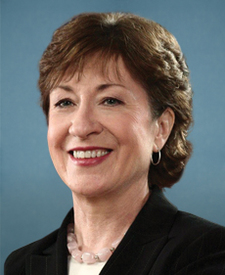 Sen. Susan CollinsR-ME
 Sen. Arlen SpecterR-PA
- Sen. Mike DeWineR-OH
 Sen. Gordon SmithR-OR
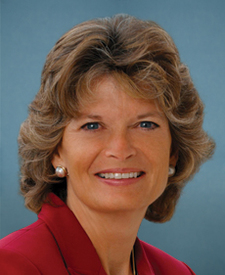 Sen. Lisa MurkowskiR-AK
 Sen. Norm ColemanR-MN
- Sen. Ben CampbellR-CO
 Sen. John McCainR-AZ
 Sen. George VoinovichR-OH
 Sen. John WarnerR-VA
 Sen. Kay HutchisonR-TX
 Sen. Ted StevensR-AK
 Sen. Richard LugarR-IN
 Sen. Kit BondR-MO
- Sen. Jim TalentR-MO
 Sen. Chuck HagelR-NE
- Sen. Peter FitzgeraldR-IL
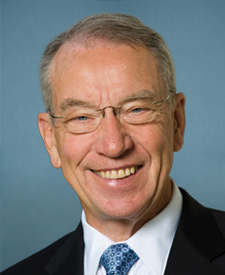 Sen. Chuck GrassleyR-IA
 Sen. Pat RobertsR-KS
 Sen. Pete DomeniciR-NM
- Sen. Bill FristR-TN
 Sen. Lamar AlexanderR-TN
 Sen. Robert BennettR-UT
 Sen. Elizabeth DoleR-NC
 Sen. Thad CochranR-MS
 Sen. Sam BrownbackR-KS
 Sen. Lindsey GrahamR-SC
- Sen. George AllenR-VA
 Sen. Judd GreggR-NH
 Sen. Richard ShelbyR-AL
 Sen. Orrin HatchR-UT
 Sen. Saxby ChamblissR-GA
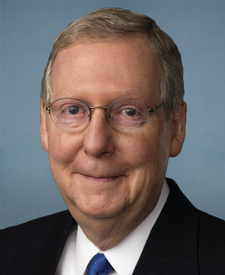 Sen. Mitch McConnellR-KY
- Sen. Conrad BurnsR-MT
 Sen. John EnsignR-NV
 Sen. Trent LottR-MS
- Sen. Rick SantorumR-PA
 Sen. John CornynR-TX
 Sen. John SununuR-NH
 Sen. Jim BunningR-KY
 Sen. Mike CrapoR-ID
 Sen. Jim InhofeR-OK
 Sen. Larry CraigR-ID
 Sen. Jeff SessionsR-AL
 Sen. Wayne AllardR-CO
 Sen. Michael EnziR-WY
- Sen. Craig ThomasR-WY
 Sen. Jon KylR-AZ
- Sen. Don NicklesR-OK












































Data notes
The Senate’s recorded vote on the final version of the law (roll call 132 in Voteview), matched to the vote the record cites and checked against its totals. Positions are each member’s DW-NOMINATE score for that Congress, as on the Ideology page; left to right is more liberal to more conservative. Paired and announced yea votes count as yea. Lists follow the compass, most liberal first. A name links to a profile only for members of the current Congress. A law passed by voice vote or unanimous consent has no member list, and neither does a vote Voteview has not yet recorded.
Committees
The committees the bill was sent to, and what each did with it.
 Judiciary Committee · House · discharged from, referred toSubcommittee: Crime and Federal Government Surveillance Subcommittee

Data notes
A committee links to its page only where it exists in the current Congress; older and renamed committees are named without a link.
Related bills
9 bills the Library of Congress relates to this one.
H.R. 718Related bill
RAVE Act
H.R. 1046Related bill
Debbie Smith Act of 2003
H.R. 1104Procedurally-related
Child Abduction Prevention Act
H.R. 1263Related bill
Code Adam Act
H.Res. 188Procedurally-related
Waiving points of order against the conference report to accompany the bill (S. 151) to amend title 18, United States Code, with respect to the sexual exploitation of children.
S. 152Related bill
DNA Sexual Assault Justice Act of 2003
S. 226Related bill
Illicit Drug Anti-Proliferation Act of 2003
S. 731Related bill
Secure Authentication Feature and Enhanced Identification Defense Act of 2003
S. 885Related bill
PROTECT Act
Data notes
Related bills are identified by the Congressional Research Service, the House and the Senate: companion and identical bills, bills with similar text, bills that were folded into this law, and rules that brought it to the floor. A bill that is itself a public law in this site’s data links here; the others link to Congress.gov.
Timeline
From introduction to signing, newest first: the committees, the floor and the president. 52 actions.
- Apr 30, 2003Became lawBecame law · Became Public Law No: 108-21.
- Became lawBecame law · Signed by President.
- Apr 28, 2003FloorFloor · Presented to President.
- Apr 11, 2003FloorFloor · Message on Senate action sent to the House.
- Apr 10, 2003Resolving differencesResolving differences · Senate agreed to conference report by Yea-Nay Vote. 98 - 0. Record Vote Number: 132.Senate roll call 132
- Resolving differencesResolving differences · Conference report agreed to in Senate: Senate agreed to conference report by Yea-Nay Vote. 98 - 0. Record Vote Number: 132.Senate roll call 132
- Resolving differencesResolving differences · Conference report considered in Senate by Unanimous Consent.
- Resolving differencesResolving differences · Conference papers: message on House action held at the desk in Senate.
- Resolving differencesResolving differences · Motions to reconsider laid on the table Agreed to without objection.
- Resolving differencesResolving differences · On agreeing to the conference report Agreed to by the Yeas and Nays: 400 - 25, 2 Present (Roll no. 127).House roll call 127
- Resolving differencesResolving differences · Conference report agreed to in House: On agreeing to the conference report Agreed to by the Yeas and Nays: 400 - 25, 2 Present (Roll no. 127).House roll call 127
- Resolving differencesResolving differences · The previous question was ordered without objection.
- Resolving differencesResolving differences · Mr. Sensenbrenner brought up conference report H. Rept. 108-66 for consideration under the provisions of H. Res. 188.
- FloorFloor · The House proceeded with one hour of debate on the conference report.
- FloorFloor · Rule H. Res. 188 passed House.
- Apr 9, 2003Resolving differencesResolving differences · Conference papers: Senate report and manager's statement held at the desk in Senate.
- Resolving differencesResolving differences · Conference report H. Rept. 108-66 filed.
- Resolving differencesResolving differences · Conference report filed: Conference report H. Rept. 108-66 filed.
- FloorFloor · Rules Committee Resolution H. Res. 188 Reported to House. Rule provides for consideration of the conference report to S. 151. All points of order against the conference report and against its consideration are waived. The conference report shall be considered as read.
- Apr 7, 2003FloorFloor · Message on Senate action sent to the House.
- Apr 3, 2003Resolving differencesResolving differences · Senate disagreed to House amendments, agreed to request for conference, and appointed conferees. Hatch; Grassley; Sessions; Graham SC; Leahy; Kennedy; Biden. by Unanimous Consent.
- Mar 31, 2003Resolving differencesResolving differences · The Speaker appointed conferees - from the Committee on Transportation and Infrastructure for consideration of sec. 303 and title IV of the House amendments, and modifications committed to conference: Young (AK), Petri, and Matheson.
- Resolving differencesResolving differences · The Speaker appointed conferees - from the Committee on Education and the Workforce for consideration of sec. 8 of the Senate bill and secs. 222, 305, and 508 of the House amendments, and modifications committed to conference: Hoekstra, Gingrey, and Hinojosa.
- Mar 27, 2003Resolving differencesResolving differences · The Speaker appointed a conferee for consideration of the Senate bill and House amendments, and modifications committed to conference: Frost.
- Resolving differencesResolving differences · The Speaker appointed conferees - from the Committee on the Judiciary for consideration of the Senate bill and the House amendments, and modifications committed to conference: Sensenbrenner, Coble, Smith (TX), Green (WI), Hart, Conyers, and Scott (VA).
- Resolving differencesResolving differences · Motion to reconsider laid on the table Agreed to without objection.
- Resolving differencesResolving differences · On motion that the House instruct conferees Agreed to by voice vote.
- Resolving differencesResolving differences · Mr. Scott (VA) moved that the House instruct conferees.
- Resolving differencesResolving differences · On motion that the House insist upon its amendments, and request a conference Agreed to without objection.
- Resolving differencesResolving differences · Mr. Sensenbrenner moved that the House insist upon its amendments, and request a conference.
Data notes
Every action the Library of Congress lists for the bill, from introduction to signing, plus the dated committee hearings. The source lists many steps twice (the chamber’s own entry and the Library of Congress copy, or a presidential and a became-law entry with the same words); those are shown once. Amendments are listed in their own section.
Amendments
No amendments to this bill are on record.
Data notes
Amendments offered to this bill in either chamber, as the Library of Congress records them: each with a status read from its last recorded step: agreed to, rejected, withdrawn, ruled out of order, fell with another amendment, or offered with no vote recorded (most Senate amendments are only ever offered). The wording of each amendment is the source’s. Amendments to amendments and amendments to other bills are not listed.
Official record
The bill’s full text is on Congress.gov. Data through Oct 7, 2026.