Human Services Amendments of 1994
Public Law 103-252 · S. 2000 · 103rd Congress · began in the Senate
Signed by Bill Clinton (D) on May 18, 1994 · Social Welfare
Sponsor: Sen. Christopher Dodd (D-CT)
Cosponsors (8): Sen. Ted Kennedy, Sen. Tom Daschle,
Passage votesYeaNay
- HouseRecorded vote: 393 yea, 20 nay393–20
- SenateRecorded vote: 98 yea, 1 nay98–1
Data notes
The final version of the law, as each chamber passed it. A chamber that passed it by voice vote or unanimous consent has no count. “Method not stated” means the record does not say how the chamber voted. Where the record has a member-by-member vote, the “Who voted for it” section shows who voted yea.
Summary
The Congressional Research Service’s plain-language summary of what the law does.
TABLE OF CONTENTS:
Title I: Head Start Programs
Title II: Community Services Block Grant Amendments
Title III: Low-Income Home Energy Assistance Amendments
Title IV: Community-Based Family Resource Programs
Human Services Amendments of 1994 - Title I: Head Start Programs - Head Start Act Amendments of 1994 - Amends the Head Start Act to reauthorize and revise its provisions.
(Sec. 103) Includes parental involvement among Head Start program services.
(Sec. 104) Extends the authorization of appropriations to carry out such Act and its Head Start program. Reserves specified amounts for a longitudinal study of Head Start participants, the Head Start Transition Project Act, and transition coordination with schools and parent involvement activities.
(Sec. 105) Allocates at least 25 percent of certain excess funds to specified quality improvement activities, plus any additional amount the Secretary of Health and Human Services (HHS) finds necessary.
Includes, under discretionary payments, payments for the costs of reviewing Head Start agencies and programs and of developing and implementing quality improvement plans.
Authorizes the Secretary to make collaboration grants, from certain reserved funds, to States to facilitate collaboration between Head Start activities and other activities targeted to low-income children and families.
Directs the Secretary to take certain factors into consideration in allocating funds for program expansion.
Provides for flexibility in satisfying the requirement that a certain number of hours be provided to children in Head Start programs.
Requires migrant Head Start programs to give priority to eligible children of migrant families whose work requires them to relocate most frequently.
(Sec. 106) Repeals outdated provisions for a comprehensive report to the Congress.
(Sec. 107) Revises provisions for designation of Head Start agencies to provide that those on Indian reservations include members of Indian tribes living near the reservation.
Revises conditions for giving priority in designations.
Revises parental involvement considerations with respect to designation of new Head Start agencies. Requires agencies to offer family literacy services and parenting skills training to parents of participating children. Allows agencies also to opt to offer such parents child development training, communication skills development assistance, opportunities to share experiences with other parents, substance abuse counseling, or other partnership in education activities. Requires a family needs assessment, including consultation with the parents, for each participating family. Requires plans to include non-English background children and their families.
(Sec. 108) Requires the Secretary to establish quality standards for Head Start agencies and programs, including standards for performance in providing required health, education, parental involvement, nutritional, social, transition activities, and other services, for administrative and financial management, and for facilities' condition and location. Provides for monitoring and for corrective actions or terminations if minimum standards are not met.
(Sec. 109) Requires each Head Start agency to coordinate with schools and promote parental involvement to facilitate children's transition from program to school. Directs the Secretaries of HHS and of Education to assess results of demonstration projects under the Head Start Transition Project Act, disseminate information on effective transition, and provide technical assistance to communities to implement effective policies and activities from those demonstrations.
(Sec. 110) Authorizes the Secretary to use certain reserved funds to purchase facilities owned by Indian tribes and make necessary capital expenditures to provide suitable Head Start facilities for such tribes.
Provides for personnel preferences for and recruitment of Indian tribe members for the American Indian Programs Branch of the Head Start Bureau of the Administration for Children and Families.
(Sec. 111) Revises participation provisions. Allows Indian tribes to enroll additional children who do not meet low-income criteria if the Head Start program predominantly serves children who do meet such criteria.
(Sec. 112) Establishes programs for families with infants and toddlers. Directs the Secretary to make grants for: (1) programs providing family-centered services for low-income families with very young children, designed to promote child development, parental role fulfillment, and movement toward self-sufficiency; and (2) evaluation of, and training and technical assistance for, projects under the Comprehensive Child Development Act. Gives time-limited priority to certain entities, including Parent-Child Centers receiving assistance under the Head Start Act and programs receiving assistance under the Comprehensive Child Development Act, and provides for selection of other grant recipients. Repeals the Comprehensive Child Development Centers Act of 1988 and the Comprehensive Child Development Act because their functions are being consolidated under the Head Start Act.
(Sec. 113) Provides for mediation of disputes with delegate agencies to avoid the need for administrative hearings. Eliminates a provision freezing regulations. Provides that terminations, reductions, or suspensions of financial assistance upheld in administrative hearings shall not be stayed pending any judicial appeal.
(Sec. 114) Sets forth goals and priorities for training and technical assistance.
(Sec. 115) Revises classroom teacher qualifications and waiver requirements.
Directs the Secretary to: (1) provide technical assistance and training to enable Head Start agencies to establish positions for mentor teachers; and (2) review and revise standards for family service workers and promote model curricula and credentials for such workers.
Authorizes the Secretary to establish a program of Head Start Fellowships for staff in local Head Start programs and other individuals working in the field of child development and family services. Provides for placement in appropriate settings.
Directs the Secretary to develop model staffing pattern plans to guide local Head Start agencies and programs.
(Sec. 116) Directs the Secretary to carry out a continuing program of research, demonstrations, and evaluations of Head Start programs, including longitudinal studies.
(Sec. 117) Repeals provisions for certain announcements, a longitudinal study, and poverty line criteria (a definition of which is added elsewhere). Revises provisions on reports, adding a study of availability and delivery of Head Start programs to Indian children living on or near reservations, children of Alaskan natives, and children of migrant and seasonal farmworkers.
(Sec. 120) Directs the Secretary to study, and report to the appropriate congressional committees on, benefits available to Head Start employees.
(Sec. 121) Amends the Elementary and Secondary Education Act of 1965 to revise provisions and extend the authorization of appropriations for the Ready to Learn Television program.
(Sec. 122) Amends the State Dependent Care Development Grants Act to extend the authorization of appropriations.
(Sec. 123) Directs the Secretary to consult with the Chief Executive Officer of the Corporation for National and Community Service regarding the dissemination of information on the Corporation's programs to Head Start programs.
(Sec. 124) Amends the Child Development Associate Scholarship Assistance Act of 1985 to extend the authorization of appropriations.
(Sec. 126) Directs the Secretary to study, and report to specified congressional committees on, the extent to which Head Start programs are addressing the need for child care services during a full working day or full calendar year among eligible low-income families with preschool children.
Title II: Community Services Block Grant Amendments - Community Services Block Grant Amendments of 1994 - Amends the Community Services Block Grant Act to extend the authorization of appropriations to carry out such Act and its community services block grant program.
(Sec. 202) Reserves certain funds for training, technical assistance, planning, and evaluation.
Revises provisions for applications and requirements, community action plans, public inspections of plans, audits, and evaluations involving waivers.
(Sec. 203) Authorizes the Secretary of HHS to provide grants for: (1) a Community Initiatives Program for community and economic development of economically distressed areas and rural areas; (2) interactive information technology among a nationwide network to enhance effective delivery of social services; and (3) nonprofit private organizations that provide assistance for migrants and seasonal farmworkers.
(Sec. 204) Extends the authorization of appropriations for community food and nutrition programs.
(Sec. 205) Authorizes the Secretary to make grants to service providers to administer national or regional programs to provide instructional activities for low-income youth. Authorizes appropriations.
(Sec. 206) Amends the Stewart B. McKinney Homeless Assistance Act to extend the authorization of appropriations for the emergency community services homeless grant program.
(Sec. 207) Amends the Human Services Reauthorization Act of 1986 to revise provisions and extend the authorization of appropriations for demonstration partnership agreements addressing the needs of the poor. Authorizes the Secretary to also make competitive grants to community action agencies to demonstrate new approaches to dealing with the problems caused by entrenched, chronic unemployment and lack of opportunities for urban youth.
Title III: Low-Income Home Energy Assistance Amendments - Low-Income Home Energy Assistance Amendments of 1994 - Amends the Low-Income Home Energy Assistance Act of 1981 to extend the authorization of appropriations for: (1) such Act and its low-income home energy assistance program (LIHEAP); and (2) the incentive program for leveraging non-Federal resources.
(Sec. 304) Authorizes appropriations for additional payments to meet the additional home energy assistance needs of one or more States arising from a natural disaster or other emergency. Designates such funds as emergency requirements, but makes them available only after submission of a formal budget request by the President. Set forth considerations for allotment of such emergency funds by the Secretary of HHS.
(Sec. 305) Provides that LIHEAP funds may be used for: (1) outreach activities and assistance to low-income households in meeting their home energy costs, particularly if such costs are a high proportion of household income; (2) intervention in energy crisis situations; (3) low-cost residential weatherization and other cost-effective energy-related home repair; and (4) State program planning, development, and administration, including leveraging programs. Exempts from certain limitations on use of program funds services that encourage and enable households to reduce their home energy needs.
(Sec. 306) Authorizes States to give priority to households with the highest home energy costs or needs in relation to household income.
Requires State plans to describe additional steps to target assistance to households with high home energy burdens.
(Sec. 307) Revises audit requirements and matters to be described in annual applications. Provides for use of Department of Energy weatherization rules to achieve program consistency. Requires reports on any amount of a State's allotment that will not be obligated for the fiscal year. Lowers the maximum amount that the Secretary may reserve for technical assistance and training.
(Sec. 312) Authorizes the Secretary to allocate not more than 25 percent of funds for the incentive program for leveraging non-Federal resources, in FY 1996 through 1999, to a Residential Energy Assistance Challenge Fund to make challenge grants to States with approved plans for Residential Energy Assistance Challenge initiatives.
(Sec. 313) Expresses the sense of the Congress that LIHEAP maintenance should be a high priority, all FY 1995 appropriations for LIHEAP should be expended, and LIHEAP expenditures for FY 1996 should ensure provision of services at or above the FY 1995 level.
Title IV: Community-Based Family Resource Programs - Amends the Child Abuse Prevention and Treatment Act to replace the community-based child abuse and neglect prevention grants program with Community-Based Family Resource Programs. Directs the Secretary of HHS to make formula grants to States for: (1) statewide networks of community-based family resource programs; (2) promoting child abuse and neglect prevention activities; (3) promoting State trust funds or other mechanisms for integrating child and family services funding streams; (4) community-based collaboration to develop a continuum of preventive services for children and families; (5) encouraging State interagency coordination and public and private partnerships in family resource programs. Sets forth provisions for grant eligibility, amounts, State applications, and local program requirements. Provides that a State which has an existing grant under the Family Resource and Support Program or the Temporary Child Care and Crisis Nurseries Program shall continue to receive such funds through the end of the grant cycle.
Authorizes appropriations for Community-Based Family Resource Programs.
Amends the Claude Pepper Young Americans Act of 1990 to repeal the Family Resource and Support Program.
Repeals the authority for emergency child abuse prevention services grants under the Child Abuse Prevention and Treatment Act.
(Sec. 402) Extends the authorization of appropriations and the termination date for the Federal Council on Children, Youth, and Families. Adds to Council duties.
(Sec. 403) Extends the authorization of appropriations for the National Center on Family Resource and Support Programs and for evaluation of family resource and support programs.
Who voted for it
Every senator of the 103rd Congress on the ideology compass. Highlighted: the 98 who voted yea on final passage. Faded: everyone else, including those who voted nay, did not vote, or had not yet taken office.
98 yea1 nay1 present or did not vote
Democrats who voted yea(55)
- Sen. Paul WellstoneD-MN
- Sen. Howard MetzenbaumD-OH
 Sen. Russell FeingoldD-WI
 Sen. Barbara BoxerD-CA
- Sen. Paul SimonD-IL
- Sen. Paul SarbanesD-MD
- Sen. George MitchellD-ME
- Sen. Claiborne PellD-RI
- Sen. Donald RiegleD-MI
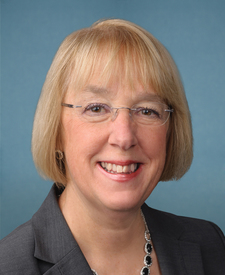 Sen. Patty MurrayD-WA
 Sen. Patrick LeahyD-VT
- Sen. Daniel MoynihanD-NY
 Sen. Tom HarkinD-IA
- Sen. David PryorD-AR
- Sen. Carol Moseley BraunD-IL
 Sen. Daniel AkakaD-HI
- Sen. Dale BumpersD-AR
 Sen. Ted KennedyD-MA
 Sen. Carl LevinD-MI
 Sen. Jay RockefellerD-WV
- Sen. Tom DaschleD-SD
 Sen. Daniel InouyeD-HI
- Sen. James SasserD-TN
 Sen. Kent ConradD-ND
- Sen. Harlan MathewsD-TN
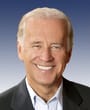 Sen. Joseph BidenD-DE
- Sen. Bill BradleyD-NJ
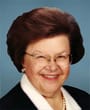 Sen. Barbara MikulskiD-MD
 Sen. John KerryD-MA
 Sen. Robert ByrdD-WV
 Sen. Christopher DoddD-CT
- Sen. Harris WoffordD-PA
- Sen. John GlennD-OH
 Sen. Dianne FeinsteinD-CA
- Sen. Wendell FordD-KY
 Sen. Byron DorganD-ND
 Sen. Harry ReidD-NV
 Sen. Frank LautenbergD-NJ
- Sen. Fritz HollingsD-SC
 Sen. Max BaucusD-MT
- Sen. Richard BryanD-NV
- Sen. Bob GrahamD-FL
- Sen. John JohnstonD-LA
- Sen. John BreauxD-LA
- Sen. Dennis DeConciniD-AZ
- Sen. Charles RobbD-VA
 Sen. Jeff BingamanD-NM
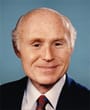 Sen. Herb KohlD-WI
- Sen. David BorenD-OK
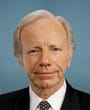 Sen. Joseph LiebermanD-CT
- Sen. Ben CampbellD-CO
- Sen. Robert KerreyD-NE
- Sen. James ExonD-NE
- Sen. Samuel NunnD-GA
- Sen. Howell HeflinD-AL














































Republicans who voted yea(43)
- Sen. Jim JeffordsR-VT
- Sen. Mark HatfieldR-OR
- Sen. John ChafeeR-RI
- Sen. David DurenbergerR-MN
 Sen. Arlen SpecterR-PA
- Sen. William CohenR-ME
- Sen. Robert PackwoodR-OR
- Sen. Nancy KassebaumR-KS
 Sen. Ted StevensR-AK
- Sen. John DanforthR-MO
 Sen. Pete DomeniciR-NM
 Sen. John WarnerR-VA
 Sen. Kit BondR-MO
- Sen. Slade GortonR-WA
- Sen. Alfonse D’AmatoR-NY
 Sen. Richard LugarR-IN
 Sen. Thad CochranR-MS
- Sen. Conrad BurnsR-MT
- Sen. Alan SimpsonR-WY
- Sen. William RothR-DE
 Sen. Kay HutchisonR-TX
 Sen. Robert BennettR-UT
 Sen. Daniel CoatsR-IN
 Sen. Chuck GrassleyR-IA
- Sen. Strom ThurmondR-SC
- Sen. Frank MurkowskiR-AK
 Sen. Orrin HatchR-UT
- Sen. Connie MackR-FL
- Sen. Paul CoverdellR-GA
 Sen. Mitch McConnellR-KY
- Sen. Robert DoleR-KS
- Sen. Larry PresslerR-SD
 Sen. John McCainR-AZ
 Sen. Judd GreggR-NH
 Sen. Trent LottR-MS
- Sen. Phil GrammR-TX
- Sen. Dirk KempthorneR-ID
 Sen. Larry CraigR-ID
- Sen. Don NicklesR-OK
- Sen. Hank BrownR-CO
- Sen. Bob SmithR-NH
- Sen. Malcolm WallopR-WY
- Sen. Lauch FairclothR-NC




























Data notes
The Senate’s recorded vote on the final version of the law (roll call 504 in Voteview), matched to the vote the record cites and checked against its totals. Positions are each member’s DW-NOMINATE score for that Congress, as on the Ideology page; left to right is more liberal to more conservative. Paired and announced yea votes count as yea. Lists follow the compass, most liberal first. A name links to a profile only for members of the current Congress. A law passed by voice vote or unanimous consent has no member list, and neither does a vote Voteview has not yet recorded.
Committees
The committees the bill was sent to, and what each did with it.

Data notes
A committee links to its page only where it exists in the current Congress; older and renamed committees are named without a link.
Timeline
From introduction to signing, newest first: the committees, the floor and the president. 39 actions.
- May 18, 1994Became lawBecame law · Became Public Law No: 103-252.
- Became lawBecame law · Signed by President.
- May 17, 1994PresidentPresident · Presented to President.
- May 12, 1994Resolving differencesResolving differences · On agreeing to the conference report Agreed to by the Yeas and Nays: 393 - 20 (Roll no. 170).House roll call 170
- Resolving differencesResolving differences · Motions to reconsider laid on the table Agreed to without objection.
- Resolving differencesResolving differences · Conference report agreed to in House: On agreeing to the conference report Agreed to by the Yeas and Nays: 393 - 20 (Roll no. 170).House roll call 170
- Resolving differencesResolving differences · The previous question was ordered without objection.
- Resolving differencesResolving differences · Mr. Ford (MI) brought up conference report H. Rept. 103-497 for consideration under the provisions of H. Res. 421.
- FloorFloor · DEBATE - Pursuant to the provisions of H. Res. 421, the House proceeded with one hour of debate on the conference report.
- FloorFloor · Rule H. Res. 421 passed House.
- May 11, 1994Resolving differencesResolving differences · Senate agreed to conference report by Yea-Nay Vote. 98-1. Record Vote No: 109.Senate roll call 109
- Resolving differencesResolving differences · Conference report agreed to in Senate: Senate agreed to conference report by Yea-Nay Vote. 98-1. Record Vote No: 109.Senate roll call 109
- Resolving differencesResolving differences · Conference papers: official papers held at the desk in Senate.
- FloorFloor · Rules Committee Resolution H. Res. 421 Reported to House. Rule provides for consideration of the conference report to S. 2000. Upon the adoption of this resolution it shall be in order to consider the conference report on S. 2000. All points of order against the conference repor…
- May 9, 1994Resolving differencesResolving differences · Conference papers: Senate report and managers' statement held at the desk in Senate.
- Resolving differencesResolving differences · Conference report H. Rept. 103-497 filed.
- Resolving differencesResolving differences · Conference report filed: Conference report H. Rept. 103-497 filed.
- May 6, 1994Resolving differencesResolving differences · Conferees agreed to file conference report.
- Resolving differencesResolving differences · Conference committee actions: Conferees agreed to file conference report.
- May 3, 1994Resolving differencesResolving differences · Senate agreed to request for conference. Appointed conferees. Kennedy; Dodd; Metzenbaum; Pell; Kassebaum; Jeffords; Coats.
- FloorFloor · Senate disagreed to the House amendments by Voice Vote.
- May 2, 1994FloorFloor · Message on House action received in Senate and at desk: House amendments to Senate bill and House requests a conference.
- Apr 28, 1994Resolving differencesResolving differences · Motion to reconsider laid on the table Agreed to without objection.
- Resolving differencesResolving differences · The Speaker appointed conferees - from the Committee on Energy and Commerce for consideration of title III of the Senate bill, and title III of the House amendment, and modifications committed to conference: Dingell, Sharp, Markey, Lehman, Kreidler, Moorhead, Bilirakis, and Hast…
- Resolving differencesResolving differences · The Speaker appointed conferees - from the Committee on Education and Labor for consideration of the Senate bill, and the House amendment, and modifications committed to conference: Ford (MI), Martinez, Kildee, Owens, Andrews (NJ), Scott, Woolsey, Romero-Barcelo, Baesler, Goodli…
- Resolving differencesResolving differences · On motion that the House insist upon its amendments, and request a conference Agreed to without objection.
- Resolving differencesResolving differences · Mr. Martinez asked unanimous consent that the House insist upon its amendments, and request a conference.
- FloorFloor · The title of the measure was amended. Agreed to without objection.
- FloorFloor · A similar measure H.R. 4250 was laid on the table without objection.
- FloorFloor · On passage Passed without objection.
Data notes
Shows the introduction, each committee and subcommittee step the source dates (referral, hearings, markup, report, discharge), and the floor, conference, presidential and became-law steps. Calendar placements, messages between the chambers, amendments and committee report numbers are not shown for laws before the 108th Congress. Two entries the source lists twice are shown once.
Official record
The bill’s full text and every action, including introduction and committee steps, are on Congress.gov. Data through Oct 7, 2026.