Resolution Trust Corporation Completion Act
Public Law 103-204 · S. 714 · 103rd Congress · began in the Senate
Signed by Bill Clinton (D) on Dec 17, 1993 · Finance and Financial Sector
Sponsor: Sen. Donald Riegle (D-MI)
Cosponsors: None
Passage votesYeaNay
- HouseRecorded vote: 235 yea, 191 nay235–191
- SenateRecorded vote: 54 yea, 45 nay54–45
Data notes
The final version of the law, as each chamber passed it. A chamber that passed it by voice vote or unanimous consent has no count. “Method not stated” means the record does not say how the chamber voted. Where the record has a member-by-member vote, the “Who voted for it” section shows who voted yea.
Summary
The Congressional Research Service’s plain-language summary of what the law does.
Resolution Trust Corporation Completion Act - Amends the Federal Home Loan Bank Act (FHLBA) to repeal the expiration date for the authority of the Resolution Trust Corporation (RTC) to use previously appropriated funds to resolve institutions in default.
(Sec. 2) Conditions the availability of funds in excess of specified amounts upon certification by the Secretary of the Treasury to the Congress that the RTC is in compliance with this Act.
Limits the use of appropriated funds solely for purposes of protecting insured depositors or the administrative expenses of the RTC. Forbids the use of such funds for the benefit of shareholders of an insured depository institution in default.
(Sec. 3) Requires the RTC to institute specified management reforms, including: (1) establishment of a comprehensive business plan; (2) marketing of real property assets on an individual basis for a certain period before disposing of them on a portfolio basis or including them in a multiasset sales initiative (except in specified circumstances); (3) specified procedures for RTC disposition of real-estate related assets; (4) a division of minorities and women's programs; (5) a chief financial officer; (6) revised applicant appraisal procedures for future task ordering agreements; (7) specified measures with respect to its contracting systems and contractor oversight responsibilities; (8) an audit committee to monitor its financial operations and asset disposition operations; (9) an assistant general counsel for professional liability; (10) a management information system; and (11) internal controls against fraud, waste, and abuse.
Requires the RTC to: (1) disclose its expenditures in detail, as well as the compensation paid to senior personnel of any depository institution under receivership or conservatorship; (2) grant preference to certain offers from minority individuals or business entities when considering offers to acquire an insured depository institution located in a predominantly minority neighborhood; (3) stipulate in certain-sized contracts that the contractor will subcontract with minority- or women-owned businesses; (4) apply competitive bidding procedures in awarding contracts that are no less stringent than those in effect on the date of enactment of this Act; (5) restrict the use of outside counsel to specified conditions; (6) ensure that each of its regional offices contains a client responsiveness unit responsible to its ombudsman; and (7) implement a process for non-defaulting business and commercial borrowers to appeal any of its decisions (when acting as a conservator) which would adversely affect their credit transactions.
Requires the Comptroller General to study and report to the Congress on: (1) RTC compliance with the management reform required by this Act; and (2) RTC transfers of performing assets.
Requires the RTC to notify the Administrator of General Services after acquiring certain interests in commercial office property in its capacity as conservator or receiver.
(Sec. 4) Amends the Federal Deposit Insurance Act (FDIA) to extend retroactively from three years to five years the statute of limitations for certain tort actions brought by the RTC as conservator or receiver of a failed savings association for fraud or intentional misconduct resulting in unjust enrichment, and other claims arising from gross negligence or intentionally tortious conduct.
(Sec. 5) Amends the FHLBA to limit the amounts of performance-based cash awards for FTC and Oversight Board employees. Proscribes compensation that exceeds that of the RTC chief executive.
(Sec. 6) Directs the FDIC and the RTC to establish an interagency transition task force to facilitate the transfer to the FDIC of RTC operations and personnel with respect to the FSLIC Resolution Fund.
(Sec. 7) Accelerates the RTC termination date from 1996 to 1995.
(Sec. 8) Amends the FDIA to direct the Secretary of the Treasury to pay the Savings Association Insurance Fund (SAIF) any amounts needed to cover losses incurred in FY 1994 through 1998.
Sets forth prerequisites for the payment of such funds, including certification by the Chairperson of the FDIC Board of Directors that specified conditions exist, and that the FDIC has provided for the appointment of: (1) a chief financial officer with no other operating responsibilities who will report directly to the FDIC Chairperson; (2) a senior officer responsible for contract enforcement; and (3) a senior attorney responsible for professional liability cases.
Prohibits the aggregate amount appropriated to the SAIF for FY 1994 through 1998 from exceeding $8 billion. Requires the Comptroller General to evaluate for the Congress any certifications submitted pursuant to SAIF funding prerequisites.
(Sec. 9) Extends the moratorium on conversion transactions (the change of status between Bank Insurance Fund (BIF) members and SAIF members) to before the later of the end of the five-year period beginning on August 9, 1989, or the date on which the SAIF first meets or exceeds a mandated reserve ratio.
(Sec. 10) Declares that neither BIF members, nor SAIF members, shall be required to repay funds borrowed by the FDIC to aid the sister fund.
(Sec. 11) Mandates that the BIF and SAIF be separately maintained. Proscribes any commingling of their respective funds.
Precludes either the BIF or the SAIF from being used to benefit the shareholders of an insured depository institution in connection with any type of resolution by either the FDIC or the RTC in their respective capacities as conservator or receiver.
(Sec. 12) Amends the FHLBA to increase, subject to appropriations, the maximum dollar limits for condominium and single family properties eligible for the RTC affordable housing program.
(Sec. 13) Amends the FDIA to include within the FDIC affordable housing program properties acquired by the FDIC in its capacity as sole owner of certain subsidiaries of a depository institution under conservatorship or receivership.
(Sec. 14) Amends the FHLBA and the FDIA to direct the RTC and the FDIC to notify clearinghouses within a reasonable time that they have acquired title to residential property ineligible for the affordable housing program.
Establishes the Affordable Housing Advisory Board to advise the Thrift Depositor Protection Oversight Board and the Board of Directors of the FDIC on affordable housing policies and operations. Terminates such Board on September 30, 1998. Terminates the National Housing Advisory Board 90 days after enactment of this Act.
Amends the FHLBA and the FDIA to direct the RTC and the FDIC to provide information on the availability of seller financing to minority- and women-owned businesses and nonprofit organizations engaged in providing affordable housing.
Amends the FHLBA and the FDIA to direct the RTC and the FDIC to enter into an agreement setting forth a plan for the orderly unification of their respective activities, authorities, and responsibilities to achieve an effective and comprehensive affordable housing program management structure. Prescribes agreement guidelines. Transfers remaining authorities and responsibilities to the FDIC on October 1, 1995. Limits the liability of the RTC and the FDIC with respect to the disposition of assets for which they have respectively been appointed conservator or receiver.
(Sec. 15) Amends the FHLBA and the FDIA to authorize the RTC and the FDIC, respectively, to offer the right of first refusal to purchase single family property to the household residing in it.
(Sec. 16) Amends the FHLBA and the FDIA to direct the RTC and FDIC, when selling real property, to give preference, among purchase offers that will result in the same net present value proceeds, to those that would use the property to provide housing for the homeless.
(Sec. 17) Amends the FHLBA and the FDIA to direct the RTC and the FDIC to grant sales preferences to public agencies and nonprofit organizations for affordable housing or homeless shelter programs when selling certain commercial real properties.
(Sec. 18) Amends the FHLBA to direct member banks to: (1) implement a housing opportunities hotline program to provide information regarding opportunities to purchase single-family properties held by Federal agencies located in the member bank's district; and (2) establish a toll-free telephone line to disseminate such information.
(Sec. 19) Amends the FDIA to declare that the FDIC shall be a U.S. agency for purposes of Federal criminal conflict of interest law. Applies such law to the FDIC and its contractors.
Directs the FDIC Board of Directors to prescribe regulations regarding: (1) conflicts of interest, ethical responsibilities and the use of confidential information; (2) procedures for ensuring minimum standards of competence, experience, and integrity for its contractors; and (3) proscriptions against the sale of assets of a failed institution by the FDIC to certain persons who engaged in unethical conduct with respect to such institution. Grants FDIC rules priority over the conflict of interest or ethical rules of other agencies or Government corporations with respect to any officer, director, employee, or independent contractor acting for or on behalf of the FDIC.
(Sec. 21) Amends the FDIA and the FHLBA to: (1) expand the list of proscribed activities entitled to whistleblower protection; and (2) extend its whistleblower protections to FDIC contractors.
(Sec. 22) Establishes within the FDIC a separate Division of Asset Disposition to exercise all powers of the FDIC with respect to the liquidation of insured depository institutions and the disposition of their assets.
(Sec. 23) Amends the Inspector General Act of 1978 to: (1) make the office of Inspector General of the FDIC a presidential appointment (currently an agency appointment); and (2) authorize the Chairperson of the FDIC to delegate specified authorities solely to the Vice Chairperson of the FDIC Board of Directors.
(Sec. 24) Amends the FHLBA to establish the position of deputy chief executive officer of the RTC.
(Sec. 25) Amends the FDIA to apply certain Federal due process protections regarding prejudgment attachment of assets and related injunctions (without the usual Federal requirement that the applicant show irreparable and immediate injury, loss, or damage).
(Sec. 26) Requires the Comptroller General to study and report to the Congress on: (1) the effectiveness of the RTC Affordable Housing Program in providing affordable very low-, low-, and moderate-income housing; and (2) feasibility of establishing a single Federal agency to consolidate real property disposition activities now conducted separately by the RTC, the FDIC, and certain other Federal agencies.
(Sec. 27) Amends the FHLBA and the FDIA to extend the duty of the RTC to be appointed as conservator or receiver until July 1, 1995.
(Sec. 28) Requires the Chairpersons of the Thrift Depositor Protection Oversight Board and of the FDIC to report to certain congressional committees regarding the purposes for which funds made available to the RTC and the SAIF were used.
(Sec. 29) Amends the FHLBA to: (1) establish the Office of General Counsel of the RTC; (2) set forth procedural guidelines under which a warranted contracting officer is authorized to execute contracts on behalf of the RTC; and (3) set forth additional contracting requirements for certain-sized RTC contracts.
(Sec. 32) Amends the Department of Defense Appropriations Act, 1990 to include within the definition of property any intangible assets sold or offered by the FDIC or the RTC.
(Sec. 33) Expresses the sense of the Congress that the chief executive officers of certain Federal financial institution regulatory agencies take all necessary steps to ensure that individuals with disabilities and entities owned by such individuals are not discriminated against in contracting for delivery of services to the agencies.
(Sec. 34) Requires the Special Counsel appointed under the Crime Control Act of 1990 to submit to certain congressional committees a status report on efforts to monitor and improve the collection of fines and restitution in cases involving criminal activity in and against the financial services industry.
(Sec. 35) Requires the Resolution Trust Corporation to provide semiannual reports to certain congressional committees concerning auction contractors for RTC assets.
(Sec. 36) Amends the FHLBA to cite conditions under which the RTC must accept appointment from the FDIC to serve as conservator or receiver of certain SAIF member banks.
(Sec. 37) Permits the BIF to assist an insured depository institution that has become State-owned.
(Sec. 38) Amends the FDIA to provide for separate insurance of funds deposited by an insured depository institution pursuant to the Bank Deposit Financial Assistance Program of the Department of Energy.
Who voted for it
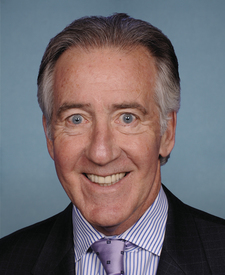
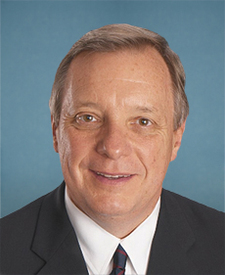
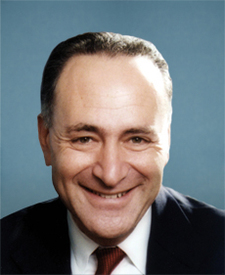
Every senator of the 103rd Congress on the ideology compass. Highlighted: the 54 who voted yea on final passage. Faded: everyone else, including those who voted nay, did not vote, or had not yet taken office.
54 yea45 nay1 present or did not vote
Democrats who voted yea(34)
 Sen. Barbara BoxerD-CA
- Sen. Paul SimonD-IL
- Sen. Paul SarbanesD-MD
- Sen. George MitchellD-ME
- Sen. Claiborne PellD-RI
- Sen. Donald RiegleD-MI
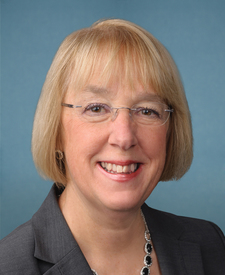 Sen. Patty MurrayD-WA
 Sen. Patrick LeahyD-VT
- Sen. David PryorD-AR
- Sen. Carol Moseley BraunD-IL
 Sen. Daniel AkakaD-HI
- Sen. Dale BumpersD-AR
 Sen. Ted KennedyD-MA
 Sen. Carl LevinD-MI
- Sen. Tom DaschleD-SD
 Sen. Daniel InouyeD-HI
- Sen. James SasserD-TN
- Sen. Harlan MathewsD-TN
 Sen. Joseph BidenD-DE
 Sen. Barbara MikulskiD-MD
 Sen. Christopher DoddD-CT
- Sen. John GlennD-OH
 Sen. Dianne FeinsteinD-CA
- Sen. Wendell FordD-KY
 Sen. Harry ReidD-NV
- Sen. Richard BryanD-NV
- Sen. John JohnstonD-LA
- Sen. John BreauxD-LA
- Sen. Charles RobbD-VA
 Sen. Jeff BingamanD-NM
- Sen. David BorenD-OK
 Sen. Joseph LiebermanD-CT
- Sen. Samuel NunnD-GA
- Sen. Howell HeflinD-AL

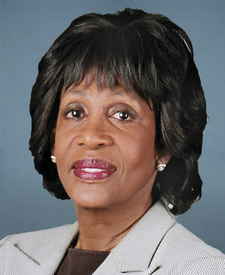










































Republicans who voted yea(20)
- Sen. Jim JeffordsR-VT
- Sen. Mark HatfieldR-OR
- Sen. John ChafeeR-RI
- Sen. David DurenbergerR-MN
- Sen. William CohenR-ME
- Sen. Robert PackwoodR-OR
- Sen. Nancy KassebaumR-KS
- Sen. John DanforthR-MO
 Sen. Pete DomeniciR-NM
 Sen. Kit BondR-MO
- Sen. Alfonse D’AmatoR-NY
 Sen. Richard LugarR-IN
- Sen. Alan SimpsonR-WY
- Sen. William RothR-DE
 Sen. Robert BennettR-UT
 Sen. Daniel CoatsR-IN
 Sen. Chuck GrassleyR-IA
- Sen. Frank MurkowskiR-AK
- Sen. Robert DoleR-KS
 Sen. Judd GreggR-NH




Data notes
The Senate’s recorded vote on the final version of the law (roll call 393 in Voteview), matched to the vote the record cites and checked against its totals. Positions are each member’s DW-NOMINATE score for that Congress, as on the Ideology page; left to right is more liberal to more conservative. Paired and announced yea votes count as yea. Lists follow the compass, most liberal first. A name links to a profile only for members of the current Congress. A law passed by voice vote or unanimous consent has no member list, and neither does a vote Voteview has not yet recorded.
Committees
The committees the bill was sent to, and what each did with it.

Data notes
A committee links to its page only where it exists in the current Congress; older and renamed committees are named without a link.
Timeline
From introduction to signing, newest first: the committees, the floor and the president. 37 actions.
- Dec 17, 1993Became lawBecame law · Became Public Law No: 103-204.
- Became lawBecame law · Signed by President.
- Dec 8, 1993PresidentPresident · Presented to President.
- Nov 23, 1993Resolving differencesResolving differences · On agreeing to the conference report Agreed to by recorded vote: 235 - 191, 1 Present (Roll no. 613).House roll call 613
- Resolving differencesResolving differences · Motion to reconsider laid on the table Agreed to without objection.
- Resolving differencesResolving differences · Conference report agreed to in House: On agreeing to the conference report Agreed to by recorded vote: 235 - 191, 1 Present (Roll no. 613).House roll call 613
- Nov 22, 1993Resolving differencesResolving differences · The previous question was ordered without objection.
- Resolving differencesResolving differences · Mr. Neal (NC) brought up conference report H. Rept. 103-380 by previously agreed to special order.
- FloorFloor · DEBATE - The House proceeded with one hour of debate on the conference report.
- FloorFloor · PERMISSION TO CONSIDER CONFERENCE REPORT - Mr. Neal asked unanimous consent that it be in order to consider the conference report, and that all points of order against the conference report be waived. Agreed to without objection.
- Nov 20, 1993Resolving differencesResolving differences · Senate agreed to conference report by Yea-Nay Vote. 54-45. Record Vote No: 393.Senate roll call 393
- Resolving differencesResolving differences · Conference report agreed to in Senate: Senate agreed to conference report by Yea-Nay Vote. 54-45. Record Vote No: 393.Senate roll call 393
- Nov 19, 1993Resolving differencesResolving differences · Conference report H. Rept. 103-380 filed.
- Resolving differencesResolving differences · Conference report filed: Conference report H. Rept. 103-380 filed.
- Resolving differencesResolving differences · Conferees agreed to file conference report.
- Resolving differencesResolving differences · Conference committee actions: Conferees agreed to file conference report.
- FloorFloor · Rules Committee Resolution H. Res. 317 Reported to House. Rule provides for consideration of the conference report to S. 714. Waiving all points of order against the conference report.
- Nov 18, 1993Resolving differencesResolving differences · Conference papers: Senate report and managers' statement held at the desk in Senate.
- Resolving differencesResolving differences · Conference held.
- Resolving differencesResolving differences · Conference committee actions: Conference held.
- Nov 16, 1993Resolving differencesResolving differences · Senate agreed to request for conference. Appointed conferees. Riegle; Sarbanes; Dodd; D'Amato; Gramm.
- FloorFloor · Senate disagreed to the House amendments by Voice Vote.
- Sep 21, 1993FloorFloor · Message on House action received in Senate and at desk: House amendments to Senate bill and House requests a conference.
- Sep 14, 1993Resolving differencesResolving differences · The Speaker appointed additional conferees - from the Committee on the Judiciary for consideration of secs. 18 and 22 of the Senate bill, and secs. 4 and 19 of the House amendment, and modifications committed to conference: Brooks, Hughes, Boucher, Fish, and Goodlatte.
- Resolving differencesResolving differences · The Speaker appointed additional conferees - from the Committee on Government Operations for consideration of sec. 13 of the Senate bill, and sec. 23 of the House amendment, and modifications committed to conference: Conyers, Collins (IL), English (OK), Clinger, and McCandless.
- Resolving differencesResolving differences · The Speaker appointed conferees - from the Committee on Banking, Finance and Urban Affairs for consideration of the Senate bill, and the House amendment, and modifications committed to conference: Gonzalez, Neal (NC), LaFalce, Vento, Schumer, Frank (MA), Kanjorski, Kennedy, Flak…
- Resolving differencesResolving differences · Motion to reconsider laid on the table Agreed to without objection.
- Resolving differencesResolving differences · On motion that the House insist upon its amendments, and request a conference Agreed to by voice vote.
- Resolving differencesResolving differences · Mr. Gonzalez moved that the House insist upon its amendments, and request a conference.
- FloorFloor · A similar measure H.R. 1340 was laid on the table without objection.
Data notes
Shows the introduction, each committee and subcommittee step the source dates (referral, hearings, markup, report, discharge), and the floor, conference, presidential and became-law steps. Calendar placements, messages between the chambers, amendments and committee report numbers are not shown for laws before the 108th Congress. Two entries the source lists twice are shown once.
Official record
The bill’s full text and every action, including introduction and committee steps, are on Congress.gov. Data through Oct 7, 2026.