ADAMHA Reorganization Act
Public Law 102-321 · S. 1306 · 102nd Congress · began in the Senate
Signed by George H. W. Bush (R) on Jul 10, 1992 · Health
Sponsor: Sen. Ted Kennedy (D-MA)
Cosponsors (1): Sen. Orrin Hatch
Passage votesYeaNay
- HouseRecorded vote: 358 yea, 60 nay358–60
- SenateRecorded vote: 86 yea, 8 nay86–8
Data notes
The final version of the law, as each chamber passed it. A chamber that passed it by voice vote or unanimous consent has no count. “Method not stated” means the record does not say how the chamber voted. Where the record has a member-by-member vote, the “Who voted for it” section shows who voted yea.
Summary
The Congressional Research Service’s plain-language summary of what the law does.
ADAMHA Reorganization Act - Title I: Reorganization of Administration and Institutes - Subtitle A: Administration - Amends the Public Health Service Act to replace provisions relating to the Alcohol, Drug Abuse, and Mental Health Administration, the National Institute on Alcohol Abuse and Alcoholism, the National Institute on Drug Abuse, and the National Institute of Mental Health with provisions declaring that the Substance Abuse and Mental Health Services Administration (the Administration) is an agency of the Public Health Service and that the Center for Substance Abuse Treatment, the Center for Substance Abuse Prevention, and the Center for Mental Health Services (the Centers) are agencies of the Administration.
Mandates an Administrator, authorizes a Deputy Administrator, sets forth the Administration's general authorities, and requires an Associate Administrator for Alcohol Prevention and Treatment Policy.
Mandates an Associate Administrator for Women's Services and establishment of the Advisory Committee for Women's Services. Requires a study on the extent to which women are represented among senior personnel at the Administration.
Requires a biennial report to specified congressional committees on Administration activities.
Authorizes appropriations for grants, cooperative agreements, and contracts under these provisions.
Replaces provisions relating to advisory councils with provisions establishing advisory councils for the Administration and each of the Centers.
Replaces provisions relating to peer review with provisions requiring peer review of grants, cooperative agreements, and contracts administered through the Centers.
Replaces provisions relating to alcohol abuse and alcoholism demonstration projects with provisions authorizing grants, contracts, and cooperative agreements to develop and expand mental health and substance abuse treatment services for homeless individuals.
Authorizes appropriations.
Establishes the Center for Substance Abuse Treatment.
Mandates grants, cooperative agreements, or contracts for providing to pregnant and postpartum women residential treatment for substance abuse. Allows minor children of the women to reside in the treatment facilities. Authorizes appropriations. Requires grants for outpatient treatment of substance abuse among pregnant and postpartum women and, where appropriate, their infants.
Mandates grants for demonstration projects to improve the provision of treatment services for substance abuse, including: (1) treatment to adolescents, female addicts and their children, racial and ethnic minorities, or individuals in rural areas; (2) treatment in exchange for public service; (3) treatment services operated by migrant or community health centers or programs providing health services for the homeless; (4) 'treatment campus' projects; (5) projects in large metropolitan areas to improve the availability and delivery of services; and (6) outreach to drug abusers at risk of HIV infection. Authorizes appropriations.
Requires grants for substance abuse treatment for individuals under criminal justice supervision. Authorizes appropriations.
Mandates grants to increase the number of substance abuse treatment professionals and the number of health professionals providing treatment services. Authorizes appropriations.
Redesignates the National Institute on Drug Abuse as the Center for Drug Abuse Treatment.
Modifies the duties of the Director of the Center for (originally established as the Office for) Substance Abuse Prevention. Replaces provisions authorizing appropriations for the Center with provisions establishing a national data base on programs for substance abuse prevention.
Replaces provisions establishing an alcohol and drug abuse clearinghouse with provisions mandating: (1) assistance to communities to develop comprehensive long-term substance abuse prevention strategies; and (2) evaluation of different community approaches to prevention. Authorizes appropriations.
Requires that demonstration projects for the prevention, treatment, and rehabilitation of drug and alcohol abuse among high risk youth include strategies for reducing the use of alcoholic and tobacco products by individuals to whom it is unlawful to sell or distribute the products. Authorizes appropriations to carry out the demonstration projects.
Establishes the Center for Mental Health Services (Mental Health Center) and sets forth its duties, including carrying out provisions relating to clinical training and instruction and clinical traineeships. (Current law authorizes the Surgeon General to carry out those provisions.)
Directs the Secretary of Health and Human Services to carry out provisions establishing grant programs for demonstration projects through the Mental Health Center (currently, through the National Institute of Mental Health), increases the limitation on the duration of grants, and authorizes appropriations.
Repeals provisions establishing a National Mental Health Education Program.
Authorizes appropriations to carry out provisions relating to counseling and mental health treatment for individuals infected with the etiologic agent for acquired immune deficiency syndrome and others who experience serious psychological reactions as a result of such infection of that individual.
Mandates grants to public entities for comprehensive community mental health services to children under 22 years old with a serious emotional disturbance. Requires grantees to enter into understandings with providers of non-mental health services (such as medical, educational, and vocational services) to facilitate the availability of those services, but prohibits the use of grant funds or non-Federal contributions made with respect to the grant for those services. Mandates case management and individualized service plans. Allows grant funds to be used for related training. Requires the grantee public entity to have an approved plan for a jurisdiction-wide care system for community-based services for such children. Authorizes appropriations.
Removes provisions relating to research on public health emergencies, animals in research, reduction in the waiting period for drug abuse treatment, model projects for pregnant and postpartum women and their infants, and drug abuse demonstration projects of national significance.
Subtitle B: Institutes - Adds the National Institute on Alcohol Abuse and Alcoholism (NIAAA), the National Institute on Drug Abuse (NIDA), and the National Institute of Mental Health (NIMH) to the list of national research institutes.
Rewords provisions relating to NIAAA's general purposes and research program, authorizes appropriations, and mandates an Associate Director for Prevention.
Creates a subpart on NIDA, including authorizing appropriations for NIDA. Mandates an Associate Director for Prevention. Authorizes the designation of National Drug Abuse Research Centers for interdisciplinary research. Mandates annual grants to any such designated centers. Establishes: (1) an Office on AIDS (acquired immune deficiency syndrome); and (2) a Medication Development Program regarding medications to treat drug addictions. Authorizes appropriations for the Medication Program. Repeals provisions relating to drug abuse research.
Creates a new subpart on NIMH. Mandates: (1) collection and publication of information on suicide and suicide prevention; and (2) an Associate Director for Special Populations to deal with policies and programs regarding women, minorities, and discrimination. Authorizes appropriations for NIMH. Mandates an Associate Director for Prevention. Establishes the Office of Rural Mental Health Research and the Office on AIDS.
Subtitle C: Miscellaneous Provisions Relating to Substance Abuse and Mental Health - Replaces provisions relating generally to alcohol abuse and alcoholism and drug abuse with provisions making the Secretary responsible for fostering substance abuse prevention and treatment programs and services in State and local governments and in private industry.
Mandates development of a variety of model programs suitable for replication on a cost-effective basis in different types of businesses and governmental entities.
Prohibits, subject to exception, denial or deprivation of Federal civilian employment, license, or right solely on the basis of prior substance abuse.
Prohibits discrimination against substance abusers suffering from medical conditions in admission or treatment by any hospital or outpatient facility receiving Federal assistance.
Provides for records confidentiality regarding any substance abuse patient in connection with a Federally-assisted program.
Subtitle D: Transfer Provisions - Provides for transfer and transition of functions, appropriations, personnel, contracts, proceedings and other matters under this Act.
Requires that, with respect to fiscal years 1993 through 1996, the peer review systems, advisory councils, and scientific advisory committees used by NIAAA, NIDA, and NIMH be used by those institutes.
Prohibits merger of NIAAA, NIDA, or NIMH with any other institute or entity or with each other for five years after enactment of this Act.
Requires the NIAAA, NIDA, and NIMH Directors to submit budgets for FY 1994 and 1995 directly to the President.
Subtitle E: References and Conforming Amendments - Deems references to the Alcohol, Drug Abuse and Mental Health Administration (ADAMHA) and its Administrator to be references to the Substance Abuse and Mental Health Services Administration and its Administrator.
Removes provisions: (1) requiring the Orphan Products Board to evaluate ADAMHA activities regarding rare diseases or conditions; (2) including ADAMHA as one of the agencies among whom the Board must assure coordination regarding drug development; and (3) requiring ADAMHA to report to the Board regarding ADAMHA's rare disease and condition activities.
Increases the number of experts or consultants of whom the Director of the National Institutes of Health is authorized to obtain the services.
Removes provisions: (1) mandating National Research Service Awards for research at ADAMHA; (2) including ADAMHA institutes in mandatory continuing study of training programs for biomedical and behavioral research personnel; and (3) referring to the ADAMHA Administrator in connection with selection of candidates for certain endowed scientific positions.
Amends the Orphan Drug Amendments of 1985 to remove a requirement that the National Commission on Orphan Diseases assess ADAMHA activities regarding rare diseases.
Amends the Protection and Advocacy for Mentally Ill Individuals Act of 1986 to require that applications for allotments under existing provisions remain in effect for four (currently, for three) years.
Subtitle F: Employee Assistance Programs - Amends the Public Health Service Act to authorize grants to assist business organizations in establishing employee assistance programs to provide substance abuse services. Authorizes appropriations.
Title II: Block Grants to States Regarding Mental Health and Substance Abuse - Replaces provisions of the Public Health Service Act relating to alcohol and drug abuse and mental health services block grants with provisions mandating annual grants and allotments to States for comprehensive community mental health services to adults with a serious mental illness and to children with a serious emotional disturbance. Requires submission by each State and approval by the Secretary of a plan for the services.
Requires that services include: (1) outpatient services; (2) 24-hour-a-day services; (3) day treatment or other partial hospitalization services, or psychosocial rehabilitation services; and (4) screening for admission to State mental health facilities. Requires services to be provided, within capacity, to any individual residing or employed in the service area regardless of ability to pay.
Requires the State to establish a State mental health planning council. Includes in council duties serving as an advocate for adults and children.
Authorizes appropriations.
Mandates annual grants and allotments to States for the prevention and treatment of substance abuse.
Allocates certain percentages for: (1) prevention and treatment regarding alcohol; (2) prevention and treatment regarding other drugs; (3) education, counseling, and risk reduction for individuals who do not require treatment; and (4) pregnant women and women with dependent children. Requires prenatal and child care for women receiving services.
Requires: (1) intravenous drug treatment programs receiving assistance to notify the State on reaching 90 percent of capacity; (2) States to assure admission to such treatment within certain time limits; and (3) outreach for such treatment.
Requires substance abuse programs receiving assistance to routinely make available tuberculosis counseling, testing, and treatment. Provides for counseling, testing, and treatment regarding HIV disease (infection with the etiologic agent for acquired immune deficiency syndrome).
Requires States to provide for the ongoing operation of a revolving fund to make loans for establishing group homes for individuals recovering from alcohol or drug abuse. Requires that: (1) the loans be repaid by the residents through monthly installments; and (2) the residents establish house policies, including residence application procedures.
Conditions a grant on a State having and enforcing a law prohibiting sale or distribution of tobacco products to any individual under 18 years old.
Requires giving preference to pregnant women in admission to substance abuse treatment. Requires treatment or interim services to be made available to such a women within a specified time limit.
Requires: (1) that States improve the process for referring individuals to treatment facilities that can provide the modality most appropriate for the individual; (2) availability of continuing education for employees; and (3) coordination of treatment activities with other services such as health, social, correctional, educational, vocational rehabilitation, and employment services.
Mandates an assessment of need for services in the State.
Limits expenditures for treatment services in correctional institutions. Allows grant funds to be used: (1) for inpatient hospital services as treatment for substance abuse only if medically necessary; and (2) with a waiver, for construction of facilities.
Authorizes appropriations.
Sets forth antidiscrimination provisions, including prohibiting discrimination against a woman because she is pregnant.
Provides for the continuation of programs under allotments to the State of Hawaii for comprehensive substance abuse and treatment programs for Native Hawaiians.
Authorizes grants to States to increase the number of individuals to whom public and nonprofit private entities are capable of providing substance abuse treatment. Authorizes appropriations.
Authorizes methadone programs, if they have more than a specified admission waiting list period, to dispense methadone with only minimum ancillary services while individuals are waiting for admission for comprehensive treatment, providing the programs provide counseling regarding preventing exposure to or the transmission of HIV disease.
Regulates the transition from the provisions deleted by this Act to the new provisions enacted by this Act, including specifying the dollar amount to be allotted to each named State from FY 1992 allotments not paid to States before a specified date.
Sets aside a specified percentage of certain funds for programs, as enacted by this Act, for pregnant and postpartum women.
Title III: Model Comprehensive Program for Treatment of Substance Abuse - Mandates a demonstration grant for a model comprehensive substance abuse treatment program in the national capital area. Earmarks certain funds appropriated for the Department of Health and Human Services to carry out the program.
Title IV: Children of Substance Abusers - Mandates grants to identify and provide certain services to children of substance abusers and their families. Lists included services such as health and mental health care and referrals. Requires peer review of grant applications. Authorizes appropriations. Authorizes use of a specified amount of such appropriations for related training of health care professionals.
Title V: Home Visiting Services for At-Risk Families - Mandates grants for the Federal share of the costs of services to families in which a member is: (1) a pregnant woman at risk of delivering an infant with a health or developmental complication; or (2) a child under three years old who has or is at risk of a health or developmental complication, child abuse, or neglect, or who was exposed to prenatal maternal substance abuse. Includes in those services: (1) prenatal and postnatal health care; (2) primary health care for the children; (3) infant care and child development education for the parents and other care givers; (4) education concerning behaviors that adversely affect health; and (5) help in obtaining other assistance.
Considers a pregnant woman at such risk if she: (1) lacks access to or information about early and routine prenatal care; (2) lacks transportation to gain access to program services; (3) lacks appropriate child care assistance; (4) is fearful of accessing substance abuse services or child and family support services; or (5) is a low-income minor.
Requires that home visiting services provided under the grants be delivered according to a case management model.
Mandates outreach, case finding, and peer review.
Authorizes appropriations.
Title VI: Trauma Centers and Drug-Related Violence - Authorizes grants for the operating expenses of trauma centers that have incurred substantial uncompensated costs in providing trauma care in geographic areas with a significant incidence of violence arising directly or indirectly from illicit trafficking in drugs. Sets forth grant qualifications and preferences. Requires recipients to operate trauma registries. Authorizes appropriations.
Title VII: Studies - Mandates studies regarding: (1) the role of the private sector in the development of anti-addiction medications; (2) the process by which such medications receive Food and Drug Administration marketing approval; (3) other matters regarding pharmacotherapeutic treatments for drug addiction.
Declares that it is the sense of the Senate that the Medications Development Division of the National Institute on Drug Abuse shall devote special attention and adequate resources to achieve the development of: (1) medications in addition to methadone; (2) a long-acting narcotic antagonist; (3) agents for the treatment of cocaine abuse and dependency; (4) medications to treat addiction to drugs that are becoming increasingly prevalent; (5) medications to treat safely pregnant addicts and their fetuses; and (6) medications to treat the offspring of addicted mothers.
Requires submission to the appropriate congressional committees of a report on the most effective methods for providing mental health services to individuals in contact with the criminal justice system.
Mandates studies regarding: (1) insurance coverage for the treatment of mental illness and substance abuse; (2) fetal alcohol effect and fetal alcohol syndrome; (3) distribution of hypodermic needles and bleach to reduce the risk of contracting acquired immune deficiency syndrome; and (4) the statutory formulae under which funds are allocated among the States and territories under specified block grant provisions of the Public Health Service Act.
Requires the Substance Abuse and Mental Health Services Administration to report directly to specified congressional committees regarding specified aspects of substance abuse and mental health services, including regarding related insurance.
Title VIII: General Provisions - Sets forth the effective dates of this Act.
Who voted for it
Every senator of the 102nd Congress on the ideology compass. Highlighted: the 86 who voted yea on final passage. Faded: everyone else, including those who voted nay, did not vote, or had not yet taken office.
86 yea8 nay6 present or did not vote
Democrats who voted yea(50)
- Sen. Howard MetzenbaumD-OH
- Sen. Brock AdamsD-WA
 Sen. Tom HarkinD-IA
- Sen. Paul SarbanesD-MD
 Sen. Ted KennedyD-MA
- Sen. James SasserD-TN
- Sen. Paul SimonD-IL
- Sen. Donald RiegleD-MI
- Sen. Alan CranstonD-CA
 Sen. Frank LautenbergD-NJ
- Sen. Harris WoffordD-PA
 Sen. Patrick LeahyD-VT
 Sen. John KerryD-MA
- Sen. David PryorD-AR
- Sen. Bill BradleyD-NJ
 Sen. Joseph BidenD-DE
 Sen. Jay RockefellerD-WV
 Sen. Kent ConradD-ND
- Sen. George MitchellD-ME
- Sen. Tom DaschleD-SD
 Sen. Carl LevinD-MI
 Sen. Daniel AkakaD-HI
- Sen. Quentin BurdickD-ND
 Sen. Barbara MikulskiD-MD
 Sen. Robert ByrdD-WV
- Sen. Wyche FowlerD-GA
- Sen. Daniel MoynihanD-NY
 Sen. Max BaucusD-MT
 Sen. Jeff BingamanD-NM
- Sen. Dale BumpersD-AR
- Sen. James SanfordD-NC
- Sen. Dennis DeConciniD-AZ
- Sen. Robert KerreyD-NE
- Sen. John GlennD-OH
- Sen. Wendell FordD-KY
 Sen. Christopher DoddD-CT
 Sen. Daniel InouyeD-HI
 Sen. Herb KohlD-WI
- Sen. James ExonD-NE
- Sen. Lloyd BentsenD-TX
- Sen. Samuel NunnD-GA
- Sen. Alan DixonD-IL
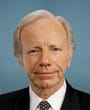 Sen. Joseph LiebermanD-CT
- Sen. John JohnstonD-LA
- Sen. Fritz HollingsD-SC
- Sen. Charles RobbD-VA
- Sen. John BreauxD-LA
- Sen. David BorenD-OK
- Sen. Howell HeflinD-AL
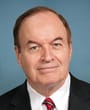 Sen. Richard ShelbyD-AL




















Republicans who voted yea(36)
- Sen. Jim JeffordsR-VT
- Sen. Mark HatfieldR-OR
- Sen. Robert PackwoodR-OR
- Sen. John ChafeeR-RI
- Sen. William CohenR-ME
- Sen. David DurenbergerR-MN
- Sen. Alfonse D’AmatoR-NY
- Sen. John DanforthR-MO
- Sen. Nancy KassebaumR-KS
- Sen. Robert KastenR-WI
- Sen. Slade GortonR-WA
- Sen. Warren RudmanR-NH
 Sen. John WarnerR-VA
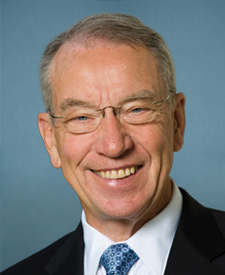 Sen. Chuck GrassleyR-IA
 Sen. Pete DomeniciR-NM
 Sen. Kit BondR-MO
 Sen. Thad CochranR-MS
- Sen. John SeymourR-CA
- Sen. Frank MurkowskiR-AK
 Sen. John McCainR-AZ
- Sen. Alan SimpsonR-WY
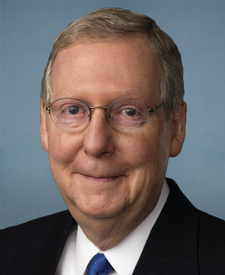 Sen. Mitch McConnellR-KY
 Sen. Richard LugarR-IN
- Sen. Strom ThurmondR-SC
- Sen. Conrad BurnsR-MT
- Sen. Larry PresslerR-SD
 Sen. Orrin HatchR-UT
 Sen. Daniel CoatsR-IN
- Sen. Robert DoleR-KS
 Sen. Trent LottR-MS
- Sen. Don NicklesR-OK
- Sen. Jake GarnR-UT
 Sen. Larry CraigR-ID
- Sen. Steven SymmsR-ID
- Sen. Malcolm WallopR-WY
- Sen. Bob SmithR-NH









Data notes
The Senate’s recorded vote on the final version of the law (roll call 399 in Voteview), matched to the vote the record cites and checked against its totals. Positions are each member’s DW-NOMINATE score for that Congress, as on the Ideology page; left to right is more liberal to more conservative. Paired and announced yea votes count as yea. Lists follow the compass, most liberal first. A name links to a profile only for members of the current Congress. A law passed by voice vote or unanimous consent has no member list, and neither does a vote Voteview has not yet recorded.
Committees
The committees the bill was sent to, and what each did with it.
 Health, Education, Labor, and Pensions Committee · Senate · hearings by (full committee), markup by, referred to, reported by
Data notes
A committee links to its page only where it exists in the current Congress; older and renamed committees are named without a link.
Timeline
From introduction to signing, newest first: the committees, the floor and the president. 68 actions.
- Jul 10, 1992Became lawBecame law · Became Public Law No: 102-321.
- Became lawBecame law · Signed by President.
- Jul 2, 1992PresidentPresident · Presented to President.
- Jul 1, 1992Resolving differencesResolving differences · On agreeing to the conference report Agreed to by the Yeas and Nays: 358 - 60 (Roll no. 253).House roll call 253
- Resolving differencesResolving differences · Conference report agreed to in House: On agreeing to the conference report Agreed to by the Yeas and Nays: 358 - 60 (Roll no. 253).House roll call 253
- Resolving differencesResolving differences · The previous question was ordered without objection.
- Resolving differencesResolving differences · Mr. Waxman brought up conference report H. Rept. 102-546 for consideration under the provisions of H. Res. 479.
- FloorFloor · Motion to reconsider laid on the table Agreed to without objection.
- FloorFloor · DEBATE - The House proceeded with one hour of general debate on the conference report.
- FloorFloor · Rule H. Res. 479 passed House.
- Jun 11, 1992FloorFloor · Rules Committee Resolution H. Res. 479 Reported to House. Rule provides for consideration of the conference report to S. 1306. All points of order against the conference report and against its consideration are waived. The conference report shall be considered as waived when cal…
- Jun 9, 1992Resolving differencesResolving differences · Senate agreed to conference report by Yea-Nay Vote. 86-8. Record Vote No: 119.Senate roll call 119
- Resolving differencesResolving differences · Conference report agreed to in Senate: Senate agreed to conference report by Yea-Nay Vote. 86-8. Record Vote No: 119.Senate roll call 119
- Resolving differencesResolving differences · Conference report considered in Senate.
- FloorFloor · Motion to instruct the Sergeant at Arms agreed to in Senate by Yea-Nay Vote. 88-6. Record Vote No: 118.Senate roll call 118
- FloorFloor · Cloture on the conference report invoked in Senate by Yea-Nay Vote. 84-9. Record Vote No: 117.Senate roll call 117
- FloorFloor · Motion to table the motion to recommit the conference report accompanying S.1306 agreed to in Senate by Yea-Nay Vote. 79-14. Record Vote No: 116.Senate roll call 116
- Jun 4, 1992Resolving differencesResolving differences · Motion to recommit conference report entered in Senate.
- Resolving differencesResolving differences · Conference report considered in Senate.
- Resolving differencesResolving differences · Conference papers: official papers held at the desk in Senate.
- FloorFloor · Cloture motion on the conference report presented in Senate.
- FloorFloor · Motion to proceed to consideration of measure agreed to in Senate by Voice Vote.
- FloorFloor · Motion to proceed to conference report accompanying S.1306 made in Senate.
- Jun 3, 1992Resolving differencesResolving differences · Conference report H. Rept. 102-546 filed.
- Resolving differencesResolving differences · Conference report filed: Conference report H. Rept. 102-546 filed.
- Resolving differencesResolving differences · Conference papers: Senate report and managers' statement held at the desk in Senate.
- May 28, 1992Resolving differencesResolving differences · On motion to recommit with instructions to conference committee Agreed to by the Yeas and Nays: 214 - 157 (Roll no. 150).House roll call 150
- Resolving differencesResolving differences · Motions to reconsider laid on the table Agreed to without objection.
- Resolving differencesResolving differences · Mr. Gingrich moved to recommit with instructions to the conference committee.
- Resolving differencesResolving differences · The previous question was ordered without objection.
Data notes
Shows the introduction, each committee and subcommittee step the source dates (referral, hearings, markup, report, discharge), and the floor, conference, presidential and became-law steps. Calendar placements, messages between the chambers, amendments and committee report numbers are not shown for laws before the 108th Congress. Two entries the source lists twice are shown once.
Official record
The bill’s full text and every action, including introduction and committee steps, are on Congress.gov. Data through Oct 7, 2026.