Williams–Yulee v. the Florida Bar
The Court held that the First Amendment did not prohibit states from barring judges and judicial candidates from personally soliciting campaign funds, because the restriction was narrowly tailored to serve the compelling interest of keeping the judiciary impartial.· AI-written
575 U.S. 433 · No. 13-1499 · 2014 term · Roberts Court
Decided Apr 29, 2015 · argued Jan 20, 2015
First Amendment · Campaign spending
Majority opinion: John Roberts
The voteMajorityDissent
5–45 in the majority, 4 in dissent
4 dissents (5–4)
Affirmed. Williams–Yulee lost.
What this ruling means
Affirmed: the Supreme Court upheld the decision of the Florida Supreme Court, so it stands (sometimes with changes the Court made to it).
Williams–Yulee was the petitioner, the side that asked the Supreme Court to review the case. “Lost” means the Court did not give that side the result it asked for.
From the Supreme Court Database. A justice who agreed with the result but not the reasoning counts in the majority.
Summary
The opening of the case’s Wikipedia article: what the case was about and what the Court held.
Williams-Yulee v. Florida Bar, 575 U.S. 433 (2015), was a United States Supreme Court case in which the court held that the First Amendment did not prohibit states from barring judges and judicial candidates from personally soliciting funds for their election campaigns since that specific restriction on candidate's speech was deemed to be narrowly tailored to serve the compelling interest of keeping the judiciary impartial. It is an instance of a government regulation passing strict scrutiny.
At issue in the case was a Florida law which barred judges from personally soliciting campaign funds. However, judges could still set up a committee in order to raise campaign funds. Williams-Yulee was a judicial candidate in Hillsborough County, Florida, who sent out a soliciting letter for campaign contributions. She also posted the letter to her website. Williams-Yulee lost her campaign to the incumbent judge. The Florida Bar filed a complaint against her for violating the law shortly afterwards.
The effects of the ruling has been a point of discussion among academics. For instance, Josh Wheeler writing for SCOTUSBlog raised concerns about greater restrictions on judicial speech and the weakening of the strict scrutiny standard.
Data notes
The text is Wikipedia’s (CC BY-SA 4.0), matched to the case by its citation, docket number or name and year, and is not checked against the opinion. The site keeps the article’s opening section, ending on its last full sentence. The one-sentence summary under the title is the Decisions list’s: Wikipedia’s own ruling sentence, or, tagged “AI-written”, one Claude wrote from this opening.
How the justices voted
Each justice who took part, placed by their Martin–Quinn ideology score for the 2014 term. Filled: the 5 in the majority. Hollow: the 4 in dissent. Colour is the party of the president who appointed them.
Majority(5)
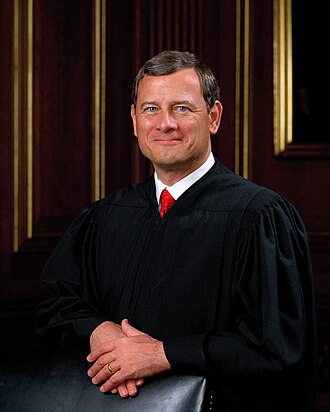 John RobertsWrote the majority opinion
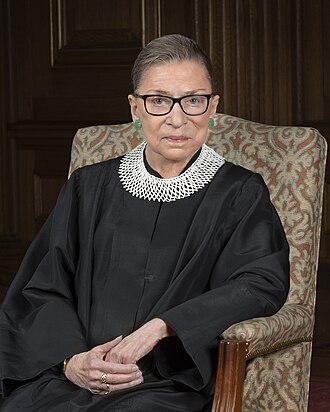 Ruth GinsburgWrote a concurrence
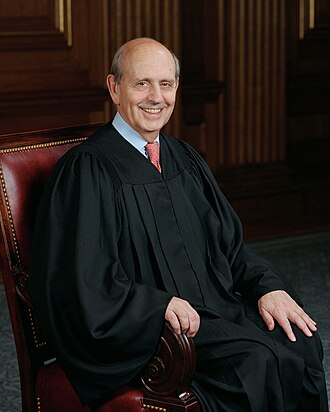 Stephen BreyerWrote a concurrence
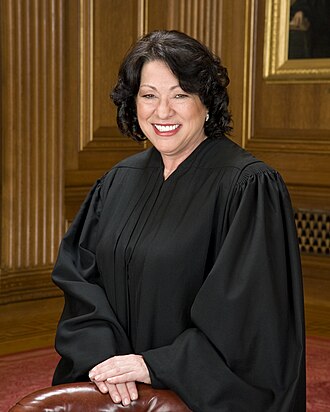 Sonia SotomayorJoined the majority
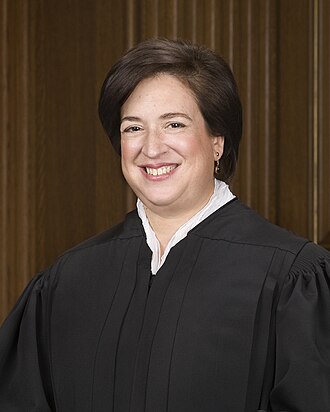 Elena KaganJoined the majority
Dissent(4)
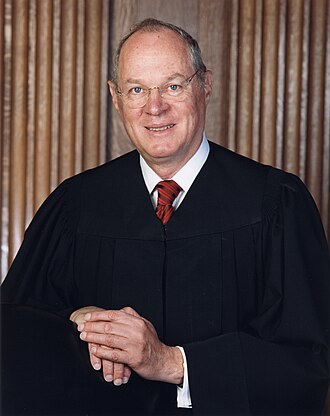 Anthony KennedyWrote a dissent
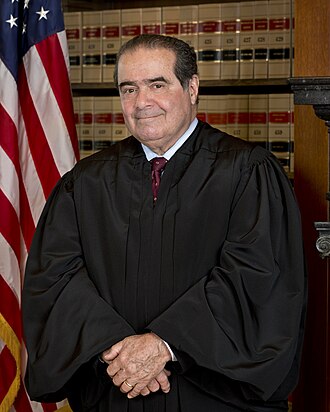 Antonin ScaliaWrote a dissent
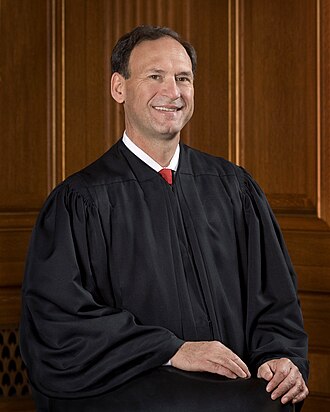 Samuel AlitoWrote a dissent
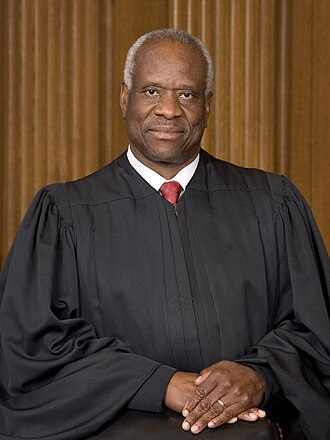 Clarence ThomasJoined a dissent
Data notes
Each justice’s vote and what they wrote are from the justice-centered file of the Supreme Court Database. “Wrote a concurrence” means the justice sided with the majority and wrote separately; a justice who dissented in part is counted on the side they took overall. A justice who wrote nothing is listed as joining their side.
Positions are each justice’s Martin–Quinn score for the case’s term, the same scores as the Ideology page: negative is more liberal, positive more conservative. A score sums up a justice’s votes across the whole term, so it says where they usually sit, not why they voted as they did here. The median line is the Court’s median justice that term.
The parties
Who brought the case to the Court, who answered it, and how it got there.
- Petitioner
- Williams–YuleePolitical candidate, activist, committee, party, party member, organization, or elected official
- Respondent
- the Florida BarAttorney, or person acting as such;includes bar applicant or law student, or law firm or bar association
- Reached the Court by
- Certiorari (the Court chose to hear it)
Data notes
The names are the two sides of the case’s title. The description under each is the Supreme Court Database’s category for that party, in its own wording. The petitioner is the side that asked the Supreme Court to review the decision below. “Why it was taken” appears only when the majority opinion says lower courts disagreed or were unsure about the question; reasons that would fit any case (“to resolve the question presented”, “an important question”) are left out.
The law at issue
The law the Court was asked to apply, and the kind of power it used to decide.
- Provision
- First Amendment (speech, press, and assembly)
- Kind of law
- Constitutional Amendment
- Decided by
- Judicial review (state level)
Data notes
The Supreme Court Database codes the main constitutional provision, statute or court rule each case turned on, and the basis of the decision: judicial review of a federal or state law, interpreting a statute, supervising the lower courts, and so on. A case can rest on more than one. “Overruled” counts only where the majority opinion says so.
Timeline
What happened at the Court and how the case got there, newest first.
- Apr 29, 2015DecidedDecided · Decided 5–4: affirmed. Williams–Yulee lost.
- Jan 20, 2015ArguedArgued · Oral argument before the Court.
- Not datedTaken upTaken up · The Supreme Court agreed to hear the case (certiorari).
- Not datedCourt belowCourt below · Began in and was decided by the Florida Supreme Court, with a dissent.
Data notes
From the Supreme Court Database: the court the case began in, the court whose decision the Supreme Court reviewed and what that court did, how the case came to the Court, and the dates of argument and decision. The database does not date the steps in the lower courts. Court names are the database’s.
Other decisions on the same issue
27 other argued cases since 1946 on campaign spending, newest first.
- National Republican Senatorial Committee v. Federal Election Commission225 L. Ed. 2d 998Jun 30, 2026 · 225 L. Ed. 2d 998First Amendment6–36–3 band
- Federal Election Commission v. Ted Cruz for SenateLandmark · Freedom of speech and of the press142 S. Ct. 1638May 16, 2022 · 142 S. Ct. 1638First AmendmentLandmark · Freedom of speech and of the press6–36–3 band
- McCutcheon v. FECLandmark · Freedom of speech and of the press572 U.S. 185Apr 2, 2014 · 572 U.S. 185First AmendmentLandmark · Freedom of speech and of the press5–45–4 band
- Arizona Free Enterprise Club's Freedom Club Pac, et al., Petitioners v. Ken Bennett, in His Official Capacity As Arizona Secretary of State, et al.564 U.S. 721Jun 27, 2011 · 564 U.S. 721First Amendment5–45–4 band
- Citizens United v. Federal Election CommissionLandmark · Freedom of speech and of the press558 U.S. 310Jan 21, 2010 · 558 U.S. 310First AmendmentLandmark · Freedom of speech and of the press5–45–4 band
- Davis v. FECLandmark · Freedom of speech and of the press554 U.S. 724Jun 26, 2008 · 554 U.S. 724First AmendmentLandmark · Freedom of speech and of the press5–45–4 band
- Federal Election Commission v. Wisconsin Right to Life, Inc.551 U.S. 449Jun 25, 2007 · 551 U.S. 449First Amendment5–45–4 band
- Neil Randall, et al. v. William H. Sorrell et al.548 U.S. 230Jun 26, 2006 · 548 U.S. 230First Amendment6–36–3 band
- Wisconsin Right to Life, Inc. v. Federal Election Commission546 U.S. 410Jan 23, 2006 · 546 U.S. 410First Amendment9–0Unanimous band
- Mitch McConnell, United States Senator, et al. v. Federal Election Commission, et al.Landmark · Freedom of speech and of the press540 U.S. 93Dec 10, 2003 · 540 U.S. 93First AmendmentLandmark · Freedom of speech and of the press5–45–4 band
- Federal Election Commission v. Christine Beaumont et al.539 U.S. 146Jun 16, 2003 · 539 U.S. 146First Amendment7–27–2 band
- Federal Election Commission v. Colorado Republican Federal Campaign Committee533 U.S. 431Jun 25, 2001 · 533 U.S. 431First Amendment5–45–4 band
- Jeremiah W. (Jay) Nixon, Attorney General of Missouri, et al. v. Shrink Missouri Government Pac et al.528 U.S. 377Jan 24, 2000 · 528 U.S. 377First Amendment6–36–3 band
- Colorado Republican Federal Campaign Committee and Douglas Jones, Treasurer v. Federal Election Commission518 U.S. 604Jun 26, 1996 · 518 U.S. 604First Amendment7–27–2 band
- Austin, Michigan Secretary of State, et al. v. Michigan State Chamber of Commerce494 U.S. 652Mar 27, 1990 · 494 U.S. 652First Amendment6–36–3 band
- Federal Election Commission v. Massachusetts Citizens for Life, Inc.479 U.S. 238Dec 15, 1986 · 479 U.S. 238First Amendment5–45–4 band
- Federal Election Commission v. National Conservative Political Action Committee et al.470 U.S. 480Mar 18, 1985 · 470 U.S. 480First Amendment7–27–2 band
- Federal Election Commission et al. v. National Right to Work Committee et al.459 U.S. 197Dec 13, 1982 · 459 U.S. 197First Amendment9–0Unanimous band
- Brown et al. v. Socialist Workers '74 Campaign Committee (Ohio) et al.459 U.S. 87Dec 8, 1982 · 459 U.S. 87First Amendment6–36–3 band
- Bread Political Action Committee et al. v. Federal Election Commission et al.455 U.S. 577Mar 8, 1982 · 455 U.S. 577First Amendment9–0Unanimous band
- Citizens Against Rent Control/Coalition for Fair Housing et al. v. City of Berkeley, California, et al.454 U.S. 290Dec 14, 1981 · 454 U.S. 290First Amendment8–18–1 band
- Federal Election Commission v. Democratic Senatorial Campaign Committee et al.454 U.S. 27Nov 10, 1981 · 454 U.S. 27First Amendment9–0Unanimous band
- California Medical Association et al. v. Federal Election Commission et al.453 U.S. 182Jun 26, 1981 · 453 U.S. 182First Amendment5–0Unanimous band
- First National Bank of Boston et al. v. Bellotti, Attorney General of Massachusetts435 U.S. 765Apr 26, 1978 · 435 U.S. 765First Amendment5–45–4 band
- Buckley et al. v. Valeo, Secretary of the United States Senate, et al.Landmark · Freedom of speech and of the press424 U.S. 1Jan 30, 1976 · 424 U.S. 1First AmendmentLandmark · Freedom of speech and of the press7–18–1 band
- Cort et al. v. Ash422 U.S. 66Jun 17, 1975 · 422 U.S. 66First Amendment9–0Unanimous band
- United States v. International Union United Automobile, Aircraft and Agricultural Implement Workers of America (UAW-CIO)352 U.S. 567Mar 11, 1957 · 352 U.S. 567First Amendment5–36–3 band
Data notes
Every other orally argued case with a clear vote, from the 1946 term on, that the Supreme Court Database files under the same issue as this one. The database gives each case one issue from a list of about 270 (abortion, search and seizure of vehicles, the death penalty, and so on), whatever law it turned on.
Official record
Read the full opinion on Justia, the argument audio on Oyez and Wikipedia. Case data from the Supreme Court Database, Version 2026 Release 01, through the 2025 term.