Bond v. United States
The Court found that a woman's attack on her friend using dangerous toxicants was not use of a chemical weapon under section 229(a)(1) of the Chemical Weapons Convention Implementation Act.· AI-written
572 U.S. 844 · No. 12-158 · 2013 term · Roberts Court
Decided Jun 2, 2014 · argued Nov 5, 2013
Criminal procedure · Statutory construction of criminal laws: assault
Landmark · Federalism
Majority opinion: John Roberts
The voteMajority
9–09 in the majority, 0 in dissent
No dissent (9–0)
Reversed and remanded. Bond won.
What this ruling means
Reversed and remanded: the Supreme Court overturned the decision of the U.S. Court of Appeals, Third Circuit and sent the case back to that court for further proceedings that follow the Supreme Court’s ruling.
Bond was the petitioner, the side that asked the Supreme Court to review the case. “Won” means the Court gave that side the result it asked for.
From the Supreme Court Database. A justice who agreed with the result but not the reasoning counts in the majority.
Summary
The opening of the case’s Wikipedia article: what the case was about and what the Court held.
Bond v. United States, 572 U.S. 844 (2014), was a United States Supreme Court case concerning whether and how international arms control agreements may regulate local crime. More specifically, it found that an attack committed by the petitioner, Carol Anne Bond, involving dangerous toxicants, was not usage of a chemical weapon under section 229(a)(1) of the Chemical Weapons Convention Implementation Act (CWCIA), a law passed to bring the United States into compliance with the namesake treaty. The case followed up on a 2011 opinion of the same name involving the same parties.
Bond had been convicted of using a chemical weapon after she was caught spreading a mixture of toxic substances around her best friend's home, having learned of an affair between her and Bond's husband. Bond subsequently challenged her conviction on the basis that CWCIA section 229(a)(1) was an unconstitutional infringement on states' rights and that her actions did not violate it. After several years of litigation, including an initial trip to the Supreme Court, the Court heard the case in 2013 and decided it seven months later. Due to the apparent conflict between Bond's "local" crime and the CWCIA's passage pursuant to an international agreement, scholars of American federalism and foreign relations law, especially conservatives, were highly interested in the case's outcome, with some believing that the Court would overturn long-standing precedent on the topic.
The majority opinion, written by Chief Justice John Roberts, vacated Bond's conviction. It found that the CWCIA was not intended and could not properly be read to criminalize conduct like Bond's, given the Chemical Weapons Convention's goal of preventing chemical warfare and other potential mass-casualty scenarios. Samuel Alito, Antonin Scalia, and Clarence Thomas wrote concurrences agreeing with the case's outcome but arguing that the Court should have struck down section 229(a)(1) as unconstitutional.
Because the Court intentionally avoided constitutional questions in its majority opinion and did not overturn any precedents, the legal community largely characterized Bond as unexpectedly narrow and anticlimactic, though some observers have remarked that the case may have more significant implications for foreign relations and federalism than initially thought.
Data notes
The text is Wikipedia’s (CC BY-SA 4.0), matched to the case by its citation, docket number or name and year, and is not checked against the opinion. The site keeps the article’s opening section, ending on its last full sentence. The one-sentence summary under the title is the Decisions list’s: Wikipedia’s own ruling sentence, or, tagged “AI-written”, one Claude wrote from this opening.
How the justices voted
Each justice who took part, placed by their Martin–Quinn ideology score for the 2013 term. Filled: the 9 in the majority. Hollow: the 0 in dissent. Colour is the party of the president who appointed them.
Majority(9)
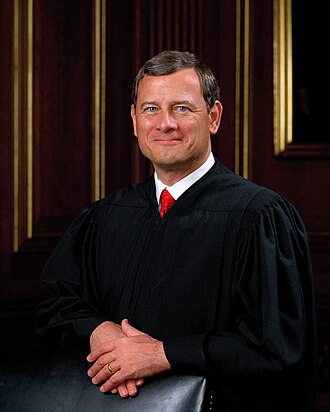 John RobertsWrote the majority opinion
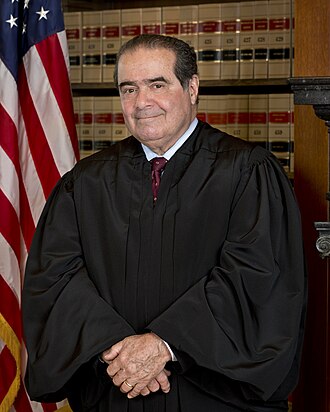 Antonin ScaliaWrote a concurrence
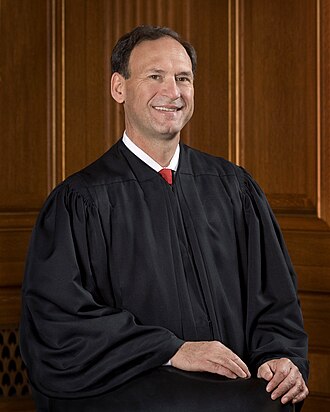 Samuel AlitoWrote a concurrence
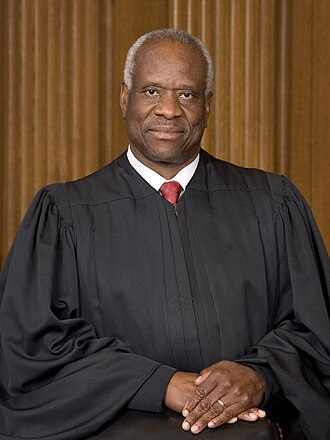 Clarence ThomasWrote a concurrence
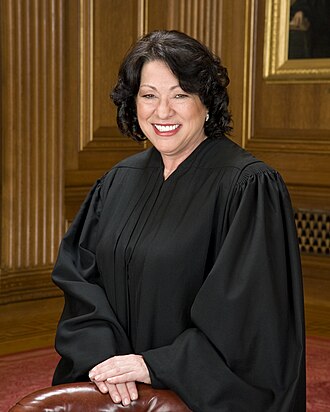 Sonia SotomayorJoined the majority
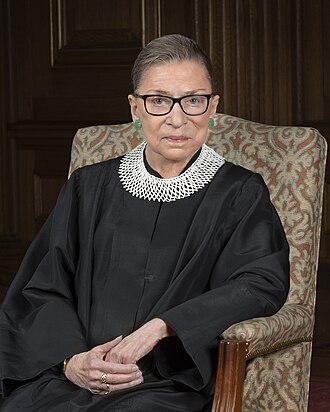 Ruth GinsburgJoined the majority
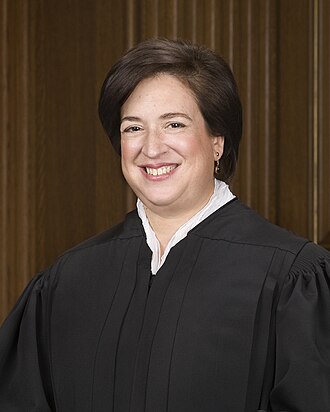 Elena KaganJoined the majority
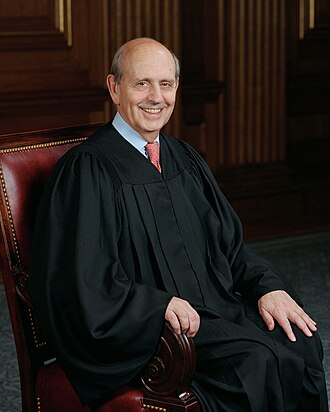 Stephen BreyerJoined the majority
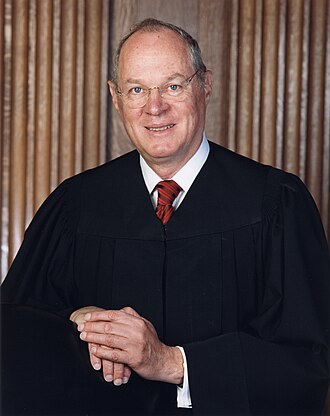 Anthony KennedyJoined the majority
Dissent(0)
- None.
Data notes
Each justice’s vote and what they wrote are from the justice-centered file of the Supreme Court Database. “Wrote a concurrence” means the justice sided with the majority and wrote separately; a justice who dissented in part is counted on the side they took overall. A justice who wrote nothing is listed as joining their side.
Positions are each justice’s Martin–Quinn score for the case’s term, the same scores as the Ideology page: negative is more liberal, positive more conservative. A score sums up a justice’s votes across the whole term, so it says where they usually sit, not why they voted as they did here. The median line is the Court’s median justice that term.
The parties
Who brought the case to the Court, who answered it, and how it got there.
- Petitioner
- BondDefendant
- Respondent
- United StatesUnited States
- Reached the Court by
- Certiorari (the Court chose to hear it)
Data notes
The names are the two sides of the case’s title. The description under each is the Supreme Court Database’s category for that party, in its own wording. The petitioner is the side that asked the Supreme Court to review the decision below. “Why it was taken” appears only when the majority opinion says lower courts disagreed or were unsure about the question; reasons that would fit any case (“to resolve the question presented”, “an important question”) are left out.
The law at issue
The law the Court was asked to apply, and the kind of power it used to decide.
- Provision
- Treaty
- Kind of law
- Other
- Decided by
- Statutory construction; Judicial review (national level)
Data notes
The Supreme Court Database codes the main constitutional provision, statute or court rule each case turned on, and the basis of the decision: judicial review of a federal or state law, interpreting a statute, supervising the lower courts, and so on. A case can rest on more than one. “Overruled” counts only where the majority opinion says so.
Timeline
What happened at the Court and how the case got there, newest first.
- Jun 2, 2014DecidedDecided · Decided 9–0: reversed and remanded. Bond won.
- Nov 5, 2013ArguedArgued · Oral argument before the Court.
- Not datedTaken upTaken up · The Supreme Court agreed to hear the case (certiorari).
- Not datedCourt belowCourt below · Decided by the U.S. Court of Appeals, Third Circuit: affirmed.
- Not datedBeganBegan · The case began in the Pennsylvania Eastern U.S. District Court.
Data notes
From the Supreme Court Database: the court the case began in, the court whose decision the Supreme Court reviewed and what that court did, how the case came to the Court, and the dates of argument and decision. The database does not date the steps in the lower courts. Court names are the database’s.
Other decisions on the same issue
5 other argued cases since 1946 on statutory construction of criminal laws: assault, newest first.
- United States v. Castleman572 U.S. 157Mar 26, 2014 · 572 U.S. 157Criminal procedure9–0Unanimous band
- Curtis Darnell Johnson v. United States559 U.S. 133Mar 2, 2010 · 559 U.S. 133Criminal procedure7–27–2 band
- United States v. David W. Lanier520 U.S. 259Mar 31, 1997 · 520 U.S. 259Criminal procedure9–0Unanimous band
- Garcia et al. v. United States469 U.S. 70Dec 10, 1984 · 469 U.S. 70Criminal procedure6–36–3 band
- Ladner v. United States358 U.S. 169Dec 15, 1958 · 358 U.S. 169Criminal procedure8–18–1 band
Data notes
Every other orally argued case with a clear vote, from the 1946 term on, that the Supreme Court Database files under the same issue as this one. The database gives each case one issue from a list of about 270 (abortion, search and seizure of vehicles, the death penalty, and so on), whatever law it turned on.
Official record
Read the full opinion on Justia, the argument audio on Oyez and Wikipedia. Case data from the Supreme Court Database, Version 2026 Release 01, through the 2025 term.