Don Stenberg, Attorney General of Nebraska, et al. v. Leroy Carhart
The Court struck down the law, finding the Nebraska statute criminalizing "partial birth abortion" violated the Due Process Clause of the United States Constitution, as interpreted in Planned Parenthood v. Casey and Roe v. Wade.
530 U.S. 914 · No. 99-830 · 1999 term · Rehnquist Court
Decided Jun 28, 2000 · argued Apr 25, 2000
Privacy · Abortion: including contraceptives
Landmark · Birth control and abortionStruck down a state law
Majority opinion: Stephen Breyer
The voteMajorityDissent
5–45 in the majority, 4 in dissent
4 dissents (5–4)
Affirmed. Don Stenberg, Attorney General of Nebraska, et al. lost.
What this ruling means
Affirmed: the Supreme Court upheld the decision of the U.S. Court of Appeals, Eighth Circuit, so it stands (sometimes with changes the Court made to it).
Don Stenberg, Attorney General of Nebraska, et al. was the petitioner, the side that asked the Supreme Court to review the case. “Lost” means the Court did not give that side the result it asked for.
From the Supreme Court Database. A justice who agreed with the result but not the reasoning counts in the majority.
Summary
The opening of the case’s Wikipedia article: what the case was about and what the Court held.
Stenberg v. Carhart, 530 U.S. 914 (2000), was a landmark decision of the United States Supreme Court dealing with a Nebraska law which made performing "partial-birth abortion" illegal, without regard for the health of the mother. Nebraska physicians who performed the procedure contrary to the law were subject to having their medical licenses revoked. The Court struck down the law, finding the Nebraska statute criminalizing "partial birth abortion" violated the Due Process Clause of the United States Constitution, as interpreted in Planned Parenthood v. Casey and Roe v. Wade.
The Court would later uphold a similar, albeit federal statute, in Gonzales v. Carhart (2007).
Data notes
The text is Wikipedia’s (CC BY-SA 4.0), matched to the case by its citation, docket number or name and year, and is not checked against the opinion. The site keeps the article’s opening section, ending on its last full sentence. The one-sentence summary under the title is the Decisions list’s: Wikipedia’s own ruling sentence, or, tagged “AI-written”, one Claude wrote from this opening.
How the justices voted
Each justice who took part, placed by their Martin–Quinn ideology score for the 1999 term. Filled: the 5 in the majority. Hollow: the 4 in dissent. Colour is the party of the president who appointed them.
Majority(5)
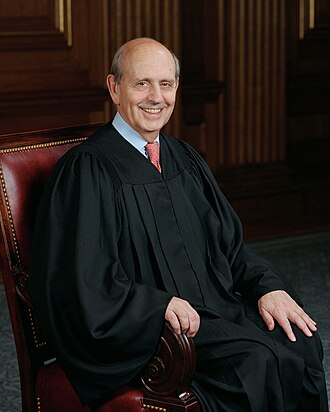 Stephen BreyerWrote the majority opinion
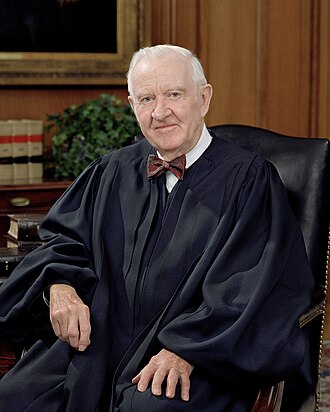 John StevensWrote a concurrence
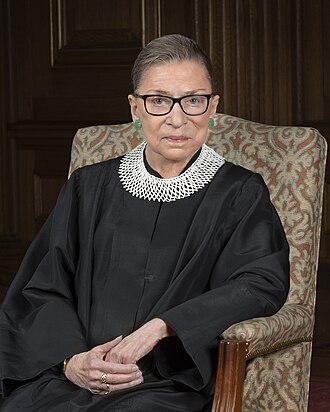 Ruth GinsburgWrote a concurrence
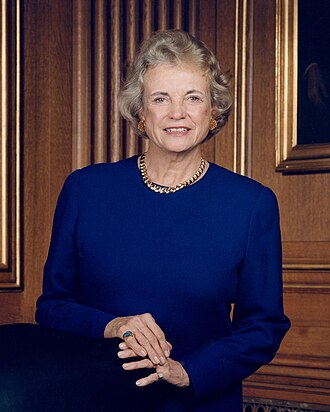 Sandra O'ConnorWrote a concurrence
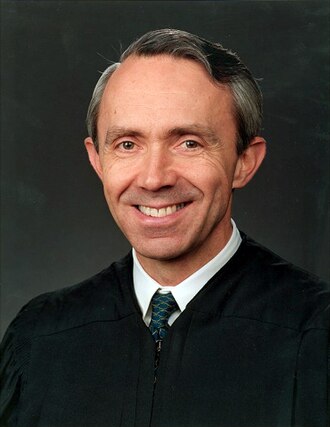 David SouterJoined the majority
Dissent(4)
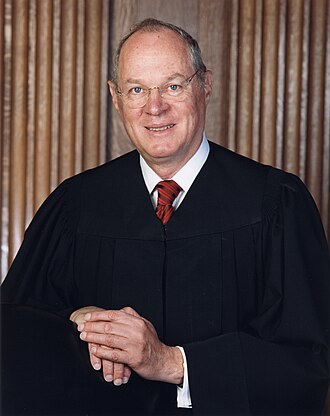 Anthony KennedyWrote a dissent
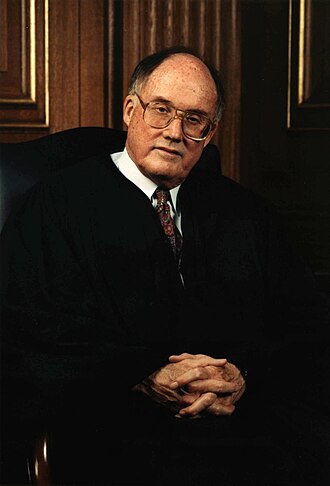 William RehnquistWrote a dissent
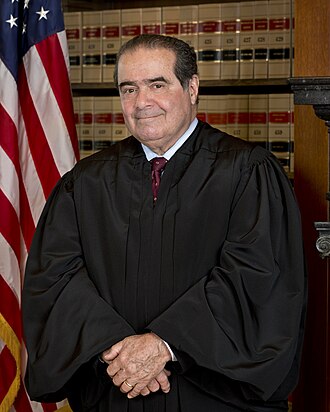 Antonin ScaliaWrote a dissent
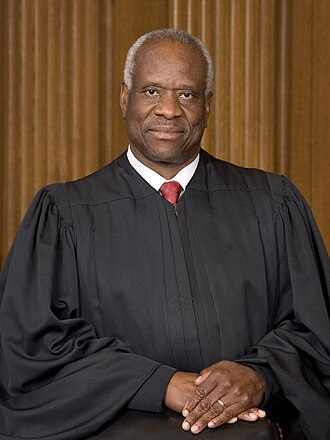 Clarence ThomasWrote a dissent
Data notes
Each justice’s vote and what they wrote are from the justice-centered file of the Supreme Court Database. “Wrote a concurrence” means the justice sided with the majority and wrote separately; a justice who dissented in part is counted on the side they took overall. A justice who wrote nothing is listed as joining their side.
Positions are each justice’s Martin–Quinn score for the case’s term, the same scores as the Ideology page: negative is more liberal, positive more conservative. A score sums up a justice’s votes across the whole term, so it says where they usually sit, not why they voted as they did here. The median line is the Court’s median justice that term.
The parties
Who brought the case to the Court, who answered it, and how it got there.
- Petitioner
- Don Stenberg, Attorney General of Nebraska, et al.Governmental official, or an official of an agency established under an interstate compact (Nebraska)
- Respondent
- Leroy CarhartPhysician, MD or DO, dentist, or medical society
- Reached the Court by
- Certiorari (the Court chose to hear it)
Data notes
The names are the two sides of the case’s title. The description under each is the Supreme Court Database’s category for that party, in its own wording. The petitioner is the side that asked the Supreme Court to review the decision below. “Why it was taken” appears only when the majority opinion says lower courts disagreed or were unsure about the question; reasons that would fit any case (“to resolve the question presented”, “an important question”) are left out.
The law at issue
The law the Court was asked to apply, and the kind of power it used to decide.
- Provision
- Fourteenth Amendment (due process)
- Kind of law
- Constitutional Amendment
- Decided by
- Judicial review (state level)
- Struck down
- A state law, as unconstitutional
Data notes
The Supreme Court Database codes the main constitutional provision, statute or court rule each case turned on, and the basis of the decision: judicial review of a federal or state law, interpreting a statute, supervising the lower courts, and so on. A case can rest on more than one. “Overruled” counts only where the majority opinion says so.
Timeline
What happened at the Court and how the case got there, newest first.
- Jun 28, 2000DecidedDecided · Decided 5–4: affirmed. Don Stenberg, Attorney General of Nebraska, et al. lost.
- Apr 25, 2000ArguedArgued · Oral argument before the Court.
- Not datedTaken upTaken up · The Supreme Court agreed to hear the case (certiorari).
- Not datedCourt belowCourt below · Decided by the U.S. Court of Appeals, Eighth Circuit: affirmed.
- Not datedBeganBegan · The case began in the Nebraska U.S. District Court.
Data notes
From the Supreme Court Database: the court the case began in, the court whose decision the Supreme Court reviewed and what that court did, how the case came to the Court, and the dates of argument and decision. The database does not date the steps in the lower courts. Court names are the database’s.
Other decisions on the same issue
39 other argued cases since 1946 on abortion, including contraceptives, newest first.
- Moyle v. United States144 S. Ct. 2015Jun 27, 2024 · 144 S. Ct. 2015Privacy6–36–3 band
- Food and Drug Administration v. Alliance for Hippocratic Medicine602 U.S. 367Jun 13, 2024 · 602 U.S. 367Privacy9–0Unanimous band
- Dobbs v. Jackson Women’s Health OrganizationLandmark · Birth control and abortion142 S. Ct. 2228Jun 24, 2022 · 142 S. Ct. 2228PrivacyLandmark · Birth control and abortion6–36–3 band
- June Medical Services LLC v. Russo140 S. Ct. 2103Jun 29, 2020 · 140 S. Ct. 2103Privacy5–45–4 band
- National Institute of Family and Life Advocates v. Becerra138 S. Ct. 2361Jun 26, 2018 · 138 S. Ct. 2361Privacy5–45–4 band
- Whole Woman's Health v. HellerstedtLandmark · Birth control and abortion579 U.S. 582Jun 27, 2016 · 579 U.S. 582PrivacyLandmark · Birth control and abortion5–36–3 band
- McCullen v. Coakley573 U.S. 464Jun 26, 2014 · 573 U.S. 464Privacy9–0Unanimous band
- Alberto R. Gonzales, Attorney General v. Leroy Carhart, et al.Landmark · Birth control and abortion550 U.S. 124Apr 18, 2007 · 550 U.S. 124PrivacyLandmark · Birth control and abortion5–45–4 band
- Joseph Scheidler, et al. v. National Organization for Women, Inc., et al.547 U.S. 9Feb 28, 2006 · 547 U.S. 9Privacy8–0Unanimous band
- Kelly A. Ayotte, Attorney General of New Hampshire v. Planned Parenthood of Northern New England, et al.546 U.S. 320Jan 18, 2006 · 546 U.S. 320Privacy9–0Unanimous band
- Scheidler v. National Organization for Women, Inc.537 U.S. 393Feb 26, 2003 · 537 U.S. 393Privacy8–18–1 band
- Leila Jeanne Hill, Audrey Himmelmann, and Everitt W. Simpson, Jr. v. Colorado, et al.530 U.S. 703Jun 28, 2000 · 530 U.S. 703Privacy6–36–3 band
- Paul Schenck and Dwight Saunders v. Pro-Choice Network of Western New York et al.519 U.S. 357Feb 19, 1997 · 519 U.S. 357Privacy6–36–3 band
- Judy Madsen, et al. v. Women's Health Center, Inc., et al.512 U.S. 753Jun 30, 1994 · 512 U.S. 753Privacy6–36–3 band
- National Organization for Women, Inc., etc., et al. v. Joseph Scheidler et al.510 U.S. 249Jan 24, 1994 · 510 U.S. 249Privacy9–0Unanimous band
- Planned Parenthood of Southeastern Pennsylvania, et al. v. Robert P. Casey, et al., etc.Landmark · Birth control and abortion505 U.S. 833Jun 29, 1992 · 505 U.S. 833PrivacyLandmark · Birth control and abortion5–45–4 band
- Irving Rust, et al. v. Sullivan, Louis W., Secretary of Health and Human Services500 U.S. 173May 23, 1991 · 500 U.S. 173Privacy5–45–4 band
- Ohio v. Akron Center for Reproductive Health et al.497 U.S. 502Jun 25, 1990 · 497 U.S. 502Privacy6–36–3 band
- Hodgson et al. v. Minnesota et al.497 U.S. 417Jun 25, 1990 · 497 U.S. 417Privacy6–36–3 band
- Webster, Attorney General of Missouri, et al. v. Reproductive Health Services et al.492 U.S. 490Jul 3, 1989 · 492 U.S. 490Privacy5–45–4 band
- Neal F. Hartigan, Attorney General of the State of Illinois, etc., et al. v. David Zbaraz and Allan G. Charles etc.484 U.S. 171Dec 14, 1987 · 484 U.S. 171Privacy4–45–4 band
- Thornburgh, Governor of Pennsylvania, et al. v. American College of Obstetricians and Gynecologists et al.476 U.S. 747Jun 11, 1986 · 476 U.S. 747Privacy5–45–4 band
- Simopoulos v. Virginia462 U.S. 506Jun 15, 1983 · 462 U.S. 506Privacy8–18–1 band
- Planned Parenthood Association of Kansas City, Missouri, Inc., et al. v. Ashcroft, Attorney General of Missouri, et al.462 U.S. 476Jun 15, 1983 · 462 U.S. 476Privacy5–45–4 band
- City of Akron v. Akron Center for Reproductive Health, Inc., et al.462 U.S. 416Jun 15, 1983 · 462 U.S. 416Privacy6–36–3 band
- H. L. v. Matheson, Governor of Utah, et al.450 U.S. 398Mar 23, 1981 · 450 U.S. 398Privacy6–36–3 band
- Williams et al. v. Zbaraz et al.448 U.S. 358Jun 30, 1980 · 448 U.S. 358Privacy5–45–4 band
- Harris, Secretary of Health and Human Services v. McRae et al.448 U.S. 297Jun 30, 1980 · 448 U.S. 297Privacy5–45–4 band
- Bellotti, Attorney General of Massachusetts, et al. v. Baird et al.443 U.S. 622Jul 2, 1979 · 443 U.S. 622Privacy8–18–1 band
- Colautti, Secretary of Welfare of Pennsylvania, et al. v. Franklin et al.439 U.S. 379Jan 9, 1979 · 439 U.S. 379Privacy6–36–3 band
- Poelker, Mayor of St. Louis, et al. v. Doe432 U.S. 519Jun 20, 1977 · 432 U.S. 519Privacy6–36–3 band
- Maher, Commissioner of Social Services of Connecticut v. Roe et al.432 U.S. 464Jun 20, 1977 · 432 U.S. 464Privacy6–36–3 band
- Beal, Secretary, Department of Public Welfare of Pennsylvania, et al. v. Doe et al.432 U.S. 438Jun 20, 1977 · 432 U.S. 438Privacy6–36–3 band
- Carey, Governor of New York, et al. v. Population Services International et al.Landmark · Birth control and abortion431 U.S. 678Jun 9, 1977 · 431 U.S. 678PrivacyLandmark · Birth control and abortion7–27–2 band
- Planned Parenthood of Central Missouri et al. v. Danforth, Attorney General of Missouri, et al.428 U.S. 52Jul 1, 1976 · 428 U.S. 52Privacy5–45–4 band
- Doe et al. v. Bolton, Attorney General of Georgia, et al.410 U.S. 179Jan 22, 1973 · 410 U.S. 179Privacy7–27–2 band
- Roe et al. v. Wade, District Attorney of Dallas CountyLandmark · Birth control and abortion410 U.S. 113Jan 22, 1973 · 410 U.S. 113PrivacyLandmark · Birth control and abortion7–27–2 band
- Eisenstadt, Sheriff v. BairdLandmark · Birth control and abortion405 U.S. 438Mar 22, 1972 · 405 U.S. 438PrivacyLandmark · Birth control and abortion6–18–1 band
- United States v. Vuitch402 U.S. 62Apr 21, 1971 · 402 U.S. 62Privacy5–45–4 band
Data notes
Every other orally argued case with a clear vote, from the 1946 term on, that the Supreme Court Database files under the same issue as this one. The database gives each case one issue from a list of about 270 (abortion, search and seizure of vehicles, the death penalty, and so on), whatever law it turned on.
Official record
Read the full opinion on Justia, the argument audio on Oyez and Wikipedia. Case data from the Supreme Court Database, Version 2026 Release 01, through the 2025 term.