William Gasperini v. Center for Humanities, Inc.
The Court held that the New York state rule applied.
518 U.S. 415 · No. 95-719 · 1995 term · Rehnquist Court
Decided Jun 24, 1996 · argued Apr 16, 1996
Judicial power · Judicial administration: jurisdiction or authority of federal courts of appeals
Majority opinion: Ruth Ginsburg
The voteMajorityDissent
6–36 in the majority, 3 in dissent
3 dissents (6–3)
Vacated and remanded. William Gasperini won.
What this ruling means
Vacated and remanded: the Supreme Court set aside the decision of the U.S. Court of Appeals, Second Circuit, wiping it out without necessarily saying the result was wrong, and sent the case back for that court to decide again under the right legal standard.
William Gasperini was the petitioner, the side that asked the Supreme Court to review the case. “Won” means the Court gave that side the result it asked for.
From the Supreme Court Database. A justice who agreed with the result but not the reasoning counts in the majority.
Summary
The opening of the case’s Wikipedia article: what the case was about and what the Court held.
Gasperini v. Center for Humanities, 518 U.S. 415 (1996), was a decision by the Supreme Court of the United States in which the Court further refined the Erie doctrine regarding when and how federal courts are to apply state law in cases brought under diversity jurisdiction. The Court held that the New York state rule applied.
Data notes
The text is Wikipedia’s (CC BY-SA 4.0), matched to the case by its citation, docket number or name and year, and is not checked against the opinion. The site keeps the article’s opening section, ending on its last full sentence. The one-sentence summary under the title is the Decisions list’s: Wikipedia’s own ruling sentence, or, tagged “AI-written”, one Claude wrote from this opening.
How the justices voted
Each justice who took part, placed by their Martin–Quinn ideology score for the 1995 term. Filled: the 6 in the majority. Hollow: the 3 in dissent. Colour is the party of the president who appointed them.
Majority(6)
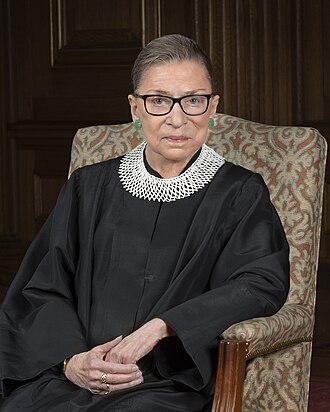 Ruth GinsburgWrote the majority opinion
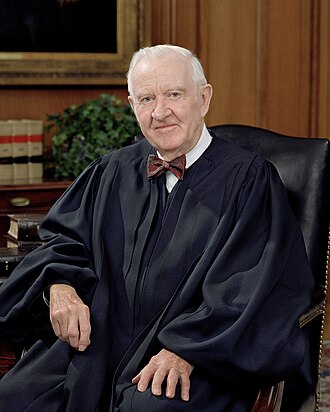 John StevensWrote a concurrence
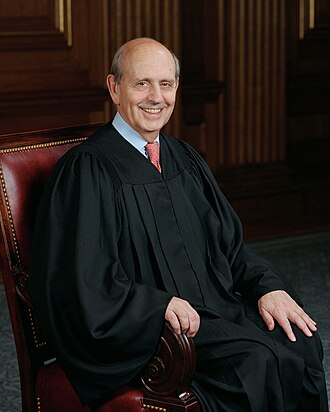 Stephen BreyerJoined the majority
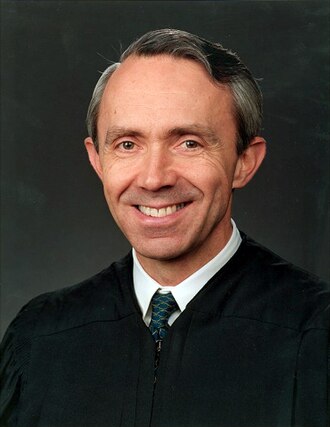 David SouterJoined the majority
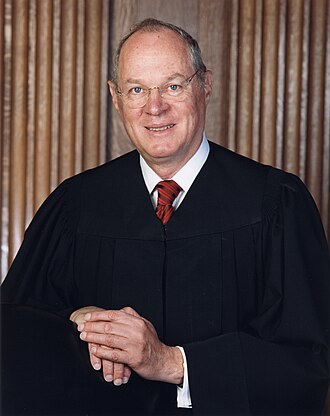 Anthony KennedyJoined the majority
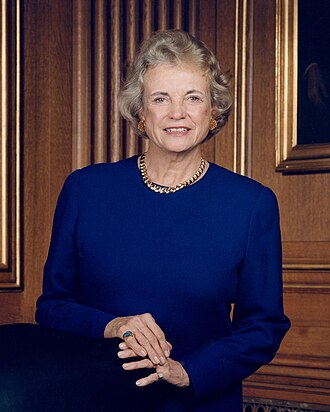 Sandra O'ConnorJoined the majority
Dissent(3)
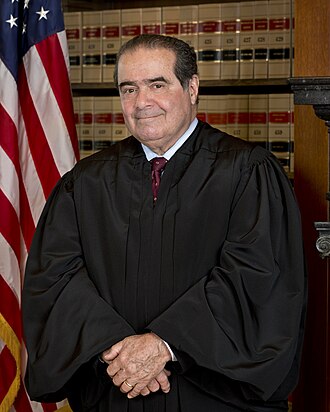 Antonin ScaliaWrote a dissent
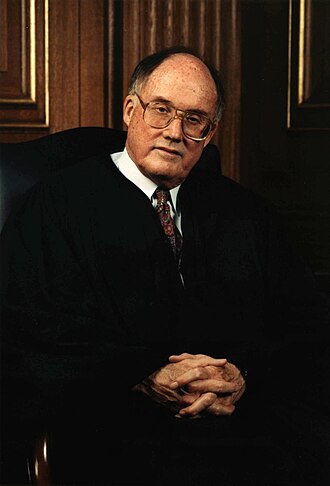 William RehnquistJoined a dissent
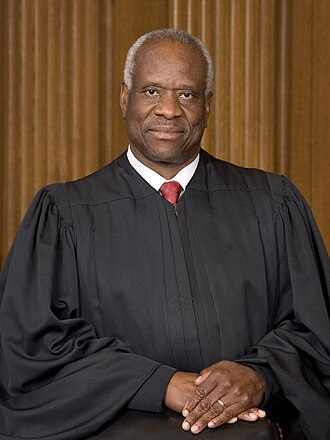 Clarence ThomasJoined a dissent
Data notes
Each justice’s vote and what they wrote are from the justice-centered file of the Supreme Court Database. “Wrote a concurrence” means the justice sided with the majority and wrote separately; a justice who dissented in part is counted on the side they took overall. A justice who wrote nothing is listed as joining their side.
Positions are each justice’s Martin–Quinn score for the case’s term, the same scores as the Ideology page: negative is more liberal, positive more conservative. A score sums up a justice’s votes across the whole term, so it says where they usually sit, not why they voted as they did here. The median line is the Court’s median justice that term.
The parties
Who brought the case to the Court, who answered it, and how it got there.
- Petitioner
- William GasperiniJournalist, columnist, member of the news media
- Respondent
- Center for Humanities, Inc.Movie, play, pictorial representation, theatrical production, actor, or exhibitor or distributor
- Reached the Court by
- Certiorari (the Court chose to hear it)
Data notes
The names are the two sides of the case’s title. The description under each is the Supreme Court Database’s category for that party, in its own wording. The petitioner is the side that asked the Supreme Court to review the decision below. “Why it was taken” appears only when the majority opinion says lower courts disagreed or were unsure about the question; reasons that would fit any case (“to resolve the question presented”, “an important question”) are left out.
The law at issue
The law the Court was asked to apply, and the kind of power it used to decide.
- Provision
- Seventh Amendment
- Kind of law
- Constitutional Amendment
- Decided by
- Judicial review (national level); Diversity jurisdiction
Data notes
The Supreme Court Database codes the main constitutional provision, statute or court rule each case turned on, and the basis of the decision: judicial review of a federal or state law, interpreting a statute, supervising the lower courts, and so on. A case can rest on more than one. “Overruled” counts only where the majority opinion says so.
Timeline
What happened at the Court and how the case got there, newest first.
- Jun 24, 1996DecidedDecided · Decided 6–3: vacated and remanded. William Gasperini won.
- Apr 16, 1996ArguedArgued · Oral argument before the Court.
- Not datedTaken upTaken up · The Supreme Court agreed to hear the case (certiorari).
- Not datedCourt belowCourt below · Decided by the U.S. Court of Appeals, Second Circuit: vacated.
- Not datedBeganBegan · The case began in the New York Southern U.S. District Court.
Data notes
From the Supreme Court Database: the court the case began in, the court whose decision the Supreme Court reviewed and what that court did, how the case came to the Court, and the dates of argument and decision. The database does not date the steps in the lower courts. Court names are the database’s.
Other decisions on the same issue
45 other argued cases since 1946 on judicial administration: jurisdiction or authority of federal courts of appeals, newest first.
- The Geo Group v. Menocal607 U.S. 438Feb 25, 2026 · 607 U.S. 438Judicial power9–0Unanimous band
- Food and Drug Administration v. R.J. Reynolds Vapor Co.145 S. Ct. 1984Jun 20, 2025 · 145 S. Ct. 1984Judicial power7–27–2 band
- Environmental Protection Agency v. Calumet Shreveport Refining, LLC145 S. Ct. 1735Jun 18, 2025 · 145 S. Ct. 1735Judicial power7–27–2 band
- Oklahoma v. Environmental Protection Agency145 S. Ct. 1720Jun 18, 2025 · 145 S. Ct. 1720Judicial power8–0Unanimous band
- Parrish v. United States145 S. Ct. 1664Jun 12, 2025 · 145 S. Ct. 1664Judicial power8–18–1 band
- United States v. Sineneng-Smith140 S. Ct. 1575May 7, 2020 · 140 S. Ct. 1575Judicial power9–0Unanimous band
- National Association of Manufacturers v. Department of Defense138 S. Ct. 617Jan 22, 2018 · 138 S. Ct. 617Judicial power9–0Unanimous band
- Manrique v. United States137 S. Ct. 1266Apr 19, 2017 · 137 S. Ct. 1266Judicial power6–27–2 band
- McLane Company v. EEOC137 S. Ct. 1159Apr 3, 2017 · 137 S. Ct. 1159Judicial power7–18–1 band
- Bullard v. Blue Hills Bank575 U.S. 496May 4, 2015 · 575 U.S. 496Judicial power9–0Unanimous band
- Republic of Iraq v. Jordan Beaty et al.556 U.S. 848Jun 8, 2009 · 556 U.S. 848Judicial power9–0Unanimous band
- Carlsbad Technology, Inc. v. Hif Bio, Inc., et al.556 U.S. 635May 4, 2009 · 556 U.S. 635Judicial power9–0Unanimous band
- Greenlaw v. United States554 U.S. 237Jun 23, 2008 · 554 U.S. 237Judicial power6–36–3 band
- Pat Osborn v. Barry Haley, et al.549 U.S. 225Jan 22, 2007 · 549 U.S. 225Judicial power7–27–2 band
- Carl Kircher, et al. v. Putnam Funds Trust et al.547 U.S. 633Jun 15, 2006 · 547 U.S. 633Judicial power9–0Unanimous band
- Ricky Bell, Warden v. Gregory Thompson545 U.S. 794Jun 27, 2005 · 545 U.S. 794Judicial power5–45–4 band
- Dow Chemical Company, et al. v. Daniel Raymond Stephenson et al.539 U.S. 111Jun 9, 2003 · 539 U.S. 111Judicial power8–0Unanimous band
- Khanh Phuong Nguyen v. United States et al.539 U.S. 69Jun 9, 2003 · 539 U.S. 69Judicial power5–45–4 band
- Syngenta Crop Protection, Inc., Robert Babb, Edee Templet, and Kenneth A. Devun v. Hurley Henson537 U.S. 28Nov 5, 2002 · 537 U.S. 28Judicial power9–0Unanimous band
- The Holmes Group, Inc. v. Vornado Air Circulation Systems, Inc.535 U.S. 826Jun 3, 2002 · 535 U.S. 826Judicial power9–0Unanimous band
- William J. Clinton, President of the United States, et al. v. James T. Goldsmith526 U.S. 529May 17, 1999 · 526 U.S. 529Judicial power9–0Unanimous band
- John W. Behrens v. Robert J. Pelletier516 U.S. 299Feb 21, 1996 · 516 U.S. 299Judicial power7–27–2 band
- Things Remembered, Inc. v. Anthony A. Petrarca516 U.S. 124Dec 5, 1995 · 516 U.S. 124Judicial power9–0Unanimous band
- Celotex Corporation v. Bennie Edwards et ux.514 U.S. 300Apr 19, 1995 · 514 U.S. 300Judicial power7–27–2 band
- Tom Swint, et al. v. Chambers County Commission, et al.514 U.S. 35Mar 1, 1995 · 514 U.S. 35Judicial power9–0Unanimous band
- Charles K. Elder v. R. D. Holloway et al.510 U.S. 510Feb 23, 1994 · 510 U.S. 510Judicial power9–0Unanimous band
- Salve Regina College v. Sharon L. Russell499 U.S. 225Mar 20, 1991 · 499 U.S. 225Judicial power6–36–3 band
- Newman-Green, Inc. v. Alfonzo-Larrain et al.490 U.S. 826Jun 12, 1989 · 490 U.S. 826Judicial power7–27–2 band
- Christianson et al. v. Colt Industries Operating Corp.486 U.S. 800Jun 17, 1988 · 486 U.S. 800Judicial power9–0Unanimous band
- United States v. Hohri et al.482 U.S. 64Jun 1, 1987 · 482 U.S. 64Judicial power8–0Unanimous band
- Icicle Seafoods, Inc. v. Worthington et al.475 U.S. 709Apr 21, 1986 · 475 U.S. 709Judicial power8–18–1 band
- Jean et al. v. Nelson, Commissioner, Immigration and Naturalization Service, et al.472 U.S. 846Jun 26, 1985 · 472 U.S. 846Judicial power6–27–2 band
- Will, U. S. District Judge v. Calvert Fire Insurance Co. et al.437 U.S. 655Jun 23, 1978 · 437 U.S. 655Judicial power5–45–4 band
- Liberty Mutual Insurance Co. v. Wetzel et al.424 U.S. 737Mar 23, 1976 · 424 U.S. 737Judicial power8–0Unanimous band
- Tidewater Oil Co. v. United States et al.409 U.S. 151Dec 6, 1972 · 409 U.S. 151Judicial power6–36–3 band
- International Union, United Automobile, Aerospace & Agricultural Implement Workers of America, AFL-CIO, Local 283 v. Scofield et al.382 U.S. 205Dec 20, 1965 · 382 U.S. 205Judicial power9–0Unanimous band
- United States v. Fruehauf et al.365 U.S. 146Feb 20, 1961 · 365 U.S. 146Judicial power8–18–1 band
- Jaffke v. Dunham, Trustee in Bankruptcy352 U.S. 280Jan 14, 1957 · 352 U.S. 280Judicial power9–0Unanimous band
- La Buy, United States District Judge, v. Howes Leather Co., Inc., et al.352 U.S. 249Jan 14, 1957 · 352 U.S. 249Judicial power5–45–4 band
- National Labor Relations Board v. Warren Company, Inc.350 U.S. 107Dec 12, 1955 · 350 U.S. 107Judicial power9–0Unanimous band
- United States et al. v. California Eastern Line, Inc.348 U.S. 351Mar 7, 1955 · 348 U.S. 351Judicial power7–18–1 band
- Western Pacific Railroad Corp. et al. v. Western Pacific Railroad Co. et al.345 U.S. 247Apr 6, 1953 · 345 U.S. 247Judicial power8–18–1 band
- Defense Supplies Corp. et al. v. Lawrence Warehouse Co. et al.336 U.S. 631Apr 18, 1949 · 336 U.S. 631Judicial power9–0Unanimous band
- United States v. United States District Court for the Southern District of New York et al.334 U.S. 258May 24, 1948 · 334 U.S. 258Judicial power7–0Unanimous band
- Cone v. West Virginia Pulp & Paper Co.330 U.S. 212Mar 3, 1947 · 330 U.S. 212Judicial power9–0Unanimous band
Data notes
Every other orally argued case with a clear vote, from the 1946 term on, that the Supreme Court Database files under the same issue as this one. The database gives each case one issue from a list of about 270 (abortion, search and seizure of vehicles, the death penalty, and so on), whatever law it turned on.
Official record
Read the full opinion on Justia, the argument audio on Oyez and Wikipedia. Case data from the Supreme Court Database, Version 2026 Release 01, through the 2025 term.