Rummel v. Estelle, Corrections Director
The Court upheld a life sentence with the possibility of parole under Texas' three strikes law for a felony fraud crime, where the offense and two prior offenses involved about $230 of fraudulent activity.· AI-written
445 U.S. 263 · No. 78-6386 · 1979 term · Burger Court
Decided Mar 18, 1980 · argued Jan 7, 1980
Criminal procedure · Cruel and unusual punishment, non-death penalty
Majority opinion: William Rehnquist
The voteMajorityDissent
5–45 in the majority, 4 in dissent
4 dissents (5–4)
Affirmed. Rummel lost.
What this ruling means
Affirmed: the Supreme Court upheld the decision of the U.S. Court of Appeals, Fifth Circuit, so it stands (sometimes with changes the Court made to it).
Rummel was the petitioner, the side that asked the Supreme Court to review the case. “Lost” means the Court did not give that side the result it asked for.
From the Supreme Court Database. A justice who agreed with the result but not the reasoning counts in the majority.
Summary
The opening of the case’s Wikipedia article: what the case was about and what the Court held.
Rummel v. Estelle, 445 U.S. 263 (1980), (sometimes erroneously cited as Rummel v. Estell) was a United States Supreme Court case in which the Court upheld a life sentence with the possibility of parole under Texas' three strikes law for a felony fraud crime, where the offense and the defendant's two prior offenses involved approximately $230 of fraudulent activity (worth $847 in 2023 dollars, or about four 40-hour weeks at the contemporary Texas minimum wage of $1.40/hour).
Data notes
The text is Wikipedia’s (CC BY-SA 4.0), matched to the case by its citation, docket number or name and year, and is not checked against the opinion. The site keeps the article’s opening section, ending on its last full sentence. The one-sentence summary under the title is the Decisions list’s: Wikipedia’s own ruling sentence, or, tagged “AI-written”, one Claude wrote from this opening.
How the justices voted
Each justice who took part, placed by their Martin–Quinn ideology score for the 1979 term. Filled: the 5 in the majority. Hollow: the 4 in dissent. Colour is the party of the president who appointed them.
Majority(5)
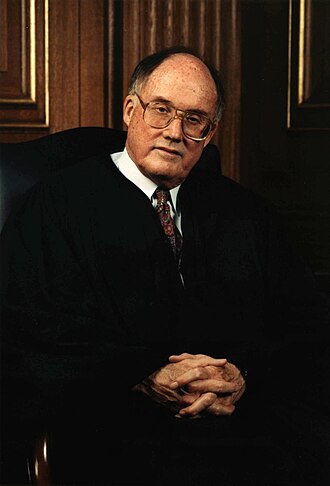 William RehnquistWrote the majority opinion
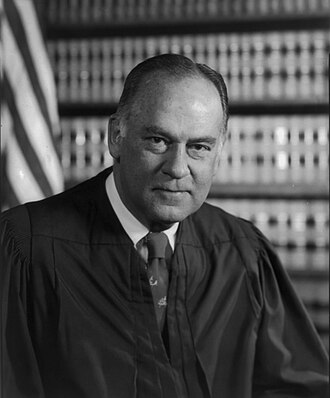 Potter StewartWrote a concurrence
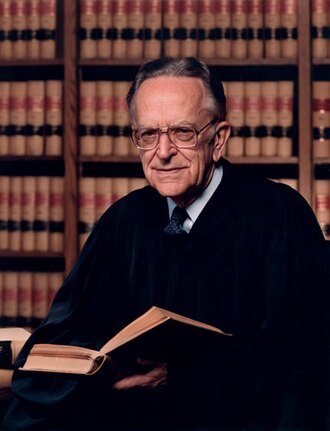 Harry BlackmunJoined the majority
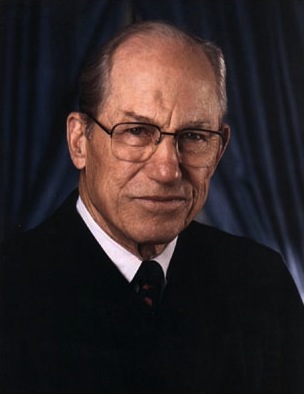 Byron WhiteJoined the majority
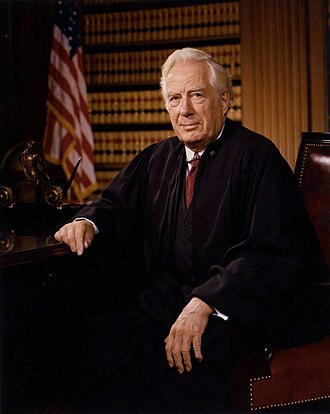 Warren BurgerJoined the majority
Dissent(4)
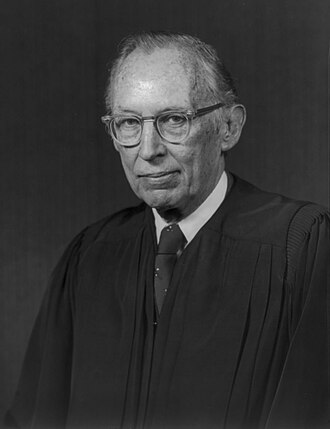 Lewis PowellWrote a dissent
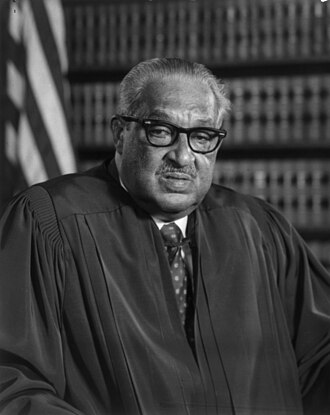 Thurgood MarshallJoined a dissent
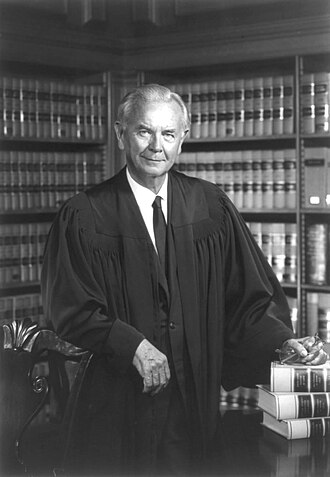 William BrennanJoined a dissent
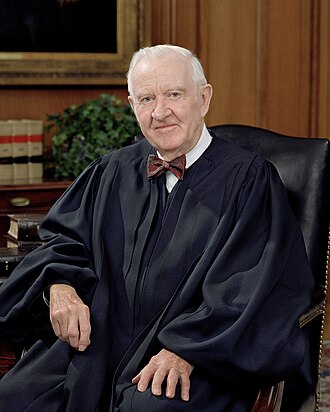 John StevensJoined a dissent
Data notes
Each justice’s vote and what they wrote are from the justice-centered file of the Supreme Court Database. “Wrote a concurrence” means the justice sided with the majority and wrote separately; a justice who dissented in part is counted on the side they took overall. A justice who wrote nothing is listed as joining their side.
Positions are each justice’s Martin–Quinn score for the case’s term, the same scores as the Ideology page: negative is more liberal, positive more conservative. A score sums up a justice’s votes across the whole term, so it says where they usually sit, not why they voted as they did here. The median line is the Court’s median justice that term.
The parties
Who brought the case to the Court, who answered it, and how it got there.
- Petitioner
- RummelPerson convicted of crime
- Respondent
- Estelle, Corrections DirectorState (Texas)
- Reached the Court by
- Certiorari (the Court chose to hear it)
Data notes
The names are the two sides of the case’s title. The description under each is the Supreme Court Database’s category for that party, in its own wording. The petitioner is the side that asked the Supreme Court to review the decision below. “Why it was taken” appears only when the majority opinion says lower courts disagreed or were unsure about the question; reasons that would fit any case (“to resolve the question presented”, “an important question”) are left out.
The law at issue
The law the Court was asked to apply, and the kind of power it used to decide.
- Provision
- Eighth Amendment (cruel and unusual punishment)
- Kind of law
- Constitutional Amendment
- Decided by
- Judicial review (state level)
Data notes
The Supreme Court Database codes the main constitutional provision, statute or court rule each case turned on, and the basis of the decision: judicial review of a federal or state law, interpreting a statute, supervising the lower courts, and so on. A case can rest on more than one. “Overruled” counts only where the majority opinion says so.
Timeline
What happened at the Court and how the case got there, newest first.
- Mar 18, 1980DecidedDecided · Decided 5–4: affirmed. Rummel lost.
- Jan 7, 1980ArguedArgued · Oral argument before the Court.
- Not datedTaken upTaken up · The Supreme Court agreed to hear the case (certiorari).
- Not datedCourt belowCourt below · Decided by the U.S. Court of Appeals, Fifth Circuit: affirmed, with a dissent.
- Not datedBeganBegan · The case began in the Texas Western U.S. District Court.
Data notes
From the Supreme Court Database: the court the case began in, the court whose decision the Supreme Court reviewed and what that court did, how the case came to the Court, and the dates of argument and decision. The database does not date the steps in the lower courts. Court names are the database’s.
Other decisions on the same issue
21 other argued cases since 1946 on cruel and unusual punishment, non-death penalty, newest first.
- City of Grants Pass, Oregon v. JohnsonLandmark · Other areas144 S. Ct. 2202Jun 28, 2024 · 144 S. Ct. 2202Criminal procedureLandmark · Other areas6–36–3 band
- Jones v. Mississippi141 S. Ct. 1307Apr 22, 2021 · 141 S. Ct. 1307Criminal procedure6–36–3 band
- Margaret Minneci, et al. v. Richard Lee Pollard et al.565 U.S. 118Jan 10, 2012 · 565 U.S. 118Criminal procedure8–18–1 band
- Edmund G. Brown, Jr., Governor of California, et al., Appellants v. Marciano Plata et al.563 U.S. 493May 23, 2011 · 563 U.S. 493Criminal procedure5–45–4 band
- Joe Harris Sullivan v. Florida560 U.S. 181May 17, 2010 · 560 U.S. 181Criminal procedure9–0Unanimous band
- Terrance Jamar Graham v. FloridaLandmark · Other criminal sentences560 U.S. 48May 17, 2010 · 560 U.S. 48Criminal procedureLandmark · Other criminal sentences6–36–3 band
- Gary Albert Ewing v. California538 U.S. 11Mar 5, 2003 · 538 U.S. 11Criminal procedure5–45–4 band
- United States v. Hosep Krikor Bajakajian524 U.S. 321Jun 22, 1998 · 524 U.S. 321Criminal procedure5–45–4 band
- Dee Farmer v. Edward Brennan, Warden, et al.511 U.S. 825Jun 6, 1994 · 511 U.S. 825Criminal procedure9–0Unanimous band
- Richard Lyle Austin v. United States509 U.S. 602Jun 28, 1993 · 509 U.S. 602Criminal procedure9–0Unanimous band
- Donald L. Helling, et al. v. William McKinney509 U.S. 25Jun 18, 1993 · 509 U.S. 25Criminal procedure7–27–2 band
- Keith J. Hudson v. Jack McMillian, et al.503 U.S. 1Feb 25, 1992 · 503 U.S. 1Criminal procedure7–27–2 band
- Ronald Allen Harmelin v. Michigan501 U.S. 957Jun 27, 1991 · 501 U.S. 957Criminal procedure5–45–4 band
- Pearly L. Wilson v. Richard Seiter, et al.501 U.S. 294Jun 17, 1991 · 501 U.S. 294Criminal procedure5–45–4 band
- Whitley, Individually and As Assistant Superintendent, Oregon State Penitentiary, et al. v. Albers475 U.S. 312Mar 4, 1986 · 475 U.S. 312Criminal procedure5–45–4 band
- Solem, Warden, South Dakota State Penitentiary v. Helm463 U.S. 277Jun 28, 1983 · 463 U.S. 277Criminal procedure5–45–4 band
- Rhodes, Governor of Ohio, et al. v. Chapman et al.452 U.S. 337Jun 15, 1981 · 452 U.S. 337Criminal procedure8–18–1 band
- Ingraham et al. v. Wright et al.430 U.S. 651Apr 19, 1977 · 430 U.S. 651Criminal procedure5–45–4 band
- Estelle, Corrections Director, et al. v. Gamble429 U.S. 97Nov 30, 1976 · 429 U.S. 97Criminal procedure8–18–1 band
- Powell v. Texas392 U.S. 514Jun 17, 1968 · 392 U.S. 514Criminal procedure5–45–4 band
- Robinson v. CaliforniaLandmark · Other areas370 U.S. 660Jun 25, 1962 · 370 U.S. 660Criminal procedureLandmark · Other areas6–27–2 band
Data notes
Every other orally argued case with a clear vote, from the 1946 term on, that the Supreme Court Database files under the same issue as this one. The database gives each case one issue from a list of about 270 (abortion, search and seizure of vehicles, the death penalty, and so on), whatever law it turned on.
Official record
Read the full opinion on Justia, the argument audio on Oyez and Wikipedia. Case data from the Supreme Court Database, Version 2026 Release 01, through the 2025 term.