Bigelow v. Virginia
The Court established First Amendment protection for commercial speech in a challenge to government regulation of advertising, determining that such publications qualify as speech under the First Amendment.· AI-written
421 U.S. 809 · No. 73-1309 · 1974 term · Burger Court
Decided Jun 16, 1975 · argued Dec 18, 1974
First Amendment · Commercial speech, excluding attorneys
Struck down a state law
Majority opinion: Harry Blackmun
The voteMajorityDissent
7–27 in the majority, 2 in dissent
2 dissents (7–2)
Reversed. Bigelow won.
What this ruling means
Reversed: the Supreme Court overturned the decision of the Virginia Supreme Court, and its own ruling ends the case.
Bigelow was the petitioner, the side that asked the Supreme Court to review the case. “Won” means the Court gave that side the result it asked for.
From the Supreme Court Database. A justice who agreed with the result but not the reasoning counts in the majority.
Summary
The opening of the case’s Wikipedia article: what the case was about and what the Court held.
Bigelow v. Virginia, 421 U.S. 809 (1975), was a United States Supreme Court decision that established First Amendment protection for commercial speech. The ruling is an important precedent on challenges to government regulation of advertising, determining that such publications qualify as speech under the First Amendment.
Data notes
The text is Wikipedia’s (CC BY-SA 4.0), matched to the case by its citation, docket number or name and year, and is not checked against the opinion. The site keeps the article’s opening section, ending on its last full sentence. The one-sentence summary under the title is the Decisions list’s: Wikipedia’s own ruling sentence, or, tagged “AI-written”, one Claude wrote from this opening.
How the justices voted
Each justice who took part, placed by their Martin–Quinn ideology score for the 1974 term. Filled: the 7 in the majority. Hollow: the 2 in dissent. Colour is the party of the president who appointed them.
Majority(7)
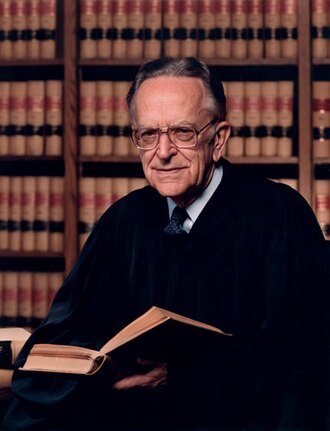 Harry BlackmunWrote the majority opinion
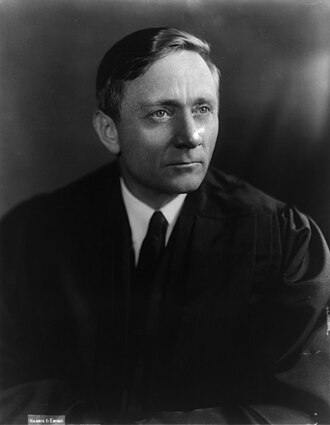 William DouglasJoined the majority
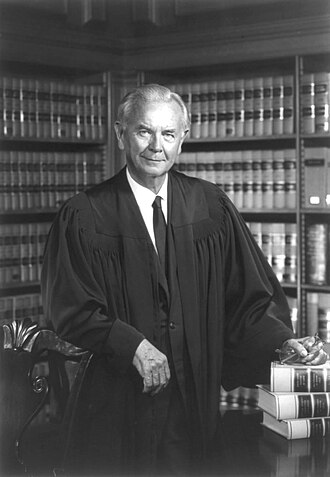 William BrennanJoined the majority
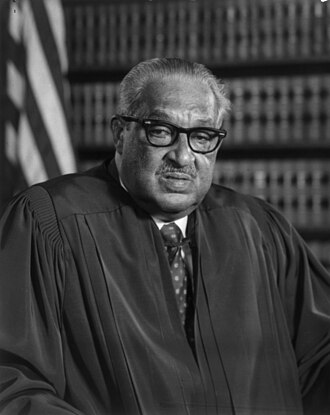 Thurgood MarshallJoined the majority
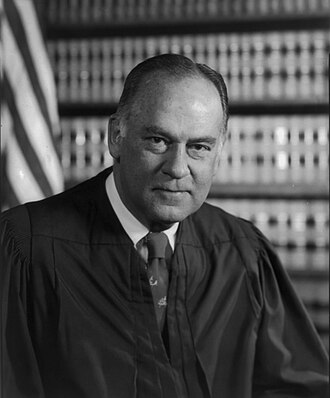 Potter StewartJoined the majority
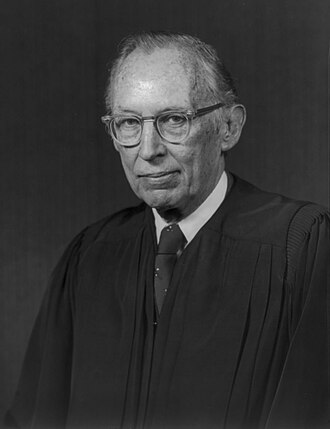 Lewis PowellJoined the majority
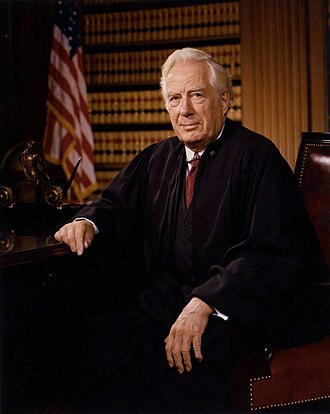 Warren BurgerJoined the majority
Dissent(2)
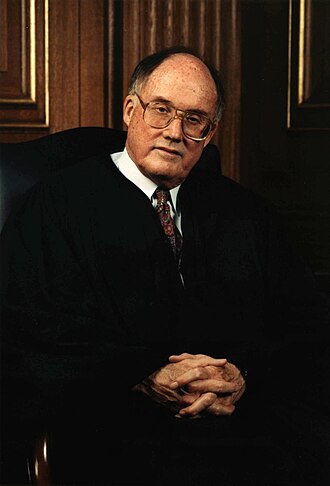 William RehnquistWrote a dissent
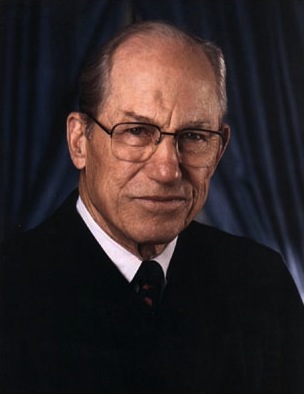 Byron WhiteJoined a dissent
Data notes
Each justice’s vote and what they wrote are from the justice-centered file of the Supreme Court Database. “Wrote a concurrence” means the justice sided with the majority and wrote separately; a justice who dissented in part is counted on the side they took overall. A justice who wrote nothing is listed as joining their side.
Positions are each justice’s Martin–Quinn score for the case’s term, the same scores as the Ideology page: negative is more liberal, positive more conservative. A score sums up a justice’s votes across the whole term, so it says where they usually sit, not why they voted as they did here. The median line is the Court’s median justice that term.
The parties
Who brought the case to the Court, who answered it, and how it got there.
- Petitioner
- BigelowPublisher, publishing company
- Respondent
- VirginiaState (Virginia)
- Reached the Court by
- Appeal (the Court was required to hear it)
Data notes
The names are the two sides of the case’s title. The description under each is the Supreme Court Database’s category for that party, in its own wording. The petitioner is the side that asked the Supreme Court to review the decision below. “Why it was taken” appears only when the majority opinion says lower courts disagreed or were unsure about the question; reasons that would fit any case (“to resolve the question presented”, “an important question”) are left out.
The law at issue
The law the Court was asked to apply, and the kind of power it used to decide.
- Provision
- First Amendment (speech, press, and assembly)
- Kind of law
- Constitutional Amendment
- Decided by
- Judicial review (state level)
- Struck down
- A state law, as unconstitutional
Data notes
The Supreme Court Database codes the main constitutional provision, statute or court rule each case turned on, and the basis of the decision: judicial review of a federal or state law, interpreting a statute, supervising the lower courts, and so on. A case can rest on more than one. “Overruled” counts only where the majority opinion says so.
Timeline
What happened at the Court and how the case got there, newest first.
- Jun 16, 1975DecidedDecided · Decided 7–2: reversed. Bigelow won.
- Dec 18, 1974ArguedArgued · Oral argument before the Court.
- Not datedTaken upTaken up · Reached the Supreme Court on appeal, which the Court had to hear.
- Not datedCourt belowCourt below · Decided by the Virginia Supreme Court: affirmed, with a dissent.
- Not datedBeganBegan · The case began in the Virginia trial court.
Data notes
From the Supreme Court Database: the court the case began in, the court whose decision the Supreme Court reviewed and what that court did, how the case came to the Court, and the dates of argument and decision. The database does not date the steps in the lower courts. Court names are the database’s.
Other decisions on the same issue
26 other argued cases since 1946 on commercial speech, excluding attorneys, newest first.
- City of Austin, Texas v. Reagan National Advertising of Texas Inc142 S. Ct. 1464Apr 21, 2022 · 142 S. Ct. 1464First Amendment6–36–3 band
- Expressions Hair Design v. Schneiderman137 S. Ct. 1144Mar 29, 2017 · 137 S. Ct. 1144First Amendment8–0Unanimous band
- Sorrell, Attorney General of Vermont, et al. v. Ims Health Inc. et al564 U.S. 552Jun 23, 2011 · 564 U.S. 552First Amendment6–36–3 band
- Mike Johanns, Secretary of Agriculture, et al., v. Livestock Marketing Association et al.544 U.S. 550May 23, 2005 · 544 U.S. 550First Amendment6–36–3 band
- Tommy G. Thompson, Secretary of Health and Human Services, et al. v. Western States Medical Center et al.535 U.S. 357Apr 29, 2002 · 535 U.S. 357First Amendment5–45–4 band
- United States and Department of Agriculture v. United Foods, Inc.533 U.S. 405Jun 25, 2001 · 533 U.S. 405First Amendment6–36–3 band
- Los Angeles Police Department v. United Reporting Publishing Corporation528 U.S. 32Dec 7, 1999 · 528 U.S. 32First Amendment7–27–2 band
- Greater New Orleans Broadcasting Association, Inc., etc., et al. v. United States et al.527 U.S. 173Jun 14, 1999 · 527 U.S. 173First Amendment9–0Unanimous band
- Dan Glickman, Secretary of Agriculture v. Wileman Brothers & Elliott, Inc., et al.521 U.S. 457Jun 25, 1997 · 521 U.S. 457First Amendment5–45–4 band
- 44 Liquormart, Inc. and Peoples Super Liquor Stores, Inc. v. Rhode Island and Rhode Island Liquor Stores Association517 U.S. 484May 13, 1996 · 517 U.S. 484First Amendment9–0Unanimous band
- Robert E. Rubin, Secretary of the Treasury v. Coors Brewing Company514 U.S. 476Apr 19, 1995 · 514 U.S. 476First Amendment9–0Unanimous band
- United States and Federal Communications Commission v. Edge Broadcasting Company T/A Power 94509 U.S. 418Jun 25, 1993 · 509 U.S. 418First Amendment7–27–2 band
- Fred H. Edenfield, et al. v. Scott Fane507 U.S. 761Apr 26, 1993 · 507 U.S. 761First Amendment8–18–1 band
- City of Cincinnati v. Discovery Network, Inc., et al.507 U.S. 410Mar 24, 1993 · 507 U.S. 410First Amendment6–36–3 band
- Board of Trustees of the State University of New York et al. v. Fox et al.492 U.S. 469Jun 29, 1989 · 492 U.S. 469First Amendment6–36–3 band
- Posadas de Puerto Rico Associates, dba Condado Holiday Inn v. Tourism Company of Puerto Rico et al.Landmark · Freedom of speech and of the press478 U.S. 328Jul 1, 1986 · 478 U.S. 328First AmendmentLandmark · Freedom of speech and of the press5–45–4 band
- Pacific Gas & Electric Co. v. Public Utilities Commission of California et al.475 U.S. 1Feb 25, 1986 · 475 U.S. 1First Amendment5–36–3 band
- Bolger et al. v. Youngs Drug Products Corp.463 U.S. 60Jun 24, 1983 · 463 U.S. 60First Amendment8–0Unanimous band
- Metromedia, Inc., et al. v. City of San Diego, et al.453 U.S. 490Jul 2, 1981 · 453 U.S. 490First Amendment6–36–3 band
- Central Hudson Gas & Electric Corp. v. Public Service Commission of New YorkLandmark · Freedom of speech and of the press447 U.S. 557Jun 20, 1980 · 447 U.S. 557First AmendmentLandmark · Freedom of speech and of the press8–18–1 band
- Friedman et al. v. Rogers et al.440 U.S. 1Feb 21, 1979 · 440 U.S. 1First Amendment7–27–2 band
- Linmark Associates, Inc., et al. v. Township of Willingboro et al.431 U.S. 85May 2, 1977 · 431 U.S. 85First Amendment8–0Unanimous band
- Virginia State Board of Pharmacy et al. v. Virginia Citizens Consumer Council, Inc., et al.Landmark · Freedom of speech and of the press425 U.S. 748May 24, 1976 · 425 U.S. 748First AmendmentLandmark · Freedom of speech and of the press7–18–1 band
- Pittsburgh Press Co. v. Pittsburgh Commission on Human Relations et al.413 U.S. 376Jun 21, 1973 · 413 U.S. 376First Amendment5–45–4 band
- Railway Express Agency, Inc. et al. v. New York336 U.S. 106Jan 31, 1949 · 336 U.S. 106First Amendment9–0Unanimous band
- Donaldson, Postmaster General, v. Read Magazine, Inc. et al.333 U.S. 178Mar 8, 1948 · 333 U.S. 178First Amendment7–27–2 band
Data notes
Every other orally argued case with a clear vote, from the 1946 term on, that the Supreme Court Database files under the same issue as this one. The database gives each case one issue from a list of about 270 (abortion, search and seizure of vehicles, the death penalty, and so on), whatever law it turned on.
Official record
Read the full opinion on Justia, the argument audio on Oyez and Wikipedia. Case data from the Supreme Court Database, Version 2026 Release 01, through the 2025 term.