Perez v. United States
The Court considered a federal law criminalizing local loan sharking and found that Congress had authority under the Commerce Clause to regulate local extortionate credit transactions because of their link to organized crime.· AI-written
402 U.S. 146 · No. 600 · 1970 term · Burger Court
Decided Apr 26, 1971 · argued Mar 22, 1971
Economic activity · Federal or state consumer protection: typically under the Truth in Lending; Food, Drug and Cosmetic; and Consumer Protection Credit Acts
Majority opinion: William Douglas
The voteMajorityDissent
8–18 in the majority, 1 in dissent
1 dissent (8–1)
Affirmed. Perez lost.
What this ruling means
Affirmed: the Supreme Court upheld the decision of the U.S. Court of Appeals, Second Circuit, so it stands (sometimes with changes the Court made to it).
Perez was the petitioner, the side that asked the Supreme Court to review the case. “Lost” means the Court did not give that side the result it asked for.
From the Supreme Court Database. A justice who agreed with the result but not the reasoning counts in the majority.
Summary
The opening of the case’s Wikipedia article: what the case was about and what the Court held.
Perez v. United States, 402 U.S. 146 (1971), was a case held by the United States Supreme Court, this decision showed the federal law criminalizing local loan sharking. Finding that Congress has authority to regulate local extortionate credit transactions under the Commerce Clause. This is based around the connection to organized crime and effect on the Interstate commerce.
This decision breaded the scope of federal power and marked a huge shift in balancing state and federal authority in criminal law enforcement. Congress could now regulate activities that pose as a threat. Through linking loan sharking to organized crime, the Court had a wide interpretation of the Commerce Clause. The 5-4 majority decision affirmed to the case that loan sharking, even if it was local, was often controlled by organized crime syndicates and generated revenue nationwide. However, Justice Burgers oppose showed that letting the federal government control local crimes could take away more power from the states. And this showed in later years in the case of United States v. Lopez.
Data notes
The text is Wikipedia’s (CC BY-SA 4.0), matched to the case by its citation, docket number or name and year, and is not checked against the opinion. The site keeps the article’s opening section, ending on its last full sentence. The one-sentence summary under the title is the Decisions list’s: Wikipedia’s own ruling sentence, or, tagged “AI-written”, one Claude wrote from this opening.
How the justices voted
Each justice who took part, placed by their Martin–Quinn ideology score for the 1970 term. Filled: the 8 in the majority. Hollow: the 1 in dissent. Colour is the party of the president who appointed them.
Majority(8)
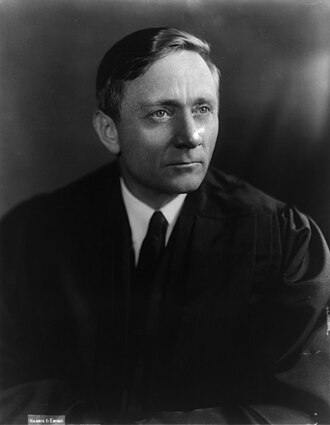 William DouglasWrote the majority opinion
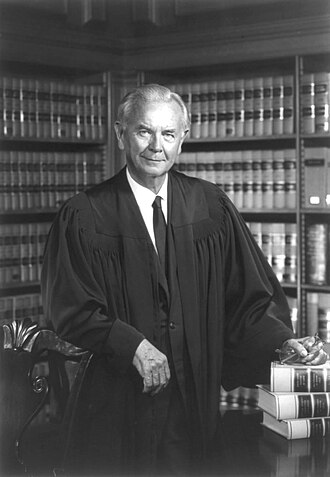 William BrennanJoined the majority
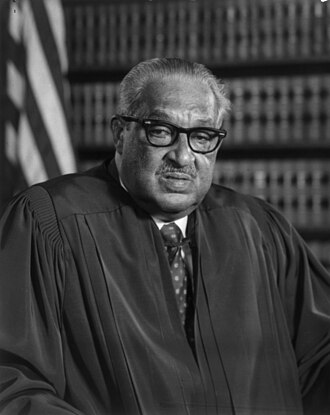 Thurgood MarshallJoined the majority
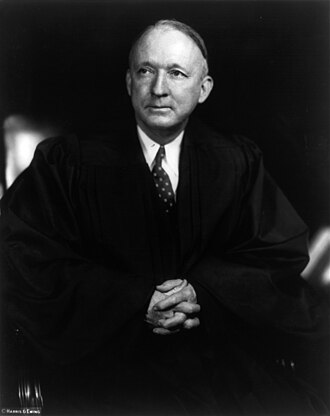 Hugo BlackJoined the majority
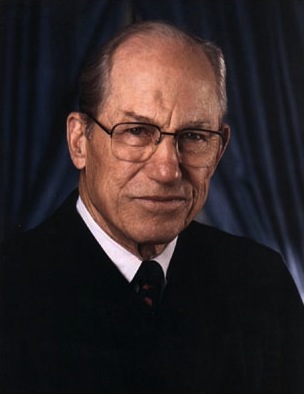 Byron WhiteJoined the majority
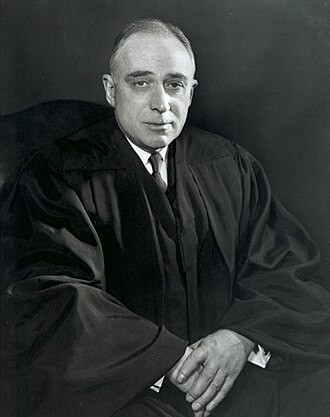 John HarlanJoined the majority
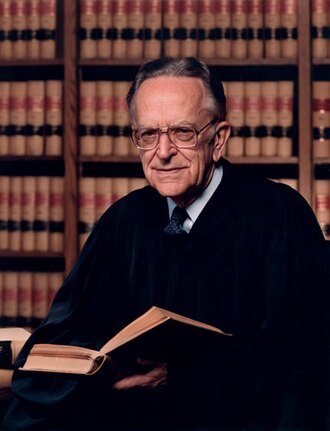 Harry BlackmunJoined the majority
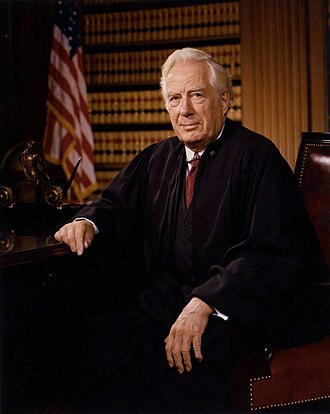 Warren BurgerJoined the majority
Dissent(1)
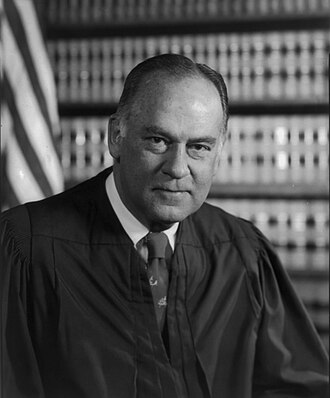 Potter StewartWrote a dissent
Data notes
Each justice’s vote and what they wrote are from the justice-centered file of the Supreme Court Database. “Wrote a concurrence” means the justice sided with the majority and wrote separately; a justice who dissented in part is counted on the side they took overall. A justice who wrote nothing is listed as joining their side.
Positions are each justice’s Martin–Quinn score for the case’s term, the same scores as the Ideology page: negative is more liberal, positive more conservative. A score sums up a justice’s votes across the whole term, so it says where they usually sit, not why they voted as they did here. The median line is the Court’s median justice that term.
The parties
Who brought the case to the Court, who answered it, and how it got there.
- Petitioner
- PerezCreditor, including institution appearing as such; e.g., a finance company
- Respondent
- United StatesUnited States
- Reached the Court by
- Certiorari (the Court chose to hear it)
Data notes
The names are the two sides of the case’s title. The description under each is the Supreme Court Database’s category for that party, in its own wording. The petitioner is the side that asked the Supreme Court to review the decision below. “Why it was taken” appears only when the majority opinion says lower courts disagreed or were unsure about the question; reasons that would fit any case (“to resolve the question presented”, “an important question”) are left out.
The law at issue
The law the Court was asked to apply, and the kind of power it used to decide.
- Provision
- Article I, Section 8, Paragraph 3 (interstate commerce clause)
- Kind of law
- Constitution
- Decided by
- Judicial review (national level)
Data notes
The Supreme Court Database codes the main constitutional provision, statute or court rule each case turned on, and the basis of the decision: judicial review of a federal or state law, interpreting a statute, supervising the lower courts, and so on. A case can rest on more than one. “Overruled” counts only where the majority opinion says so.
Timeline
What happened at the Court and how the case got there, newest first.
- Apr 26, 1971DecidedDecided · Decided 8–1: affirmed. Perez lost.
- Mar 22, 1971ArguedArgued · Oral argument before the Court.
- Not datedTaken upTaken up · The Supreme Court agreed to hear the case (certiorari).
- Not datedCourt belowCourt below · Decided by the U.S. Court of Appeals, Second Circuit: affirmed, with a dissent.
- Not datedBeganBegan · The case began in the New York Eastern U.S. District Court.
Data notes
From the Supreme Court Database: the court the case began in, the court whose decision the Supreme Court reviewed and what that court did, how the case came to the Court, and the dates of argument and decision. The database does not date the steps in the lower courts. Court names are the database’s.
Other decisions on the same issue
48 other argued cases since 1946 on federal or state consumer protection: typically under the Truth in Lending; Food, Drug and Cosmetic; and Consumer Protection Credit Acts, newest first.
- FDA v. Wages and White Lion Investments, LLC145 S. Ct. 898Apr 2, 2025 · 145 S. Ct. 898Economic activity9–0Unanimous band
- Royal Canin U.S.A., Inc. v. Wullschleger604 U.S. 22Jan 15, 2025 · 604 U.S. 22Economic activity9–0Unanimous band
- Department of Agriculture Rural Development Rural Housing Service v. Kirtz601 U.S. 42Feb 8, 2024 · 601 U.S. 42Economic activity9–0Unanimous band
- U.S., ex rel. Polansky v. Executive Health Resources599 U.S. 419Jun 16, 2023 · 599 U.S. 419Economic activity8–18–1 band
- United States ex rel. Schutte v. Supervalu Inc.598 U.S. 739Jun 1, 2023 · 598 U.S. 739Economic activity9–0Unanimous band
- Amg Capital Management, LLC v. Federal Trade Commission141 S. Ct. 1341Apr 22, 2021 · 141 S. Ct. 1341Economic activity9–0Unanimous band
- Rotkiske v. Klemm140 S. Ct. 355Dec 10, 2019 · 140 S. Ct. 355Economic activity8–18–1 band
- Obduskey v. McCarthy & Holthus LLP139 S. Ct. 1029Mar 20, 2019 · 139 S. Ct. 1029Economic activity9–0Unanimous band
- Henson v. Santander Consumer USA Inc.137 S. Ct. 1718Jun 12, 2017 · 137 S. Ct. 1718Economic activity9–0Unanimous band
- Jesinoski v. Countrywide Home Loans, Inc.574 U.S. 259Jan 13, 2015 · 574 U.S. 259Economic activity9–0Unanimous band
- Pom Wonderful LLC v. Coca-Cola Co.573 U.S. 102Jun 12, 2014 · 573 U.S. 102Economic activity8–0Unanimous band
- Olivea Marx, Petitioner v. General Revenue Corporation568 U.S. 371Feb 26, 2013 · 568 U.S. 371Economic activity7–27–2 band
- Tammy Foret Freeman, et al., Petitioners v. Quicken Loans, Inc.566 U.S. 624May 24, 2012 · 566 U.S. 624Economic activity9–0Unanimous band
- Caraco Pharmaceutical Laboratories, Ltd., et al., Petitioners v. Novo Nordisk A/S et al.566 U.S. 399Apr 17, 2012 · 566 U.S. 399Economic activity9–0Unanimous band
- Marcus D. Mims, Petitioner v. Arrow Financial Services, LLC565 U.S. 368Jan 18, 2012 · 565 U.S. 368Economic activity9–0Unanimous band
- Chase Bank USA, Na., Petitioner v. James A. McCoy, Individually and on Behalf of All Others Similarly Situated562 U.S. 195Jan 24, 2011 · 562 U.S. 195Economic activity9–0Unanimous band
- Hemi Group, LLC and Kai Gachupin v. City of New York, New York559 U.S. 1Jan 25, 2010 · 559 U.S. 1Economic activity5–36–3 band
- Safeco Insurance Company of America, et al. v. Charles Burr, et al.551 U.S. 47Jun 4, 2007 · 551 U.S. 47Economic activity9–0Unanimous band
- Koons Buick Pontiac GMC, Inc. v. Bradley Nigh543 U.S. 50Nov 30, 2004 · 543 U.S. 50Economic activity8–18–1 band
- Household Credit Services, Inc. and MBNA America Bank, N. A. v. Sharon R. Pfennig541 U.S. 232Apr 21, 2004 · 541 U.S. 232Economic activity9–0Unanimous band
- TRW Inc. v. Adelaide Andrews534 U.S. 19Nov 13, 2001 · 534 U.S. 19Economic activity9–0Unanimous band
- Food and Drug Administration, et al. v. Brown & Williamson Tobacco Corporation, et al.529 U.S. 120Mar 21, 2000 · 529 U.S. 120Economic activity5–45–4 band
- David R. Beach, et ux. v. Ocwen Federal Bank523 U.S. 410Apr 21, 1998 · 523 U.S. 410Economic activity9–0Unanimous band
- National Credit Union Administration v. First National Bank & Trust Co. et al.522 U.S. 479Feb 25, 1998 · 522 U.S. 479Economic activity5–45–4 band
- George W. Heintz, et al. v. Darlene Jenkins514 U.S. 291Apr 18, 1995 · 514 U.S. 291Economic activity9–0Unanimous band
- United States v. Generix Drug Corp. et al.460 U.S. 453Mar 22, 1983 · 460 U.S. 453Economic activity9–0Unanimous band
- American Express Co. v. Koerner452 U.S. 233Jun 8, 1981 · 452 U.S. 233Economic activity9–0Unanimous band
- Anderson Bros. Ford et al. v. Valencia et al.452 U.S. 205Jun 8, 1981 · 452 U.S. 205Economic activity5–45–4 band
- Ford Motor Credit Co. et al. v. Milhollin444 U.S. 555Feb 20, 1980 · 444 U.S. 555Economic activity9–0Unanimous band
- United States et al. v. Rutherford et al.442 U.S. 544Jun 18, 1979 · 442 U.S. 544Economic activity9–0Unanimous band
- United States v. Park421 U.S. 658Jun 9, 1975 · 421 U.S. 658Economic activity6–36–3 band
- Usv Pharmaceutical Corp. v. Weinberger, Secretary of Health, Education, and Welfare, et al.412 U.S. 655Jun 18, 1973 · 412 U.S. 655Economic activity7–0Unanimous band
- Weinberger, Secretary of Health, Education, and Welfare, et al. v. Bentex Pharmaceuticals, Inc., et al.412 U.S. 645Jun 18, 1973 · 412 U.S. 645Economic activity7–0Unanimous band
- Ciba Corp. v. Weinberger, Secretary of Health, Education, and Welfare, et al.412 U.S. 640Jun 18, 1973 · 412 U.S. 640Economic activity7–0Unanimous band
- Weinberger, Secretary of Health, Education, and Welfare, et al. v. Hynson, Westcott & Dunning, Inc.412 U.S. 609Jun 18, 1973 · 412 U.S. 609Economic activity7–0Unanimous band
- Mourning v. Family Publications Service, Inc.411 U.S. 356Apr 24, 1973 · 411 U.S. 356Economic activity5–45–4 band
- United States v. an Article of Drug . . . Bacto-Unidisk . . . .394 U.S. 784Apr 28, 1969 · 394 U.S. 784Economic activity8–18–1 band
- United States v. Wiesenfeld Warehouse Co.376 U.S. 86Feb 17, 1964 · 376 U.S. 86Economic activity9–0Unanimous band
- Federal Trade Commission v. National Casualty Co.357 U.S. 560Jun 30, 1958 · 357 U.S. 560Economic activity9–0Unanimous band
- United States v. Allied Oil Corp. et al.341 U.S. 1Apr 9, 1951 · 341 U.S. 1Economic activity7–0Unanimous band
- 62 Cases of Jam et al. v. United States340 U.S. 593Mar 26, 1951 · 340 U.S. 593Economic activity7–27–2 band
- Reilly, Postmaster, v. Pinkus, Trading As American Health Aids Co., Also Known As Energy Food Center338 U.S. 269Nov 14, 1949 · 338 U.S. 269Economic activity8–0Unanimous band
- United States v. Urbuteit335 U.S. 355Nov 22, 1948 · 335 U.S. 355Economic activity5–45–4 band
- Kordel v. United States335 U.S. 345Nov 22, 1948 · 335 U.S. 345Economic activity5–45–4 band
- Woods, Housing Expediter, v. Stone333 U.S. 472Mar 15, 1948 · 333 U.S. 472Economic activity8–18–1 band
- United States v. Sullivan, Trading As Sullivan's Pharmacy332 U.S. 689Jan 19, 1948 · 332 U.S. 689Economic activity6–36–3 band
- United States v. Walsh, Trading As Kelp Laboratories331 U.S. 432May 19, 1947 · 331 U.S. 432Economic activity8–18–1 band
- United States v. Ruzicka et al., Trading As Seeley Dairy329 U.S. 287Dec 16, 1946 · 329 U.S. 287Economic activity9–0Unanimous band
Data notes
Every other orally argued case with a clear vote, from the 1946 term on, that the Supreme Court Database files under the same issue as this one. The database gives each case one issue from a list of about 270 (abortion, search and seizure of vehicles, the death penalty, and so on), whatever law it turned on.
Official record
Read the full opinion on Justia, the argument audio on Oyez and Wikipedia. Case data from the Supreme Court Database, Version 2026 Release 01, through the 2025 term.