National Labor Relations Board v. Gissel Packing Co., Inc., et al.
In a dispute over union authorization cards under the National Labor Relations Act, the Court upheld the NLRB's authority to order an employer that committed unfair labor practices to recognize and bargain with a union based solely on majority authorization cards.· AI-written
395 U.S. 575 · No. 573 · 1968 term · Warren Court
Decided Jun 16, 1969 · argued Mar 26, 1969
Unions · Labor-management disputes: bargaining
Majority opinion: Earl Warren
The voteMajority
8–08 in the majority, 0 in dissent
No dissent (9–0)
Reversed and remanded. National Labor Relations Board won.
What this ruling means
Reversed and remanded: the Supreme Court overturned the decision of the U.S. Court of Appeals, Fourth Circuit and sent the case back to that court for further proceedings that follow the Supreme Court’s ruling.
National Labor Relations Board was the petitioner, the side that asked the Supreme Court to review the case. “Won” means the Court gave that side the result it asked for.
From the Supreme Court Database. A justice who agreed with the result but not the reasoning counts in the majority.
Summary
The opening of the case’s Wikipedia article: what the case was about and what the Court held.
NLRB v. Gissel Packing Co., Inc., 395 U.S. 575 (1969) was a unanimous United States Supreme Court case clarifying the application of the National Labor Relations Act after the Taft-Hartley Amendments, particularly the application of union authorization cards.
The Taft-Hartley Amendments repealed the provision of the National Labor Relations Act that allowed the NLRB to certify unions without an election. In the Joy Silk decision, the NLRB announced that it would order employers to recognize and bargain with unions if the general counsel established that the union represented a majority of workers in the appropriate bargaining unit, the union request recognition, the employer denied the request for recognition and lacked good faith doubt of the union's majority status, and the employer tried to disrupt the union's majority status by committing unfair labor practices. This doctrine provided a strong incentive for employers to avoid committing unfair labor practices during organizing campaigns.
After the Court abandoned Joy Silk, it announced its new doctrine in Gissel, which hinges on whether employer unfair labor practices make a fair election unlikely or impossible, a more speculative test than the Joy Silk doctrine. First, the Court upheld the board's authority to remedy an employer's unfair labor practices by ordering the employer to recognize and bargain with a union based solely on authorization cards from a majority of employees. So-called "Gissel" orders are issued when the atmosphere has been so tainted by an employer's unfair labor practices that a fair rerun election is unlikely. Second, the Court held that the NLRB retains the authority to force an employer to bargain with the union even when the union no longer possesses a majority of employees at the time of the bargaining order.
Since the decision in Gissel, federal circuit courts have added additional burdens on the NLRB's authority to issue Gissel orders.
Data notes
The text is Wikipedia’s (CC BY-SA 4.0), matched to the case by its citation, docket number or name and year, and is not checked against the opinion. The site keeps the article’s opening section, ending on its last full sentence. The one-sentence summary under the title is the Decisions list’s: Wikipedia’s own ruling sentence, or, tagged “AI-written”, one Claude wrote from this opening.
How the justices voted
Each justice who took part, placed by their Martin–Quinn ideology score for the 1968 term. Filled: the 8 in the majority. Hollow: the 0 in dissent. Colour is the party of the president who appointed them.
Majority(8)
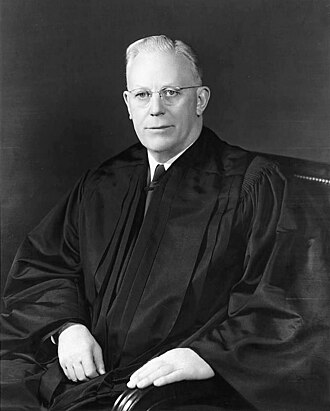 Earl WarrenWrote the majority opinion
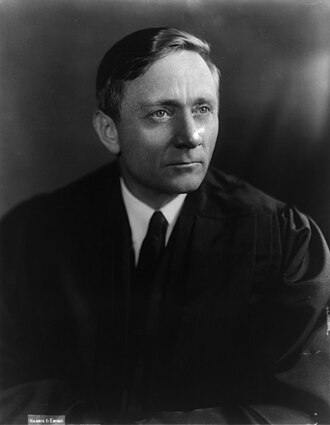 William DouglasJoined the majority
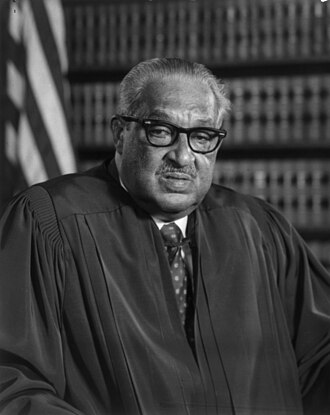 Thurgood MarshallJoined the majority
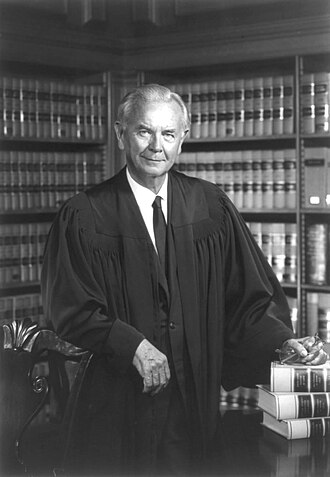 William BrennanJoined the majority
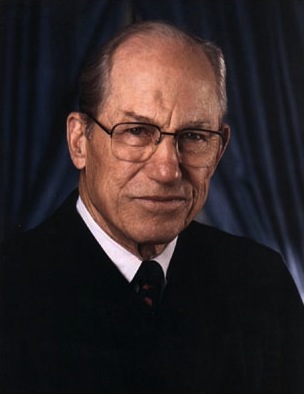 Byron WhiteJoined the majority
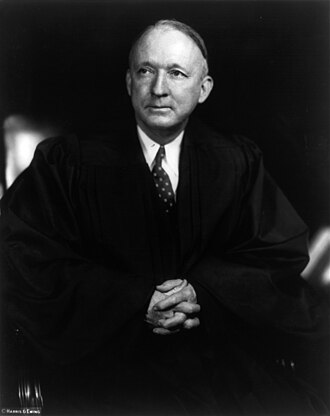 Hugo BlackJoined the majority
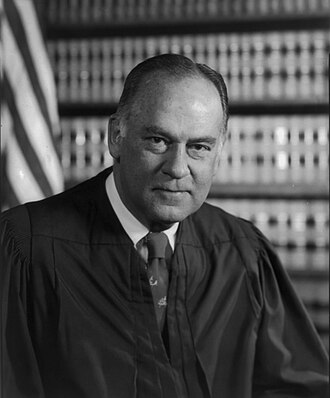 Potter StewartJoined the majority
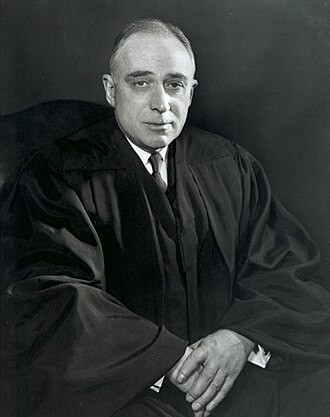 John HarlanJoined the majority
Dissent(0)
- None.
Data notes
Each justice’s vote and what they wrote are from the justice-centered file of the Supreme Court Database. “Wrote a concurrence” means the justice sided with the majority and wrote separately; a justice who dissented in part is counted on the side they took overall. A justice who wrote nothing is listed as joining their side.
Positions are each justice’s Martin–Quinn score for the case’s term, the same scores as the Ideology page: negative is more liberal, positive more conservative. A score sums up a justice’s votes across the whole term, so it says where they usually sit, not why they voted as they did here. The median line is the Court’s median justice that term.
The parties
Who brought the case to the Court, who answered it, and how it got there.
- Petitioner
- National Labor Relations BoardNational Labor Relations Board, or regional office or officer
- Respondent
- Gissel Packing Co., Inc., et al.Employer
- Reached the Court by
- Certiorari (the Court chose to hear it)
Data notes
The names are the two sides of the case’s title. The description under each is the Supreme Court Database’s category for that party, in its own wording. The petitioner is the side that asked the Supreme Court to review the decision below. “Why it was taken” appears only when the majority opinion says lower courts disagreed or were unsure about the question; reasons that would fit any case (“to resolve the question presented”, “an important question”) are left out.
The law at issue
The law the Court was asked to apply, and the kind of power it used to decide.
- Provision
- National Labor Relations, as amended
- Kind of law
- Federal Statute
- Decided by
- Interpretation of administrative regulation or rule, or executive order; Statutory construction
Data notes
The Supreme Court Database codes the main constitutional provision, statute or court rule each case turned on, and the basis of the decision: judicial review of a federal or state law, interpreting a statute, supervising the lower courts, and so on. A case can rest on more than one. “Overruled” counts only where the majority opinion says so.
Timeline
What happened at the Court and how the case got there, newest first.
- Jun 16, 1969DecidedDecided · Decided 8–0: reversed and remanded. National Labor Relations Board won.
- Mar 26, 1969ArguedArgued · Oral argument before the Court.
- Not datedTaken upTaken up · The Supreme Court agreed to hear the case (certiorari).
- Not datedCourt belowCourt below · Began in and was decided by the U.S. Court of Appeals, Fourth Circuit: affirmed and reversed (or vacated) in part.
Data notes
From the Supreme Court Database: the court the case began in, the court whose decision the Supreme Court reviewed and what that court did, how the case came to the Court, and the dates of argument and decision. The database does not date the steps in the lower courts. Court names are the database’s.
Other decisions on the same issue
37 other argued cases since 1946 on labor-management disputes: bargaining, newest first.
- Unite Here Local 355 v. Mulhall571 U.S. 83Dec 10, 2013 · 571 U.S. 83Unions6–36–3 band
- National Federation of Federal Employees, Local 1309 v. Department of the Interior et al.526 U.S. 86Mar 3, 1999 · 526 U.S. 86Unions5–45–4 band
- American Hospital Association v. National Labor Relations Board et al.499 U.S. 606Apr 23, 1991 · 499 U.S. 606Unions9–0Unanimous band
- Fort Stewart Schools v. Federal Labor Relations Authority et al.495 U.S. 641May 29, 1990 · 495 U.S. 641Unions9–0Unanimous band
- Department of the Treasury, Internal Revenue Service v. Federal Labor Relations Authority, et al.494 U.S. 922Apr 17, 1990 · 494 U.S. 922Unions7–27–2 band
- National Labor Relations Board v. Curtin Matheson Scientific, Inc.494 U.S. 775Apr 17, 1990 · 494 U.S. 775Unions5–45–4 band
- Pittsburgh & Lake Erie Railroad Co. v. Railway Labor Executives' Association491 U.S. 490Jun 21, 1989 · 491 U.S. 490Unions5–45–4 band
- Federal Labor Relations Authority v. Aberdeen Proving Ground, Department of the Army485 U.S. 409Apr 4, 1988 · 485 U.S. 409Unions9–0Unanimous band
- Fall River Dyeing & Finishing Corp. v. National Labor Relations Board482 U.S. 27Jun 1, 1987 · 482 U.S. 27Unions6–36–3 band
- National Labor Relations Board v. Action Automotive, Inc.469 U.S. 490Feb 19, 1985 · 469 U.S. 490Unions6–36–3 band
- National Labor Relations Board v. Bildisco & Bildisco, Debtor-In-Possession, et al.465 U.S. 513Feb 22, 1984 · 465 U.S. 513Unions5–45–4 band
- United Transportation Union v. Long Island Rail Road Co. et al.455 U.S. 678Mar 24, 1982 · 455 U.S. 678Unions9–0Unanimous band
- Charles D. Bonanno Linen Service, Inc. v. National Labor Relations Board et al.454 U.S. 404Jan 11, 1982 · 454 U.S. 404Unions5–45–4 band
- National Labor Relations Board v. Hendricks County Rural Electric Membership Corp.454 U.S. 170Dec 2, 1981 · 454 U.S. 170Unions5–45–4 band
- National Labor Relations Board v. Yeshiva University444 U.S. 672Feb 20, 1980 · 444 U.S. 672Unions5–45–4 band
- National Labor Relations Board v. Catholic Bishop of Chicago et al.440 U.S. 490Mar 21, 1979 · 440 U.S. 490Unions5–45–4 band
- Bayside Enterprises, Inc., et al. v. National Labor Relations Board429 U.S. 298Jan 11, 1977 · 429 U.S. 298Unions9–0Unanimous band
- Linden Lumber Division, Summer & Co. v. National Labor Relations Board et al.419 U.S. 301Dec 23, 1974 · 419 U.S. 301Unions5–45–4 band
- National Labor Relations Board v. Bell Aerospace Company, Division of Textron, Inc.416 U.S. 267Apr 23, 1974 · 416 U.S. 267Unions5–45–4 band
- National Labor Relations Board v. Burns International Security Services, Inc., et al.406 U.S. 272May 15, 1972 · 406 U.S. 272Unions9–0Unanimous band
- Allied Chemical & Alkali Workers of America, Local Union No. 1 v. Pittsburgh Plate Glass Co., Chemical Division, et al.404 U.S. 157Dec 6, 1971 · 404 U.S. 157Unions6–18–1 band
- H. K. Porter Co., Inc., Disston Division-Danville Works v. National Labor Relations Board et al.397 U.S. 99Mar 2, 1970 · 397 U.S. 99Unions4–27–2 band
- National Labor Relations Board v. United Insurance Co. of America et al.390 U.S. 254Mar 6, 1968 · 390 U.S. 254Unions7–0Unanimous band
- National Labor Relations Board v. Acme Industrial Co.385 U.S. 432Jan 9, 1967 · 385 U.S. 432Unions9–0Unanimous band
- National Labor Relations Board v. Metropolitan Life Insurance Co.380 U.S. 438Apr 5, 1965 · 380 U.S. 438Unions8–18–1 band
- Fibreboard Paper Products Corp. v. National Labor Relations Board et al.379 U.S. 203Dec 14, 1964 · 379 U.S. 203Unions8–0Unanimous band
- National Labor Relations Board v. General Motors Corp.373 U.S. 734Jun 3, 1963 · 373 U.S. 734Unions8–0Unanimous band
- National Labor Relations Board v. Katz et al.369 U.S. 736May 21, 1962 · 369 U.S. 736Unions7–0Unanimous band
- National Labor Relations Board v. Insurance Agents' International Union, AFL-CIO361 U.S. 477Feb 23, 1960 · 361 U.S. 477Unions6–36–3 band
- National Labor Relations Board v. Fant Milling Co.360 U.S. 301Jun 15, 1959 · 360 U.S. 301Unions9–0Unanimous band
- National Labor Relations Board v. Lion Oil Co. et al.352 U.S. 282Jan 22, 1957 · 352 U.S. 282Unions6–27–2 band
- Brooks v. National Labor Relations Board348 U.S. 96Dec 6, 1954 · 348 U.S. 96Unions8–0Unanimous band
- Howell Chevrolet Co. v. National Labor Relations Board346 U.S. 482Dec 14, 1953 · 346 U.S. 482Unions8–18–1 band
- National Labor Relations Board v. American National Insurance Co.343 U.S. 395May 26, 1952 · 343 U.S. 395Unions6–36–3 band
- National Labor Relations Board v. Crompton-Highland Mills, Inc.337 U.S. 217May 31, 1949 · 337 U.S. 217Unions9–0Unanimous band
- Packard Motor Car Co. v. National Labor Relations Board330 U.S. 485Mar 10, 1947 · 330 U.S. 485Unions5–45–4 band
- National Labor Relations Board v. Donnelly Garment Co. et al.330 U.S. 219Mar 3, 1947 · 330 U.S. 219Unions9–0Unanimous band
Data notes
Every other orally argued case with a clear vote, from the 1946 term on, that the Supreme Court Database files under the same issue as this one. The database gives each case one issue from a list of about 270 (abortion, search and seizure of vehicles, the death penalty, and so on), whatever law it turned on.
Official record
Read the full opinion on Justia, the argument audio on Oyez and Wikipedia. Case data from the Supreme Court Database, Version 2026 Release 01, through the 2025 term.