Estes v. Texas
The United States Supreme Court overturned the fraud conviction of petitioner Billy Sol Estes, holding that his Fourteenth Amendment due process rights had been violated by the publicity associated with the pretrial hearing, which had been carried live on both television and radio.
381 U.S. 532 · No. 256 · 1964 term · Warren Court
Decided Jun 7, 1965 · argued Apr 1, 1965
Criminal procedure · Extra-legal jury influences: miscellaneous
Majority opinion: Tom Clark
The voteMajorityDissent
5–45 in the majority, 4 in dissent
4 dissents (5–4)
Reversed. Estes won.
What this ruling means
Reversed: the Supreme Court overturned the decision of the Texas Supreme Court, and its own ruling ends the case.
Estes was the petitioner, the side that asked the Supreme Court to review the case. “Won” means the Court gave that side the result it asked for.
From the Supreme Court Database. A justice who agreed with the result but not the reasoning counts in the majority.
Summary
The opening of the case’s Wikipedia article: what the case was about and what the Court held.
Estes v. Texas, 381 U.S. 532 (1965), was a case in which the United States Supreme Court overturned the fraud conviction of petitioner Billy Sol Estes, holding that his Fourteenth Amendment due process rights had been violated by the publicity associated with the pretrial hearing, which had been carried live on both television and radio. News photography was permitted throughout the trial and parts of it were broadcast as well.
There was no doubt that the Court was displeased with the intensive pretrial and trial coverage, but its biggest concern was the presence of cameras at the two-day-long pretrial hearing. It included at least 12 still and television photographers, three microphones on the judge's bench, and several aimed at the jury's box and attorney's table. When it was time for the trial to be held, it was moved about 500 miles away and the judge had imposed rather severe restrictions on press coverage. However, the justices did mark the notion that cameras would return to courtrooms eventually:
It is said that the ever-advancing techniques of public communication and the adjustment of the public to its presence may bring about a change in the effect of telecasting upon the fairness of criminal trials. But we are not dealing here with future developments in the field of electronics. Our judgment cannot be rested on the hypothesis of tomorrow but must take the facts as they are presented today."
The Supreme Court ruled in Chandler v. Florida, 449 U.S. 560 (1981) that a state could allow the broadcast and still photography coverage of criminal trials.
Data notes
The text is Wikipedia’s (CC BY-SA 4.0), matched to the case by its citation, docket number or name and year, and is not checked against the opinion. The site keeps the article’s opening section, ending on its last full sentence. The one-sentence summary under the title is the Decisions list’s: Wikipedia’s own ruling sentence, or, tagged “AI-written”, one Claude wrote from this opening.
How the justices voted
Each justice who took part, placed by their Martin–Quinn ideology score for the 1964 term. Filled: the 5 in the majority. Hollow: the 4 in dissent. Colour is the party of the president who appointed them.
Majority(5)
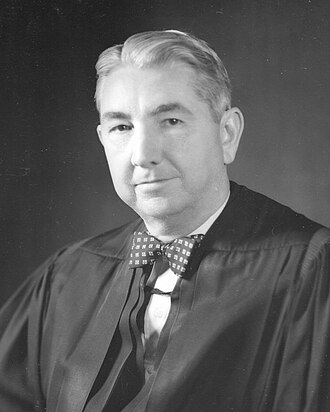 Tom ClarkWrote the majority opinion
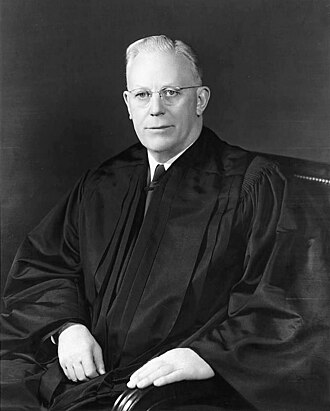 Earl WarrenWrote a concurrence
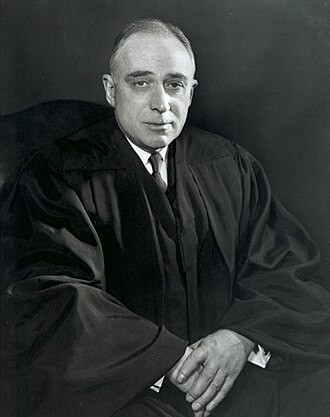 John HarlanWrote a concurrence
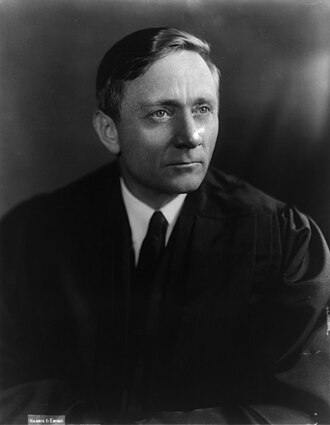 William DouglasJoined the majority
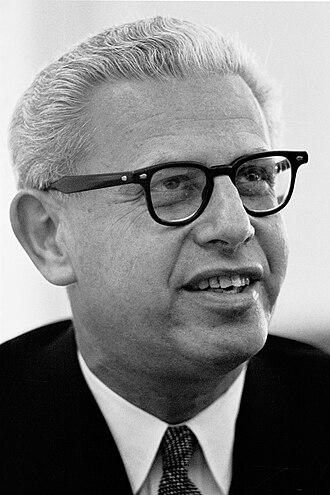 Arthur GoldbergJoined the majority
Dissent(4)
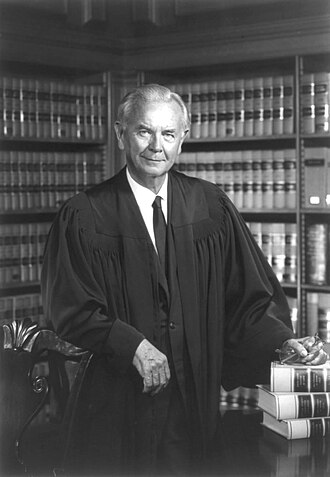 William BrennanWrote a dissent
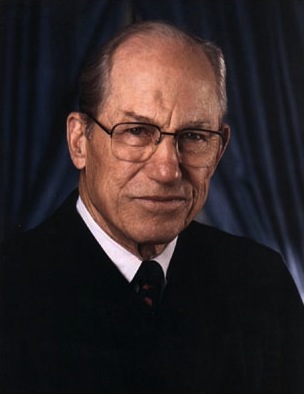 Byron WhiteWrote a dissent
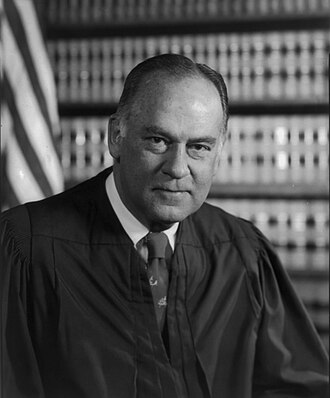 Potter StewartWrote a dissent
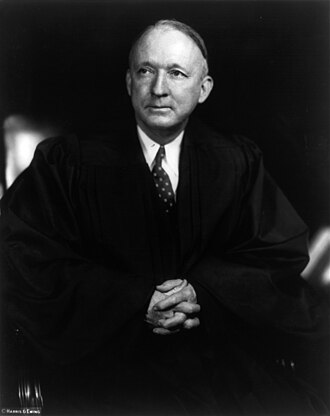 Hugo BlackJoined a dissent
Data notes
Each justice’s vote and what they wrote are from the justice-centered file of the Supreme Court Database. “Wrote a concurrence” means the justice sided with the majority and wrote separately; a justice who dissented in part is counted on the side they took overall. A justice who wrote nothing is listed as joining their side.
Positions are each justice’s Martin–Quinn score for the case’s term, the same scores as the Ideology page: negative is more liberal, positive more conservative. A score sums up a justice’s votes across the whole term, so it says where they usually sit, not why they voted as they did here. The median line is the Court’s median justice that term.
The parties
Who brought the case to the Court, who answered it, and how it got there.
- Petitioner
- EstesPerson accused, indicted, or suspected of crime
- Respondent
- TexasState (Texas)
- Reached the Court by
- Certiorari (the Court chose to hear it)
Data notes
The names are the two sides of the case’s title. The description under each is the Supreme Court Database’s category for that party, in its own wording. The petitioner is the side that asked the Supreme Court to review the decision below. “Why it was taken” appears only when the majority opinion says lower courts disagreed or were unsure about the question; reasons that would fit any case (“to resolve the question presented”, “an important question”) are left out.
The law at issue
The law the Court was asked to apply, and the kind of power it used to decide.
- Provision
- Sixth Amendment (other provisions)
- Kind of law
- Constitutional Amendment
- Decided by
- Judicial review (state level)
Data notes
The Supreme Court Database codes the main constitutional provision, statute or court rule each case turned on, and the basis of the decision: judicial review of a federal or state law, interpreting a statute, supervising the lower courts, and so on. A case can rest on more than one. “Overruled” counts only where the majority opinion says so.
Timeline
What happened at the Court and how the case got there, newest first.
- Jun 7, 1965DecidedDecided · Decided 5–4: reversed. Estes won.
- Apr 1, 1965ArguedArgued · Oral argument before the Court.
- Not datedTaken upTaken up · The Supreme Court agreed to hear the case (certiorari).
- Not datedCourt belowCourt below · Decided by the Texas Supreme Court: affirmed.
- Not datedBeganBegan · The case began in the Texas trial court.
Data notes
From the Supreme Court Database: the court the case began in, the court whose decision the Supreme Court reviewed and what that court did, how the case came to the Court, and the dates of argument and decision. The database does not date the steps in the lower courts. Court names are the database’s.
Other decisions on the same issue
10 other argued cases since 1946 on extra-legal jury influences: miscellaneous, newest first.
- Diaz v. United States144 S. Ct. 1727Jun 20, 2024 · 144 S. Ct. 1727Criminal procedure6–36–3 band
- Thomas L. Carey, Warden v. Mathew Musladin549 U.S. 70Dec 11, 2006 · 549 U.S. 70Criminal procedure9–0Unanimous band
- United States v. Michael E. Gaudin515 U.S. 506Jun 19, 1995 · 515 U.S. 506Criminal procedure9–0Unanimous band
- David Riggins v. Nevada504 U.S. 127May 18, 1992 · 504 U.S. 127Criminal procedure7–27–2 band
- Holbrook, Superintendent, Massachusetts Correctional Institution, et al. v. Flynn475 U.S. 560Mar 25, 1986 · 475 U.S. 560Criminal procedure9–0Unanimous band
- Chandler et al. v. Florida449 U.S. 560Jan 26, 1981 · 449 U.S. 560Criminal procedure8–0Unanimous band
- Morford v. United States339 U.S. 258Apr 10, 1950 · 339 U.S. 258Criminal procedure8–0Unanimous band
- Dennis v. United States339 U.S. 162Mar 27, 1950 · 339 U.S. 162Criminal procedure5–27–2 band
- Frazier v. United States335 U.S. 497Dec 20, 1948 · 335 U.S. 497Criminal procedure5–45–4 band
- Fay v. New York332 U.S. 261Jun 23, 1947 · 332 U.S. 261Criminal procedure5–45–4 band
Data notes
Every other orally argued case with a clear vote, from the 1946 term on, that the Supreme Court Database files under the same issue as this one. The database gives each case one issue from a list of about 270 (abortion, search and seizure of vehicles, the death penalty, and so on), whatever law it turned on.
Official record
Read the full opinion on Justia, the argument audio on Oyez and Wikipedia. Case data from the Supreme Court Database, Version 2026 Release 01, through the 2025 term.