United States v. Seeger
The Court ruled that the military draft exemption for conscientious objectors covered not only those who believed in a supreme being but also those whose sincere and meaningful beliefs held a place in their lives parallel to that of God.· AI-written
380 U.S. 163 · No. 50 · 1964 term · Warren Court
Decided Mar 8, 1965 · argued Nov 16, 1964
First Amendment · Conscientious objectors
Majority opinion: Tom Clark
The voteMajority
9–09 in the majority, 0 in dissent
No dissent (9–0)
Affirmed. United States lost.
What this ruling means
Affirmed: the Supreme Court upheld the decision of the U.S. Court of Appeals, Second Circuit, so it stands (sometimes with changes the Court made to it).
United States was the petitioner, the side that asked the Supreme Court to review the case. “Lost” means the Court did not give that side the result it asked for.
From the Supreme Court Database. A justice who agreed with the result but not the reasoning counts in the majority.
Summary
The opening of the case’s Wikipedia article: what the case was about and what the Court held.
United States v. Seeger, 380 U.S. 163 (1965), was a case in which the United States Supreme Court ruled that the exemption from the military draft for conscientious objectors could be reserved not only for those professing conformity with the moral directives of a supreme being but also for those whose views on war derived from a "sincere and meaningful belief which occupies in the life of its possessor a place parallel to that filled by the God of those" who had routinely gotten the exemption.
The Court reasoned that "both morals and sound policy require that the state should not violate the conscience of the individual" and that "liberty of conscience has a moral and social value which makes it worthy of preservation at the hands of the state." Additionally, that if this principle is violated to preserve the "life" of the state that it puts into question whether the state will lose its "life" as a result.
The case resolved, on diverse but related grounds, three cases, each involving conviction for failure to accept induction into the armed forces on the part of someone who sought conscientious-objector status without "belong[ing] to an orthodox religious sect". The accused, whose cases were otherwise unrelated, were Arno Sascha Jakobson, Forest Britt Peter, and Daniel Andrew Seeger; it was Seeger's case that gave its name to the multi-case decision. Archibald Cox, then Solicitor General, argued for the United States in every case.
Data notes
The text is Wikipedia’s (CC BY-SA 4.0), matched to the case by its citation, docket number or name and year, and is not checked against the opinion. The site keeps the article’s opening section, ending on its last full sentence. The one-sentence summary under the title is the Decisions list’s: Wikipedia’s own ruling sentence, or, tagged “AI-written”, one Claude wrote from this opening.
How the justices voted
Each justice who took part, placed by their Martin–Quinn ideology score for the 1964 term. Filled: the 9 in the majority. Hollow: the 0 in dissent. Colour is the party of the president who appointed them.
Majority(9)
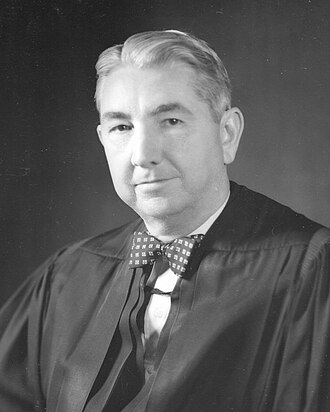 Tom ClarkWrote the majority opinion
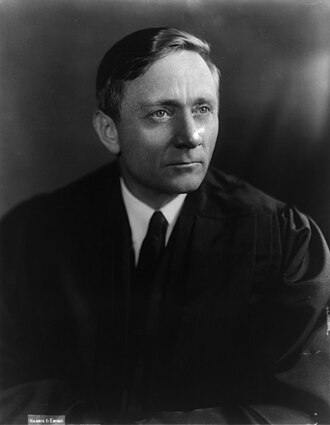 William DouglasWrote a concurrence
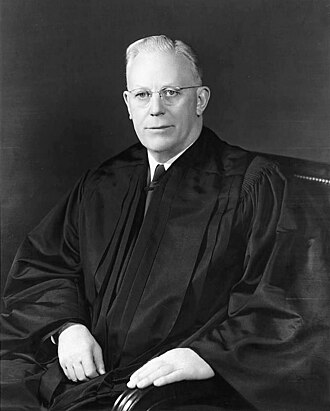 Earl WarrenJoined the majority
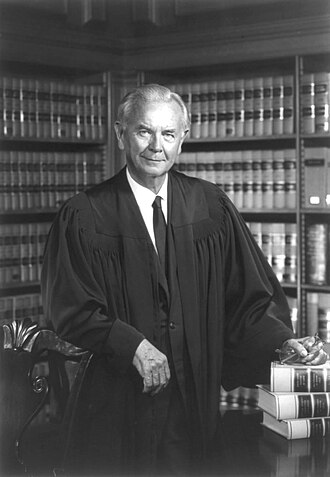 William BrennanJoined the majority
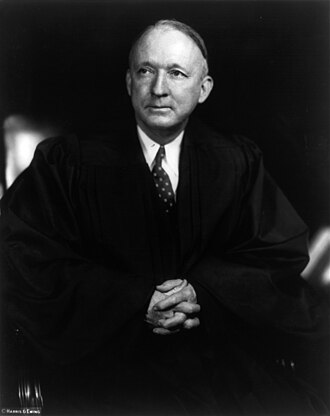 Hugo BlackJoined the majority
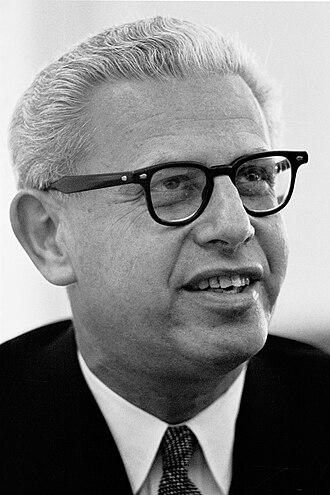 Arthur GoldbergJoined the majority
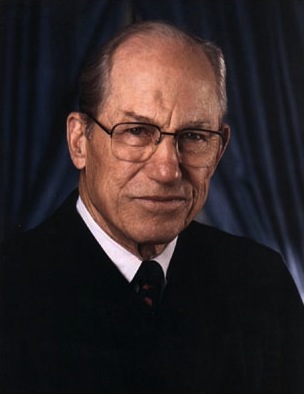 Byron WhiteJoined the majority
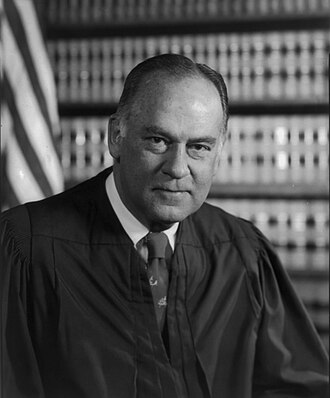 Potter StewartJoined the majority
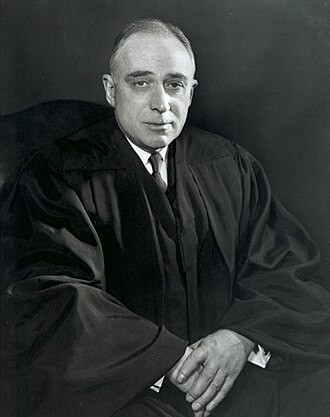 John HarlanJoined the majority
Dissent(0)
- None.
Data notes
Each justice’s vote and what they wrote are from the justice-centered file of the Supreme Court Database. “Wrote a concurrence” means the justice sided with the majority and wrote separately; a justice who dissented in part is counted on the side they took overall. A justice who wrote nothing is listed as joining their side.
Positions are each justice’s Martin–Quinn score for the case’s term, the same scores as the Ideology page: negative is more liberal, positive more conservative. A score sums up a justice’s votes across the whole term, so it says where they usually sit, not why they voted as they did here. The median line is the Court’s median justice that term.
The parties
Who brought the case to the Court, who answered it, and how it got there.
- Petitioner
- United StatesUnited States
- Respondent
- SeegerPerson subject to selective service
- Reached the Court by
- Certiorari (the Court chose to hear it)
Data notes
The names are the two sides of the case’s title. The description under each is the Supreme Court Database’s category for that party, in its own wording. The petitioner is the side that asked the Supreme Court to review the decision below. “Why it was taken” appears only when the majority opinion says lower courts disagreed or were unsure about the question; reasons that would fit any case (“to resolve the question presented”, “an important question”) are left out.
The law at issue
The law the Court was asked to apply, and the kind of power it used to decide.
- Provision
- Selective Service, Military Selective Service, or Universal Military Service and Training Acts
- Kind of law
- Federal Statute
- Decided by
- Statutory construction
Data notes
The Supreme Court Database codes the main constitutional provision, statute or court rule each case turned on, and the basis of the decision: judicial review of a federal or state law, interpreting a statute, supervising the lower courts, and so on. A case can rest on more than one. “Overruled” counts only where the majority opinion says so.
Timeline
What happened at the Court and how the case got there, newest first.
- Mar 8, 1965DecidedDecided · Decided 9–0: affirmed. United States lost.
- Nov 16, 1964ArguedArgued · Oral argument before the Court.
- Not datedTaken upTaken up · The Supreme Court agreed to hear the case (certiorari).
- Not datedCourt belowCourt below · Decided by the U.S. Court of Appeals, Second Circuit: reversed.
- Not datedBeganBegan · The case began in the New York Southern U.S. District Court.
Data notes
From the Supreme Court Database: the court the case began in, the court whose decision the Supreme Court reviewed and what that court did, how the case came to the Court, and the dates of argument and decision. The database does not date the steps in the lower courts. Court names are the database’s.
Other decisions on the same issue
24 other argued cases since 1946 on conscientious objectors, newest first.
- Wayte v. United States470 U.S. 598Mar 19, 1985 · 470 U.S. 598First Amendment7–27–2 band
- Fein v. Selective Service System Local Board No. 7 of Yonkers, New York, et al.405 U.S. 365Mar 21, 1972 · 405 U.S. 365First Amendment4–36–3 band
- Parisi v. Davidson et al.405 U.S. 34Feb 23, 1972 · 405 U.S. 34First Amendment7–0Unanimous band
- Clay, aka Ali v. United States403 U.S. 698Jun 28, 1971 · 403 U.S. 698First Amendment8–0Unanimous band
- McGee v. United States402 U.S. 479May 17, 1971 · 402 U.S. 479First Amendment8–18–1 band
- Ehlert v. United States402 U.S. 99Apr 21, 1971 · 402 U.S. 99First Amendment6–36–3 band
- Gillette v. United States401 U.S. 437Mar 8, 1971 · 401 U.S. 437First Amendment8–18–1 band
- United States v. Weller401 U.S. 254Feb 24, 1971 · 401 U.S. 254First Amendment8–18–1 band
- United States v. Sisson399 U.S. 267Jun 29, 1970 · 399 U.S. 267First Amendment5–36–3 band
- Mulloy v. United States398 U.S. 410Jun 15, 1970 · 398 U.S. 410First Amendment8–0Unanimous band
- Welsh v. United States398 U.S. 333Jun 15, 1970 · 398 U.S. 333First Amendment5–36–3 band
- Gonzales v. United States364 U.S. 59Jun 27, 1960 · 364 U.S. 59First Amendment5–45–4 band
- Johnston et al. v. United States351 U.S. 215May 21, 1956 · 351 U.S. 215First Amendment6–36–3 band
- Gonzales v. United States348 U.S. 407Mar 14, 1955 · 348 U.S. 407First Amendment5–36–3 band
- Simmons v. United States348 U.S. 397Mar 14, 1955 · 348 U.S. 397First Amendment6–27–2 band
- Sicurella v. United States348 U.S. 385Mar 14, 1955 · 348 U.S. 385First Amendment6–27–2 band
- Witmer v. United States348 U.S. 375Mar 14, 1955 · 348 U.S. 375First Amendment6–27–2 band
- Dickinson v. United States346 U.S. 389Nov 30, 1953 · 346 U.S. 389First Amendment6–36–3 band
- United States v. Nugent346 U.S. 1Jun 8, 1953 · 346 U.S. 1First Amendment5–36–3 band
- Cox v. United States332 U.S. 442Nov 24, 1947 · 332 U.S. 442First Amendment5–45–4 band
- Sunal v. Large, Superintendent, Federal Prison Camp332 U.S. 174Jun 23, 1947 · 332 U.S. 174First Amendment6–36–3 band
- Gibson v. United States329 U.S. 338Dec 23, 1946 · 329 U.S. 338First Amendment9–0Unanimous band
- Eagles, Post Commanding Officer, v. United States ex rel. Horowitz329 U.S. 317Dec 23, 1946 · 329 U.S. 317First Amendment9–0Unanimous band
- Eagles, Post Commanding Officer, v. United States ex rel. Samuels329 U.S. 304Dec 23, 1946 · 329 U.S. 304First Amendment9–0Unanimous band
Data notes
Every other orally argued case with a clear vote, from the 1946 term on, that the Supreme Court Database files under the same issue as this one. The database gives each case one issue from a list of about 270 (abortion, search and seizure of vehicles, the death penalty, and so on), whatever law it turned on.
Official record
Read the full opinion on Justia, the argument audio on Oyez and Wikipedia. Case data from the Supreme Court Database, Version 2026 Release 01, through the 2025 term.