United States v. Philadelphia National Bank et al.
The Court held that Section 7 of the Clayton Act, as amended in 1950, applied to bank mergers, and it established a presumption that mergers covering at least 30 percent of the relevant market were unlawful.· AI-written
374 U.S. 321 · No. 83 · 1962 term · Warren Court
Decided Jun 17, 1963 · argued Feb 20, 1963
Economic activity · Mergers
Majority opinion: William Brennan
The voteMajorityDissent
6–26 in the majority, 2 in dissent
2 dissents (7–2)
Reversed and remanded. United States won.
What this ruling means
Reversed and remanded: the Supreme Court overturned the decision of the Pennsylvania Eastern U.S. District Court and sent the case back to that court for further proceedings that follow the Supreme Court’s ruling.
United States was the petitioner, the side that asked the Supreme Court to review the case. “Won” means the Court gave that side the result it asked for.
From the Supreme Court Database. A justice who agreed with the result but not the reasoning counts in the majority.
Summary
The opening of the case’s Wikipedia article: what the case was about and what the Court held.
United States v. Philadelphia National Bank, 374 U.S. 321 (1963), also called the Philadelphia Bank case, was a 1963 decision of the United States Supreme Court that held Section 7 of the Clayton Act, as amended in 1950, applied to bank mergers. It was the first case in which the Supreme Court considered the application of antitrust laws to the commercial banking industry. In addition to holding the statute applicable to bank mergers, the Court established a presumption that mergers that covered at least 30 percent of the relevant market were presumptively unlawful.
Data notes
The text is Wikipedia’s (CC BY-SA 4.0), matched to the case by its citation, docket number or name and year, and is not checked against the opinion. The site keeps the article’s opening section, ending on its last full sentence. The one-sentence summary under the title is the Decisions list’s: Wikipedia’s own ruling sentence, or, tagged “AI-written”, one Claude wrote from this opening.
How the justices voted
Each justice who took part, placed by their Martin–Quinn ideology score for the 1962 term. Filled: the 6 in the majority. Hollow: the 2 in dissent. Colour is the party of the president who appointed them.
Majority(6)
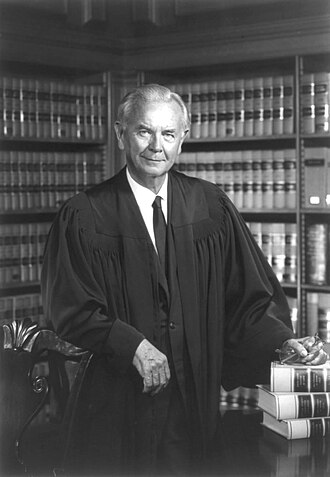 William BrennanWrote the majority opinion
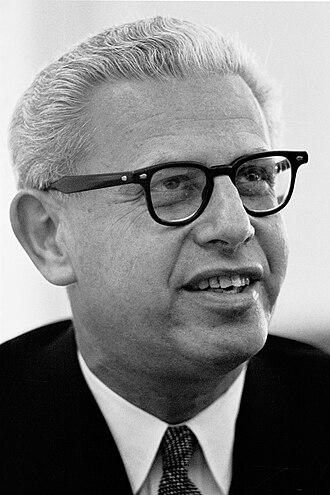 Arthur GoldbergWrote a concurrence
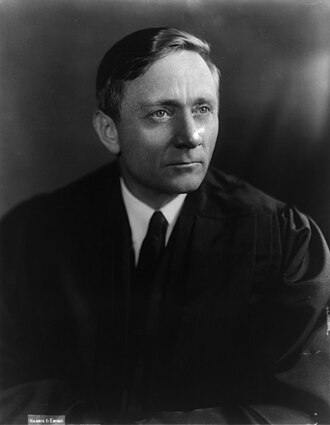 William DouglasJoined the majority
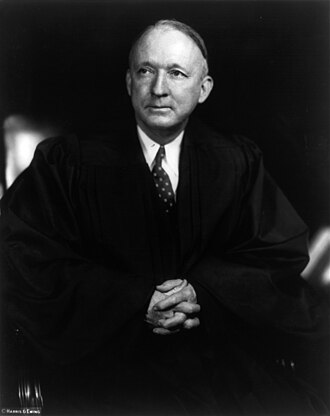 Hugo BlackJoined the majority
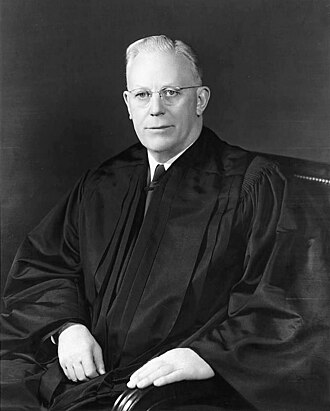 Earl WarrenJoined the majority
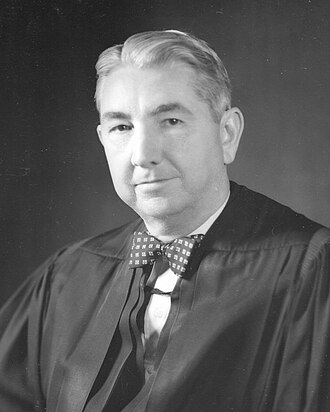 Tom ClarkJoined the majority
Dissent(2)
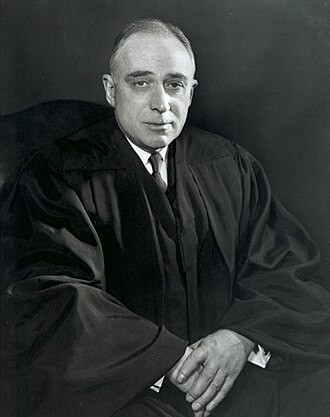 John HarlanWrote a dissent
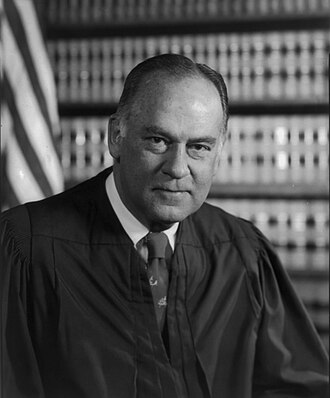 Potter StewartJoined a dissent
Did not take part: Byron White.
Data notes
Each justice’s vote and what they wrote are from the justice-centered file of the Supreme Court Database. “Wrote a concurrence” means the justice sided with the majority and wrote separately; a justice who dissented in part is counted on the side they took overall. A justice who wrote nothing is listed as joining their side.
Positions are each justice’s Martin–Quinn score for the case’s term, the same scores as the Ideology page: negative is more liberal, positive more conservative. A score sums up a justice’s votes across the whole term, so it says where they usually sit, not why they voted as they did here. The median line is the Court’s median justice that term.
The parties
Who brought the case to the Court, who answered it, and how it got there.
- Petitioner
- United StatesUnited States
- Respondent
- Philadelphia National Bank et al.Bank, savings and loan, credit union, investment company
- Reached the Court by
- Appeal (the Court was required to hear it)
Data notes
The names are the two sides of the case’s title. The description under each is the Supreme Court Database’s category for that party, in its own wording. The petitioner is the side that asked the Supreme Court to review the decision below. “Why it was taken” appears only when the majority opinion says lower courts disagreed or were unsure about the question; reasons that would fit any case (“to resolve the question presented”, “an important question”) are left out.
The law at issue
The law the Court was asked to apply, and the kind of power it used to decide.
- Provision
- Clayton
- Kind of law
- Federal Statute
- Decided by
- Statutory construction
Data notes
The Supreme Court Database codes the main constitutional provision, statute or court rule each case turned on, and the basis of the decision: judicial review of a federal or state law, interpreting a statute, supervising the lower courts, and so on. A case can rest on more than one. “Overruled” counts only where the majority opinion says so.
Timeline
What happened at the Court and how the case got there, newest first.
- Jun 17, 1963DecidedDecided · Decided 6–2: reversed and remanded. United States won.
- Feb 20, 1963ArguedArgued · Oral argument before the Court.
- Not datedTaken upTaken up · Reached the Supreme Court on appeal, which the Court had to hear.
- Not datedCourt belowCourt below · Began in and was decided by the Pennsylvania Eastern U.S. District Court.
Data notes
From the Supreme Court Database: the court the case began in, the court whose decision the Supreme Court reviewed and what that court did, how the case came to the Court, and the dates of argument and decision. The database does not date the steps in the lower courts. Court names are the database’s.
Other decisions on the same issue
47 other argued cases since 1946 on mergers, newest first.
- Emulex Corp. v. Varjabedian139 S. Ct. 1407Apr 23, 2019 · 139 S. Ct. 1407Economic activity9–0Unanimous band
- California v. American Stores Co. et al.495 U.S. 271Apr 30, 1990 · 495 U.S. 271Economic activity9–0Unanimous band
- Cargill, Inc., et al. v. Monfort of Colorado, Inc.479 U.S. 104Dec 9, 1986 · 479 U.S. 104Economic activity6–27–2 band
- Northeast Bancorp, Inc., et al. v. Board of Governors of the Federal Reserve System et al.472 U.S. 159Jun 10, 1985 · 472 U.S. 159Economic activity8–0Unanimous band
- Board of Governors of the Federal Reserve System v. First Lincolnwood Corp.439 U.S. 234Dec 11, 1978 · 439 U.S. 234Economic activity7–27–2 band
- E.I. Du Pont de Nemours & Co. et al. v. Collins et al.432 U.S. 46Jun 16, 1977 · 432 U.S. 46Economic activity7–18–1 band
- United States v. American Building Maintenance Industries422 U.S. 271Jun 24, 1975 · 422 U.S. 271Economic activity6–36–3 band
- United States v. Citizens & Southern National Bank et al.422 U.S. 86Jun 17, 1975 · 422 U.S. 86Economic activity6–36–3 band
- United States v. ITT Continental Baking Co.420 U.S. 223Feb 19, 1975 · 420 U.S. 223Economic activity5–45–4 band
- United States v. Connecticut National Bank et al.418 U.S. 656Jun 26, 1974 · 418 U.S. 656Economic activity5–45–4 band
- United States v. Marine Bancorporation, Inc., et al.418 U.S. 602Jun 26, 1974 · 418 U.S. 602Economic activity5–36–3 band
- United States v. General Dynamics Corp. et al.415 U.S. 486Mar 19, 1974 · 415 U.S. 486Economic activity5–45–4 band
- United States v. First National Bancorporation, Inc., et al.410 U.S. 577Feb 28, 1973 · 410 U.S. 577Economic activity4–45–4 band
- United States v. Falstaff Brewing Corp. et al.410 U.S. 526Feb 28, 1973 · 410 U.S. 526Economic activity5–27–2 band
- Port of Portland et al. v. United States et al.408 U.S. 811Jun 29, 1972 · 408 U.S. 811Economic activity7–0Unanimous band
- Ford Motor Co. v. United States et al.405 U.S. 562Mar 29, 1972 · 405 U.S. 562Economic activity5–27–2 band
- United States v. Armour & Co. et al.402 U.S. 673Jun 1, 1971 · 402 U.S. 673Economic activity4–36–3 band
- United States v. Greater Buffalo Press, Inc., et al.402 U.S. 549Jun 1, 1971 · 402 U.S. 549Economic activity9–0Unanimous band
- United States v. Armour & Co. et al.398 U.S. 268Jun 1, 1970 · 398 U.S. 268Economic activity5–18–1 band
- United States v. Interstate Commerce Commission et al.396 U.S. 491Feb 2, 1970 · 396 U.S. 491Economic activity7–0Unanimous band
- Securities and Exchange Commission v. New England Electric System et al.390 U.S. 207Mar 5, 1968 · 390 U.S. 207Economic activity7–0Unanimous band
- United States v. Third National Bank in Nashville et al.390 U.S. 171Mar 4, 1968 · 390 U.S. 171Economic activity5–27–2 band
- City of Pottsville v. United States et al.389 U.S. 486Jan 15, 1968 · 389 U.S. 486Economic activity7–18–1 band
- United States v. Penn-Olin Chemical Co. et al.389 U.S. 308Dec 11, 1967 · 389 U.S. 308Economic activity4–45–4 band
- Federal Trade Commission v. Procter & Gamble Co.386 U.S. 568Apr 10, 1967 · 386 U.S. 568Economic activity7–0Unanimous band
- Baltimore & Ohio Railroad Co. et al. v. United States et al.386 U.S. 372Mar 27, 1967 · 386 U.S. 372Economic activity5–45–4 band
- United States v. First City National Bank of Houston et al.386 U.S. 361Mar 27, 1967 · 386 U.S. 361Economic activity8–0Unanimous band
- Levin v. Mississippi River Fuel Corp. et al.386 U.S. 162Feb 27, 1967 · 386 U.S. 162Economic activity8–0Unanimous band
- Cascade Natural Gas Corp. v. El Paso Natural Gas Co. et al.386 U.S. 129Feb 27, 1967 · 386 U.S. 129Economic activity5–27–2 band
- Federal Trade Commission v. Dean Foods Co. et al.384 U.S. 597Jun 13, 1966 · 384 U.S. 597Economic activity5–45–4 band
- United States v. Pabst Brewing Co. et al.384 U.S. 546Jun 13, 1966 · 384 U.S. 546Economic activity9–0Unanimous band
- United States v. Von's Grocery Co. et al.384 U.S. 270May 31, 1966 · 384 U.S. 270Economic activity6–27–2 band
- Securities and Exchange Commission v. New England Electric System et al.384 U.S. 176May 16, 1966 · 384 U.S. 176Economic activity7–27–2 band
- United States v. Continental Can Co. et al.378 U.S. 441Jun 22, 1964 · 378 U.S. 441Economic activity7–27–2 band
- United States v. Penn-Olin Chemical Co. et al.378 U.S. 158Jun 22, 1964 · 378 U.S. 158Economic activity7–27–2 band
- United States v. Aluminum Co. of America et al.377 U.S. 271Jun 1, 1964 · 377 U.S. 271Economic activity6–36–3 band
- United States v. El Paso Natural Gas Co. et al.376 U.S. 651Apr 6, 1964 · 376 U.S. 651Economic activity7–18–1 band
- United States v. First National Bank & Trust Co. of Lexington et al.376 U.S. 665Apr 6, 1964 · 376 U.S. 665Economic activity7–27–2 band
- Gilbertville Trucking Co., Inc., et al. v. United States et al.371 U.S. 115Dec 3, 1962 · 371 U.S. 115Economic activity9–0Unanimous band
- Brown Shoe Co., Inc., v. United States370 U.S. 294Jun 25, 1962 · 370 U.S. 294Economic activity7–0Unanimous band
- California v. Federal Power Commission et al.369 U.S. 482Apr 30, 1962 · 369 U.S. 482Economic activity5–27–2 band
- United States v. E. I. Du Pont de Nemours & Co. et al.366 U.S. 316May 22, 1961 · 366 U.S. 316Economic activity4–36–3 band
- Brotherhood of Maintenance of Way Employes et al. v. United States et al.366 U.S. 169May 1, 1961 · 366 U.S. 169Economic activity8–18–1 band
- Maryland and Virginia Milk Producers Association, Inc., v. United States362 U.S. 458May 2, 1960 · 362 U.S. 458Economic activity9–0Unanimous band
- Minneapolis & St. Louis Railway Co. v. United States et al.361 U.S. 173Dec 14, 1959 · 361 U.S. 173Economic activity8–18–1 band
- International Boxing Club of New York, Inc., et al. v. United States358 U.S. 242Jan 12, 1959 · 358 U.S. 242Economic activity5–36–3 band
- United States v. Columbia Steel Co. et al.334 U.S. 495Jun 7, 1948 · 334 U.S. 495Economic activity5–45–4 band
Data notes
Every other orally argued case with a clear vote, from the 1946 term on, that the Supreme Court Database files under the same issue as this one. The database gives each case one issue from a list of about 270 (abortion, search and seizure of vehicles, the death penalty, and so on), whatever law it turned on.
Official record
Read the full opinion on Justia, the argument audio on Oyez and Wikipedia. Case data from the Supreme Court Database, Version 2026 Release 01, through the 2025 term.