Ganger et al. v. City of Miami.
The Court expanded the circumstances in which federal courts should hold evidentiary hearings when presented with petitions for habeas corpus by state prisoners following denial of postconviction relief in state court.
359 U.S. 64 · No. 153 · 1958 term · Warren Court
Decided Mar 9, 1959 · argued Mar 2, 1959
Judicial power · No merits: dismissed or affirmed for want of a substantial or properly presented federal question, or a nonsuit
The voteMajority
9–09 in the majority, 0 in dissent
No dissent (9–0)
Petition denied or appeal dismissed. Ganger et al. lost.
What this ruling means
Dismissed: after hearing the case the Supreme Court declined to decide it, so the decision of the Florida Supreme Court stands.
Ganger et al. was the petitioner, the side that asked the Supreme Court to review the case. “Lost” means the Court did not give that side the result it asked for.
From the Supreme Court Database. A justice who agreed with the result but not the reasoning counts in the majority.
Summary
The opening of the case’s Wikipedia article: what the case was about and what the Court held.
Townsend v. Sain, 372 U.S. 293 (1963), was a United States Supreme Court case wherein the Court expanded the circumstances in which federal courts should hold evidentiary hearings when presented with petitions for habeas corpus by state prisoners following denial of postconviction relief in state court. The Court held that federal district courts must hold evidentiary hearings if the state court did not resolve all material factual disputes in a full and fair hearing supported by the record.
The case centered around Charles Townsend, who was convicted of a series of murders and robberies and sentenced to death. The issue heard in the Supreme Court centered around a confession Townsend had given while under the influence of an alleged "truth serum". Townsend's attorneys argued that the effects of the truth serum had made the confession inadmissible. Townsend appealed the case by filing a writ of habeas corpus against Sheriff Frank G. Sain of Cook County, Illinois. The case made it to Illinois Supreme Court once, and the Supreme Court twice: first in 1959 and again in 1963. The appeals case however did not revolve around the truth serum, but instead procedural questions surrounding a prisoner's right to an evidentiary hearing during the appeal process.
The court held that Townsend's writ of habeas corpus should not have been summarily denied, and that the lower court should have held an evidentiary hearing to determine the veracity of Townsend's claims. The court repeated its previous decision that coerced confessions were inadmissible, and theorized that a confession via truth serum would thus be inadmissible; the court was careful to avoid saying whether or not Townsend had actually been given a truth serum.
Alongside Fay v. Noia and Sanders v. United States, Townsend is cited as revolutionizing and greatly expanding the use of habeas corpus, leading to it being used as a general purpose appeals tool. However a variety of Supreme Court decisions since then have narrowed its application.
Data notes
The text is Wikipedia’s (CC BY-SA 4.0), matched to the case by its citation, docket number or name and year, and is not checked against the opinion. The site keeps the article’s opening section, ending on its last full sentence. The one-sentence summary under the title is the Decisions list’s: Wikipedia’s own ruling sentence, or, tagged “AI-written”, one Claude wrote from this opening.
How the justices voted
Each justice who took part, placed by their Martin–Quinn ideology score for the 1958 term. Filled: the 9 in the majority. Hollow: the 0 in dissent. Colour is the party of the president who appointed them.
Majority(9)
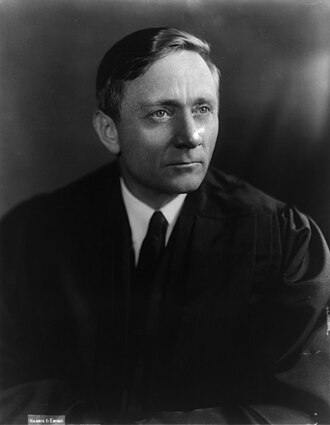 William DouglasJoined the majority
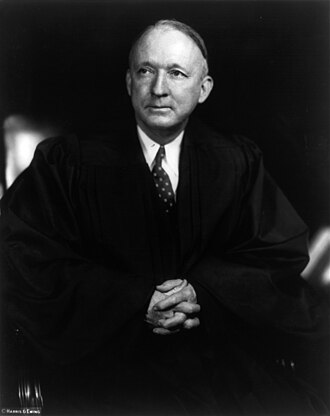 Hugo BlackJoined the majority
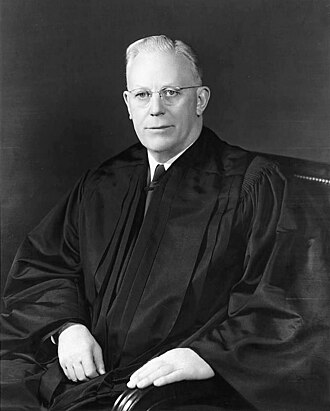 Earl WarrenJoined the majority
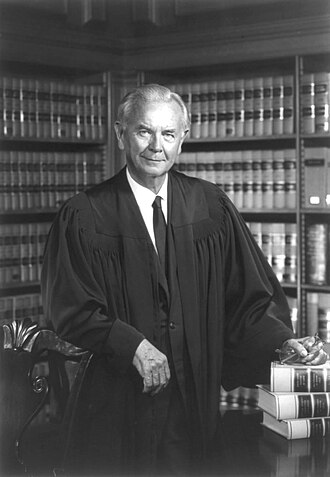 William BrennanJoined the majority
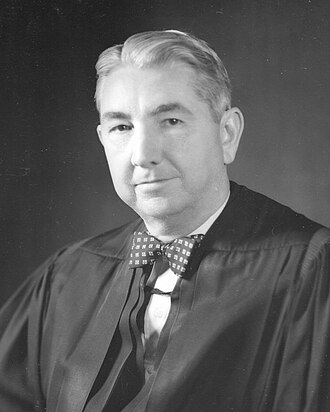 Tom ClarkJoined the majority
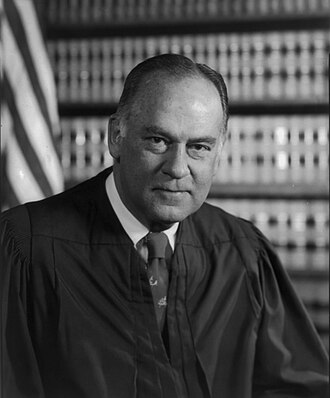 Potter StewartJoined the majority
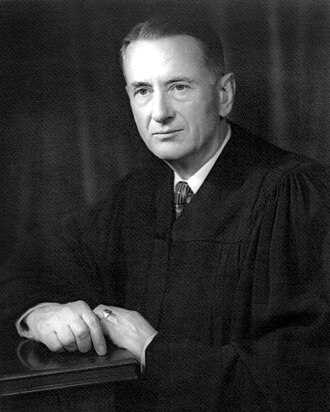 Charles WhittakerJoined the majority
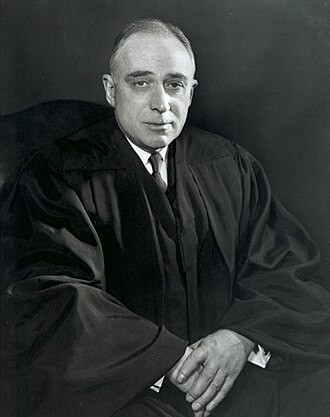 John HarlanJoined the majority
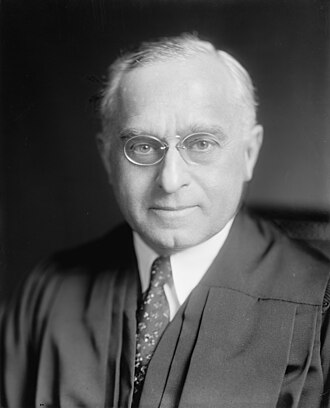 Felix FrankfurterJoined the majority
Dissent(0)
- None.
Data notes
Each justice’s vote and what they wrote are from the justice-centered file of the Supreme Court Database. “Wrote a concurrence” means the justice sided with the majority and wrote separately; a justice who dissented in part is counted on the side they took overall. A justice who wrote nothing is listed as joining their side.
Positions are each justice’s Martin–Quinn score for the case’s term, the same scores as the Ideology page: negative is more liberal, positive more conservative. A score sums up a justice’s votes across the whole term, so it says where they usually sit, not why they voted as they did here. The median line is the Court’s median justice that term.
The parties
Who brought the case to the Court, who answered it, and how it got there.
- Petitioner
- Ganger et al.
- Respondent
- City of Miami.City, town, township, village, or borough government or governmental unit (Florida)
- Reached the Court by
- Appeal (the Court was required to hear it)
Data notes
The names are the two sides of the case’s title. The description under each is the Supreme Court Database’s category for that party, in its own wording. The petitioner is the side that asked the Supreme Court to review the decision below. “Why it was taken” appears only when the majority opinion says lower courts disagreed or were unsure about the question; reasons that would fit any case (“to resolve the question presented”, “an important question”) are left out.
The law at issue
The law the Court was asked to apply, and the kind of power it used to decide.
- Decided by
- Supreme Court supervision of lower federal or state courts or original jurisdiction
Data notes
The Supreme Court Database codes the main constitutional provision, statute or court rule each case turned on, and the basis of the decision: judicial review of a federal or state law, interpreting a statute, supervising the lower courts, and so on. A case can rest on more than one. “Overruled” counts only where the majority opinion says so.
Timeline
What happened at the Court and how the case got there, newest first.
- Mar 9, 1959DecidedDecided · Decided 9–0: petition denied or appeal dismissed. Ganger et al. lost.
- Mar 2, 1959ArguedArgued · Oral argument before the Court.
- Not datedTaken upTaken up · Reached the Supreme Court on appeal, which the Court had to hear.
- Not datedCourt belowCourt below · Decided by the Florida Supreme Court: reversed and remanded.
- Not datedBeganBegan · The case began in the Florida trial court.
Data notes
From the Supreme Court Database: the court the case began in, the court whose decision the Supreme Court reviewed and what that court did, how the case came to the Court, and the dates of argument and decision. The database does not date the steps in the lower courts. Court names are the database’s.
Other decisions on the same issue
13 other argued cases since 1946 on no merits: dismissed or affirmed for want of a substantial or properly presented federal question, or a nonsuit, newest first.
- John D. Ashcroft, Former Attorney General, et al. v. Javaid Iqbal et al.Landmark556 U.S. 662May 18, 2009 · 556 U.S. 662Judicial powerLandmark5–45–4 band
- Mark H. Oring v. State Bar of California488 U.S. 590Jan 23, 1989 · 488 U.S. 590Judicial power9–0Unanimous band
- McNamara, Edward v. County of San Diego Department of Social Services488 U.S. 152Dec 6, 1988 · 488 U.S. 152Judicial power9–0Unanimous band
- Vincent v. Texas449 U.S. 199Dec 9, 1980 · 449 U.S. 199Judicial power9–0Unanimous band
- Pearson v. Dodd et al.429 U.S. 396Jan 12, 1977 · 429 U.S. 396Judicial power9–0Unanimous band
- Mattiello v. Connecticut.395 U.S. 209May 26, 1969 · 395 U.S. 209Judicial power8–0Unanimous band
- Benz v. New York State Thruway Authority369 U.S. 147Mar 19, 1962 · 369 U.S. 147Judicial power7–18–1 band
- Newsom v. Smyth, Superintendent, Virginia State Penitentiary365 U.S. 604Mar 27, 1961 · 365 U.S. 604Judicial power6–36–3 band
- Nelson et al. v. Tennessee.355 U.S. 271Dec 16, 1957 · 355 U.S. 271Judicial power9–0Unanimous band
- Walton v. California.350 U.S. 868Oct 24, 1955 · 350 U.S. 868Judicial power6–27–2 band
- Palmer Oil Corp. et al. v. Amerada Petroleum Corp. et al.343 U.S. 390May 12, 1952 · 343 U.S. 390Judicial power9–0Unanimous band
- Montana-Dakota Utilities Co. v. Northwestern Public Service Co.341 U.S. 246May 7, 1951 · 341 U.S. 246Judicial power5–45–4 band
- Standard-Vacuum Oil Co. v. United States339 U.S. 157Mar 27, 1950 · 339 U.S. 157Judicial power8–0Unanimous band
Data notes
Every other orally argued case with a clear vote, from the 1946 term on, that the Supreme Court Database files under the same issue as this one. The database gives each case one issue from a list of about 270 (abortion, search and seizure of vehicles, the death penalty, and so on), whatever law it turned on.
Official record
Read the full opinion on Justia, the argument audio on Oyez and Wikipedia. Case data from the Supreme Court Database, Version 2026 Release 01, through the 2025 term.