United States ex rel. Toth v. Quarles, Secretary of the Air Force
The Court expanded the rights of citizens to civilian trials, holding that an ex-serviceman cannot be court-martialed for crimes alleged during his military service.
350 U.S. 11 · No. 3 · 1955 term · Warren Court
Decided Nov 7, 1955 · argued Feb 8, 1955, reargued Oct 13, 1955
Civil rights · Military: veteran
Struck down an act of Congress
Majority opinion: Hugo Black
The voteMajorityDissent
6–36 in the majority, 3 in dissent
3 dissents (6–3)
Reversed. United States ex rel. Toth won.
What this ruling means
Reversed: the Supreme Court overturned the decision of the U.S. Court of Appeals, District of Columbia Circuit, and its own ruling ends the case.
United States ex rel. Toth was the petitioner, the side that asked the Supreme Court to review the case. “Won” means the Court gave that side the result it asked for.
From the Supreme Court Database. A justice who agreed with the result but not the reasoning counts in the majority.
Summary
The opening of the case’s Wikipedia article: what the case was about and what the Court held.
United States ex rel. Toth v. Quarles, 350 U.S. 11 (1955), was a decision by the Supreme Court of the United States that expanded the rights of citizens to civilian trials, holding that an ex-serviceman cannot be court-martialed for crimes alleged during his military service.
The United States Air Force alleged that the petitioner, Robert W. Toth, committed a murder while he was on active duty in Korea. (On Sept 27, 1952, while on guard duty at a air base in South Korea, Toth and airman Thomas Kinder had taken into custody a drunken South Korean Civilian named Bang Soon Kil who had grabbed at Toth arm who then pistol-whipped the Civilian. Toth and Kinder were ordered by their superior Lt George Schreiber to kill Bang. Schreiber and Kinder then still in the military were court-martialed: Schreiber was sentenced to life in prison (reduced to 5 years in prison; forfeiture of pay and dishonorable discharge; he served 20 months before being dismissed from service); Kinder was sentenced to life sentence (reduced to two years in prison and a dishonorable discharge; the discharge was later suspended, allowing him to return to service). They argued that while they knew about the murder while Toth was in the armed forces, they didn't know the identity of the man who did it so Toth was honorably discharged. Donald A. Quarles, at the time the Secretary of the Air Force, argued that as the crimes occurred during Toth's military service, the military could constitutionally try him.
The case mostly dealt with the Uniform Code of Military Justice (UCMJ), a 1950 law passed by the 81st United States Congress and signed by President Harry S. Truman, and whether or not certain provisions of it were constitutional; that is to say, whether or not Congress could deprive ex-service members of their Fourth and Fifth Amendment rights.
In the majority opinion, decided 6–3, Justice Hugo Black wrote that "[the UCMJ] is not a valid exercise of the power granted Congress in Article I of the Constitution." The decision in Quarles would prove as an important precedent which the Court would rely on two years later in the landmark Reid v. Covert ruling. Whereas Quarles dealt with the case of an ex-servicemember, Covert would deny the government the ability to try any US citizen by military tribunal, even citizens abroad.
Data notes
The text is Wikipedia’s (CC BY-SA 4.0), matched to the case by its citation, docket number or name and year, and is not checked against the opinion. The site keeps the article’s opening section, ending on its last full sentence. The one-sentence summary under the title is the Decisions list’s: Wikipedia’s own ruling sentence, or, tagged “AI-written”, one Claude wrote from this opening.
How the justices voted
Each justice who took part, placed by their Martin–Quinn ideology score for the 1955 term. Filled: the 6 in the majority. Hollow: the 3 in dissent. Colour is the party of the president who appointed them.
Majority(6)
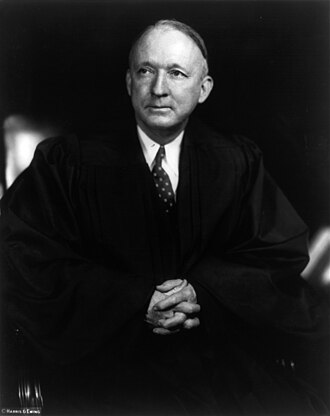 Hugo BlackWrote the majority opinion
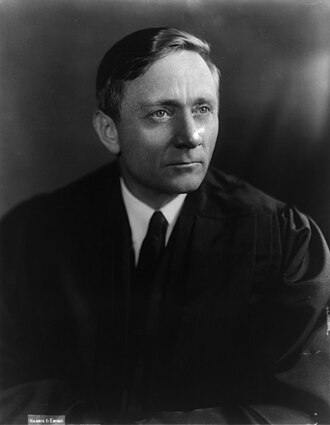 William DouglasJoined the majority
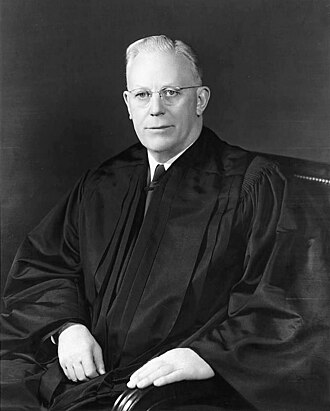 Earl WarrenJoined the majority
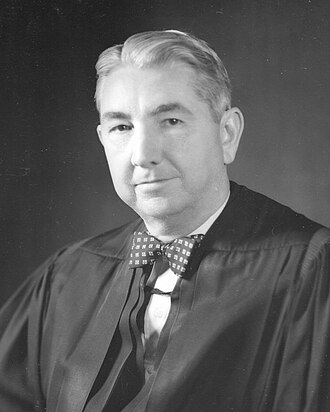 Tom ClarkJoined the majority
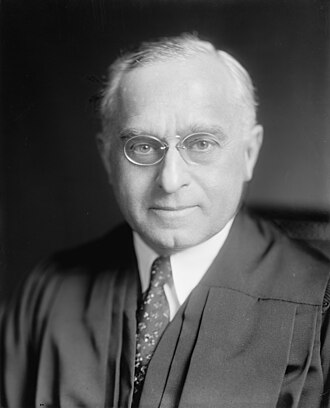 Felix FrankfurterJoined the majority
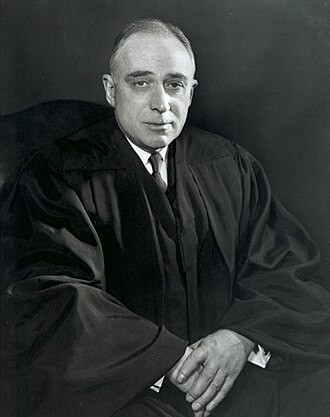 John HarlanJoined the majority
Dissent(3)
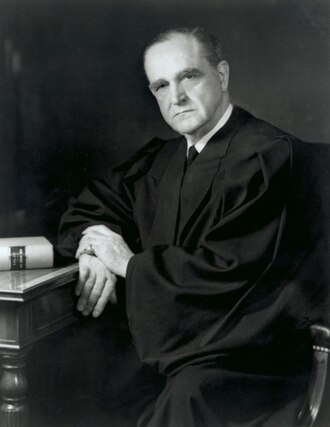 Sherman MintonWrote a dissent
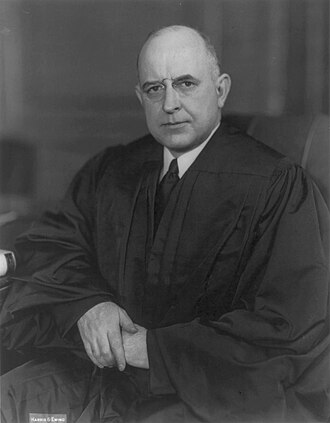 Stanley ReedWrote a dissent
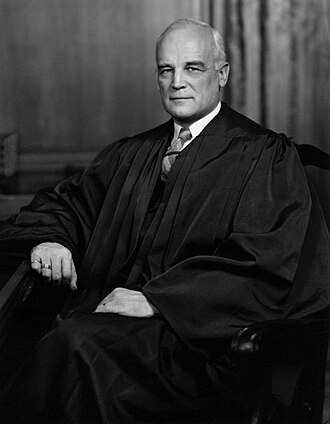 Harold BurtonJoined a dissent
Data notes
Each justice’s vote and what they wrote are from the justice-centered file of the Supreme Court Database. “Wrote a concurrence” means the justice sided with the majority and wrote separately; a justice who dissented in part is counted on the side they took overall. A justice who wrote nothing is listed as joining their side.
Positions are each justice’s Martin–Quinn score for the case’s term, the same scores as the Ideology page: negative is more liberal, positive more conservative. A score sums up a justice’s votes across the whole term, so it says where they usually sit, not why they voted as they did here. The median line is the Court’s median justice that term.
The parties
Who brought the case to the Court, who answered it, and how it got there.
- Petitioner
- United States ex rel. TothVeteran
- Respondent
- Quarles, Secretary of the Air ForceSecretary or administrative unit or personnel of the U.S. Air Force
- Reached the Court by
- Certiorari (the Court chose to hear it)
Data notes
The names are the two sides of the case’s title. The description under each is the Supreme Court Database’s category for that party, in its own wording. The petitioner is the side that asked the Supreme Court to review the decision below. “Why it was taken” appears only when the majority opinion says lower courts disagreed or were unsure about the question; reasons that would fit any case (“to resolve the question presented”, “an important question”) are left out.
The law at issue
The law the Court was asked to apply, and the kind of power it used to decide.
- Provision
- Article I, Section 8, Paragraph 11 (war power)
- Kind of law
- Constitution
- Decided by
- Judicial review (national level)
- Struck down
- An act of Congress, as unconstitutional
Data notes
The Supreme Court Database codes the main constitutional provision, statute or court rule each case turned on, and the basis of the decision: judicial review of a federal or state law, interpreting a statute, supervising the lower courts, and so on. A case can rest on more than one. “Overruled” counts only where the majority opinion says so.
Timeline
What happened at the Court and how the case got there, newest first.
- Nov 7, 1955DecidedDecided · Decided 6–3: reversed. United States ex rel. Toth won.
- Oct 13, 1955RearguedReargued · The Court heard the case argued a second time.
- Feb 8, 1955ArguedArgued · Oral argument before the Court.
- Not datedTaken upTaken up · The Supreme Court agreed to hear the case (certiorari).
- Not datedCourt belowCourt below · Decided by the U.S. Court of Appeals, District of Columbia Circuit: reversed.
- Not datedBeganBegan · The case began in the District Of Columbia U.S. District Court.
Data notes
From the Supreme Court Database: the court the case began in, the court whose decision the Supreme Court reviewed and what that court did, how the case came to the Court, and the dates of argument and decision. The database does not date the steps in the lower courts. Court names are the database’s.
Other decisions on the same issue
33 other argued cases since 1946 on military: veteran, newest first.
- Soto v. United States145 S. Ct. 1677Jun 12, 2025 · 145 S. Ct. 1677Civil rights9–0Unanimous band
- Rudisill v. McDonough601 U.S. 294Apr 16, 2024 · 601 U.S. 294Civil rights7–27–2 band
- Arellano v. McDonough598 U.S. 1Jan 23, 2023 · 598 U.S. 1Civil rights9–0Unanimous band
- George v. McDonough2022 U.S. LEXIS 2944Jun 15, 2022 · 2022 U.S. LEXIS 2944Civil rights6–36–3 band
- Doretha H. Henderson, Authorized Representative of David L. Henderson, Deceased, Petitioner v. Eric K. Shineski, Secretary of Veterans Affairs562 U.S. 428Mar 1, 2011 · 562 U.S. 428Civil rights8–0Unanimous band
- Eric K. Shinseki, Secretary of Veterans Affairs v. Woodrow F. Sanders556 U.S. 396Apr 21, 2009 · 556 U.S. 396Civil rights6–36–3 band
- Jesse Brown, Secretary of Veterans Affairs v. Fred P. Gardner513 U.S. 115Dec 12, 1994 · 513 U.S. 115Civil rights9–0Unanimous band
- Traynor v. Turnage, Administrator, Veterans' Administration, et al.485 U.S. 535Apr 20, 1988 · 485 U.S. 535Civil rights4–36–3 band
- Monroe v. Standard Oil Co.452 U.S. 549Jun 17, 1981 · 452 U.S. 549Civil rights5–45–4 band
- Coffy v. Republic Steel Corp.447 U.S. 191Jun 10, 1980 · 447 U.S. 191Civil rights9–0Unanimous band
- Oliphant v. Suquamish Indian Tribe et al.Landmark · Native American law435 U.S. 191Mar 6, 1978 · 435 U.S. 191Civil rightsLandmark · Native American law6–27–2 band
- Alabama Power Co. v. Davis431 U.S. 581Jun 6, 1977 · 431 U.S. 581Civil rights9–0Unanimous band
- Foster v. Dravo Corp.420 U.S. 92Feb 18, 1975 · 420 U.S. 92Civil rights8–0Unanimous band
- Hernandez et al. v. Veterans' Administration et al.415 U.S. 391Mar 4, 1974 · 415 U.S. 391Civil rights9–0Unanimous band
- Johnson, Administrator of Veterans' Affairs, et al. v. Robison415 U.S. 361Mar 4, 1974 · 415 U.S. 361Civil rights8–18–1 band
- Accardi et al. v. Pennsylvania Railroad Co.383 U.S. 225Feb 28, 1966 · 383 U.S. 225Civil rights8–0Unanimous band
- Brooks v. Missouri Pacific Railroad Co.376 U.S. 182Feb 17, 1964 · 376 U.S. 182Civil rights9–0Unanimous band
- Tilton et al. v. Missouri Pacific Railroad Co.376 U.S. 169Feb 17, 1964 · 376 U.S. 169Civil rights9–0Unanimous band
- United States v. Shimer367 U.S. 374Jun 12, 1961 · 367 U.S. 374Civil rights7–27–2 band
- United States, Trustee, v. Oregon366 U.S. 643May 29, 1961 · 366 U.S. 643Civil rights7–27–2 band
- Bell et al. v. United States366 U.S. 393May 22, 1961 · 366 U.S. 393Civil rights9–0Unanimous band
- McKinney v. Missouri-Kansas-Texas Railroad Co. et al.357 U.S. 265Jun 23, 1958 · 357 U.S. 265Civil rights7–27–2 band
- United States v. Plesha et al.352 U.S. 202Jan 14, 1957 · 352 U.S. 202Civil rights6–36–3 band
- Diehl v. Lehigh Valley Railroad Co. et al.348 U.S. 960Mar 14, 1955 · 348 U.S. 960Civil rights7–18–1 band
- Ford Motor Co. v. Huffman et al.345 U.S. 330Apr 6, 1953 · 345 U.S. 330Civil rights9–0Unanimous band
- Elder et al. v. Brannan, Secretary of Agriculture341 U.S. 277May 7, 1951 · 341 U.S. 277Civil rights8–18–1 band
- Oakley v. Louisville & Nashville Railroad Co. et al.338 U.S. 278Nov 14, 1949 · 338 U.S. 278Civil rights8–0Unanimous band
- Aeronautical Industrial District Lodge 727 v. Campbell et al.337 U.S. 521Jun 20, 1949 · 337 U.S. 521Civil rights9–0Unanimous band
- United States ex rel. Hirshberg v. Cooke, Commanding Officer336 U.S. 210Feb 28, 1949 · 336 U.S. 210Civil rights9–0Unanimous band
- United States v. Zazove334 U.S. 602Jun 14, 1948 · 334 U.S. 602Civil rights9–0Unanimous band
- Hilton v. Sullivan, Secretary of the Navy, et al.334 U.S. 323Jun 1, 1948 · 334 U.S. 323Civil rights9–0Unanimous band
- Mitchell et al., Members of the Civil Service Commission, v. Cohen333 U.S. 411Mar 8, 1948 · 333 U.S. 411Civil rights8–18–1 band
- Trailmobile Company et al. v. Whirls331 U.S. 40Apr 14, 1947 · 331 U.S. 40Civil rights7–27–2 band
Data notes
Every other orally argued case with a clear vote, from the 1946 term on, that the Supreme Court Database files under the same issue as this one. The database gives each case one issue from a list of about 270 (abortion, search and seizure of vehicles, the death penalty, and so on), whatever law it turned on.
Official record
Read the full opinion on Justia, the argument audio on Oyez and Wikipedia. Case data from the Supreme Court Database, Version 2026 Release 01, through the 2025 term.