Department of Defense Authorization Act, 1983
Public Law 97-252 · S. 2248 · 97th Congress · began in the Senate
Signed by Ronald Reagan (R) on Sep 8, 1982 · Armed Forces and National Security
Sponsor: Sen. John Tower (R-TX)
Cosponsors (1): Sen. John Stennis
Passage votesYeaNay
- HouseRecorded vote: 251 yea, 148 nay251–148
- SenateRecorded vote: 77 yea, 21 nay77–21
Data notes
The final version of the law, as each chamber passed it. A chamber that passed it by voice vote or unanimous consent has no count. “Method not stated” means the record does not say how the chamber voted. Where the record has a member-by-member vote, the “Who voted for it” section shows who voted yea.
Summary
The Congressional Research Service’s plain-language summary of what the law does.
Department of Defense Authorization Act, 1983 - Title I: Procurement - Authorizes appropriations for FY 1983 for the armed forces and Defense agencies for procurement of aircraft, missiles, weapons, tracked combat vehicles, ammunition, torpedoes, other procurement, and shipbuilding and conversion. Prohibits the expenditure of funds for the basing and deployment of the MX missile until the President gives Congress 30 days notice of the basing mode selected.
Earmarks a portion of the Air Force funds for the United States FY 1983 share of the North Atlantic Treaty Organizations's (NATO's) cost of acquiring the Airborne Warning and Control System (AWACS). Permits the Secretary of Defense, in carrying out the Multilateral Memorandum of Understanding Between the North Atlantic Treaty Organization (NATO) Ministers of Defense concerning the NATO Airborne Warning and Control System (AWACS) Program, to waive reimbursement for the cost of specified functions performed by other than AWACS personnel and to assume contingent liability for program losses and specified charges during FY 1983.
Prohibits a Secretary of a military department from entering into multiyear contracts for the procurement of specified aircraft, weapons, and other equipment until the Armed Services Committees have been given 30 days notice of such intentions.
Permits the Secretary of the Air Force to acquire a tethered aero-stat radar set for deployment at Kennedy Air Force Station, Florida.
Authorizes the Secretary of Defense to procure secure telephone communication systems in support of a national program to provide such a service.
Prohibits the use of authorizations for the 9-millimeter handgun.
Title II: Research, Development, Test, and Evaluation - Authorizes appropriations for the armed forces for research, development, test, and evaluation for FY 1983. Prohibits the obligation of funds for the MX missile basing mode until the President gives Congress 30 days notice of the basing mode selected. Earmarks funds for the C-17 cargo transport aircraft.
Prohibits the Navy from obligating funds for the DDGX (DDG-51) until the Secretary of the Navy notifies the Armed Services Committees of Congress of a plan for the deployment of the 5-inch semi-active laser guided projectile and seafire electro-optical fire control system concurrently with the deployment of the DDG-51 lead ship.
Prohibits the expenditure of funds for the development of the LANTIRN System until the Secretary of the Air Force certifies to the Armed Services and Appropriations Committees that the LANTIRN program has been restructured and a competitive demonstration between the System and a modified version of the Navy's F/A-18 aircraft FLIR System has been carried out.
Title III: Operation and Maintenance - Authorizes appropriations for FY 1983 for the armed and reserve forces, including the national guard, and for other activities and agencies of the Department of Defense. Authorizes additional sums for increases in benefits for civilian employees of the Department of Defense.
Limits the amount of funds which may be used for ship overhauls.
Prohibits long-term leasing of a naval vessel with a substantial termination liability unless the Secretary of the Navy gives the Armed Services and Appropriations Committees 30 days notice with a description and justification for leasing rather than acquiring such vessel.
Prohibits the use of funds for the leasing of any vessel associated with the T-5 Replacement Tanker Program which has a major component not made in the United States.
Prohibits the use of funds for any study begun after FY 1982 on the benefits or feasibility of contracting-out commercial or industrial type functions of the Department performed by Department personnel.
Title IV: Active Forces - Establishes end strength levels for FY 1983 for active duty personnel for the Army, Navy, Marine Corps, and the Air Force. Permits the Secretary of Defense to increase such end strength levels by 0.5 percent if necessary to maintain a stable personnel force.
Extends through FY 1983 the limitation on the enlistment and induction into the armed services of persons whose score on the Armed Forces Qualification Test falls below a prescribed level.
Restores leave lost by specified members of the armed forces during FY 1981.
Title V: Reserve Forces - Establishes average strength for FY 1983 for: (1) the Army National Guard; (2) the Army Reserve; (3) the Naval Reserve; (4) the Marine Corps Reserve; (5) the Air National Guard; (6) the Air Force Reserve; and (7) the Coast Guard Reserve. Sets forth the number of Reserves serving on full-time active duty to administer, recruit, or train the Reserve components. Provides for the adjustment of average strength levels in the national interest and as specified.
Increases the number of enlisted personnel who may be on active duty in support of the Reserve components.
Title VI: Civilian Personnel - Establishes an end strength level for civilian personnel for the Department of Defense for FY 1983. Requires the apportionment of such personnel among the various military branches and departments. Requires the Secretary of Defense to report to Congress on such allocation within 60 days. Specifies the types of civilian employees to be included in such end levels. Permits the Secretary to increase the number of civilian personnel beyond the authorized end strength.
Title VII: Military Training Student Loads - Establishes average military training student loads for FY 1983. Amends the Department of Defense Authorization Act, 1981 to extend through August 31, 1983, the reduction in the number of students required to be in a unit of the Junior Reserve Officers' Training Corps.
Title VIII: Civil Defense - Authorizes appropriations for FY 1983 to carry out the provisions of the Federal Civil Defense Act of 1950, including amounts for State personnel and administrative expenses.
Title IX: Supplemental Authorizations for FY 1982 Procurement - Authorizes additional appropriations for procurement for FY 1982 for: (1) naval vessels; (2) aircraft; (3) Air Force research and development; and (4) the operation and maintenance of all the armed and reserve forces and Defense agencies. Increases the end strength authorization for the Army for FY 1982.
Title X: Former Spouse's Protection - Uniformed Services Former Spouses Protection Act - Requires the Secretary of the military department concerned to pay from the military pension of the member or former member of a uniformed service to a spouse or former spouse the amount specified in a court's final decree of divorce, dissolution, annulment, or legal separation, or a court ordered, ratified, or approved property settlement. Limits the total amount of pension subject to court order to 50 percent. States that orders for payments to more than one spouse shall be satisfied on a first-come-first-served basis. Sets forth procedures for the Secretary to follow in the event of conflicting orders regarding one spouse.
States that orders for payments in a particular month from a decree of divorce or separation and from service of legal process for enforcement of child support or alimony payments shall be paid on a first-come-first-served basis, up to 65 percent of the disposable pension.
Entitles members or former members with a former spouse to participate in the Survivor Benefit Plan.
Entitles former spouses married 20 years or more during the member's service to coverage under the Civilian Health and Medical Program of the Uniformed Services (CHAMPUS) if such spouse does not have other medical coverage. Grants former spouses married 20 years or more during the member's service commissary and post exchange privileges on the same basis as surviving spouses of retired members.
Limits the treatment of military pensions as marital property to payments due on or after June 21, 1981, the date of the McCarty decision.
Title XI: General Provisions - Permits the Secretary of Defense to transfer up to $1,500,000,000 of the funds authorized among categories as specified. Requires the Secretary to notify Congress immediately of any transfers.
Permits the obligation of appropriated but not previously authorized funds in FY 1982 for the procurement of: (1) aircraft for the Army; (2) aircraft for the Air Force; (3) missiles for the Air Force; and (4) operations and maintenance for Defense-wide activities. Expands the authorization limitation on the Special Defense Acquisition Fund for FY 1984.
Amends the Department of Defense Appropriation Authorization Act, 1976 to increase the amount of funds involved in a transfer of defense articles necessitating a report to Congress.
Directs the Secretary to report to Congress annually on the funding needs of technology transfer control policy formulation and activities.
Prohibits the Secretary from transferring funds to the Administrator of the National Aeronautics and Space Administration (NASA) to defray costs of placing Department payloads into orbit by means of the space shuttle.
Directs the Secretary of Defense to submit quarterly reports to Congress on current major defense acquisition programs, to be known as Selected Acquisition Reports. Requires such reports to include current program acquisition unit costs and the history of such costs. Differentiates the requirements for such reports, requiring a comprehensive report in only the first quarter of a fiscal year and requiring no report in the other quarters, if the cost, performance, or schedule of a program has not changed. Permits waivers of such reports with the approval of the Armed Services Committees.
Includes reports from the program manager designated for each program to the respective Secretary as part of the quarterly selected acquisitions report. Requires that reports: (1) break down cost information both as to the total cost of the system thus far and the procurement unit cost at the time of the report; and (2) detail any changes of schedule or system performances. Requires the Secretary concerned to determine within seven days of the quarterly report when the total program acquisition costs or the unit costs in a fiscal year without procurement authorizations exceed 15 percent of the original projections. Requires the Secretary to then notify Congress within ten days of the initial receipt of the report of such increases. Prohibits the expenditure of additional funds 30 days after the determination of overrun. Permits the expenditure of additional funds if the Secretary concerned reports to Congress within that 30 day period on the reasons for such increases, including the identities of the program managers and contractors and future actions to be taken to control cost growth.
Sets forth a similar reporting system whenever a quarterly report indicates the current procurement unit cost or total program acquisition cost in a FY with procurement authorizations exceeds the original projections by more than 25 percent. Prohibits the expenditure of additional funds 60 days after a determination of overrun unless the Secretary of Defense submits to Congress a certification that such system is essential, no alternatives exist, and future estimates and management will control costs.
Directs the Secretary to submit to such committees a report concerning the sufficiency of civilian personnel for the Defense Contract Audit Agency, Defense Audit Service, and the Defense Criminal Investigative Service, including current and projected numbers and the amount of cost savings such agencies have achieved.
Directs the Secretary of Defense to conduct a test program in FY 1983 to determine the effect of exempting certain Department contracts from the provision prohibiting the use of funds to pay a price differential to relieve economic dislocations. Directs the President to report to Congress on the results of such test.
Prohibits the use of funds for the consolidation of functions performed by the Military Traffic Management Command of the Army, the Military Sealift Command of the Navy, or the Military Airlift Command of the Air Force. Directs the Secretary of Defense to report to the Armed Services Committees on the possibility and effect of changes in the management or contracting authority of such Commands.
Prohibits the contracting out of firefighting or security functions at any military installation or facility, except the renewal of existing contracts.
Amends the Department of Defense Authorization Act, 1981 to limit to functions performed by 10 or more personnel the application of the requirement that the Secretary report to Congress on the conversion of performance of commercial and industrial type functions from Department personnel to private contractors.
Amends the Military Selective Service Act to render ineligible for assistance or benefits under the Higher Education Act of 1965 any person who is required to but does not register for military service.
Authorizes the Secretary of Defense to collect and compile directory information on each 17 year old or 11th grade student in the United States for military recruiting and related national security purposes. Limits to three years the time such information may be retained.
Requires such information to be kept confidential.
Requires each State and local government to make available to the Secretary on request any criminal history information on any person who has applied for enlistment or participation in the armed forces.
Revises the training requirements for persons enlisting in the armed forces reserves to extend from 180 days to 270 days the lapse of time permitted between enlistment and the beginning of such initial active duty period.
Provides for a temporary increase in the number of naval officers who may serve in the grades of admiral and vice admiral.
Amends the Inspector General Act of 1978 to establish in the Department of Defense the Office of Inspector General. Transfers to the Office the Defense Audit Service and the Defense Investigative Service. Prohibits the appointment of any member of the armed forces to the position of Inspector General.
Places the Inspector General under the authority, direction, and control of the Secretary of Defense. Directs the Inspector to: (1) be the principal adviser to the Secretary for matters relating to the prevention and detection of fraud, waste, and abuse in the programs and operations of the Department; (2) initiate, and conduct audits and investigations in the Department; (3) provide policy direction for audits, investigations, and program performance evaluation; and (4) monitor adherence to audit procedures.
Directs the Inspector to expeditiously report suspected or alleged violations of the Uniform Code of Military Justice to the Secretary of the military department concerned or the Secretary of Defense.
Authorizes the Inspector to make rules, investigations, and reports necessary to administer this program.
Requires the Secretary and the Inspector to each give the appropriate committees of Congress 30 days notice of any prohibition against the Inspector General's conducting any audit or investigation or issuing any subpoena which the Secretary determines to be against the national security interests of the United States.
Requires each semiannual report from the Inspector General to Congress by way of the Secretary of Defense to include a listing of each contract audit conducted during that reporting period. Requires reports concerning flagrant problems to be submitted within seven days to the Senate Governmental Affairs Committee and the House Government Operations Committee.
Creates an open enrollment period of 12 months for specified members of the National Guard and the Reserves to elect to participate in the Survivor Benefit Plan.
Amends the Department of Defense Authorization Act, 1981 to extend for another year the deadline for the Secretary of Defense's report to Congress on allied contributions to the command defense.
Amends the Department of Defense Appropriation Authorization Act, 1975 to require the Secretary to include in a report on the standardization of weapons and systems as they affect the combat effectiveness of NATO a description of existing Department programs that support the development or procurement of systems developed or procured by other members of NATO and the funds requested and appropriated for such systems.
Expresses the sense of Congress that the President, should propose that the United States and its allies pool defense efforts and establish a cooperative defense-industrial effort.
Directs the Secretary to study and evaluate initiatives for improving the control and containment of use of nuclear weapons, particularly in crises, including the establishment of multi-national military crises control centers and the development of a forum for joint U.S./Soviet Union sharing of information. Requires the President and the Secretary to report to the appropriate congressional committees on such evaluation and on the merits and status of the arms control process.
Expresses the sense of Congress that the President should: (1) continue to promote negotiations through the United Nations' Ad Hoc Working Group on Chemical Warfare of the Committee on Disarmament to draft a treaty for the effective and verifiable prohibition on the development, production, and stockpiling of all chemical weapons; and (2) press for an inquiry into the Soviet use of such weapons and express to the Soviets a desire for a comprehensive, verifiable ban on such weapons.
Permits the Secretary of Defense to enter into cooperative military airlift agreements with allies and nonreciprocal military airlift agreements with North Atlantic Treaty Organization (NATO) subsidiary bodies.
Prohibits the expenditure of funds for the production of binary chemical weapons unless the President certifies to Congress that the United States abjures testing on human beings and that it is undertaking negotiations with the Soviet Union to bar production of such weapons.
Permits the Secretary of a military department to purchase administrative motor vehicles to be used outside the United States only from the lowest bidder from the United States or the host nation.
Prohibits the construction of naval vessels in a foreign shipyard except as authorized by the President in the national interest. Directs the President to give Congress 30 days notice of any exceptions.
Prohibits the use of funds to purchase major equipment essential to national defense from non-U.S. manufacturers that would make the United States dependent on such manufacturers as a sole source unless the Secretary gives the Armed Services and Appropriations committees 30 days notice.
Amends the Department of Defense Appropriations Act, 1982 to permit the procurement of special metals or chemical warfare protective clothing produced outside the United States.
Expresses the sense of Congress that the members of the National Guard and the Reserves should be recognized for the role they play in our national security.
Directs the Secretary of Defense to conduct a study on the report entitled "Vista 1999", a long range look at the future of the Army and the Air National Guard. Requires the Secretary to report to the Armed Services Committees by February 1, 1983.
Authorizes the payment of claims by members of the uniformed services held hostage in Iran during the Iranian crisis.
Permits the Superintendent of the U.S. Military Academy to use gifts made to the United States for the benefit of such Academy.
Prohibits the use of funds to purchase or produce any map of the Union of Soviet Socialist Republics that does not specifically designate Estonia, Latvia, and Lithuania as separate and Soviet occupied.
Who voted for it
Every senator of the 97th Congress on the ideology compass. Highlighted: the 77 who voted yea on final passage. Faded: everyone else, including those who voted nay, did not vote, or had not yet taken office.
77 yea21 nay2 present or did not vote
Democrats who voted yea(30)
- Sen. Howard MetzenbaumD-OH
- Sen. Paul SarbanesD-MD
- Sen. Thomas EagletonD-MO
 Sen. Christopher DoddD-CT
 Sen. Patrick LeahyD-VT
 Sen. Joseph BidenD-DE
 Sen. Robert ByrdD-WV
- Sen. Jennings RandolphD-WV
- Sen. George MitchellD-ME
- Sen. Bill BradleyD-NJ
- Sen. Daniel MoynihanD-NY
- Sen. James SasserD-TN
- Sen. Dee HuddlestonD-KY
- Sen. Howard CannonD-NV
- Sen. Scoop JacksonD-WA
- Sen. Quentin BurdickD-ND
- Sen. Fritz HollingsD-SC
- Sen. John GlennD-OH
- Sen. Dennis DeConciniD-AZ
- Sen. Alan DixonD-IL
- Sen. Lawton ChilesD-FL
- Sen. Howell HeflinD-AL
- Sen. David BorenD-OK
- Sen. Samuel NunnD-GA
- Sen. John JohnstonD-LA
- Sen. Lloyd BentsenD-TX
- Sen. Edward ZorinskyD-NE
- Sen. Russell LongD-LA
- Sen. John StennisD-MS
- Sen. Harry ByrdD-VA









Republicans who voted yea(47)
- Sen. Lowell WeickerR-CT
 Sen. Arlen SpecterR-PA
- Sen. Henry HeinzR-PA
- Sen. John ChafeeR-RI
- Sen. Mark AndrewsR-ND
- Sen. Robert StaffordR-VT
- Sen. William CohenR-ME
- Sen. William RothR-DE
- Sen. Paula HawkinsR-FL
- Sen. Robert PackwoodR-OR
- Sen. John DanforthR-MO
- Sen. Alfonse D’AmatoR-NY
- Sen. Charles PercyR-IL
- Sen. Rudy BoschwitzR-MN
- Sen. James AbdnorR-SD
- Sen. Robert KastenR-WI
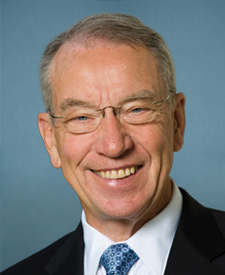 Sen. Chuck GrassleyR-IA
- Sen. Slade GortonR-WA
- Sen. Warren RudmanR-NH
 Sen. Thad CochranR-MS
- Sen. Roger JepsenR-IA
 Sen. Pete DomeniciR-NM
 Sen. Ted StevensR-AK
- Sen. Frank MurkowskiR-AK
 Sen. Richard LugarR-IN
 Sen. John WarnerR-VA
- Sen. Mack MattinglyR-GA
- Sen. Nicholas BradyR-NJ
 Sen. Orrin HatchR-UT
- Sen. Howard BakerR-TN
- Sen. Robert DoleR-KS
- Sen. William ArmstrongR-CO
- Sen. Strom ThurmondR-SC
- Sen. Malcolm WallopR-WY
- Sen. Paul LaxaltR-NV
- Sen. Jeremiah DentonR-AL
- Sen. John TowerR-TX
- Sen. Jake GarnR-UT
- Sen. Don NicklesR-OK
- Sen. Samuel HayakawaR-CA
- Sen. Jesse HelmsR-NC
- Sen. Dan QuayleR-IN
- Sen. James McClureR-ID
- Sen. Gordon HumphreyR-NH
- Sen. John EastR-NC
- Sen. Steven SymmsR-ID
- Sen. Barry GoldwaterR-AZ











Data notes
The Senate’s recorded vote on the final version of the law (roll call 828 in Voteview), matched to the vote the record cites and checked against its totals. Positions are each member’s DW-NOMINATE score for that Congress, as on the Ideology page; left to right is more liberal to more conservative. Paired and announced yea votes count as yea. Lists follow the compass, most liberal first. A name links to a profile only for members of the current Congress. A law passed by voice vote or unanimous consent has no member list, and neither does a vote Voteview has not yet recorded.
Committees
The committees the bill was sent to, and what each did with it.
 Armed Services Committee · Senate · markup by, re-committed to, referred to, reported bySubcommittee: Force Requirements and Personnel Subcommittee; Strategic Forces Subcommittee; Personnel Subcommittee; Acquisition and Technology Subcommittee; Sea Power and Force Projection Subcommittee
Data notes
A committee links to its page only where it exists in the current Congress; older and renamed committees are named without a link.
Timeline
From introduction to signing, newest first: the committees, the floor and the president. 54 actions.
- Sep 8, 1982Became lawBecame law · Became Public Law No: 97-252.
- Became lawBecame law · Signed by President.
- Aug 27, 1982PresidentPresident · Presented to President.
- Aug 18, 1982Resolving differencesResolving differences · House Agreed to Conference Report by Yea-Nay Vote: 251 - 148 (Record Vote No: 297).House roll call 297
- Resolving differencesResolving differences · Conference report agreed to in House: House Agreed to Conference Report by Yea-Nay Vote: 251 - 148 (Record Vote No: 297).House roll call 297
- Aug 17, 1982Resolving differencesResolving differences · Senate agreed to conference report by Yea-Nay Vote. 77-21. Record Vote No: 331.Senate roll call 331
- Resolving differencesResolving differences · Conference report agreed to in Senate: Senate agreed to conference report by Yea-Nay Vote. 77-21. Record Vote No: 331.Senate roll call 331
- Resolving differencesResolving differences · Conference report considered in Senate.
- Aug 16, 1982Resolving differencesResolving differences · Conferees agreed to file conference report.
- Resolving differencesResolving differences · Conference committee actions: Conferees agreed to file conference report.
- Resolving differencesResolving differences · Conference Report 97-749 Filed in House.
- Resolving differencesResolving differences · Conference report filed: Conference Report 97-749 Filed in House.
- Aug 13, 1982Resolving differencesResolving differences · Conference held.
- Resolving differencesResolving differences · Conference committee actions: Conference held.
- Aug 12, 1982Resolving differencesResolving differences · Conference held.
- Resolving differencesResolving differences · Conference committee actions: Conference held.
- Aug 11, 1982Resolving differencesResolving differences · Conference held.
- Resolving differencesResolving differences · Conference committee actions: Conference held.
- Aug 10, 1982Resolving differencesResolving differences · Conference held.
- Resolving differencesResolving differences · Conference committee actions: Conference held.
- Aug 6, 1982Resolving differencesResolving differences · Conference held.
- Resolving differencesResolving differences · Conference committee actions: Conference held.
- Aug 5, 1982Resolving differencesResolving differences · Conference held.
- Resolving differencesResolving differences · Conference committee actions: Conference held.
- Aug 3, 1982Resolving differencesResolving differences · Conference held.
- Resolving differencesResolving differences · Conference committee actions: Conference held.
- Resolving differencesResolving differences · Senate agreed to request for conference. Appointed conferees. Tower; Thurmond; Goldwater; Warner; Humphrey; Cohen; Jepsen; Quayle; Denton; Brady; Stennis; Jackson; Cannon; Byrd, of VA; Nunn; Hart; Exon; Levin; Roth; Eagleton. (For the consideration of Section 1122 pertaining to …
- Resolving differencesResolving differences · Considered by House Motion to close Conference by a Yea-Nay Vote: 372-0 Record Vote No. 234.House roll call 234
- FloorFloor · Senate disagreed to the House amendments. By Unanimous Consent.
- Jul 29, 1982Resolving differencesResolving differences · House Requested a Conference and Speaker Appointed Conferees: Price, Bennett, Stratton, White, Nichols, Brinkley, Mollohan, Dan Daniel, Dickinson, Whitehurst, Spence, Beard, Mitchell (NY), Holt, Boland, Mineta, Robinson, Brooks, Horton, Fountain, Fascell, Erlenborn.
Data notes
Shows the introduction, each committee and subcommittee step the source dates (referral, hearings, markup, report, discharge), and the floor, conference, presidential and became-law steps. Calendar placements, messages between the chambers, amendments and committee report numbers are not shown for laws before the 108th Congress. Two entries the source lists twice are shown once.
Official record
The bill’s full text and every action, including introduction and committee steps, are on Congress.gov. Data through Oct 7, 2026.