Military Commissions Act of 2006
Public Law 109-366 · S. 3930 · 109th Congress · began in the Senate
Signed by George W. Bush (R) on Oct 17, 2006 · Armed Forces and National Security
Major law
Sponsor: Sen. Mitch McConnell (R-KY)
Cosponsors (2): Sen. Bill Frist, Sen. John Warner
Passage votesYeaNay
- HouseRecorded vote: 250 yea, 170 nay250–170
- SenateRecorded vote: 65 yea, 34 nay65–34
Data notes
The final version of the law, as each chamber passed it. A chamber that passed it by voice vote or unanimous consent has no count. “Method not stated” means the record does not say how the chamber voted. Where the record has a member-by-member vote, the “Who voted for it” section shows who voted yea.
Summary
The Congressional Research Service’s plain-language summary of what the law does.
Military Commissions Act of 2006 - (Sec. 2) States that the authority under this Act to establish military commissions (commissions) may not be construed to alter or limit the the President's authority under the Constitution or laws of the United States to establish commissions for areas declared to be under martial law or in occupied territories should circumstances so require.
(Sec. 3) Amends the Uniform Code of Military Justice (UCMJ) to codify and establish procedures governing the use of commissions to try alien unlawful enemy combatants (combatants) engaged in hostilities against the United States for violations of the law of war and other offenses specifically made triable by commissions under this Act. Defines an "unlawful enemy combatant" as a person who has: (1) engaged in or supported hostilities against the United States or its co-belligerents who is not a lawful enemy combatant; or (2) been determined to be an unlawful enemy combatant by a Combatant Status Review Tribunal or other tribunal established under the authority of the President or the Secretary of Defense (Secretary). Defines a "lawful enemy combatant" as a person who is a member of: (1) the regular forces of a State party engaged in hostilities against the United States; (2) a militia, volunteer corps, or organized resistance movement belonging to a State party engaged in such hostilities, which are under responsible command, wear a fixed distinctive sign recognizable at a distance, carry their arms openly, and abide by the law of war; or (3) a regular armed force who professes allegiance to a government engaged in such hostilities, but not recognized by the United States.
Authorizes the President to establish such commissions. Prohibits commission findings, holdings, and other precedents from being introduced or considered in any proceeding of a court-martial convened under the UCMJ. Prohibits a combatant subject to trial by commission from invoking the Geneva Conventions as a source of rights. Allows commissions to impose upon any person found guilty any punishment not forbidden under the UCMJ, including the death penalty. Requires an annual report from the Secretary to the congressional defense committees on any trials conducted.
Makes eligible to serve on a commission any commissioned officer of the Armed Forces on active duty. Requires to be detailed to each commission a military judge, trial and military defense counsel, and reporters and interpreters. Requires at least five members in each commission.
Outlines commission pre-trial procedures, including charges and specifications. Prohibits a person from being required to testify against himself (compulsory self-incrimination) at a commission proceeding. Prohibits (with a limited exception) a statement obtained by the use of torture from being admissible against the accused.
Prescribes commission trial procedures, including: (1) rules of evidence; (2) duties of trial and defense counsel; (3) pleas of the accused; (4) opportunity to obtain witnesses and other evidence; (5) the defense of lack of mental responsibility; and (6) the record of trial. Requires: (1) a two-thirds commission member vote for conviction; (2) a three-fourths member vote for a sentence of life imprisonment or confinement of more than ten years; and (3) a unanimous vote by at least 12 members in a case in which the death penalty is sought. Prohibits any sentence from including cruel or unusual punishments such as flogging, branding, or marking or tattooing of the body.
Prescribes commission post-trial procedures, including: (1) review by the convening authority; (2) appeal by the United States; (3) rehearings; (4) reviews by the Court of Military Commission Review, the U.S. Court of Appeals for the District of Columbia, and the U.S. Supreme Court; and (5) the execution of sentences.
Makes the following offenses triable by commissions: (1) murder of protected persons; (2) attacking civilians; (3) attacking civilian objects; (4) attacking protected property; (5) pillaging; (6) denying quarter; (7) taking hostages; (8) employing poison or similar weapons; (9) using protected persons as a shield; (10) using protected property as a shield; (11) torture; (12) cruel or inhuman treatment; (13) intentionally causing serious bodily injury; (14) mutilating or maiming; (15) murder in violation of the law of war; (16) destruction of property in violation of the law of war; (17) using treachery or perfidy; (18) improperly using a flag of truce; (19) improperly using a distinctive emblem; (20) intentionally mistreating a dead body; (21) rape; (22) sexual assault or abuse; (23) hijacking or hazarding a vessel or aircraft; (24) terrorism; (25) providing material support for terrorism; (26) wrongfully aiding the enemy; (27) spying; (28) conspiracy; (29) perjury and obstruction of justice; and (30) contempt.
Requires a report from the Secretary to the defense committees setting forth commission procedures prescribed under this Act.
(Sec. 4) Makes inapplicable to commissions UCMJ provisions concerning: (1) contempt; (2) speedy trial; (3) self-incrimination warnings; and (4) pretrial investigations.
(Sec. 5) Prohibits a person from invoking the Geneva Conventions in any habeas corpus or other civil action to which the United States, a current or former officer, employee, or member of the Armed Forces, or other agent of the United States is a party as a source of rights in any court of the United States or its states or territories.
(Sec. 6) Authorizes the President to interpret the meaning and application of the Geneva Conventions and to promulgate standards and regulations for violations of treaty obligations which are not grave breaches of the Geneva Conventions. Directs the President to issue such interpretations through Executive Orders.
Amends the federal criminal code to include the following as violations of the War Crimes Act: (1) torture; (2) cruel or inhuman treatment; (3) performing biological experiments; (4) murder; (5) mutilation or maiming; (6) intentionally causing serious bodily injury; (7) rape; (8) sexual assault or abuse; and (9) taking hostages.
Prohibits any person in the custody or control of the United States, regardless of nationality or physical location, from being subject to cruel, inhuman, or degrading treatment or punishment.
(Sec. 7) Amends federal criminal justice provisions to deny any court or judge jurisdiction to hear or consider an application for a writ of habeas corpus filed by or on behalf of, or to hear or consider any other action against the United States or its agents relating to any aspect of the detention, treatment, or trial of, an alien detained outside the United States who is or was detained by the United States and has been determined to have been properly detained as an enemy combatant or is awaiting such determination. Makes the provisions of this section effective upon enactment, and applicable to all cases, without exception, pending on or after enactment which relate to any aspect of the detention, transfer, treatment, trial, or conditions of detention of an alien detained by the United States since September 11, 2001.
(Sec. 8) Amends provisions of the Detainee Treatment Act of 2005 relating to the protection of U.S. government personnel engaged in authorized interrogations to: (1) require (currently authorizes) the U.S. government to provide counsel and pay the legal fees of any such personnel with respect to any civil action or criminal prosecution arising out of an authorized interrogation; and (2) make such provisions effective with respect to actions occurring between September 11, 2001, and December 30, 2005.
(Sec. 9) Amends the Detainee Treatment Act of 2005 to make reviews of all judgments of commissions (currently, only judgments involving a capital case or a case in which the alien was sentenced to imprisonment of ten years or more) a matter of right.
(Sec. 10) Includes all aliens detained by the United States (currently, only those detained by the Department of Defense at Guantanamo Bay, Cuba) under the authority for the review by the U.S. Court of Appeals for the District of Columbia of a decision of a Combatant Status Review Tribunal that an alien is properly detained as an enemy combatant.
Who voted for it
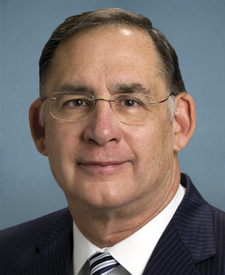
Every senator of the 109th Congress on the ideology compass. Highlighted: the 65 who voted yea on final passage. Faded: everyone else, including those who voted nay, did not vote, or had not yet taken office.
65 yea34 nay1 present or did not vote
Democrats who voted yea(12)
 Sen. Frank LautenbergD-NJ
 Sen. Bob MenendezD-NJ
 Sen. Debbie StabenowD-MI
 Sen. Jay RockefellerD-WV
 Sen. Ken SalazarD-CO
 Sen. Joseph LiebermanD-CT
 Sen. Tim JohnsonD-SD
 Sen. Bill NelsonD-FL
 Sen. Mark PryorD-AR
 Sen. Mary LandrieuD-LA
 Sen. Thomas CarperD-DE
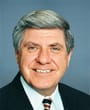 Sen. Ben NelsonD-NE





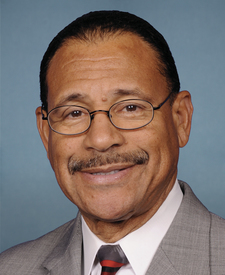



Republicans who voted yea(53)
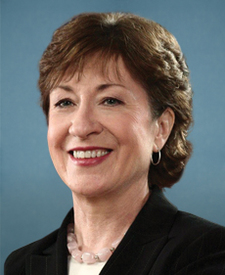 Sen. Susan CollinsR-ME
 Sen. Arlen SpecterR-PA
- Sen. Mike DeWineR-OH
 Sen. Norm ColemanR-MN
 Sen. Gordon SmithR-OR
 Sen. John WarnerR-VA
 Sen. George VoinovichR-OH
 Sen. Richard LugarR-IN
- Sen. Jim TalentR-MO
 Sen. Lisa MurkowskiR-AK
 Sen. Pete DomeniciR-NM
 Sen. Ted StevensR-AK
 Sen. Kay HutchisonR-TX
 Sen. Robert BennettR-UT
 Sen. Mel MartinezR-FL
- Sen. Conrad BurnsR-MT
- Sen. Rick SantorumR-PA
 Sen. John McCainR-AZ
 Sen. Thad CochranR-MS
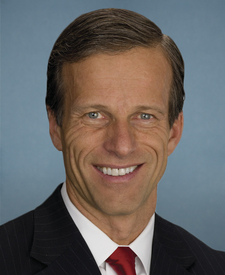 Sen. John ThuneR-SD
 Sen. Orrin HatchR-UT
 Sen. Lamar AlexanderR-TN
 Sen. Chuck HagelR-NE
 Sen. Pat RobertsR-KS
 Sen. Kit BondR-MO
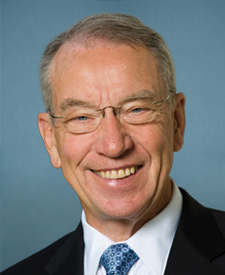 Sen. Chuck GrassleyR-IA
 Sen. Elizabeth DoleR-NC
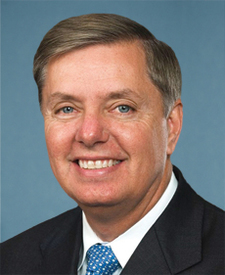 Sen. Lindsey GrahamR-SC
- Sen. Bill FristR-TN
 Sen. Sam BrownbackR-KS
 Sen. Richard ShelbyR-AL
 Sen. Larry CraigR-ID
- Sen. George AllenR-VA
 Sen. Trent LottR-MS
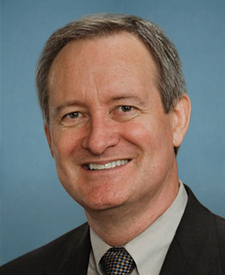 Sen. Mike CrapoR-ID
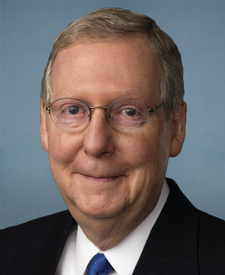 Sen. Mitch McConnellR-KY
 Sen. Judd GreggR-NH
 Sen. Saxby ChamblissR-GA
 Sen. Johnny IsaksonR-GA
 Sen. Richard BurrR-NC
 Sen. John SununuR-NH
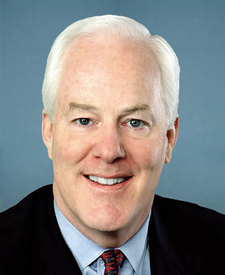 Sen. John CornynR-TX
 Sen. John EnsignR-NV
- Sen. Craig ThomasR-WY
 Sen. Michael EnziR-WY
 Sen. David VitterR-LA
 Sen. Jon KylR-AZ
 Sen. Jim BunningR-KY
 Sen. Wayne AllardR-CO
 Sen. Jeff SessionsR-AL
 Sen. Jim DeMintR-SC
 Sen. Jim InhofeR-OK
 Sen. Thomas CoburnR-OK






















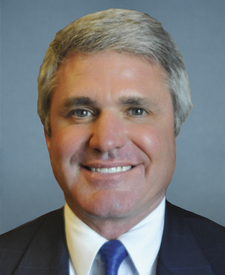


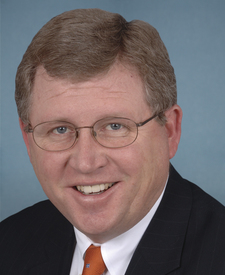














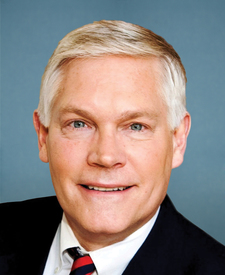





Data notes
The Senate’s recorded vote on the final version of the law (roll call 625 in Voteview), matched to the vote the record cites and checked against its totals. Positions are each member’s DW-NOMINATE score for that Congress, as on the Ideology page; left to right is more liberal to more conservative. Paired and announced yea votes count as yea. Lists follow the compass, most liberal first. A name links to a profile only for members of the current Congress. A law passed by voice vote or unanimous consent has no member list, and neither does a vote Voteview has not yet recorded.
Committees
The record shows no committee referral for this bill.
Data notes
A committee links to its page only where it exists in the current Congress; older and renamed committees are named without a link.
Related bills
7 bills the Library of Congress relates to this one.
H.R. 6054Related bill
Military Commissions Act of 2006
H.R. 6166Related bill
Military Commissions Act of 2006
H.Res. 1054Related bill
Waiving points of order against the conference report to accompany the bill (H.R. 5441) making appropriations for the Department of Homeland Security for the fiscal year ending September 30, 2007, and for other purposes…
S. 3861Related bill
Bringing Terrorists to Justice Act of 2006
S. 3886Related bill
Terrorist Tracking, Identification, and Prosecution Act of 2006
S. 3901Related bill
Military Commissions Act of 2006
S. 3929Related bill
A bill to authorize military commissions to bring terrorists to justice, to strengthen and modernize terrorist surveillance capabilities, and for other purposes.
Data notes
Related bills are identified by the Congressional Research Service, the House and the Senate: companion and identical bills, bills with similar text, bills that were folded into this law, and rules that brought it to the floor. A bill that is itself a public law in this site’s data links here; the others link to Congress.gov.
Timeline
From introduction to signing, newest first: the committees, the floor and the president. 19 actions.
- Oct 17, 2006Became lawBecame law · Became Public Law No: 109-366.
- Became lawBecame law · Signed by President.
- Oct 10, 2006FloorFloor · Presented to President.
- Sep 29, 2006FloorFloor · Motion to reconsider laid on the table Agreed to without objection.
- FloorFloor · On passage Passed by the Yeas and Nays: 250 - 170 (Roll no. 508).House roll call 508
- FloorFloor · Considered as unfinished business.
- FloorFloor · POSTPONED PROCEEDINGS - The Chair put the question on adoption of the bill S. 3930 and announced that by voice vote, the ayes had prevailed. Mr. Sensenbrenner demanded the yeas and nays and the Chair postponed further proceedings on the question of adoption of S. 3930 until late…
- FloorFloor · The previous question was ordered pursuant to the rule.
- FloorFloor · DEBATE - The House proceeded with one hour of debate on S. 3930.
- FloorFloor · Considered under the provisions of rule H. Res. 1054.
- Sep 28, 2006FloorFloor · Held at the desk.
- FloorFloor · Message on Senate action sent to the House.
- FloorFloor · Received in the House.
- FloorFloor · Passed Senate with an amendment by Yea-Nay Vote. 65 - 34. Record Vote Number: 259.Senate roll call 259
- FloorFloor · Considered by Senate.
- Sep 27, 2006FloorFloor · Measure laid before Senate by unanimous consent.
- Sep 25, 2006CalendarCalendar · Read the second time. Placed on Senate Legislative Calendar under General Orders. Calendar No. 634.
- Sep 22, 2006CalendarCalendar · Introduced in the Senate. Read the first time. pursuant to the order of September 21, 2006, as modified on September 22, 2006. Placed on Senate Legislative Calendar under Read the First Time.
- IntroducedIntroduced · Introduced in Senate
Data notes
Every action the Library of Congress lists for the bill, from introduction to signing, plus the dated committee hearings. The source lists many steps twice (the chamber’s own entry and the Library of Congress copy, or a presidential and a became-law entry with the same words); those are shown once. Amendments are listed in their own section.
Amendments
6 amendments offered to the bill, with the last recorded step of each.
- Rejected
S.Amdt. 5104SenateSen. Robert ByrdD-WV· offered Sep 28, 2006Rejected
To prohibit the establishment of new military commissions after December 31, 2011.
Sep 28, 2006: Amendment SA 5104 not agreed to in Senate by Yea-Nay Vote. 47 - 52. Record Vote Number: 257.
- Rejected
S.Amdt. 5095SenateSen. Jay RockefellerD-WV· offered Sep 28, 2006Rejected
To provide for congressional oversight of certain Central Intelligence Agency programs.
Sep 28, 2006: Amendment SA 5095 not agreed to in Senate by Yea-Nay Vote. 46 - 53. Record Vote Number: 256.
- Rejected
S.Amdt. 5088SenateSen. Ted KennedyD-MA· offered Sep 27, 2006Rejected
To provide for the protection of United States persons in the implementation of treaty obligations.
Sep 28, 2006: Amendment SA 5088 not agreed to in Senate by Yea-Nay Vote. 46 - 53. Record Vote Number: 258.
- Rejected
S.Amdt. 5087SenateSen. Arlen SpecterR-PA· offered Sep 27, 2006Rejected
To strike the provision regarding habeas review.
Sep 28, 2006: Amendment SA 5087 not agreed to in Senate by Yea-Nay Vote. 48 - 51. Record Vote Number: 255.
- Rejected
S.Amdt. 5086SenateSen. Carl LevinD-MI· offered Sep 27, 2006Rejected
In the nature of a substitute.
Sep 27, 2006: Amendment SA 5086 not agreed to in Senate by Yea-Nay Vote. 43 - 54. Record Vote Number: 254.
- Agreed to
S.Amdt. 5085SenateSen. Bill FristR-TN· offered Sep 27, 2006Agreed to
In the nature of a substitute.
Sep 27, 2006: Amendment SA 5085 agreed to in Senate by Unanimous Consent.
Data notes
Amendments offered to this bill in either chamber, as the Library of Congress records them: each with a status read from its last recorded step: agreed to, rejected, withdrawn, ruled out of order, fell with another amendment, or offered with no vote recorded (most Senate amendments are only ever offered). The wording of each amendment is the source’s. Amendments to amendments and amendments to other bills are not listed.
Official record
The bill’s full text is on Congress.gov. Data through Oct 7, 2026.