Line Item Veto Act
Public Law 104-130 · S. 4 · 104th Congress · began in the Senate
Signed by Bill Clinton (D) on Apr 9, 1996 · Economics and Public Finance
Major law
Sponsor: Sen. Robert Dole (R-KS)
Cosponsors (29): Sen. John McCain, Sen. Daniel Coats,
Passage votesYeaNay
- HouseUnanimous consent
- SenateRecorded vote: 69 yea, 31 nay69–31
Data notes
The final version of the law, as each chamber passed it. A chamber that passed it by voice vote or unanimous consent has no count. “Method not stated” means the record does not say how the chamber voted. Where the record has a member-by-member vote, the “Who voted for it” section shows who voted yea.
Summary
The Congressional Research Service’s plain-language summary of what the law does.
Line Item Veto Act - Amends the Congressional Budget and Impoundment Control Act of 1974 to authorize the President to cancel in whole any dollar amount of discretionary budget authority, any item of new direct spending, or any limited tax benefit signed into law, if the President: (1) determines that such cancellation will reduce the Federal budget deficit and will not impair essential Government functions or harm the national interest; and (2) notifies the Congress of any such cancellation within five calendar days after enactment of the law providing such amount, item, or benefit. Requires the President, in identifying cancellations, to consider legislative histories and information referenced in law.
Provides that the President's authority shall not apply to any cancellation contained in an enacted disapproval bill (a bill or joint resolution of prescribed language which only disapproves one or more cancellations contained in a special message transmitted by the President).
Directs the President, for each law from which a cancellation has been made, to transmit to the Congress a single special message identifying the amounts, items, and benefits cancelled and setting forth: (1) the President's determinations under this Act; (2) the reasons for the cancellation; (3) the estimated fiscal, economic, budgetary, and program effects; (4) the adjustments to discretionary spending limits and effects upon the sequestration procedures; and (5) with respect to the cancellation of any such amount or item, information on the affected Government entities, States, and congressional districts. Requires such special message to be transmitted to the House of Representatives and the Senate within five days after enactment of the law to which the cancellation applies.
Makes any such cancellation effective on the date the special message is received in the House and Senate. Makes such cancellations that are disapproved by an enacted disapproval bill null and void.
Requires the Office of Management and Budget to: (1) estimate the reduction in Federal budget authority and outlays that result from such a cancellation, including reductions to discretionary spending limits for each fiscal year; (2) estimate the deficit decrease that will result from such cancellation; and (3) reduce the Federal spending caps by the amount of such estimated reduction (after the expiration of the time period for congressional consideration of a disapproval bill, plus ten days). Requires the Director of the Congressional Budget Office to submit to the Senate and House Budget Committees an estimate of the reduction in budget authority and outlays resulting from a cancellation for each outyear.
Outlines procedures and provides 30 days for the expedited congressional consideration of disapproval bills for cancellations in special messages received from the President.
Defines a "limited tax benefit" as: (1) any revenue-losing provision which provides a Federal tax deduction, credit, exclusion, or preference to 100 or fewer beneficiaries; and (2) any Federal tax provision change which provides temporary or permanent transitional relief for ten or fewer beneficiaries. Specifies exceptions.
Directs the Joint Committee on Taxation (JCT) to: (1) review any revenue or reconciliation bill or joint resolution which includes any amendment to the Internal Revenue Code (IRC) that is being prepared by a conference committee; (2) identify whether such bill or resolution contains any limited tax benefit; and (3) provide to the conference committee a statement identifying any limited tax benefit. Allows any revenue or reconciliation bill or joint resolution that amends the IRC and is reported by a conference committee to include as a separate section the information contained in the statement of the JCT. Limits the President's benefit cancellation authority to those benefits that are identified in such a statement or that meet the definition under this Act. Prohibits the judicial review of the identification of a limited tax benefit in a conference report.
Provides for: (1) expedited review by the U.S. District Court for the District of Columbia of an action brought by a Member of Congress or an adversely affected individual on the ground that any provision of this Act violates the Constitution; (2) review of an order of such Court by appeal directly to the Supreme Court; and (3) expedited disposition of such matter by the Supreme Court.
Makes this Act effective on the earlier of: (1) the day after the enactment of an Act to provide for a seven-year plan for deficit reduction and to achieve a balanced Federal budget; or (2) January 1, 1997. Terminates this Act on or after January 1, 2005.
Who voted for it
Every senator of the 104th Congress on the ideology compass. Highlighted: the 69 who voted yea on final passage. Faded: everyone else, including those who voted nay, did not vote, or had not yet taken office.
69 yea31 nay
Democrats who voted yea(19)
- Sen. Paul WellstoneD-MN
 Sen. Ted KennedyD-MA
 Sen. Russell FeingoldD-WI
- Sen. Tom DaschleD-SD
- Sen. Paul SimonD-IL
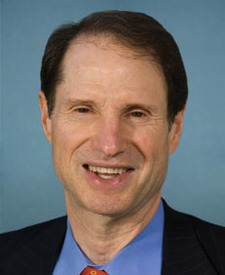 Sen. Ron WydenD-OR
 Sen. Tom HarkinD-IA
 Sen. John KerryD-MA
 Sen. Byron DorganD-ND
- Sen. Bill BradleyD-NJ
 Sen. Herb KohlD-WI
 Sen. Joseph BidenD-DE
- Sen. Bob GrahamD-FL
 Sen. Dianne FeinsteinD-CA
- Sen. John BreauxD-LA
- Sen. Charles RobbD-VA
- Sen. James ExonD-NE
 Sen. Joseph LiebermanD-CT
 Sen. Max BaucusD-MT
Republicans who voted yea(50)
 Sen. Arlen SpecterR-PA
 Sen. Olympia SnoweR-ME
- Sen. John ChafeeR-RI
- Sen. Ben CampbellD-CO
- Sen. Nancy KassebaumR-KS
- Sen. Alan SimpsonR-WY
- Sen. Alfonse D’AmatoR-NY
 Sen. Ted StevensR-AK
- Sen. Mike DeWineR-OH
 Sen. Pete DomeniciR-NM
- Sen. Slade GortonR-WA
- Sen. William RothR-DE
 Sen. Richard LugarR-IN
 Sen. Kit BondR-MO
 Sen. John WarnerR-VA
 Sen. Robert BennettR-UT
 Sen. Thad CochranR-MS
- Sen. Larry PresslerR-SD
- Sen. Spencer AbrahamR-MI
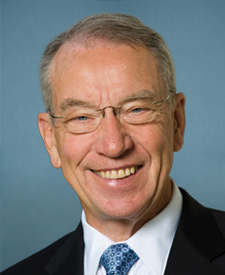 Sen. Chuck GrassleyR-IA
- Sen. Bill FristR-TN
- Sen. Rick SantorumR-PA
 Sen. Orrin HatchR-UT
- Sen. Conrad BurnsR-MT
 Sen. Richard ShelbyR-AL
- Sen. Frank MurkowskiR-AK
 Sen. Mitch McConnellR-KY
- Sen. Robert DoleR-KS
- Sen. Fred ThompsonR-TN
 Sen. Judd GreggR-NH
- Sen. Strom ThurmondR-SC
 Sen. Kay HutchisonR-TX
- Sen. Connie MackR-FL
- Sen. Craig ThomasR-WY
- Sen. Paul CoverdellR-GA
 Sen. Daniel CoatsR-IN
- Sen. Dirk KempthorneR-ID
 Sen. Trent LottR-MS
 Sen. Larry CraigR-ID
 Sen. John McCainR-AZ
- Sen. Rod GramsR-MN
- Sen. John AshcroftR-MO
- Sen. Don NicklesR-OK
- Sen. Hank BrownR-CO
- Sen. Phil GrammR-TX
 Sen. Jim InhofeR-OK
 Sen. Jon KylR-AZ
- Sen. Bob SmithR-NH
- Sen. Jesse HelmsR-NC
- Sen. Lauch FairclothR-NC
Data notes
The Senate’s recorded vote on the final version of the law (roll call 669 in Voteview), matched to the vote the record cites and checked against its totals. Positions are each member’s DW-NOMINATE score for that Congress, as on the Ideology page; left to right is more liberal to more conservative. Paired and announced yea votes count as yea. Lists follow the compass, most liberal first. A name links to a profile only for members of the current Congress. A law passed by voice vote or unanimous consent has no member list, and neither does a vote Voteview has not yet recorded.
Committees
The committees the bill was sent to, and what each did with it.

- Homeland Security and Governmental Affairs Committee · Senate · hearings by (full committee), markup by, referred to, reported by
Data notes
A committee links to its page only where it exists in the current Congress; older and renamed committees are named without a link.
Timeline
From introduction to signing, newest first: the committees, the floor and the president. 52 actions.
- Apr 9, 1996Became lawBecame law · Became Public Law No: 104-130.
- Became lawBecame law · Signed by President.
- Mar 28, 1996PresidentPresident · Presented to President.
- Resolving differencesResolving differences · Motion to reconsider laid on the table Agreed to without objection.
- Resolving differencesResolving differences · On agreeing to the conference report Agreed to without objection.
- Resolving differencesResolving differences · Conference report agreed to in House: On agreeing to the conference report Agreed to without objection.
- Resolving differencesResolving differences · Mr. Clinger brought up conference report H. Rept. 104-491 for consideration under the provisions of H. Res. 391.
- Resolving differencesResolving differences · Conference report agreed to in House: House agreed to conference report pursuant to H. Res. 391.
- FloorFloor · House agreed to conference report pursuant to H. Res. 391.
- Mar 27, 1996Resolving differencesResolving differences · Senate agreed to conference report by Yea-Nay Vote. 69-31. Record Vote No: 56.Senate roll call 56
- Resolving differencesResolving differences · Conference report agreed to in Senate: Senate agreed to conference report by Yea-Nay Vote. 69-31. Record Vote No: 56.Senate roll call 56
- Resolving differencesResolving differences · Motion to recommit conference report tabled in Senate by Yea-Nay Vote. 58-42. Record Vote No: 55.Senate roll call 55
- Resolving differencesResolving differences · Motion to recommit conference report with instructions entered in Senate.
- Resolving differencesResolving differences · Conference report considered in Senate.
- Mar 21, 1996Resolving differencesResolving differences · Conference report H. Rept. 104-491 filed.
- Resolving differencesResolving differences · Conference report filed: Conference report H. Rept. 104-491 filed.
- Resolving differencesResolving differences · Conference papers: Senate report and managers' statement and official papers held at the desk in Senate.
- Resolving differencesResolving differences · Conferees agreed to file conference report.
- Resolving differencesResolving differences · Conference committee actions: Conferees agreed to file conference report.
- Oct 25, 1995Resolving differencesResolving differences · On motion that the House instruct conferees Agreed to by the Yeas and Nays: 381 - 44 (Roll no. 736).House roll call 736
- Resolving differencesResolving differences · Mr. Deutsch moved that the House instruct conferees.
- FloorFloor · DEBATE - The House proceeded with one hour of debate on the motion to instruct conferees on the part of the House to insist upon the inclusion of provisions to require that the bill apply to the targeted tax benefit provisions of any revenue or reconciliation bill enacted into l…
- Oct 24, 1995FloorFloor · Mr. Deutsch announced his intention to offer a motion on October 25, 1995, to instruct conferees on the part of the House to insist upon the inclusion of provisions to require that the bill apply to the targeted tax benefit provisions of any revenue or reconciliation bill enacte…
- Sep 27, 1995Resolving differencesResolving differences · Conference held.
- Resolving differencesResolving differences · Conference committee actions: Conference held.
- Sep 7, 1995Resolving differencesResolving differences · Motion to reconsider laid on the table Agreed to without objection.
- Resolving differencesResolving differences · The Speaker appointed conferees: Clinger, Solomon, Bunning, Goss, Blute, Collins (IL), Sabo, and Beilenson.
- Resolving differencesResolving differences · On motion that the House instruct conferees Agreed to by voice vote.
- Resolving differencesResolving differences · Mr. Wise moved that the House instruct conferees.
- Resolving differencesResolving differences · On motion that the House insist upon its amendments, and agree to a conference Agreed to by voice vote.
Data notes
Shows the introduction, each committee and subcommittee step the source dates (referral, hearings, markup, report, discharge), and the floor, conference, presidential and became-law steps. Calendar placements, messages between the chambers, amendments and committee report numbers are not shown for laws before the 108th Congress. Two entries the source lists twice are shown once.
Official record
The bill’s full text and every action, including introduction and committee steps, are on Congress.gov. Data through Oct 7, 2026.