Family and Medical Leave Act of 1993
Public Law 103-3 · H.R. 1 · 103rd Congress · began in the House
Signed by Bill Clinton (D) on Feb 5, 1993 · Labor and Employment
Major law
Sponsor: Rep. William Ford (D-MI-13)
Cosponsors (170): Rep. Bill Clay, Rep. George Miller,
Passage votesYeaNay
- HouseMethod not stated
- SenateRecorded vote: 71 yea, 27 nay71–27
Data notes
The final version of the law, as each chamber passed it. A chamber that passed it by voice vote or unanimous consent has no count. “Method not stated” means the record does not say how the chamber voted. Where the record has a member-by-member vote, the “Who voted for it” section shows who voted yea.
Summary
The Congressional Research Service’s plain-language summary of what the law does.
TABLE OF CONTENTS:
Title I: General Requirements for Leave
Title II: Leave for Civil Service Employees
Title III: Commission on Leave
Title IV: Miscellaneous Provisions
Title V: Coverage of Congressional Employees
Title VI: Sense of Congress
Family and Medical Leave Act of 1993 - Title I: General Requirements for Leave - Establishes certain requirements for unpaid family and medical leave for permanent employees.
(Sec. 101) Makes employees eligible for such leave if they have been employed, by the employer from whom leave is sought, for at least: (1) a total of 12 months; and (2) 1,250 hours of service during the previous 12-month period. (Excludes from such coverage: (1) employees at worksites at which the employer employs less than 50 persons, if the total number of employees of that employer within 75 miles of that worksite is less than 50; and (2) Federal officers and employees covered under title II of this Act.)
(Sec. 102) Entitles employees to 12 workweeks of leave during any 12-month period because of: (1) the birth of their child; (2) the placement of a child for their adoption or foster care; (3) their care of a child, spouse, or parent who has a serious health condition; or (4) their own serious health condition which makes them unable to perform the functions of their position.
Conditions such leave for the birth or placement of a child as follows: (1) the entitlement ends 12 months after the birth or placement; and (2) such leave may not be taken intermittently unless employee and employer agree otherwise.
Allows intermittent leave for necessary medical treatment of an employee or family member. Allows the employer to require a temporary transfer to an equivalent alternative position that better accommodates such intermittent leave.
Allows all leave under this title: (1) to be taken on a reduced leave schedule, upon agreement with the employer; and (2) to consist of unpaid leave, except under specified conditions when substitution of certain types of paid leave may be elected or required. Does not require an employer to provide paid sick or medical leave in any situation in which the employer would not normally provide any such paid leave.
Requires employees to: (1) give at least 30 days' notice of the need for leave to which they are entitled under this Act, when foreseeable; and (2) make a reasonable effort to schedule medical treatment or supervision so as not to disrupt unduly the employer's operations, subject to approval of the health care provider.
Allows limitation of the dual aggregate leave entitlement to 12 weeks in any 12-month period, in the case of spouses employed by the same employer, if such leave is for the birth or placement of a child or for the care of a sick parent.
(Sec. 103) Sets forth conditions of certification for leave entitlements under this Act.
(Sec. 104) Requires restoration of the employee to his or her position or an equivalent position upon return from such leave. Allows an employer to deny such restoration to certain highly compensated employees, under specified conditions (the highest paid ten percent of the employer's employees within a 75-mile radius of a facility; the denial must be necessary to prevent substantial and grievous economic injury to the employer's operations).
Requires maintenance of employee health benefits during such leave.
(Sec. 105) Prohibits interference with or discrimination against employees exercising rights under this title.
(Sec. 106) Sets forth the investigative authority of the Secretary of Labor under this title.
(Sec. 107) Provides for enforcement of this Act. Provides for administrative and civil actions. Makes an employer who violates this title's prohibitions against interference or discrimination liable for damages in the amount of: (1) any wages, salary, employment benefits, or other compensation denied or lost; (2) (where such compensation has not been denied or lost) any actual monetary losses, such as the cost of providing care; (3) interest on such losses; and (4) liquidated damages under certain conditions. Makes such employers also liable for appropriate equitable relief, including, without limitation, employment, reinstatement, and promotion. Sets forth provisions for attorney's fees, limitation of actions, and injunctions, other equitable relief, and the Solicitor of Labor's role in such litigation.
(Sec. 108) Sets forth special rules concerning employees of local educational agencies and of private elementary and secondary schools.
(Sec. 109) Sets forth requirements for posting notice and for fines.
Title II: Leave for Civil Service Employees - (Sec. 201) Entitles eligible civil service employees to family and temporary medical leave for specified periods.
Allows up to 12 administrative workweeks of leave without pay (or substituted paid leave) in any 12-month period for: (1) family leave (i.e., leave because of the birth or placement of a child or care of a sick spouse, child, or parent); or (2) temporary medical leave for a serious health condition that makes the employee unable to perform the functions of their position.
Sets forth: (1) requirements for employees to give prior notice; (2) certification provisions; (3) protections for job position and health insurance benefits; and (4) prohibitions against coercion.
Requires the Office of Personnel Management to prescribe regulations for this title which are consistent with the regulations prescribed by the Secretary of Labor under title I of this Act.
Title III: Commission on Leave - (Sec. 301) Establishes the Commission on Leave.
(Sec. 302) Requires the Commission to conduct a comprehensive study of: (1) existing and proposed leave policies; (2) the potential costs, benefits, and impact on productivity of such policies on employers; and (3) alternative and equivalent State enforcement of this Act with respect to employees of local educational agencies and private schools.
Requires the Commission to report on such study to the Congress within two years after the Commission first meets. (Sec. 306) Terminates the Commission within 30 days after its report to the Congress.
Title IV: Miscellaneous Provisions - (Sec. 401 and Sec. 402) Sets forth the effect of this Act on other laws and existing employment benefits.
(Sec. 403) Provides that nothing in this Act shall be construed to discourage employers from adopting more generous leave policies.
(Sec. 404) Directs the Secretary of Labor to prescribe regulations to carry out this title (except those provisions applicable to the Senate) within 60 days.
Title V: Coverage of Congressional Employees - (Sec. 501) Applies the rights and protections established under specified provisions of title I of this Act to Senate employees. Makes specified provisions of the Government Employee Rights Act of 1991 applicable, with certain exceptions. Provides that allegations shall be considered by the Office of Senate Fair Employment Practices or another entity designated by the Senate. Requires such Office to ensure that Senate employees are informed of their rights under this Act.
(Sec. 502) Applies the rights and protections under title I of this Act to employees of the House of Representatives, except for the exemption concerning highly compensated employees. Requires that the remedies and procedures under the Fair Employment Practices Resolution be applied in administering such coverage.
Title VI: Sense of Congress - Expresses the sense of the Congress that: (1) the Secretary of Defense shall conduct a comprehensive review of current departmental policy with respect to the service of homosexuals in the armed forces, including specified considerations, and report, with recommendations, to the the President and the Congress by July 15, 1993; and (2) the Senate Committee on Armed Services shall conduct comprehensive hearings on such policy and oversight hearings on such Secretary's recommendations.
Who voted for it
Every senator of the 103rd Congress on the ideology compass. Highlighted: the 71 who voted yea on final passage. Faded: everyone else, including those who voted nay, did not vote, or had not yet taken office.
71 yea27 nay2 present or did not vote
Democrats who voted yea(55)
- Sen. Paul WellstoneD-MN
- Sen. Howard MetzenbaumD-OH
 Sen. Russell FeingoldD-WI
 Sen. Barbara BoxerD-CA
- Sen. Paul SimonD-IL
- Sen. Paul SarbanesD-MD
- Sen. George MitchellD-ME
- Sen. Claiborne PellD-RI
- Sen. Donald RiegleD-MI
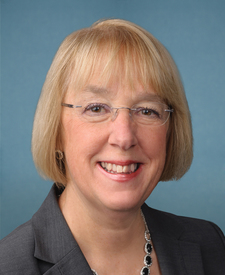 Sen. Patty MurrayD-WA
 Sen. Patrick LeahyD-VT
- Sen. Daniel MoynihanD-NY
 Sen. Tom HarkinD-IA
- Sen. David PryorD-AR
- Sen. Carol Moseley BraunD-IL
 Sen. Daniel AkakaD-HI
- Sen. Dale BumpersD-AR
 Sen. Ted KennedyD-MA
 Sen. Carl LevinD-MI
 Sen. Jay RockefellerD-WV
- Sen. Tom DaschleD-SD
 Sen. Daniel InouyeD-HI
- Sen. James SasserD-TN
 Sen. Kent ConradD-ND
- Sen. Harlan MathewsD-TN
 Sen. Joseph BidenD-DE
- Sen. Bill BradleyD-NJ
 Sen. Barbara MikulskiD-MD
 Sen. John KerryD-MA
 Sen. Robert ByrdD-WV
 Sen. Christopher DoddD-CT
- Sen. Harris WoffordD-PA
- Sen. John GlennD-OH
 Sen. Dianne FeinsteinD-CA
- Sen. Wendell FordD-KY
 Sen. Byron DorganD-ND
 Sen. Harry ReidD-NV
 Sen. Frank LautenbergD-NJ
 Sen. Max BaucusD-MT
- Sen. Richard BryanD-NV
- Sen. Bob GrahamD-FL
- Sen. John JohnstonD-LA
- Sen. John BreauxD-LA
- Sen. Dennis DeConciniD-AZ
- Sen. Charles RobbD-VA
 Sen. Jeff BingamanD-NM
 Sen. Herb KohlD-WI
- Sen. David BorenD-OK
 Sen. Joseph LiebermanD-CT
- Sen. Ben CampbellD-CO
- Sen. Robert KerreyD-NE
- Sen. James ExonD-NE
- Sen. Samuel NunnD-GA
- Sen. Robert KruegerD-TX
 Sen. Richard ShelbyD-AL
Republicans who voted yea(16)
- Sen. Jim JeffordsR-VT
- Sen. Mark HatfieldR-OR
- Sen. John ChafeeR-RI
- Sen. David DurenbergerR-MN
 Sen. Arlen SpecterR-PA
- Sen. William CohenR-ME
- Sen. Robert PackwoodR-OR
 Sen. Ted StevensR-AK
- Sen. John DanforthR-MO
 Sen. Kit BondR-MO
- Sen. Alfonse D’AmatoR-NY
- Sen. Conrad BurnsR-MT
- Sen. William RothR-DE
 Sen. Daniel CoatsR-IN
- Sen. Frank MurkowskiR-AK
 Sen. John McCainR-AZ
Data notes
The Senate’s recorded vote on the final version of the law (roll call 11 in Voteview), matched to the vote the record cites and checked against its totals. Positions are each member’s DW-NOMINATE score for that Congress, as on the Ideology page; left to right is more liberal to more conservative. Paired and announced yea votes count as yea. Lists follow the compass, most liberal first. A name links to a profile only for members of the current Congress. A law passed by voice vote or unanimous consent has no member list, and neither does a vote Voteview has not yet recorded.
Committees
The committees the bill was sent to, and what each did with it.
 Education and Workforce Committee · House · markup by, referred to, reported bySubcommittee: Health, Employment, Labor, and Pensions Subcommittee
- Committee on House Administration · House · referred toSubcommittee: Personnel and Police Subcommittee
- Post Office and Civil Service Committee · House · markup by, referred to, reported by
Data notes
A committee links to its page only where it exists in the current Congress; older and renamed committees are named without a link.
Timeline
From introduction to signing, newest first: the committees, the floor and the president. 27 actions.
- Feb 5, 1993Became lawBecame law · Became Public Law No: 103-3.
- Became lawBecame law · Signed by President.
- PresidentPresident · Presented to President.
- Feb 4, 1993FloorFloor · House agreed to Senate amendment pursuant to H. Res. 71.
- FloorFloor · Rules Committee Resolution H. Res. 71 Reported to House. Rule provides for consideration of senate amedment to H.R. 1. Upon adoption of this resolution, the bill shall be taken from the Speaker's table to the end that the Senate amendment shall be agreed to.
- FloorFloor · Passed Senate in lieu of S. 5 with an amendment by Yea-Nay Vote. 71-27. Record Vote No: 11.Senate roll call 11
- FloorFloor · Measure laid before Senate by unanimous consent.
- Feb 3, 1993Resolving differencesResolving differences · On motion to table the motion to reconsider the passage of the measure Agreed to by Division vote: 21 - 14.
- Resolving differencesResolving differences · Mr. Ford (MI) moved to table the motion to reconsider the passage of the measure
- FloorFloor · Motion to reconsider the passage of the measure tabled.
- FloorFloor · Mr. Gephardt moved to reconsider the passage of the measure.
- FloorFloor · On passage Passed by recorded vote: 265 - 163 (Roll no. 22).House roll call 22
- FloorFloor · On motion to recommit with instructions Failed by recorded vote: 175 - 253 (Roll No. 21).House roll call 21
- FloorFloor · The previous question on the motion to recommit with instructions was ordered without objection.
- FloorFloor · Rule H. Res. 58 passed House.
- Feb 2, 1993CommitteeCommittee · Reported by House Education and Workforce Committee
- CommitteeCommittee · Reported by House Post Office and Civil Service Committee
- Jan 27, 1993CommitteeCommittee · Markup by House Education and Workforce Committee
- CommitteeCommittee · Discharged from Health, Employment, Labor, and Pensions Subcommittee of the House Education and Workforce Committee
- CommitteeCommittee · Markup by House Post Office and Civil Service Committee
- Jan 26, 1993CommitteeCommittee · Hearings by Health, Employment, Labor, and Pensions Subcommittee of the House Education and Workforce Committee
- Jan 25, 1993CommitteeCommittee · Referred to Health, Employment, Labor, and Pensions Subcommittee of the House Education and Workforce Committee
- Jan 19, 1993CommitteeCommittee · Referred to Personnel and Police Subcommittee of the House Committee on House Administration
- Jan 5, 1993CommitteeCommittee · Referred to House Education and Workforce Committee
- CommitteeCommittee · Referred to House Committee on House Administration
- CommitteeCommittee · Referred to House Post Office and Civil Service Committee
- IntroducedIntroduced · Introduced in the House
Data notes
Shows the introduction, each committee and subcommittee step the source dates (referral, hearings, markup, report, discharge), and the floor, conference, presidential and became-law steps. Calendar placements, messages between the chambers, amendments and committee report numbers are not shown for laws before the 108th Congress. Two entries the source lists twice are shown once.
Official record
The bill’s full text and every action, including introduction and committee steps, are on Congress.gov. Data through Oct 7, 2026.