Civil Rights Act of 1991
Public Law 102-166 · S. 1745 · 102nd Congress · began in the Senate
Signed by George H. W. Bush (R) on Nov 21, 1991 · Civil Rights and Liberties, Minority Issues
Major law
Sponsor: Sen. John Danforth (R-MO)
Cosponsors (6): Sen. John Chafee, Sen. William Cohen,
Passage votesYeaNay
- HouseRecorded vote: 381 yea, 38 nay381–38
- SenateRecorded vote: 93 yea, 5 nay93–5
Data notes
The final version of the law, as each chamber passed it. A chamber that passed it by voice vote or unanimous consent has no count. “Method not stated” means the record does not say how the chamber voted. Where the record has a member-by-member vote, the “Who voted for it” section shows who voted yea.
Summary
The Congressional Research Service’s plain-language summary of what the law does.
Civil Rights Act of 1991 - Title I: Federal Civil Rights Remedies - Amends Federal law to declare that: (1) for purposes of provisions relating to equal rights under the law, the right to make and enforce contracts includes the making, performance, modification, and termination of contracts, and the enjoyment of all benefits, privileges, terms, and conditions of the contractual relationship; and (2) the rights protected by the amended provisions are protected against impairment by nongovernmental discrimination and impairment under color of State law.
Allows compensatory and punitive damages for intentional employment discrimination on the basis of race, color, religion, sex, national origin, or disability, except when: (1) the practice is unlawful because of its disparate impact; (2) the complaining party may recover under provisions of Federal law relating to equal rights under the law; or (3) the covered entity, in a disability discrimination case, demonstrates good faith efforts to make a reasonable accommodation that would provide an equally effective opportunity and would not cause an undue hardship on the operation of the business.
Allows such punitive damages under these provisions where: (1) the respondent is not a government, governmental agency, or political subdivision; and (2) there is malice or reckless indifference to the federally protected rights of an aggrieved individual. Prohibits compensatory damages under these provisions for back pay, interest on back pay, or any other type of relief authorized under specified provisions of the Civil Rights Act of 1964 relating to injunctions, affirmative action, or other equitable relief.
Limits to specified dollar amounts, varying depending on the number of employees employed by an employer, the sum of compensatory (for specified types of losses) and punitive damages.
Allows any party to demand a jury trial if the complaining party seeks compensatory or punitive damages. Prohibits the court from informing the jury of the dollar amount limitations.
Allows the awarding of attorney's fees in connection with an action or proceeding to enforce these provisions.
Provides for the burdens of proof which must be met by the various parties when an allegation of an unlawful employment practice is based on an assertion that a particular employment practice or particular employment practices result in disparate impact.
Prohibits using business necessity as a defense to a claim of intentional discrimination.
Declares that a rule barring employment of an individual who currently uses or possesses a controlled substance, other than as authorized by Federal law, shall be considered an unlawful practice only if the rule is adopted or applied with intent to discriminate.
Prohibits using any statement other than a specified memorandum in the Congressional Record as legislative history in construing any provision of this Act relating to Wards Cove Packing Co., Inc. v. Atonio (1989, which held that, in cases brought under Title VII of the Civil Rights Act of 1964, the burden is on the plaintiff to prove an employer had no business necessity for a practice with discriminatory effects), business necessity, cumulation, or alternative business practice.
Declares it an unlawful employment practice for a respondent, in connection with employment or promotion selection or referral, to adjust the scores of, use different cutoff scores for, or otherwise alter the results of, employment related tests on the basis of race, color, religion, sex, or national origin.
Declares that an unlawful employment practice is established when it is shown that a discriminatory basis was a motivating factor, even though other factors also motivated the practice. Allows, when such mixed motives have been proven and the respondent shows it would have taken the same action in the absence of the impermissible motivating factor, declaratory relief, limited types of injunctive relief, and attorney's fees and costs demonstrated to be directly attributable only to the pursuit of a claim under the enforcement provisions of title VII. Prohibits, in such cases, awarding damages or issuing certain types of orders.
Provides for the finality of litigated or consent judgments or orders resolving an employment discrimination claim, barring actions (challenging an order) by persons who had certain types of notice and opportunity.
Amends the Civil Rights Act of 1964 and the Americans with Disabilities Act of 1990 to include U.S. citizens employed in a foreign country in the definition of "employee." Declares that: (1) it is not unlawful to take an action, with respect to an employee in a foreign country, which would otherwise be prohibited by certain unlawful employment practice provisions of such title, if compliance with those provisions would violate the law of the foreign country; (2) any practice prohibited by such provisions engaged in by an employer who controls a corporation incorporated in a foreign country is presumed to be engaged in by the employer; and (3) those provisions do not apply to the foreign operations of a foreign employer which is not controlled by an American employee.
Amends the Civil Rights Act of 1964 to establish the Technical Assistance Training Institute to provide technical assistance and training regarding the laws and regulations enforced by the Equal Employment Opportunity Commission (EEOC). Authorizes appropriations.
Requires the EEOC, with regard to rights and obligations under title VII or other laws, to carry out educational and outreach activities, including in languages other than English, targeted to: (1) individuals who have historically been victims of employment discrimination and who have not been equitably served by the EEOC; and (2) individuals on whose behalf the EEOC has authority to enforce any other law.
Declares that an unlawful employment practice occurs, with respect to a seniority system that has been adopted for an intentionally discriminatory purpose, whether or not that purpose is apparent on the face of the system, when the system is adopted, when an individual becomes subject to the system, or when a person is injured by the application of the system.
Amends Federal law to allow expert fees to be included in attorney's fees awarded to the prevailing party in an action to enforce provisions of Federal law relating to: (1) equal rights under the law and making and enforcing contracts; and (2) damages in cases of intentional employment discrimination.
Amends the Civil Rights Act of 1964 to allow expert fees to be included in attorney's fees awarded to the prevailing party in an employment discrimination case.
Extends the time limit for an aggrieved employee or employment applicant to file a civil action after notice of final action by a department, agency, or unit of the Federal Government. Requires the same interest to compensate for delay in payment by the Government as in cases involving non-public parties.
Amends the Age Discrimination in Employment Act of 1967 (ADEA) to replace provisions providing for tolling of the statute of limitations for actions under the ADEA with provisions requiring the Equal Employment Opportunity Commission (EEOC) to give certain notice if it dismisses a charge or otherwise terminates proceedings. Allows a person to bring a civil action within a specified time limit.
Prohibits construing the amendments made by this Act to affect court-ordered remedies, affirmative action, or conciliation agreements that are in accordance with the law.
Declares that: (1) the rights and protections under title VII (Equal Employment Opportunities) of the Civil Rights Act of 1964 shall apply with respect to any employee in an employment position in the House of Representatives and any employing authority of the House, with remedies and procedures as described in a specified House Resolution, as incorporated into the Rules of the House of Representatives; and (2) the provisions of this Act relating to such Resolution and Rules are enacted as an exercise in the rulemaking power of the House and may be changed as any other rule of the House.
Declares that the rights and protections under this Act and title VII of the Civil Rights Act of 1964 shall apply with respect to the conduct of each instrumentality of the Congress, with the chief official of each instrumentality establishing the remedies and procedures to be used. Makes such remedies and procedures exclusive, except for employees who are defined as Senate employees. Defines instrumentalities of the Congress to include the Architect of the Capitol, the Congressional Budget Office, the General Accounting Office, the Government Printing Office, the Office of Technology Assessment, and the U.S. Botanic Garden.
Encourages the use of alternative means of dispute resolution to resolve disputes arising under the Acts and provisions of Federal law amended by this Act.
Title II: Glass Ceiling - Glass Ceiling Act of 1991 - Establishes the Glass Ceiling Commission to conduct a study and prepare recommendations concerning: (1) eliminating artificial barriers to the advancement of women and minorities; and (2) increasing opportunities and developmental experiences of women and minorities to foster advancement of women and minorities to management and decision making positions in business.
Establishes the National Award for Diversity and Excellence in American Executive Management for a business which makes substantial effort to promote the opportunities and developmental experiences of women and minorities to foster advancement to management and decision making positions. Allows an award recipient to publicize the receipt of the award and use the award in its advertising if the business agrees to help other U.S. businesses to improve opportunities and developmental experiences of women and minorities.
Authorizes appropriations. Terminates the Commission and authority to make the award four years after enactment of this Act.
Title III: Government Employee Rights - Government Employee Rights Act of 1991 - Requires all personnel actions affecting Senate employees to be made free from discrimination based on race, color, religion, sex, national origin, age, handicap, or disability.
Establishes as an office of the Senate the Office of Senate Fair Employment Practices to implement provisions of this title and programs for the Senate to heighten awareness of employee rights in order to prevent violations.
Sets forth a procedure for consideration of alleged violations, including a hearing by a board of independent hearing officers. Provides for remedies as under specified provisions of: (1) the Civil Rights Act of 1964; or (2) other specified Federal law relating to equal rights under the law and compensatory damages for intentional discrimination. Allows review by the Select Committee on Ethics. Allows and regulates subsequent judicial review.
Prohibits intimidation and reprisal.
Declares that: (1) subject to exception, provisions of this title are enacted by the Senate as an exercise of the rulemaking power of the Senate and may be changed as any other rule of the Senate; and (2) except for provisions governing judicial review, enforcement is in the exclusive jurisdiction of the Senate.
Declares that it is not a violation to consider a Senate employee's or applicant's party affiliation, domicile, or political compatibility with the employing office.
Prohibits actions to redress discriminatory practices under this title except as provided in this title.
Declares that it is the sense of the Senate that legislation should be enacted to provide the rights under this title to employees of congressional instrumentalities not provided with those rights.
Declares that: (1) the Senate reaffirms its commitment to a Standing Rule of the Senate regarding employment discrimination within the Senate; and (2) notwithstanding any provision of this title, the Select Committee on Ethics shall retain full power with respect to disciplinary action.
Applies certain rights of this title (prohibiting discrimination and providing for certain remedies) to employment of: (1) presidential appointees; and (2) individuals chosen or appointed by an elected official of a State or political subdivision. Provides for enforcement by administrative action and for judicial review.
Provides, notwithstanding title IV of this Act, for the severability of judicial review provisions of this title.
Requires, as an exercise of the rulemaking power of the Senate and retaining the power to change the provision as any other Senate rule, that each Senate committee report on a public bill or joint resolution (except the Appropriations and Budget Committees) to note and evaluate provisions which apply to the Congress.
Allows any Member of the Senate to intervene as a matter of right in any proceeding regarding judicial review under certain provisions of this title to determine the constitutionality of the provision. Allows appeal directly to the U.S. Supreme Court and requires that Court to accept jurisdiction and expedite the appeal.
Title IV: General Provisions - Provides for severability of, and the effective date of, the provisions of this Act.
Title V: Civil War Sites Advisory Commission - Amends the Civil War Sites Study Act of 1990 to increase the number of Members of the House of Representatives and the number of Members of the Senate on the Civil War Sites Advisory Commission.
Who voted for it
Every senator of the 102nd Congress on the ideology compass. Highlighted: the 93 who voted yea on final passage. Faded: everyone else, including those who voted nay, did not vote, or had not yet taken office.
93 yea5 nay2 present or did not vote
Democrats who voted yea(55)
- Sen. Paul WellstoneD-MN
- Sen. Howard MetzenbaumD-OH
- Sen. Brock AdamsD-WA
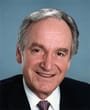 Sen. Tom HarkinD-IA
- Sen. Paul SarbanesD-MD
 Sen. Ted KennedyD-MA
- Sen. James SasserD-TN
- Sen. Paul SimonD-IL
- Sen. Donald RiegleD-MI
- Sen. Alan CranstonD-CA
 Sen. Frank LautenbergD-NJ
 Sen. Patrick LeahyD-VT
 Sen. John KerryD-MA
- Sen. David PryorD-AR
- Sen. Bill BradleyD-NJ
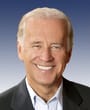 Sen. Joseph BidenD-DE
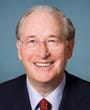 Sen. Jay RockefellerD-WV
 Sen. Kent ConradD-ND
- Sen. George MitchellD-ME
- Sen. Tom DaschleD-SD
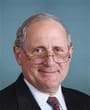 Sen. Carl LevinD-MI
- Sen. Albert GoreD-TN
- Sen. Claiborne PellD-RI
 Sen. Daniel AkakaD-HI
- Sen. Quentin BurdickD-ND
 Sen. Barbara MikulskiD-MD
- Sen. Timothy WirthD-CO
 Sen. Robert ByrdD-WV
- Sen. Wyche FowlerD-GA
- Sen. Daniel MoynihanD-NY
 Sen. Max BaucusD-MT
 Sen. Jeff BingamanD-NM
- Sen. Dale BumpersD-AR
- Sen. James SanfordD-NC
- Sen. Dennis DeConciniD-AZ
- Sen. John GlennD-OH
- Sen. Wendell FordD-KY
 Sen. Christopher DoddD-CT
 Sen. Daniel InouyeD-HI
 Sen. Herb KohlD-WI
 Sen. Harry ReidD-NV
- Sen. James ExonD-NE
- Sen. Richard BryanD-NV
- Sen. Lloyd BentsenD-TX
- Sen. Samuel NunnD-GA
- Sen. Alan DixonD-IL
- Sen. Bob GrahamD-FL
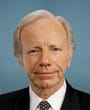 Sen. Joseph LiebermanD-CT
- Sen. John JohnstonD-LA
- Sen. Fritz HollingsD-SC
- Sen. Charles RobbD-VA
- Sen. John BreauxD-LA
- Sen. David BorenD-OK
- Sen. Howell HeflinD-AL
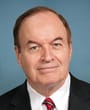 Sen. Richard ShelbyD-AL




























Republicans who voted yea(38)
- Sen. Jim JeffordsR-VT
- Sen. Mark HatfieldR-OR
 Sen. Arlen SpecterR-PA
- Sen. Robert PackwoodR-OR
- Sen. John ChafeeR-RI
- Sen. William CohenR-ME
- Sen. David DurenbergerR-MN
- Sen. Alfonse D’AmatoR-NY
- Sen. John DanforthR-MO
- Sen. Nancy KassebaumR-KS
- Sen. Robert KastenR-WI
 Sen. Ted StevensR-AK
- Sen. Slade GortonR-WA
- Sen. Warren RudmanR-NH
 Sen. John WarnerR-VA
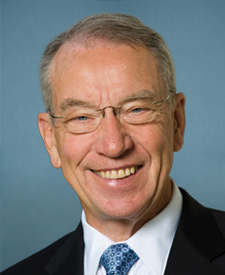 Sen. Chuck GrassleyR-IA
 Sen. Pete DomeniciR-NM
 Sen. Kit BondR-MO
 Sen. Thad CochranR-MS
- Sen. John SeymourR-CA
- Sen. Frank MurkowskiR-AK
 Sen. John McCainR-AZ
- Sen. Alan SimpsonR-WY
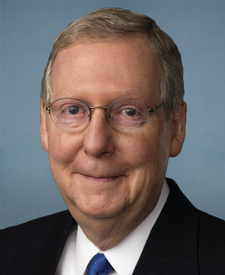 Sen. Mitch McConnellR-KY
 Sen. Richard LugarR-IN
- Sen. Strom ThurmondR-SC
- Sen. Conrad BurnsR-MT
- Sen. Larry PresslerR-SD
 Sen. Orrin HatchR-UT
- Sen. Robert DoleR-KS
- Sen. William RothR-DE
 Sen. Trent LottR-MS
- Sen. Connie MackR-FL
- Sen. Don NicklesR-OK
- Sen. Jake GarnR-UT
- Sen. Phil GrammR-TX
- Sen. Hank BrownR-CO
 Sen. Larry CraigR-ID


















Data notes
The Senate’s recorded vote on the final version of the law (roll call 238 in Voteview), matched to the vote the record cites and checked against its totals. Positions are each member’s DW-NOMINATE score for that Congress, as on the Ideology page; left to right is more liberal to more conservative. Paired and announced yea votes count as yea. Lists follow the compass, most liberal first. A name links to a profile only for members of the current Congress. A law passed by voice vote or unanimous consent has no member list, and neither does a vote Voteview has not yet recorded.
Committees
The record shows no committee referral for this bill.
Data notes
A committee links to its page only where it exists in the current Congress; older and renamed committees are named without a link.
Timeline
From introduction to signing, newest first: the committees, the floor and the president. 13 actions.
- Nov 21, 1991Became lawBecame law · Became Public Law No: 102-166.
- Became lawBecame law · Signed by President.
- Nov 13, 1991PresidentPresident · Presented to President.
- Nov 7, 1991FloorFloor · Motion to reconsider laid on the table Agreed to without objection.
- FloorFloor · On passage Passed by the Yeas and Nays: 381 - 38 (Roll no. 386).House roll call 386
- FloorFloor · Rule H. Res. 270 passed House.
- Oct 30, 1991FloorFloor · Passed Senate with an amendment by Yea-Nay Vote. 93-5. Record Vote No: 238.Senate roll call 238
- FloorFloor · The substitute as amended agreed to by Voice Vote.
- Oct 29, 1991FloorFloor · By a decision of the Senate the point of order was not sustained by Yea-Nay Vote. 22-76. Record Vote No: 235.Senate roll call 235
- Oct 25, 1991FloorFloor · Measure laid before Senate by unanimous consent.
- Oct 22, 1991FloorFloor · Cloture on the motion to proceed invoked in Senate by Yea-Nay Vote. 93-4. Record Vote No: 227.Senate roll call 227
- Oct 8, 1991FloorFloor · Cloture motion on the motion to proceed vitiated by Unanimous Consent.
- Sep 24, 1991IntroducedIntroduced · Introduced in the Senate
Data notes
Shows the introduction, each committee and subcommittee step the source dates (referral, hearings, markup, report, discharge), and the floor, conference, presidential and became-law steps. Calendar placements, messages between the chambers, amendments and committee report numbers are not shown for laws before the 108th Congress. Two entries the source lists twice are shown once.
Official record
The bill’s full text and every action, including introduction and committee steps, are on Congress.gov. Data through Oct 7, 2026.