United States v. Texas
The case concerned whether the federal government could sue Texas to stop enforcement of its six-week abortion ban, and the Court ruled per curiam that certiorari was improvidently granted and dismissed the case.· AI-written
142 S. Ct. 522 · No. 21-588 · 2021 term · Roberts Court
Decided Dec 10, 2021 · argued Nov 1, 2021
Federalism · National supremacy: miscellaneous
The voteMajorityDissent
8–18 in the majority, 1 in dissent
1 dissent (8–1)
Petition denied or appeal dismissed. United States lost.
What this ruling means
Dismissed: after hearing the case the Supreme Court declined to decide it, so the decision of the U.S. Court of Appeals, Fifth Circuit stands.
United States was the petitioner, the side that asked the Supreme Court to review the case. “Lost” means the Court did not give that side the result it asked for.
From the Supreme Court Database. A justice who agreed with the result but not the reasoning counts in the majority.
Summary
The opening of the case’s Wikipedia article: what the case was about and what the Court held.
United States v. Texas, 595 U.S. 74 (2021), was a United States Supreme Court case that involved the Texas Heartbeat Act, also known as Senate Bill 8 or SB8, a state law that bans abortion once a "fetal heartbeat" is detected, typically six weeks into pregnancy. A unique feature of the Act, and challenges to it, is the delegation of enforcement to any and all private individuals who are authorized by the Act to file civil actions against abortion providers who violate it, and aiders and abetters, while state and local officials are prohibited from doing so. Opponents stated that the Act went against the landmark 1973 Supreme Court decision Roe v. Wade, which, prior to its overturn in 2022, banned states from prohibiting abortions during the first trimester of pregnancy in favor of the woman's right to privacy guaranteed by the Fourteenth Amendment.
As one of several challenges to the law, the Supreme Court within United States v. Texas was asked to consider and decide whether the federal government has standing and the right to sue Texas for injunctive and declaratory relief to stop enforcement of the Act through private civil litigation in the Texas judicial system. The case was fast-tracked by the Court and heard on November 1, 2021, alongside Whole Woman's Health v. Jackson, which was brought by abortion providers and allies as a pre-enforcement challenge to the constitutionality of the Texas Heartbeat Act. The Supreme Court ruled in a per curiam decision in December 2021 that the writ of certiorari was improvidently granted, and dismissed the case.
Data notes
The text is Wikipedia’s (CC BY-SA 4.0), matched to the case by its citation, docket number or name and year, and is not checked against the opinion. The site keeps the article’s opening section, ending on its last full sentence. The one-sentence summary under the title is the Decisions list’s: Wikipedia’s own ruling sentence, or, tagged “AI-written”, one Claude wrote from this opening.
How the justices voted
Each justice who took part, placed by their Martin–Quinn ideology score for the 2021 term. Filled: the 8 in the majority. Hollow: the 1 in dissent. Colour is the party of the president who appointed them.
Majority(8)
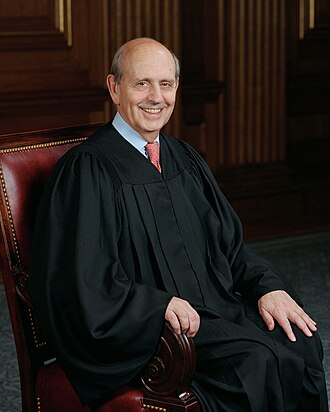 Stephen BreyerJoined the majority
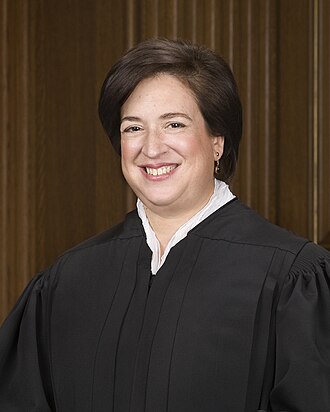 Elena KaganJoined the majority
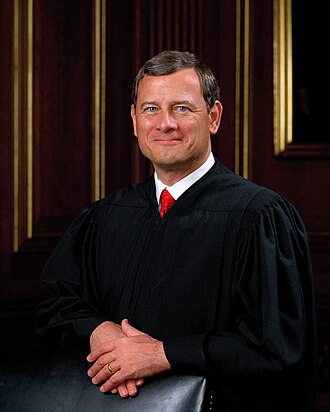 John RobertsJoined the majority
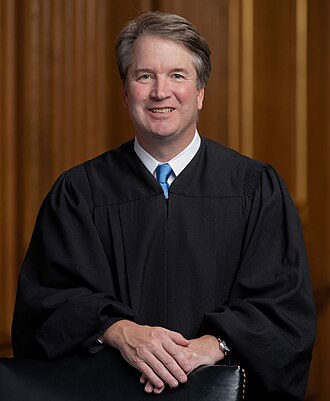 Brett KavanaughJoined the majority
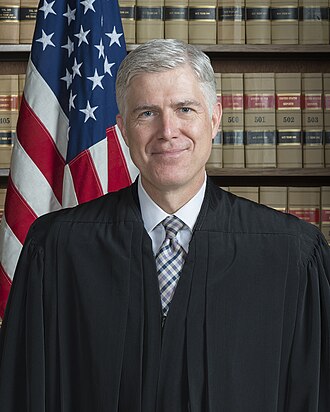 Neil GorsuchJoined the majority
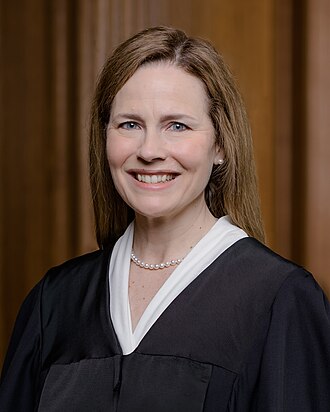 Amy BarrettJoined the majority
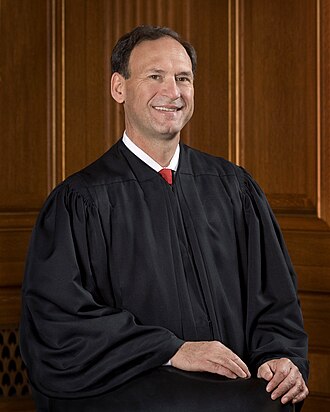 Samuel AlitoJoined the majority
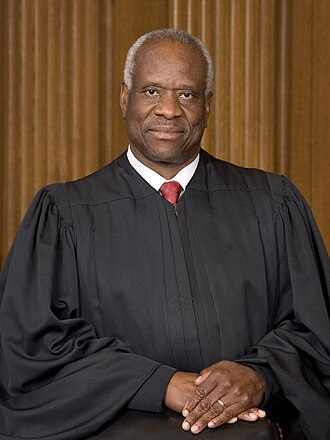 Clarence ThomasJoined the majority
Dissent(1)
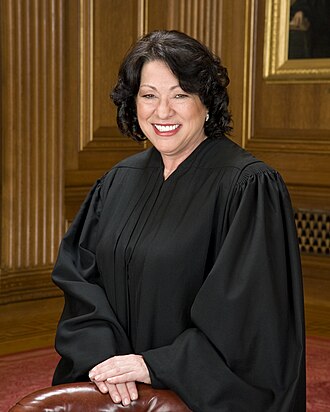 Sonia SotomayorJoined a dissent
Data notes
Each justice’s vote and what they wrote are from the justice-centered file of the Supreme Court Database. “Wrote a concurrence” means the justice sided with the majority and wrote separately; a justice who dissented in part is counted on the side they took overall. A justice who wrote nothing is listed as joining their side.
Positions are each justice’s Martin–Quinn score for the case’s term, the same scores as the Ideology page: negative is more liberal, positive more conservative. A score sums up a justice’s votes across the whole term, so it says where they usually sit, not why they voted as they did here. The median line is the Court’s median justice that term.
The parties
Who brought the case to the Court, who answered it, and how it got there.
- Petitioner
- United StatesUnited States
- Respondent
- TexasState (Texas)
- Reached the Court by
- Certiorari (the Court chose to hear it)
Data notes
The names are the two sides of the case’s title. The description under each is the Supreme Court Database’s category for that party, in its own wording. The petitioner is the side that asked the Supreme Court to review the decision below. “Why it was taken” appears only when the majority opinion says lower courts disagreed or were unsure about the question; reasons that would fit any case (“to resolve the question presented”, “an important question”) are left out.
The law at issue
The record codes no legal provision for this case.
Data notes
The Supreme Court Database codes the main constitutional provision, statute or court rule each case turned on, and the basis of the decision: judicial review of a federal or state law, interpreting a statute, supervising the lower courts, and so on. A case can rest on more than one. “Overruled” counts only where the majority opinion says so.
Timeline
What happened at the Court and how the case got there, newest first.
- Dec 10, 2021DecidedDecided · Decided 8–1: petition denied or appeal dismissed. United States lost.
- Nov 1, 2021ArguedArgued · Oral argument before the Court.
- Not datedTaken upTaken up · The Supreme Court agreed to hear the case (certiorari).
- Not datedCourt belowCourt below · Decided by the U.S. Court of Appeals, Fifth Circuit.
- Not datedBeganBegan · The case began in the Texas Western U.S. District Court.
Data notes
From the Supreme Court Database: the court the case began in, the court whose decision the Supreme Court reviewed and what that court did, how the case came to the Court, and the dates of argument and decision. The database does not date the steps in the lower courts. Court names are the database’s.
Other decisions on the same issue
40 other argued cases since 1946 on national supremacy: miscellaneous, newest first.
- United States v. Washington2022 U.S. LEXIS 3010Jun 21, 2022 · 2022 U.S. LEXIS 3010Federalism9–0Unanimous band
- Allen v. Cooper140 S. Ct. 994Mar 23, 2020 · 140 S. Ct. 994Federalism9–0Unanimous band
- Parker Drilling Management Services, Ltd. v. Newton139 S. Ct. 1881Jun 10, 2019 · 139 S. Ct. 1881Federalism9–0Unanimous band
- Murphy v. National Collegiate Athletic AssociationLandmark · Federalism138 S. Ct. 1461May 14, 2018 · 138 S. Ct. 1461FederalismLandmark · Federalism7–27–2 band
- National Federation of Independent Business, et al., Petitioners v. Kathleen Sebelius, Secretary of Health and Human Services, et al.Landmark · Federalism567 U.S. 519Jun 28, 2012 · 567 U.S. 519FederalismLandmark · Federalism5–45–4 band
- United States v. Graydon Earl Comstock, Jr., et al.560 U.S. 126May 17, 2010 · 560 U.S. 126Federalism7–27–2 band
- United States v. Georgia et al.546 U.S. 151Jan 10, 2006 · 546 U.S. 151Federalism9–0Unanimous band
- Basim Omar Sabri v. United States541 U.S. 600May 17, 2004 · 541 U.S. 600Federalism9–0Unanimous band
- Tennessee Student Assistance Corporation v. Pamela L. Hood541 U.S. 440May 17, 2004 · 541 U.S. 440Federalism7–27–2 band
- Linda Frew, on Behalf of Her Daughter, Carla Frew, et al. v. Albert Hawkins, Commissioner, Texas Health and Human Services Commission, et al.540 U.S. 431Jan 14, 2004 · 540 U.S. 431Federalism9–0Unanimous band
- Nevada Department of Human Resources, et al. v. William Hibbs et al.538 U.S. 721May 27, 2003 · 538 U.S. 721Federalism6–36–3 band
- Paul D. Lapides v. Board of Regents of the University System of Georgia, et al.535 U.S. 613May 13, 2002 · 535 U.S. 613Federalism9–0Unanimous band
- Board of Trustees of the University of Alabama, et al., v. Patricia Garrett, et al.531 U.S. 356Feb 21, 2001 · 531 U.S. 356Federalism5–45–4 band
- United States v. Antonio J. Morrison, et al.Landmark · Federalism529 U.S. 598May 15, 2000 · 529 U.S. 598FederalismLandmark · Federalism5–45–4 band
- Janet Reno, Attorney General, et al. v. Charlie Condon, Attorney General of South Carolina, et al.528 U.S. 141Jan 12, 2000 · 528 U.S. 141Federalism9–0Unanimous band
- J. Daniel Kimel, Jr., et al. v. Florida Board of Regents, et al.528 U.S. 62Jan 11, 2000 · 528 U.S. 62Federalism5–45–4 band
- John H. Alden, et al. v. Maine527 U.S. 706Jun 23, 1999 · 527 U.S. 706Federalism5–45–4 band
- College Savings Bank v. Florida Prepaid Postsecondary Education Expense Board et al.527 U.S. 666Jun 23, 1999 · 527 U.S. 666Federalism5–45–4 band
- Florida Prepaid Postsecondary Education Expense Board v. College Savings Bank and United States527 U.S. 627Jun 23, 1999 · 527 U.S. 627Federalism5–45–4 band
- Jay Printz, Sheriff/Coroner, Ravalli County, Montana v. United StatesLandmark · Federalism521 U.S. 898Jun 27, 1997 · 521 U.S. 898FederalismLandmark · Federalism5–45–4 band
- Seminole Tribe of Florida v. Florida et al.517 U.S. 44Mar 27, 1996 · 517 U.S. 44Federalism5–45–4 band
- United States v. Alfonso Lopez, Jr.Landmark · Federalism514 U.S. 549Apr 26, 1995 · 514 U.S. 549FederalismLandmark · Federalism5–45–4 band
- Mark Howlett, a Minor, by and Through Elizabeth Howlett, His Mother, Natural Guardian and Next Friend v. Scott Rose, As Superintendent of Schools for Pinellas County, Florida, et al.496 U.S. 356Jun 11, 1990 · 496 U.S. 356Federalism9–0Unanimous band
- George S. Bennett v. Arkansas485 U.S. 395Mar 29, 1988 · 485 U.S. 395Federalism9–0Unanimous band
- South Dakota v. Dole, Secretary of TransportationLandmark · Federalism483 U.S. 203Jun 23, 1987 · 483 U.S. 203FederalismLandmark · Federalism7–27–2 band
- Atascadero State Hospital et al. v. Scanlon473 U.S. 234Jun 28, 1985 · 473 U.S. 234Federalism5–45–4 band
- Lawrence County et al. v. Lead-Deadwood School District No. 40-1469 U.S. 256Jan 9, 1985 · 469 U.S. 256Federalism7–27–2 band
- Pennhurst State School and Hospital et al. v. Halderman et al.465 U.S. 89Jan 23, 1984 · 465 U.S. 89Federalism5–45–4 band
- Ray, Governor of Washington, et al. v. Atlantic Richfield Co. et al.435 U.S. 151Mar 6, 1978 · 435 U.S. 151Federalism6–36–3 band
- Fry et al. v. United States421 U.S. 542May 27, 1975 · 421 U.S. 542Federalism7–18–1 band
- Nash v. Florida Industrial Commission et al.389 U.S. 235Dec 5, 1967 · 389 U.S. 235Federalism8–0Unanimous band
- Commissioner of Internal Revenue v. Estate of Bosch387 U.S. 456Jun 5, 1967 · 387 U.S. 456Federalism6–36–3 band
- Donovan et al. v. City of Dallas et al.377 U.S. 408Jun 8, 1964 · 377 U.S. 408Federalism6–36–3 band
- Head, Doing Business As Lea County Publishing Co., et al. v. New Mexico Board of Examiners in Optometry374 U.S. 424Jun 17, 1963 · 374 U.S. 424Federalism9–0Unanimous band
- Division 1287, Amalgamated Association of Street, Electric Railway & Motor Coach Employees of America et al. v. Missouri374 U.S. 74Jun 10, 1963 · 374 U.S. 74Federalism9–0Unanimous band
- Colorado Anti-Discrimination Commission et al. v. Continental Air Lines, Inc.372 U.S. 714Apr 22, 1963 · 372 U.S. 714Federalism9–0Unanimous band
- Bibb, Director, Department of Public Safety of Illinois, et al. v. Navajo Freight Lines, Inc., et al.359 U.S. 520May 25, 1959 · 359 U.S. 520Federalism9–0Unanimous band
- Greenwood v. United States350 U.S. 366Mar 5, 1956 · 350 U.S. 366Federalism8–0Unanimous band
- Franklin National Bank of Franklin Square v. New York347 U.S. 373Apr 5, 1954 · 347 U.S. 373Federalism8–18–1 band
- United States v. Burnison et al.339 U.S. 87Mar 13, 1950 · 339 U.S. 87Federalism7–18–1 band
Data notes
Every other orally argued case with a clear vote, from the 1946 term on, that the Supreme Court Database files under the same issue as this one. The database gives each case one issue from a list of about 270 (abortion, search and seizure of vehicles, the death penalty, and so on), whatever law it turned on.
Official record
Read the argument audio on Oyez and Wikipedia. Case data from the Supreme Court Database, Version 2026 Release 01, through the 2025 term.