United States v. Haymond
The U.S. Supreme Court struck down the five-year mandatory minimum prison sentence for certain sex offenses committed by federal supervised releases under 18 U.S.C. § 3583(k) as unconstitutional unless the charges are proven to a jury beyond a reasonable doubt.
139 S. Ct. 2369 · No. 17-1672 · 2018 term · Roberts Court
Decided Jun 26, 2019 · argued Feb 26, 2019
Criminal procedure · Jury trial
Struck down an act of Congress
Majority opinion: Neil Gorsuch
The voteMajorityDissent
5–45 in the majority, 4 in dissent
4 dissents (5–4)
Vacated and remanded. United States won.
What this ruling means
Vacated and remanded: the Supreme Court set aside the decision of the U.S. Court of Appeals, Tenth Circuit, wiping it out without necessarily saying the result was wrong, and sent the case back for that court to decide again under the right legal standard.
United States was the petitioner, the side that asked the Supreme Court to review the case. “Won” means the Court gave that side the result it asked for.
From the Supreme Court Database. A justice who agreed with the result but not the reasoning counts in the majority.
Summary
The opening of the case’s Wikipedia article: what the case was about and what the Court held.
United States v. Haymond, 588 U.S. ___ (2019), is a case in which the U.S. Supreme Court struck down the five-year mandatory minimum prison sentence for certain sex offenses committed by federal supervised releases under 18 U.S.C. § 3583(k) as unconstitutional unless the charges are proven to a jury beyond a reasonable doubt. Justices Ginsburg, Sotomayor, and Kagan joined Gorsuch's plurality opinion, while Breyer provided the necessary fifth vote with his narrow concurrence that began by saying he agreed with much of Justice Alito's dissent, which was joined by Justices Roberts, Thomas, and Kavanaugh.
The Court was considering whether Congress can require mandatory minimum prison sentences that exceed the minimum for the original offense, and allow maximum prison sentences that exceed the maximum for the original offense, in federal supervised release revocation cases where the facts were not proven to a jury beyond a reasonable doubt. The supervised release statute requires only that there be a judge's finding by a preponderance of the evidence that a violation of federal supervised release has occurred.
The U.S. Court of Appeals for the 10th Circuit, relying heavily on United States v. Booker, excised the offending provision, which had been introduced in the Adam Walsh Child Protection and Safety Act of 2006, and whose required application in this case the sentencing judge had found "repugnant."
Justice Samuel Alito noted in oral argument that this case has the potential to bring down the entire system of federal supervised release. According to a Congressional Research Service report, "The Supreme Court's ultimate decision in Haymond could have significant implications going forward for the over 16,000 federal inmates currently incarcerated and the nearly 9,000 former federal inmates currently serving terms of supervised release for sex offenses, as well as for how Congress crafts laws concerning supervised release."
Data notes
The text is Wikipedia’s (CC BY-SA 4.0), matched to the case by its citation, docket number or name and year, and is not checked against the opinion. The site keeps the article’s opening section, ending on its last full sentence. The one-sentence summary under the title is the Decisions list’s: Wikipedia’s own ruling sentence, or, tagged “AI-written”, one Claude wrote from this opening.
How the justices voted
Each justice who took part, placed by their Martin–Quinn ideology score for the 2018 term. Filled: the 5 in the majority. Hollow: the 4 in dissent. Colour is the party of the president who appointed them.
Majority(5)
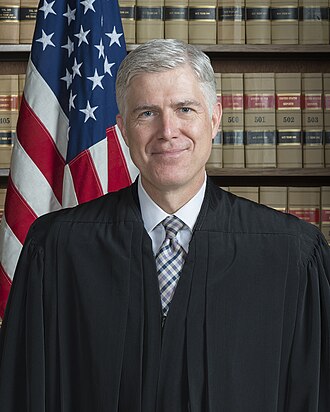 Neil GorsuchWrote the majority opinion
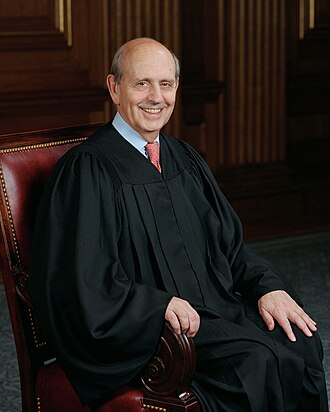 Stephen BreyerWrote a concurrence
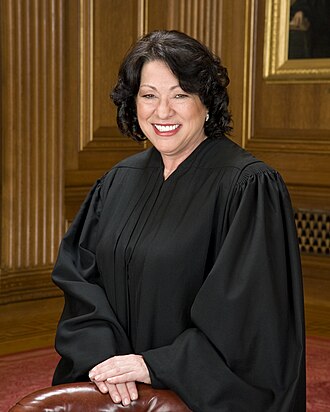 Sonia SotomayorJoined the majority
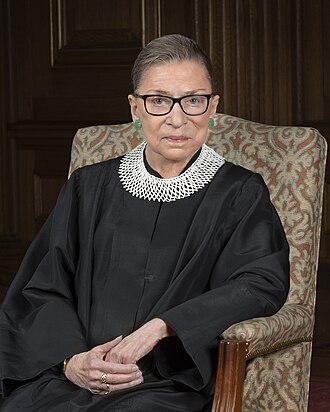 Ruth GinsburgJoined the majority
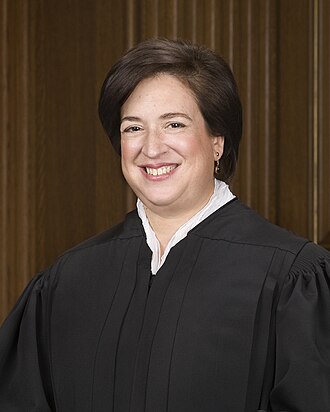 Elena KaganJoined the majority
Dissent(4)
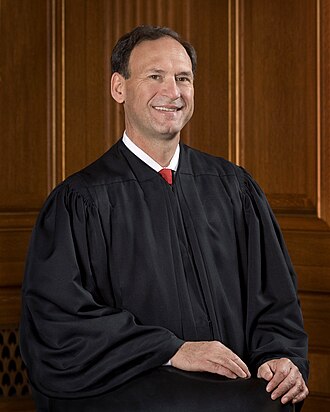 Samuel AlitoWrote a dissent
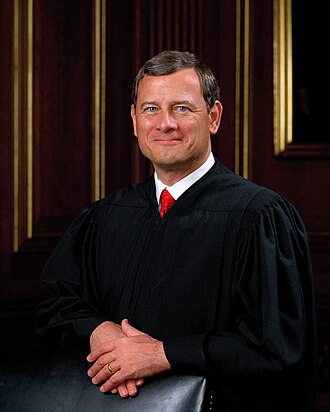 John RobertsJoined a dissent
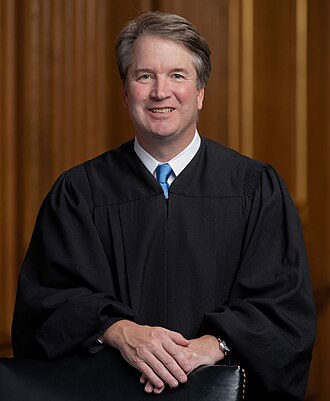 Brett KavanaughJoined a dissent
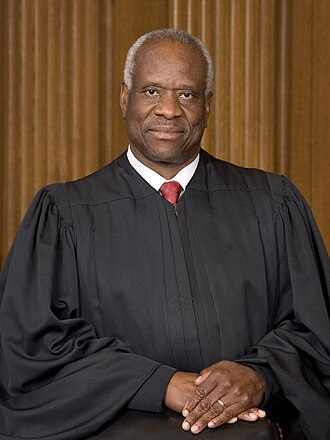 Clarence ThomasJoined a dissent
Data notes
Each justice’s vote and what they wrote are from the justice-centered file of the Supreme Court Database. “Wrote a concurrence” means the justice sided with the majority and wrote separately; a justice who dissented in part is counted on the side they took overall. A justice who wrote nothing is listed as joining their side.
Positions are each justice’s Martin–Quinn score for the case’s term, the same scores as the Ideology page: negative is more liberal, positive more conservative. A score sums up a justice’s votes across the whole term, so it says where they usually sit, not why they voted as they did here. The median line is the Court’s median justice that term.
The parties
Who brought the case to the Court, who answered it, and how it got there.
- Petitioner
- United StatesUnited States
- Respondent
- HaymondPerson convicted of crime
- Reached the Court by
- Certiorari (the Court chose to hear it)
Data notes
The names are the two sides of the case’s title. The description under each is the Supreme Court Database’s category for that party, in its own wording. The petitioner is the side that asked the Supreme Court to review the decision below. “Why it was taken” appears only when the majority opinion says lower courts disagreed or were unsure about the question; reasons that would fit any case (“to resolve the question presented”, “an important question”) are left out.
The law at issue
The law the Court was asked to apply, and the kind of power it used to decide.
- Provision
- Sixth Amendment (right to trial by jury)
- Kind of law
- Constitutional Amendment
- Decided by
- Judicial review (national level)
- Struck down
- An act of Congress, as unconstitutional
Data notes
The Supreme Court Database codes the main constitutional provision, statute or court rule each case turned on, and the basis of the decision: judicial review of a federal or state law, interpreting a statute, supervising the lower courts, and so on. A case can rest on more than one. “Overruled” counts only where the majority opinion says so.
Timeline
What happened at the Court and how the case got there, newest first.
- Jun 26, 2019DecidedDecided · Decided 5–4: vacated and remanded. United States won.
- Feb 26, 2019ArguedArgued · Oral argument before the Court.
- Not datedTaken upTaken up · The Supreme Court agreed to hear the case (certiorari).
- Not datedCourt belowCourt below · Decided by the U.S. Court of Appeals, Tenth Circuit: vacated and remanded, with a dissent.
- Not datedBeganBegan · The case began in the Oklahoma Northern U.S. District Court.
Data notes
From the Supreme Court Database: the court the case began in, the court whose decision the Supreme Court reviewed and what that court did, how the case came to the Court, and the dates of argument and decision. The database does not date the steps in the lower courts. Court names are the database’s.
Other decisions on the same issue
38 other argued cases since 1946 on jury trial, newest first.
- Perttu v. Richards145 S. Ct. 1793Jun 18, 2025 · 145 S. Ct. 1793Criminal procedure5–45–4 band
- Ramos v. LouisianaLandmark · Other criminal sentences140 S. Ct. 1390Apr 20, 2020 · 140 S. Ct. 1390Criminal procedureLandmark · Other criminal sentences6–36–3 band
- Hurst v. Florida577 U.S. 92Jan 12, 2016 · 577 U.S. 92Criminal procedure8–18–1 band
- Deborah K. Johnson, Acting Warden, Petitioner v. Tara Sheneva Williams568 U.S. 289Feb 20, 2013 · 568 U.S. 289Criminal procedure9–0Unanimous band
- Oregon v. Thomas Eugene Ice555 U.S. 160Jan 14, 2009 · 555 U.S. 160Criminal procedure5–45–4 band
- William Joseph Harris v. United States536 U.S. 545Jun 24, 2002 · 536 U.S. 545Criminal procedure5–45–4 band
- Ray A. Lewis v. United States518 U.S. 322Jun 24, 1996 · 518 U.S. 322Criminal procedure7–27–2 band
- Herbert Markman and Positek, Inc. v. Westview Instruments, Inc. and Althon Enterprises, Inc.517 U.S. 370Apr 23, 1996 · 517 U.S. 370Criminal procedure9–0Unanimous band
- Guy Wooddell, Jr. v. International Brotherhood of Electrical Workers, Local 71, et al.502 U.S. 93Dec 4, 1991 · 502 U.S. 93Criminal procedure8–0Unanimous band
- Chauffeurs, Teamsters and Helpers Local No. 391 v. Terry et al.494 U.S. 558Mar 20, 1990 · 494 U.S. 558Criminal procedure6–36–3 band
- John S. Lytle v. Household Manufacturing, Inc., dba Schwitzer Turbochargers494 U.S. 545Mar 20, 1990 · 494 U.S. 545Criminal procedure9–0Unanimous band
- Granfinanciera, S. A., et al. v. Nordberg, Creditor Trustee for the Estate of Chase & Sanborn Corp., fka, General Coffee Corp.492 U.S. 33Jun 23, 1989 · 492 U.S. 33Criminal procedure6–36–3 band
- Blanton et al. v. City of North Las Vegas, Nevada489 U.S. 538Mar 6, 1989 · 489 U.S. 538Criminal procedure9–0Unanimous band
- McDonough Power Equipment, Inc. v. Greenwood et al.464 U.S. 548Jan 18, 1984 · 464 U.S. 548Criminal procedure9–0Unanimous band
- Lehman, Secretary of the Navy v. Nakshian453 U.S. 156Jun 26, 1981 · 453 U.S. 156Criminal procedure5–45–4 band
- Burch et al. v. Louisiana441 U.S. 130Apr 17, 1979 · 441 U.S. 130Criminal procedure9–0Unanimous band
- Ballew v. Georgia435 U.S. 223Mar 21, 1978 · 435 U.S. 223Criminal procedure9–0Unanimous band
- Lorillard, a Division of Loew's Theatres, Inc. v. Pons434 U.S. 575Feb 22, 1978 · 434 U.S. 575Criminal procedure8–0Unanimous band
- Atlas Roofing Co., Inc. v. Occupational Safety and Health Review Commission et al.430 U.S. 442Mar 23, 1977 · 430 U.S. 442Criminal procedure8–0Unanimous band
- Ludwig v. Massachusetts427 U.S. 618Jun 30, 1976 · 427 U.S. 618Criminal procedure5–45–4 band
- Muniz et al. v. Hoffman, Regional Director, National Labor Relations Board422 U.S. 454Jun 25, 1975 · 422 U.S. 454Criminal procedure5–45–4 band
- Pernell v. Southall Realty416 U.S. 363Apr 24, 1974 · 416 U.S. 363Criminal procedure9–0Unanimous band
- Curtis v. Loether et al.415 U.S. 189Feb 20, 1974 · 415 U.S. 189Criminal procedure9–0Unanimous band
- Chaffin v. Stynchcombe, Sheriff412 U.S. 17May 21, 1973 · 412 U.S. 17Criminal procedure5–45–4 band
- Apodaca et al. v. OregonLandmark · Other criminal sentences406 U.S. 404May 22, 1972 · 406 U.S. 404Criminal procedureLandmark · Other criminal sentences5–45–4 band
- Johnson v. Louisiana406 U.S. 356May 22, 1972 · 406 U.S. 356Criminal procedure5–45–4 band
- Baldwin v. New York399 U.S. 66Jun 22, 1970 · 399 U.S. 66Criminal procedure5–36–3 band
- United States v. Reynolds et ux.397 U.S. 14Feb 24, 1970 · 397 U.S. 14Criminal procedure6–27–2 band
- Ross et al., Trustees v. Bernhard et al.396 U.S. 531Feb 2, 1970 · 396 U.S. 531Criminal procedure5–36–3 band
- Dyke et al. v. Taylor Implement Manufacturing Co., Inc.391 U.S. 216May 20, 1968 · 391 U.S. 216Criminal procedure7–27–2 band
- Duncan v. LouisianaLandmark · Other areas391 U.S. 145May 20, 1968 · 391 U.S. 145Criminal procedureLandmark · Other areas7–27–2 band
- Baxstrom v. Herold, State Hospital Director383 U.S. 107Feb 23, 1966 · 383 U.S. 107Criminal procedure9–0Unanimous band
- Meeker et ux. v. Ambassador Oil Corp.375 U.S. 160Dec 2, 1963 · 375 U.S. 160Criminal procedure9–0Unanimous band
- Simler v. Conner372 U.S. 221Feb 18, 1963 · 372 U.S. 221Criminal procedure9–0Unanimous band
- Dairy Queen, Inc., v. Wood, U.S. District Judge, et al.369 U.S. 469Apr 30, 1962 · 369 U.S. 469Criminal procedure7–0Unanimous band
- Magenau, Administrator, v. Aetna Freight Lines, Inc.360 U.S. 273Jun 15, 1959 · 360 U.S. 273Criminal procedure6–36–3 band
- Beacon Theatres, Inc., v. Westover, U.S. District Judge, et al.359 U.S. 500May 25, 1959 · 359 U.S. 500Criminal procedure5–36–3 band
- United States v. Moore et ux.340 U.S. 616Mar 26, 1951 · 340 U.S. 616Criminal procedure5–45–4 band
Data notes
Every other orally argued case with a clear vote, from the 1946 term on, that the Supreme Court Database files under the same issue as this one. The database gives each case one issue from a list of about 270 (abortion, search and seizure of vehicles, the death penalty, and so on), whatever law it turned on.
Official record
Read the argument audio on Oyez and Wikipedia. Case data from the Supreme Court Database, Version 2026 Release 01, through the 2025 term.