Florida v. Georgia
In a dispute over water allocation in the ACF River Basin, the Court ruled that the special master had not properly considered Florida's argument and remanded the case to be reheard and reviewed.· AI-written
138 S. Ct. 2502 · No. No. 142, Orig. · 2017 term · Roberts Court
Decided Jun 27, 2018 · argued Jan 8, 2018
Interstate relations · Non-real property dispute between states
Majority opinion: Stephen Breyer
The voteMajorityDissent
5–45 in the majority, 4 in dissent
4 dissents (5–4)
Florida won.
What this ruling means
Florida was the petitioner, the side that asked the Supreme Court to review the case. “Won” means the Court gave that side the result it asked for.
From the Supreme Court Database. A justice who agreed with the result but not the reasoning counts in the majority.
Summary
The opening of the case’s Wikipedia article: what the case was about and what the Court held.
Florida v. Georgia, 585 U.S. 803 (2018), was a decision by the Supreme Court of the United States in an original jurisdiction case. It involves a long-running dispute over waters within the ACF River Basin, running from the north Georgia mountains through metro Atlanta to the Florida panhandle, which is managed by the United States Army Corps of Engineers. Waters in the area have been stressed by the population growth of Atlanta over previous decades. The immediate case stemmed from droughts in 2011 and 2012 that caused economic damage to Florida due to lower water flows from the ACF River Basin into the panhandle, impacting its seafood production; Florida sought relief to have more water allocated towards them from the ACF by placing a water allocation cap on Georgia. The Supreme Court assigned a special master to review Florida's complaint, but ultimately found in 2016 that Florida had not fully demonstrated the need for more allocation. Florida challenged this determination to the Supreme Court. On June 27, 2018, the Supreme Court ruled 5–4 that the special master had not properly considered Florida's argument and remanded the case to be reheard and reviewed.
Subsequently, the court replaced the special master, who later ruled against Florida in the dispute. Florida challenged the conclusions of the special master's report, but the Supreme Court overruled Florida's exceptions and unanimously dismissed the case in Florida v. Georgia, 592 U.S. ___ (2021).
Data notes
The text is Wikipedia’s (CC BY-SA 4.0), matched to the case by its citation, docket number or name and year, and is not checked against the opinion. The site keeps the article’s opening section, ending on its last full sentence. The one-sentence summary under the title is the Decisions list’s: Wikipedia’s own ruling sentence, or, tagged “AI-written”, one Claude wrote from this opening.
How the justices voted
Each justice who took part, placed by their Martin–Quinn ideology score for the 2017 term. Filled: the 5 in the majority. Hollow: the 4 in dissent. Colour is the party of the president who appointed them.
Majority(5)
 Stephen BreyerWrote the majority opinion
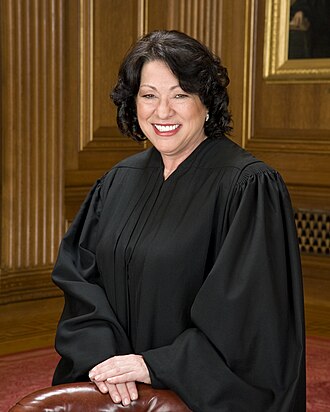 Sonia SotomayorJoined the majority
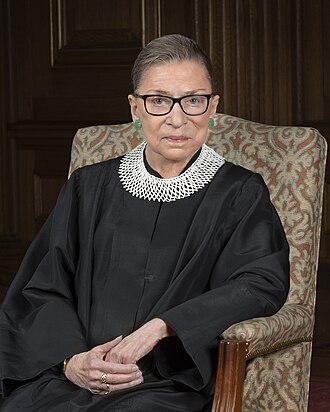 Ruth GinsburgJoined the majority
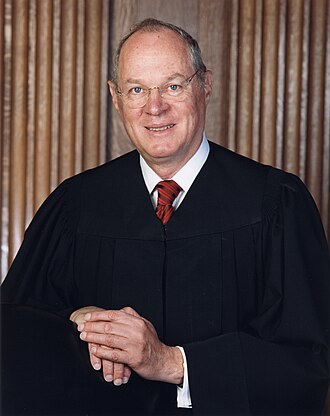 Anthony KennedyJoined the majority
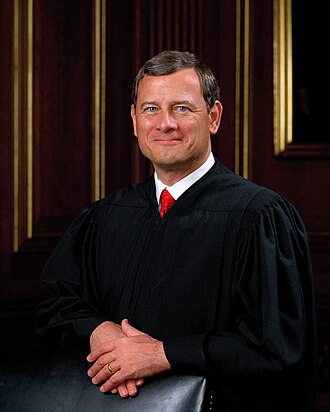 John RobertsJoined the majority
Dissent(4)
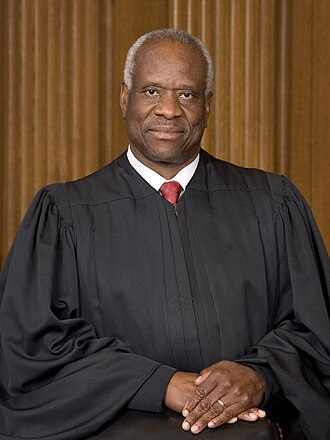 Clarence ThomasWrote a dissent
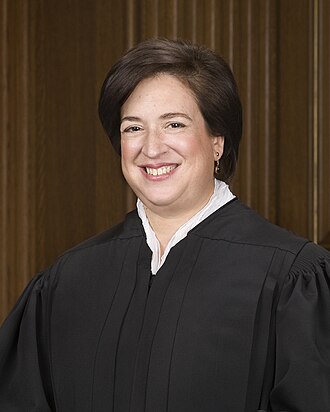 Elena KaganJoined a dissent
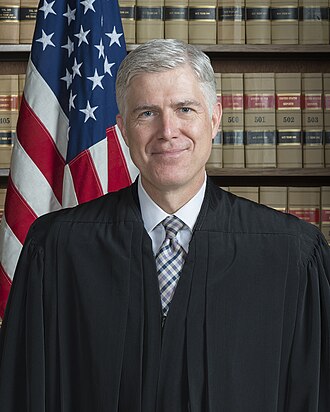 Neil GorsuchJoined a dissent
 Samuel AlitoJoined a dissent
Data notes
Each justice’s vote and what they wrote are from the justice-centered file of the Supreme Court Database. “Wrote a concurrence” means the justice sided with the majority and wrote separately; a justice who dissented in part is counted on the side they took overall. A justice who wrote nothing is listed as joining their side.
Positions are each justice’s Martin–Quinn score for the case’s term, the same scores as the Ideology page: negative is more liberal, positive more conservative. A score sums up a justice’s votes across the whole term, so it says where they usually sit, not why they voted as they did here. The median line is the Court’s median justice that term.
The parties
Who brought the case to the Court, who answered it, and how it got there.
- Petitioner
- FloridaState (Florida)
- Respondent
- GeorgiaState (Georgia)
- Reached the Court by
- Original jurisdiction (filed directly in the Supreme Court)
Data notes
The names are the two sides of the case’s title. The description under each is the Supreme Court Database’s category for that party, in its own wording. The petitioner is the side that asked the Supreme Court to review the decision below. “Why it was taken” appears only when the majority opinion says lower courts disagreed or were unsure about the question; reasons that would fit any case (“to resolve the question presented”, “an important question”) are left out.
The law at issue
The law the Court was asked to apply, and the kind of power it used to decide.
- Decided by
- Federal common law
Data notes
The Supreme Court Database codes the main constitutional provision, statute or court rule each case turned on, and the basis of the decision: judicial review of a federal or state law, interpreting a statute, supervising the lower courts, and so on. A case can rest on more than one. “Overruled” counts only where the majority opinion says so.
Timeline
What happened at the Court and how the case got there, newest first.
- Jun 27, 2018DecidedDecided · Decided 5–4. Florida won.
- Jan 8, 2018ArguedArgued · Oral argument before the Court.
- Not datedFiledFiled · Filed directly in the Supreme Court, under its original jurisdiction.
Data notes
From the Supreme Court Database: the court the case began in, the court whose decision the Supreme Court reviewed and what that court did, how the case came to the Court, and the dates of argument and decision. The database does not date the steps in the lower courts. Court names are the database’s.
Other decisions on the same issue
26 other argued cases since 1946 on non-real property dispute between states, newest first.
- Delaware v. Pennsylvania and Wisconsin598 U.S. 115Feb 28, 2023 · 598 U.S. 115Interstate relations9–0Unanimous band
- Florida v. Georgia592 U.S. 433Apr 1, 2021 · 592 U.S. 433Interstate relations9–0Unanimous band
- Texas v. New Mexico141 S. Ct. 509Dec 14, 2020 · 141 S. Ct. 509Interstate relations7–18–1 band
- State of Montana, Plaintiff v. State of Wyoming and State of North Dakota563 U.S. 368May 2, 2011 · 563 U.S. 368Interstate relations7–18–1 band
- State of South Carolina v. State of North Carolina558 U.S. 256Jan 20, 2010 · 558 U.S. 256Interstate relations5–45–4 band
- State of Kansas, Plaintiff v. State of Colorado556 U.S. 98Mar 9, 2009 · 556 U.S. 98Interstate relations9–0Unanimous band
- State of Kansas v. State of Colorado543 U.S. 86Dec 7, 2004 · 543 U.S. 86Interstate relations8–18–1 band
- State of Kansas v. State of Colorado533 U.S. 1Jun 11, 2001 · 533 U.S. 1Interstate relations6–36–3 band
- State of Nebraska v. States of Wyoming and Colorado515 U.S. 1May 30, 1995 · 515 U.S. 1Interstate relations8–18–1 band
- State of Kansas v. State of Colorado514 U.S. 673May 15, 1995 · 514 U.S. 673Interstate relations9–0Unanimous band
- State of Nebraska v. States of Wyoming and Colorado507 U.S. 584Apr 20, 1993 · 507 U.S. 584Interstate relations9–0Unanimous band
- State of Delaware v. State of New York, et al.507 U.S. 490Mar 30, 1993 · 507 U.S. 490Interstate relations6–36–3 band
- States of Oklahoma and Texas v. State of New Mexico501 U.S. 221Jun 17, 1991 · 501 U.S. 221Interstate relations5–45–4 band
- Texas v. New Mexico482 U.S. 124Jun 8, 1987 · 482 U.S. 124Interstate relations8–0Unanimous band
- Colorado v. New Mexico et al.467 U.S. 310Jun 4, 1984 · 467 U.S. 310Interstate relations8–18–1 band
- Idaho ex rel. Evans, Governor of Idaho, et al. v. Oregon et al.462 U.S. 1017Jun 23, 1983 · 462 U.S. 1017Interstate relations6–36–3 band
- Colorado v. New Mexico et al.459 U.S. 176Dec 13, 1982 · 459 U.S. 176Interstate relations9–0Unanimous band
- Texas v. New Mexico446 U.S. 540May 19, 1980 · 446 U.S. 540Interstate relations8–18–1 band
- Idaho ex rel. Evans, Governor of Idaho, et al. v. Oregon et al.444 U.S. 380Jan 21, 1980 · 444 U.S. 380Interstate relations7–27–2 band
- Idaho ex rel. Andrus, Governor, et al. v. Oregon et al.429 U.S. 163Dec 7, 1976 · 429 U.S. 163Interstate relations9–0Unanimous band
- Pennsylvania v. New York et al.407 U.S. 206Jun 19, 1972 · 407 U.S. 206Interstate relations6–36–3 band
- Texas v. New Jersey et al.379 U.S. 674Feb 1, 1965 · 379 U.S. 674Interstate relations8–18–1 band
- Illinois v. Michigan et al.360 U.S. 712Jun 29, 1959 · 360 U.S. 712Interstate relations9–0Unanimous band
- California v. Washington358 U.S. 64Nov 10, 1958 · 358 U.S. 64Interstate relations9–0Unanimous band
- Wisconsin v. Tennessee.350 U.S. 955Jan 30, 1956 · 350 U.S. 955Interstate relations8–0Unanimous band
- Arizona v. California et al.350 U.S. 114Dec 12, 1955 · 350 U.S. 114Interstate relations5–36–3 band
Data notes
Every other orally argued case with a clear vote, from the 1946 term on, that the Supreme Court Database files under the same issue as this one. The database gives each case one issue from a list of about 270 (abortion, search and seizure of vehicles, the death penalty, and so on), whatever law it turned on.
Official record
Read Wikipedia. Case data from the Supreme Court Database, Version 2026 Release 01, through the 2025 term.