Microsoft Corporation, Petitioner v. I4i Limited Partnership et al.
564 U.S. 91 · No. 10-290 · 2010 term · Roberts Court
Decided Jun 9, 2011 · argued Apr 18, 2011
Economic activity · Patents and copyrights: patentability of computer processes
Majority opinion: Sonia Sotomayor
The voteMajority
8–08 in the majority, 0 in dissent
No dissent (9–0)
Affirmed. Microsoft Corporation, Petitioner lost.
What this ruling means
Affirmed: the Supreme Court upheld the decision of the U.S. Court of Appeals, Federal Circuit, so it stands (sometimes with changes the Court made to it).
Microsoft Corporation, Petitioner was the petitioner, the side that asked the Supreme Court to review the case. “Lost” means the Court did not give that side the result it asked for.
From the Supreme Court Database. A justice who agreed with the result but not the reasoning counts in the majority.
Summary
The opening of the case’s Wikipedia article: what the case was about and what the Court held.
Microsoft Corp. v. i4i Ltd. Partnership, 564 U.S. 91 (2011), was a case decided by the Supreme Court of the United States. It deals with the presumption of validity and the standard of evidence in patent lawsuits. This case is widely considered as a prime example of a frivolous lawsuit by a patent troll, underscoring the need for a reform of the US patent law.
The case was a patent dispute between small Toronto-based company i4i Ltd. Partnership and Microsoft for infringement of a patent regarding custom XML encoding in Microsoft Word, a feature used by a "small fraction of Microsoft Word users". The original lawsuit was filed in the Federal Court for the Eastern District of Texas, known for its decisions favoring patent trolls. i4i prevailed both in the district court and on appeal to the CAFC. The latter awarded i4i $200 million against Microsoft as a reasonable royalty.
Under 35 U.S.C. § 282, a patent, which has been examined and issued by the USPTO is entitled to a presumption of validity in courts, and this presumption can be overcome based on clear and convincing evidence.
On appeal to the SCOTUS Microsoft argued that the clear and convincing evidence standard applied by the Federal Circuit was inappropriate, and that because of the backlog of unexamined patent applications at the USPTO, patent examiners do not have adequate amount of time to examine patent applications, and therefore a preponderance of the evidence standard should be applied by courts, when patent validity is challenged.
The US Supreme Court rejected Microsoft's position. Judge Sotomayor wrote: "Congress has amended the patent laws to account for concerns about 'bad' patents, including by expanding the reexamination process to provide for inter partes proceedings. Through it all the evidentiary standard adopted in §282 has gone untouched."
The courts also issued and confirmed a permanent injunction against Microsoft. The disputed feature has been removed from Word since.
Data notes
The text is Wikipedia’s (CC BY-SA 4.0), matched to the case by its citation, docket number or name and year, and is not checked against the opinion. The site keeps the article’s opening section, ending on its last full sentence. The one-sentence summary under the title is the Decisions list’s: Wikipedia’s own ruling sentence, or, tagged “AI-written”, one Claude wrote from this opening.
How the justices voted
Each justice who took part, placed by their Martin–Quinn ideology score for the 2010 term. Filled: the 8 in the majority. Hollow: the 0 in dissent. Colour is the party of the president who appointed them.
Majority(8)
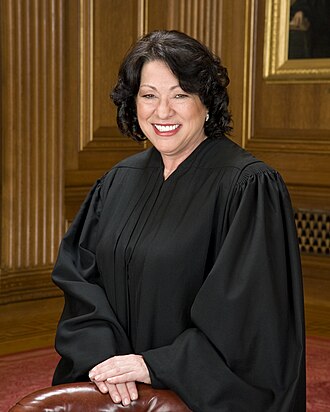 Sonia SotomayorWrote the majority opinion
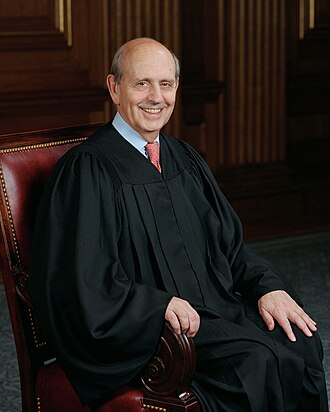 Stephen BreyerWrote a concurrence
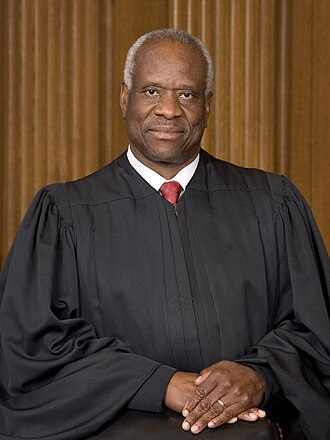 Clarence ThomasWrote a concurrence
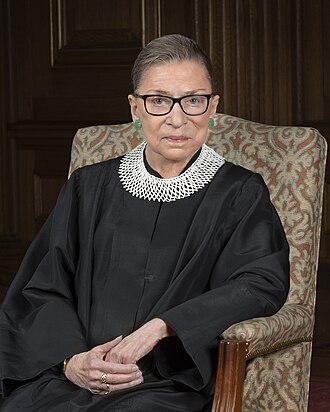 Ruth GinsburgJoined the majority
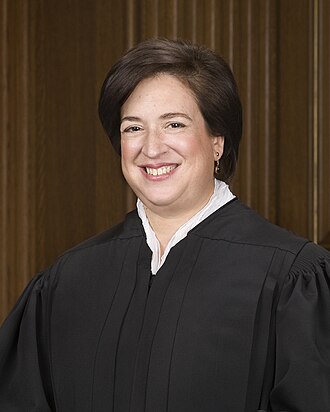 Elena KaganJoined the majority
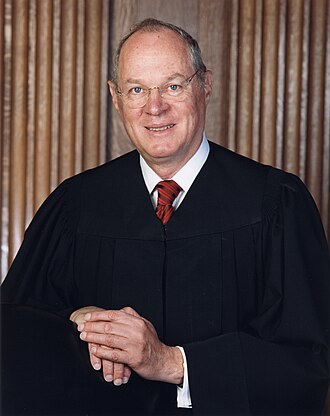 Anthony KennedyJoined the majority
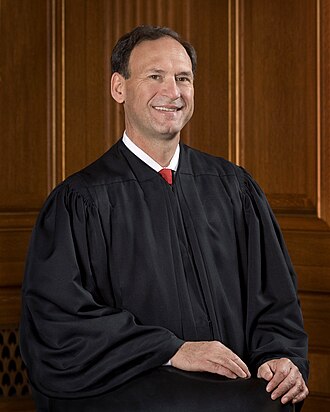 Samuel AlitoJoined the majority
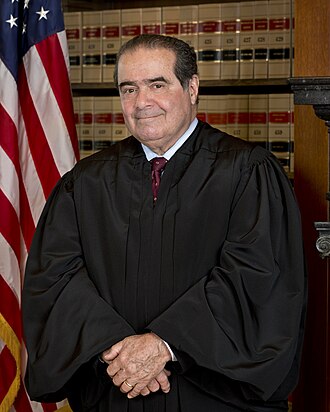 Antonin ScaliaJoined the majority
Dissent(0)
- None.
Did not take part: John Roberts.
Data notes
Each justice’s vote and what they wrote are from the justice-centered file of the Supreme Court Database. “Wrote a concurrence” means the justice sided with the majority and wrote separately; a justice who dissented in part is counted on the side they took overall. A justice who wrote nothing is listed as joining their side.
Positions are each justice’s Martin–Quinn score for the case’s term, the same scores as the Ideology page: negative is more liberal, positive more conservative. A score sums up a justice’s votes across the whole term, so it says where they usually sit, not why they voted as they did here. The median line is the Court’s median justice that term.
The parties
Who brought the case to the Court, who answered it, and how it got there.
- Petitioner
- Microsoft Corporation, PetitionerComputer business or manufacturer, hardware or software
- Respondent
- I4i Limited Partnership et al.Computer business or manufacturer, hardware or software
- Reached the Court by
- Certiorari (the Court chose to hear it)
Data notes
The names are the two sides of the case’s title. The description under each is the Supreme Court Database’s category for that party, in its own wording. The petitioner is the side that asked the Supreme Court to review the decision below. “Why it was taken” appears only when the majority opinion says lower courts disagreed or were unsure about the question; reasons that would fit any case (“to resolve the question presented”, “an important question”) are left out.
The law at issue
The law the Court was asked to apply, and the kind of power it used to decide.
- Provision
- 35-282
- Kind of law
- Infrequently litigated statutes
- Decided by
- Statutory construction
Data notes
The Supreme Court Database codes the main constitutional provision, statute or court rule each case turned on, and the basis of the decision: judicial review of a federal or state law, interpreting a statute, supervising the lower courts, and so on. A case can rest on more than one. “Overruled” counts only where the majority opinion says so.
Timeline
What happened at the Court and how the case got there, newest first.
- Jun 9, 2011DecidedDecided · Decided 8–0: affirmed. Microsoft Corporation, Petitioner lost.
- Apr 18, 2011ArguedArgued · Oral argument before the Court.
- Not datedTaken upTaken up · The Supreme Court agreed to hear the case (certiorari).
- Not datedCourt belowCourt below · Decided by the U.S. Court of Appeals, Federal Circuit: affirmed.
- Not datedBeganBegan · The case began in the Texas Eastern U.S. District Court.
Data notes
From the Supreme Court Database: the court the case began in, the court whose decision the Supreme Court reviewed and what that court did, how the case came to the Court, and the dates of argument and decision. The database does not date the steps in the lower courts. Court names are the database’s.
Other decisions on the same issue
10 other argued cases since 1946 on patents and copyrights: patentability of computer processes, newest first.
- Alice Corp. Pty. Ltd. v. CLS Bank Int'lLandmark · Copyright/Patents573 U.S. 208Jun 19, 2014 · 573 U.S. 208Economic activityLandmark · Copyright/Patents9–0Unanimous band
- Bernard L. Bilski and Rand A. Warsaw v. David J. Kappos, Under Secretary of Commerce for Intellectual Property and Director, Patent and Trademark Office561 U.S. 593Jun 28, 2010 · 561 U.S. 593Economic activity9–0Unanimous band
- Quanta Computer, Inc., et al. v. LG Electronics, Inc.553 U.S. 617Jun 9, 2008 · 553 U.S. 617Economic activity9–0Unanimous band
- Microsoft Corporation v. AT&T Corp.550 U.S. 437Apr 30, 2007 · 550 U.S. 437Economic activity7–18–1 band
- Ebay Inc., et al. v. Mercexchange, L. L. C.547 U.S. 388May 15, 2006 · 547 U.S. 388Economic activity9–0Unanimous band
- Diamond, Commissioner of Patents and Trademarks v. Bradley et al450 U.S. 381Mar 9, 1981 · 450 U.S. 381Economic activity4–45–4 band
- Diamond, Commissioner of Patents and Trademarks v. Diehr et al.450 U.S. 175Mar 3, 1981 · 450 U.S. 175Economic activity5–45–4 band
- Parker, Acting Commissioner of Patents and Trademarks v. Flook437 U.S. 584Jun 22, 1978 · 437 U.S. 584Economic activity6–36–3 band
- Dann, Commissioner of Patents and Trademarks v. Johnston425 U.S. 219Mar 31, 1976 · 425 U.S. 219Economic activity7–0Unanimous band
- Gottschalk, Acting Commissioner of Patents v. Benson et al.409 U.S. 63Nov 20, 1972 · 409 U.S. 63Economic activity6–0Unanimous band
Data notes
Every other orally argued case with a clear vote, from the 1946 term on, that the Supreme Court Database files under the same issue as this one. The database gives each case one issue from a list of about 270 (abortion, search and seizure of vehicles, the death penalty, and so on), whatever law it turned on.
Official record
Read the full opinion on Justia, the argument audio on Oyez and Wikipedia. Case data from the Supreme Court Database, Version 2026 Release 01, through the 2025 term.