Union Pacific Railroad Company v. Brotherhood of Locomotive Engineers and Trainmen General Committee of Adjustment, Central Region
The Court held that, because nothing in the Railway Labor Act made the obligation to conference minor disputes or prove conferencing jurisdictional, the act's limited grounds for relief should not be treated as a constitutional due process issue.· AI-written
558 U.S. 67 · No. 08-604 · 2009 term · Roberts Court
Decided Dec 8, 2009 · argued Oct 7, 2009
Unions · Labor-management disputes: employee discharge
Majority opinion: Ruth Ginsburg
The voteMajority
9–09 in the majority, 0 in dissent
No dissent (9–0)
Affirmed. Union Pacific Railroad Company lost.
What this ruling means
Affirmed: the Supreme Court upheld the decision of the U.S. Court of Appeals, Seventh Circuit, so it stands (sometimes with changes the Court made to it).
Union Pacific Railroad Company was the petitioner, the side that asked the Supreme Court to review the case. “Lost” means the Court did not give that side the result it asked for.
From the Supreme Court Database. A justice who agreed with the result but not the reasoning counts in the majority.
Summary
The opening of the case’s Wikipedia article: what the case was about and what the Court held.
Union Pacific Railroad v. Brotherhood of Locomotive Engineers, 558 U.S. 67 (2009), was a United States Supreme Court in which the court held that, given that nothing in the Railway Labor Act elevates to jurisdictional status the obligation to conference minor disputes or to prove conferencing, it is incorrect to treat the limited statutory grounds for relief in the act as a constitutional due process issue. The court agreed with the court below that the case needed to be dismissed because the statute created a jurisdictional issue, but it disagreed with the court's disposition of the issue with constitutional due process considerations rather than what was written in the statute.
Data notes
The text is Wikipedia’s (CC BY-SA 4.0), matched to the case by its citation, docket number or name and year, and is not checked against the opinion. The site keeps the article’s opening section, ending on its last full sentence. The one-sentence summary under the title is the Decisions list’s: Wikipedia’s own ruling sentence, or, tagged “AI-written”, one Claude wrote from this opening.
How the justices voted
Each justice who took part, placed by their Martin–Quinn ideology score for the 2009 term. Filled: the 9 in the majority. Hollow: the 0 in dissent. Colour is the party of the president who appointed them.
Majority(9)
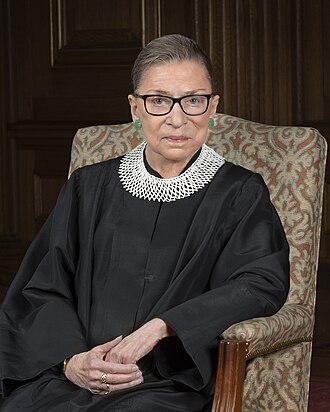 Ruth GinsburgWrote the majority opinion
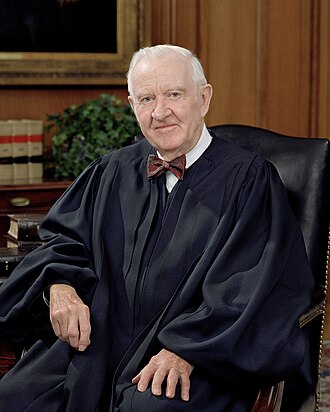 John StevensJoined the majority
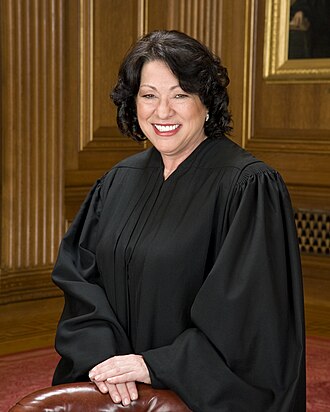 Sonia SotomayorJoined the majority
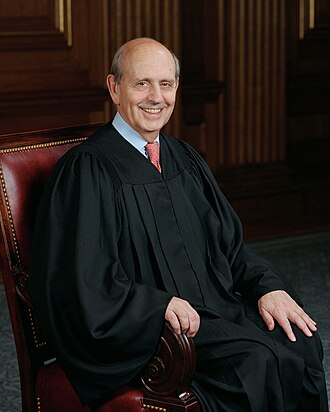 Stephen BreyerJoined the majority
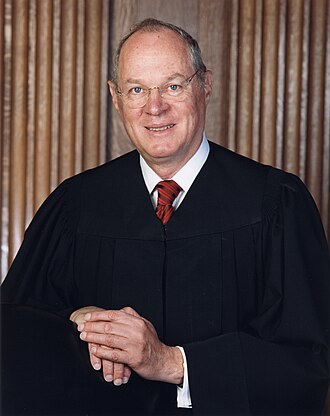 Anthony KennedyJoined the majority
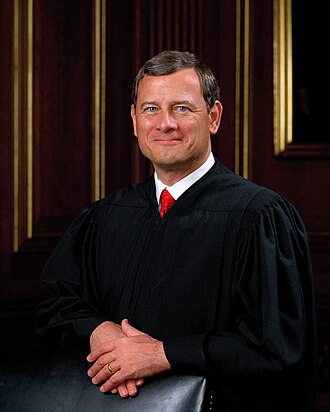 John RobertsJoined the majority
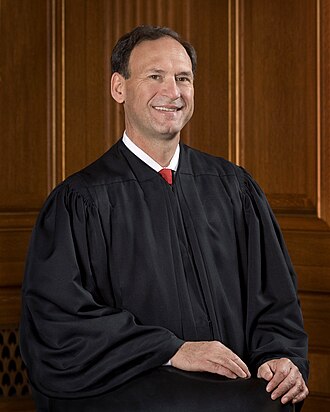 Samuel AlitoJoined the majority
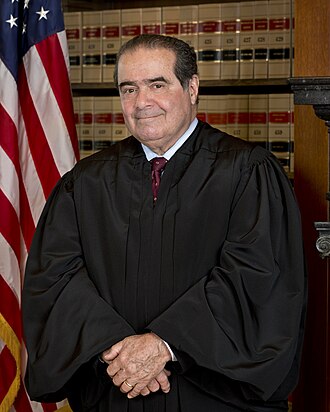 Antonin ScaliaJoined the majority
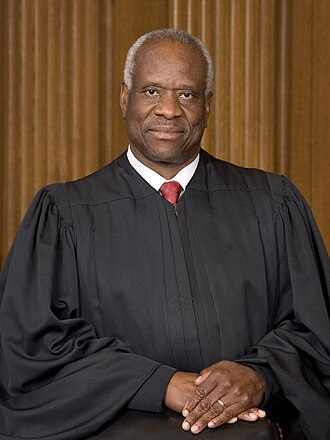 Clarence ThomasJoined the majority
Dissent(0)
- None.
Data notes
Each justice’s vote and what they wrote are from the justice-centered file of the Supreme Court Database. “Wrote a concurrence” means the justice sided with the majority and wrote separately; a justice who dissented in part is counted on the side they took overall. A justice who wrote nothing is listed as joining their side.
Positions are each justice’s Martin–Quinn score for the case’s term, the same scores as the Ideology page: negative is more liberal, positive more conservative. A score sums up a justice’s votes across the whole term, so it says where they usually sit, not why they voted as they did here. The median line is the Court’s median justice that term.
The parties
Who brought the case to the Court, who answered it, and how it got there.
- Petitioner
- Union Pacific Railroad CompanyRailroad
- Respondent
- Brotherhood of Locomotive Engineers and Trainmen General Committee of Adjustment, Central RegionUnion, labor organization, or official
- Reached the Court by
- Certiorari (the Court chose to hear it)
- Why it was taken
- Federal appeals courts had ruled differently on the question
Data notes
The names are the two sides of the case’s title. The description under each is the Supreme Court Database’s category for that party, in its own wording. The petitioner is the side that asked the Supreme Court to review the decision below. “Why it was taken” appears only when the majority opinion says lower courts disagreed or were unsure about the question; reasons that would fit any case (“to resolve the question presented”, “an important question”) are left out.
The law at issue
The law the Court was asked to apply, and the kind of power it used to decide.
- Provision
- Railway Labor
- Kind of law
- Federal Statute
- Decided by
- Statutory construction
Data notes
The Supreme Court Database codes the main constitutional provision, statute or court rule each case turned on, and the basis of the decision: judicial review of a federal or state law, interpreting a statute, supervising the lower courts, and so on. A case can rest on more than one. “Overruled” counts only where the majority opinion says so.
Timeline
What happened at the Court and how the case got there, newest first.
- Dec 8, 2009DecidedDecided · Decided 9–0: affirmed. Union Pacific Railroad Company lost.
- Oct 7, 2009ArguedArgued · Oral argument before the Court.
- Not datedTaken upTaken up · The Supreme Court agreed to hear the case (certiorari). Federal appeals courts had ruled differently on the question.
- Not datedCourt belowCourt below · Decided by the U.S. Court of Appeals, Seventh Circuit: reversed.
- Not datedBeganBegan · The case began in the Illinois Northern U.S. District Court.
Data notes
From the Supreme Court Database: the court the case began in, the court whose decision the Supreme Court reviewed and what that court did, how the case came to the Court, and the dates of argument and decision. The database does not date the steps in the lower courts. Court names are the database’s.
Other decisions on the same issue
20 other argued cases since 1946 on labor-management disputes: employee discharge, newest first.
- Starbucks Corp. v. McKinney144 S. Ct. 1570Jun 13, 2024 · 144 S. Ct. 1570Unions8–18–1 band
- Eastern Associated Coal Corporation v. United Mine Workers of America, District 17, et al.531 U.S. 57Nov 28, 2000 · 531 U.S. 57Unions9–0Unanimous band
- Arthur Groves, Bobby J. Evans and Local 771, Internation Union UAW v. Ring Screw Works, Ferndale Fastener Division498 U.S. 168Dec 10, 1990 · 498 U.S. 168Unions9–0Unanimous band
- Trans World Airlines, Inc. v. Independent Federation of Flight Attendants489 U.S. 426Feb 28, 1989 · 489 U.S. 426Unions6–36–3 band
- Trans World Airlines, Inc. v. Independent Federation of Flight Attendants485 U.S. 175Mar 2, 1988 · 485 U.S. 175Unions4–45–4 band
- National Labor Relations Board v. City Disposal Systems, Inc.465 U.S. 822Mar 21, 1984 · 465 U.S. 822Unions5–45–4 band
- National Labor Relations Board v. Transportation Management Corp.462 U.S. 393Jun 13, 1983 · 462 U.S. 393Unions9–0Unanimous band
- Golden State Bottling Co., Inc., Formerly Pepsi-Cola Bottling Co. of Sacramento, et al. v. National Labor Relations Board414 U.S. 168Dec 5, 1973 · 414 U.S. 168Unions9–0Unanimous band
- National Labor Relations Board v. International Van Lines409 U.S. 48Nov 7, 1972 · 409 U.S. 48Unions9–0Unanimous band
- National Labor Relations Board v. Scrivener, dba Aa Electric Co.405 U.S. 117Feb 23, 1972 · 405 U.S. 117Unions9–0Unanimous band
- National Labor Relations Board v. Fleetwood Trailer Co., Inc.389 U.S. 375Dec 18, 1967 · 389 U.S. 375Unions8–0Unanimous band
- International Union, United Automobile, Aerospace & Agricultural Implement Workers of America (UAW), AFL-CIO v. Hoosier Cardinal Corp.383 U.S. 696Mar 24, 1966 · 383 U.S. 696Unions6–36–3 band
- American Ship Building Co. v. National Labor Relations Board380 U.S. 300Mar 29, 1965 · 380 U.S. 300Unions9–0Unanimous band
- National Labor Relations Board v. Burnup & Sims, Inc.379 U.S. 21Nov 9, 1964 · 379 U.S. 21Unions8–18–1 band
- International Association of Machinists, AFL-CIO, et al. v. Central Airlines, Inc.372 U.S. 682Apr 15, 1963 · 372 U.S. 682Unions9–0Unanimous band
- General Drivers, Warehousemen & Helpers, Local Union No. 89, et al. v. Riss & Company, Inc.372 U.S. 517Mar 18, 1963 · 372 U.S. 517Unions9–0Unanimous band
- National Labor Relations Board v. Washington Aluminum Co.370 U.S. 9May 28, 1962 · 370 U.S. 9Unions7–0Unanimous band
- National Labor Relations Board v. Walton Manufacturing Co. et al.369 U.S. 404Apr 9, 1962 · 369 U.S. 404Unions6–27–2 band
- Olin Mathieson Chemical Corp. v. National Labor Relations Board.352 U.S. 1020Feb 28, 1957 · 352 U.S. 1020Unions8–0Unanimous band
- National Labor Relations Board v. Seven-Up Bottling Company of Miami, Inc.344 U.S. 344Jan 12, 1953 · 344 U.S. 344Unions8–18–1 band
Data notes
Every other orally argued case with a clear vote, from the 1946 term on, that the Supreme Court Database files under the same issue as this one. The database gives each case one issue from a list of about 270 (abortion, search and seizure of vehicles, the death penalty, and so on), whatever law it turned on.
Official record
Read the full opinion on Justia, the argument audio on Oyez and Wikipedia. Case data from the Supreme Court Database, Version 2026 Release 01, through the 2025 term.