Buckeye Check Cashing, Inc. v. John Cardegna et al.
In a class action against a payday lender claiming loan agreements were unlawful, the Court held that under the Federal Arbitration Act an arbitrator, not a court, decides the contract's legality unless the arbitration clause itself is challenged.· AI-written
546 U.S. 440 · No. 04-1264 · 2005 term · Roberts Court
Decided Feb 21, 2006 · argued Nov 29, 2005
Economic activity · Arbitration (other than as pertains to labor-management or employer-employee relations
Majority opinion: Antonin Scalia
The voteMajorityDissent
7–17 in the majority, 1 in dissent
1 dissent (8–1)
Reversed and remanded. Buckeye Check Cashing, Inc. won.
What this ruling means
Reversed and remanded: the Supreme Court overturned the decision of the Florida Supreme Court and sent the case back to that court for further proceedings that follow the Supreme Court’s ruling.
Buckeye Check Cashing, Inc. was the petitioner, the side that asked the Supreme Court to review the case. “Won” means the Court gave that side the result it asked for.
From the Supreme Court Database. A justice who agreed with the result but not the reasoning counts in the majority.
Summary
The opening of the case’s Wikipedia article: what the case was about and what the Court held.
Buckeye Check Cashing, Inc. v. Cardegna, 546 U.S. 440 (2006), is a United States Supreme Court case concerning contract law and arbitration. The case arose from a class action filed in Florida against a payday lender alleging the loan agreements the plaintiffs had signed were unenforceable because they essentially charged a higher interest rate than that permitted under Florida law.
The lending agreements called for all disputes between the borrower and lender to be settled in arbitration. The original plaintiffs argued that the entire contract, including the arbitration clause, was invalid because it violated the law. When it was appealed to the High Court, Justice Antonin Scalia wrote for a majority of seven that the Federal Arbitration Act, as previously interpreted by the Court, settled a question that had long been debated by legal scholars and lower-court judges. The opinion distinguished void and voidable contracts, requiring that in the latter an arbitrator rule on all issues including the legality of the contract unless the arbitration clause was itself challenged. The only dissenter was Clarence Thomas, who restated his belief that the Arbitration Act does not supersede state law.
Data notes
The text is Wikipedia’s (CC BY-SA 4.0), matched to the case by its citation, docket number or name and year, and is not checked against the opinion. The site keeps the article’s opening section, ending on its last full sentence. The one-sentence summary under the title is the Decisions list’s: Wikipedia’s own ruling sentence, or, tagged “AI-written”, one Claude wrote from this opening.
How the justices voted
Each justice who took part, placed by their Martin–Quinn ideology score for the 2005 term. Filled: the 7 in the majority. Hollow: the 1 in dissent. Colour is the party of the president who appointed them.
Majority(7)
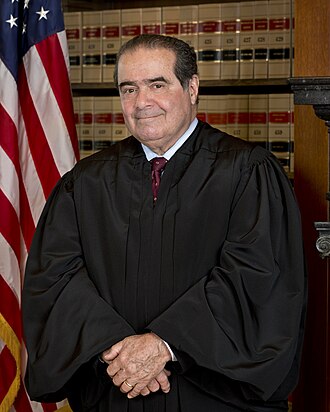 Antonin ScaliaWrote the majority opinion
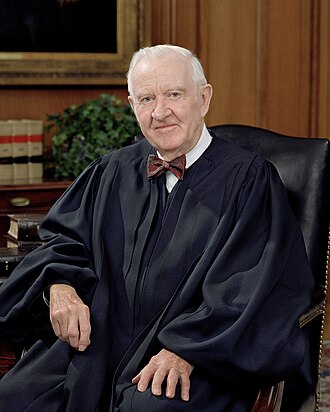 John StevensJoined the majority
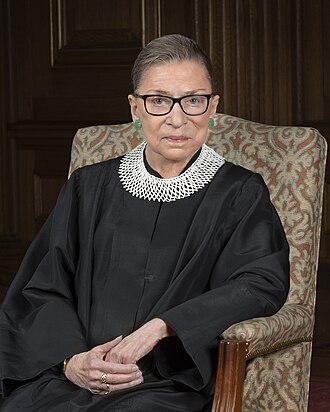 Ruth GinsburgJoined the majority
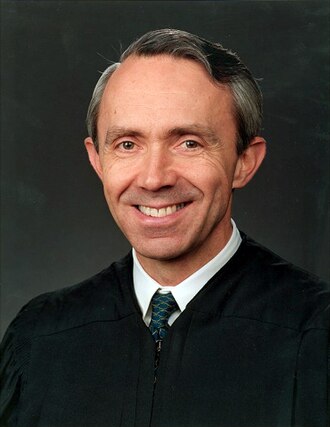 David SouterJoined the majority
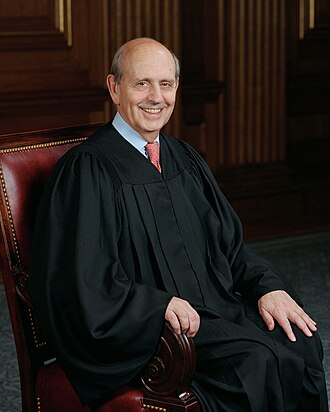 Stephen BreyerJoined the majority
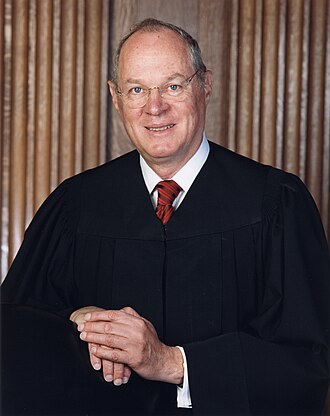 Anthony KennedyJoined the majority
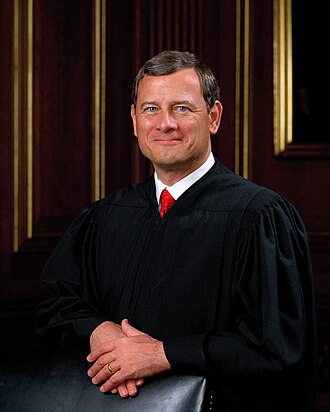 John RobertsJoined the majority
Dissent(1)
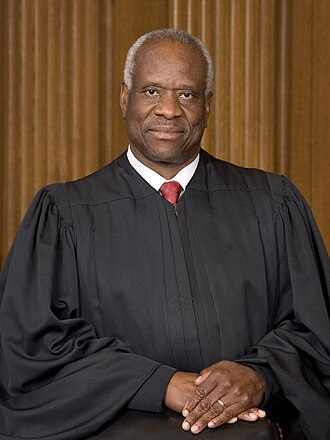 Clarence ThomasWrote a dissent
Did not take part: Samuel Alito.
Data notes
Each justice’s vote and what they wrote are from the justice-centered file of the Supreme Court Database. “Wrote a concurrence” means the justice sided with the majority and wrote separately; a justice who dissented in part is counted on the side they took overall. A justice who wrote nothing is listed as joining their side.
Positions are each justice’s Martin–Quinn score for the case’s term, the same scores as the Ideology page: negative is more liberal, positive more conservative. A score sums up a justice’s votes across the whole term, so it says where they usually sit, not why they voted as they did here. The median line is the Court’s median justice that term.
The parties
Who brought the case to the Court, who answered it, and how it got there.
- Petitioner
- Buckeye Check Cashing, Inc.Creditor, including institution appearing as such; e.g., a finance company
- Respondent
- John Cardegna et al.Debtor
- Reached the Court by
- Certiorari (the Court chose to hear it)
Data notes
The names are the two sides of the case’s title. The description under each is the Supreme Court Database’s category for that party, in its own wording. The petitioner is the side that asked the Supreme Court to review the decision below. “Why it was taken” appears only when the majority opinion says lower courts disagreed or were unsure about the question; reasons that would fit any case (“to resolve the question presented”, “an important question”) are left out.
The law at issue
The law the Court was asked to apply, and the kind of power it used to decide.
- Provision
- 9 U.S.C. § 1
- Kind of law
- Infrequently litigated statutes
- Decided by
- Federal common law; Statutory construction
Data notes
The Supreme Court Database codes the main constitutional provision, statute or court rule each case turned on, and the basis of the decision: judicial review of a federal or state law, interpreting a statute, supervising the lower courts, and so on. A case can rest on more than one. “Overruled” counts only where the majority opinion says so.
Timeline
What happened at the Court and how the case got there, newest first.
- Feb 21, 2006DecidedDecided · Decided 7–1: reversed and remanded. Buckeye Check Cashing, Inc. won.
- Nov 29, 2005ArguedArgued · Oral argument before the Court.
- Not datedTaken upTaken up · The Supreme Court agreed to hear the case (certiorari).
- Not datedCourt belowCourt below · Decided by the Florida Supreme Court: reversed.
- Not datedBeganBegan · The case began in the Florida trial court.
Data notes
From the Supreme Court Database: the court the case began in, the court whose decision the Supreme Court reviewed and what that court did, how the case came to the Court, and the dates of argument and decision. The database does not date the steps in the lower courts. Court names are the database’s.
Other decisions on the same issue
27 other argued cases since 1946 on arbitration (other than as pertains to labor-management or employer-employee relations, newest first.
- Flower Foods v. Brock146 S. Ct. 1358May 28, 2026 · 146 S. Ct. 1358Economic activity9–0Unanimous band
- Jules v. Andre Balazs Properties608 U.S. 200May 14, 2026 · 608 U.S. 200Economic activity9–0Unanimous band
- Coinbase v. Suski144 S. Ct. 1186May 23, 2024 · 144 S. Ct. 1186Economic activity9–0Unanimous band
- Coinbase, Inc. v. Bielski599 U.S. 736Jun 23, 2023 · 599 U.S. 736Economic activity5–45–4 band
- ZF Automotive US v. Luxshare, Ltd.142 S. Ct. 2078Jun 13, 2022 · 142 S. Ct. 2078Economic activity9–0Unanimous band
- Ge Energy Power Conversion France Sas v. Outokumpu Stainless USA LLC140 S. Ct. 1637Jun 1, 2020 · 140 S. Ct. 1637Economic activity9–0Unanimous band
- Henry Schein Inc. v. Archer and White Sales Inc.139 S. Ct. 524Jan 8, 2019 · 139 S. Ct. 524Economic activity9–0Unanimous band
- Kindred Nursing Centers v. Clark137 S. Ct. 1421May 15, 2017 · 137 S. Ct. 1421Economic activity7–18–1 band
- Directv, Inc. v. Imburgia577 U.S. 47Dec 14, 2015 · 577 U.S. 47Economic activity6–36–3 band
- BG Group PLC v. Republic of Argentina572 U.S. 25Mar 5, 2014 · 572 U.S. 25Economic activity7–27–2 band
- American Express Company, et al., Petitioners v. Italian Colors Restaurant, et al.570 U.S. 228Jun 20, 2013 · 570 U.S. 228Economic activity5–36–3 band
- Oxford Health Plans LLC, Petitioner v. John Ivan Sutter569 U.S. 564Jun 10, 2013 · 569 U.S. 564Economic activity9–0Unanimous band
- Compucredit Corporation et al. v. Wanda Greenwood et al.565 U.S. 95Jan 10, 2012 · 565 U.S. 95Economic activity8–18–1 band
- AT&T Mobility LLC, Petitioner v. Vincent ConcepcionLandmark · Businesses/Corporations/Contracts563 U.S. 333Apr 27, 2011 · 563 U.S. 333Economic activityLandmark · Businesses/Corporations/Contracts5–45–4 band
- Stolt-Nielsen S. A., et al. v. Animalfeeds International Corp.559 U.S. 662Apr 27, 2010 · 559 U.S. 662Economic activity5–36–3 band
- Hall Street Associates, L.L.C. v. Mattel, Inc552 U.S. 576Mar 25, 2008 · 552 U.S. 576Economic activity6–36–3 band
- Green Tree Financial Corp., Nka Conseco Finance Corp. v. Lynn W. Bazzle et al., in a Representative Capacity on Behalf of a Class and for All Others Similarly Situated, et al.539 U.S. 444Jun 23, 2003 · 539 U.S. 444Economic activity5–45–4 band
- Karen Howsam, etc. v. Dean Witter Reynolds, Inc.537 U.S. 79Dec 10, 2002 · 537 U.S. 79Economic activity8–0Unanimous band
- First Options of Chicago, Inc. v. Manuel Kaplan, et ux. and MK Investments, Inc.514 U.S. 938May 22, 1995 · 514 U.S. 938Economic activity9–0Unanimous band
- Shearson/American Express Inc. et al. v. McMahon et al.482 U.S. 220Jun 8, 1987 · 482 U.S. 220Economic activity5–45–4 band
- Mitsubishi Motors Corp. v. Soler Chrysler-Plymouth, Inc.Landmark · Businesses/Corporations/Contracts473 U.S. 614Jul 2, 1985 · 473 U.S. 614Economic activityLandmark · Businesses/Corporations/Contracts5–36–3 band
- Thomas, Administrator, United States Environmental Protection Agency v. Union Carbide Agricultural Products Co. et al.473 U.S. 568Jul 1, 1985 · 473 U.S. 568Economic activity9–0Unanimous band
- Dean Witter Reynolds Inc. v. Byrd470 U.S. 213Mar 4, 1985 · 470 U.S. 213Economic activity9–0Unanimous band
- Southland Corp. et al. v. Keating et al.Landmark · Businesses/Corporations/Contracts465 U.S. 1Jan 23, 1984 · 465 U.S. 1Economic activityLandmark · Businesses/Corporations/Contracts6–36–3 band
- Commonwealth Coatings Corp. v. Continental Casualty Co. et al.393 U.S. 145Nov 18, 1968 · 393 U.S. 145Economic activity6–36–3 band
- Prima Paint Corp. v. Flood & Conklin Mfg. Co.Landmark · Businesses/Corporations/Contracts388 U.S. 395Jun 12, 1967 · 388 U.S. 395Economic activityLandmark · Businesses/Corporations/Contracts6–36–3 band
- Moseley, Doing Business As Moseley Plumbing & Heating Co., v. Electronic & Missile Facilities, Inc., et al.374 U.S. 167Jun 17, 1963 · 374 U.S. 167Economic activity8–18–1 band
Data notes
Every other orally argued case with a clear vote, from the 1946 term on, that the Supreme Court Database files under the same issue as this one. The database gives each case one issue from a list of about 270 (abortion, search and seizure of vehicles, the death penalty, and so on), whatever law it turned on.
Official record
Read the full opinion on Justia, the argument audio on Oyez and Wikipedia. Case data from the Supreme Court Database, Version 2026 Release 01, through the 2025 term.