Elk Grove Unified School District and David W. Gordon, Superintendent v. Michael A. Newdow et al.
In a challenge to the words "under God" in the Pledge of Allegiance in schools, the Court held that Newdow, a noncustodial parent, lacked standing to sue on his daughter's behalf, reversing the Ninth Circuit without reaching the constitutional question.· AI-written
542 U.S. 1 · No. 02-1624 · 2003 term · Rehnquist Court
Decided Jun 14, 2004 · argued Mar 24, 2004
Judicial power · Standing to sue: personal injury
Majority opinion: John Stevens
The voteMajority
8–08 in the majority, 0 in dissent
No dissent (9–0)
Reversed. Elk Grove Unified School District and David W. Gordon, Superintendent won.
What this ruling means
Reversed: the Supreme Court overturned the decision of the U.S. Court of Appeals, Ninth Circuit, and its own ruling ends the case.
Elk Grove Unified School District and David W. Gordon, Superintendent was the petitioner, the side that asked the Supreme Court to review the case. “Won” means the Court gave that side the result it asked for.
From the Supreme Court Database. A justice who agreed with the result but not the reasoning counts in the majority.
Summary
The opening of the case’s Wikipedia article: what the case was about and what the Court held.
Elk Grove Unified School District v. Newdow, 542 U.S. 1 (2004), was a case decided by the U.S. Supreme Court. The lawsuit, originally filed as Newdow v. United States Congress, Elk Grove Unified School District, et al. in 2000, led to a 2002 ruling by the United States Court of Appeals for the Ninth Circuit that the words "under God" in the Pledge of Allegiance are an endorsement of religion and therefore violate the Establishment Clause of the First Amendment to the United States Constitution. The words had been added by a 1954 act of Congress that changed the phrase "one nation indivisible" into "one nation under God, indivisible". After an initial decision striking the congressionally added "under God", the superseding opinion on denial of rehearing en banc was more limited, holding that compelled recitation of the language by school teachers to students was invalid.
On June 14, 2004, the Supreme Court held Michael Newdow, as a noncustodial parent, did not have standing to bring the suit on his daughter's behalf. The mother was previously given sole legal custody of the daughter. The Ninth Circuit's decision was thus reversed as a matter of procedural law, so it did not consider the constitutional question raised by the case.
On January 3, 2005, a new suit was filed in the U.S. District Court for the Eastern District of California on behalf of three unnamed families. On September 14, 2005, District Court Judge Lawrence Karlton ruled in favor of Newdow. Citing the precedent of the 2002 ruling by the Ninth Circuit Court of Appeals, Judge Karlton issued an order enjoining the school district defendants from continuing their practices of leading children in the pledge with "under God." The case was later appealed to the Ninth Circuit under Newdow v. Carey and was reversed.
Data notes
The text is Wikipedia’s (CC BY-SA 4.0), matched to the case by its citation, docket number or name and year, and is not checked against the opinion. The site keeps the article’s opening section, ending on its last full sentence. The one-sentence summary under the title is the Decisions list’s: Wikipedia’s own ruling sentence, or, tagged “AI-written”, one Claude wrote from this opening.
How the justices voted
Each justice who took part, placed by their Martin–Quinn ideology score for the 2003 term. Filled: the 8 in the majority. Hollow: the 0 in dissent. Colour is the party of the president who appointed them.
Majority(8)
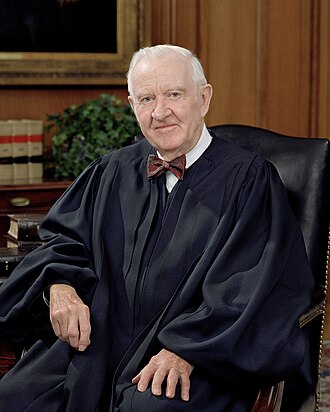 John StevensWrote the majority opinion
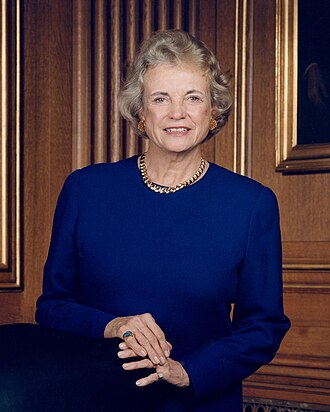 Sandra O'ConnorWrote a concurrence
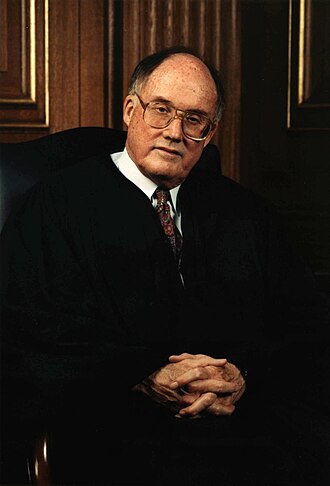 William RehnquistWrote a concurrence
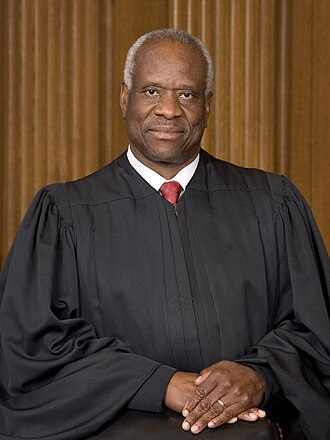 Clarence ThomasWrote a concurrence
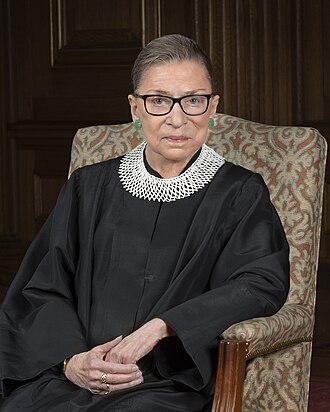 Ruth GinsburgJoined the majority
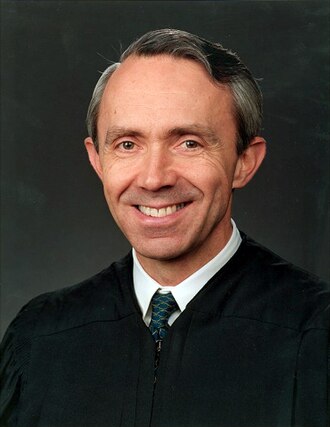 David SouterJoined the majority
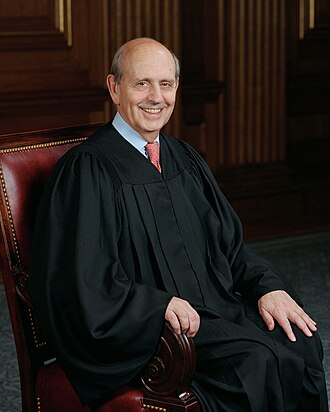 Stephen BreyerJoined the majority
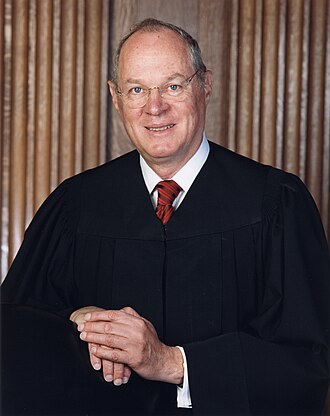 Anthony KennedyJoined the majority
Dissent(0)
- None.
Data notes
Each justice’s vote and what they wrote are from the justice-centered file of the Supreme Court Database. “Wrote a concurrence” means the justice sided with the majority and wrote separately; a justice who dissented in part is counted on the side they took overall. A justice who wrote nothing is listed as joining their side.
Positions are each justice’s Martin–Quinn score for the case’s term, the same scores as the Ideology page: negative is more liberal, positive more conservative. A score sums up a justice’s votes across the whole term, so it says where they usually sit, not why they voted as they did here. The median line is the Court’s median justice that term.
The parties
Who brought the case to the Court, who answered it, and how it got there.
- Petitioner
- Elk Grove Unified School District and David W. Gordon, SuperintendentLocal school district or board of education (California)
- Respondent
- Michael A. Newdow et al.Father
- Reached the Court by
- Certiorari (the Court chose to hear it)
Data notes
The names are the two sides of the case’s title. The description under each is the Supreme Court Database’s category for that party, in its own wording. The petitioner is the side that asked the Supreme Court to review the decision below. “Why it was taken” appears only when the majority opinion says lower courts disagreed or were unsure about the question; reasons that would fit any case (“to resolve the question presented”, “an important question”) are left out.
The law at issue
The law the Court was asked to apply, and the kind of power it used to decide.
- Decided by
- Supreme Court supervision of lower federal or state courts or original jurisdiction
Data notes
The Supreme Court Database codes the main constitutional provision, statute or court rule each case turned on, and the basis of the decision: judicial review of a federal or state law, interpreting a statute, supervising the lower courts, and so on. A case can rest on more than one. “Overruled” counts only where the majority opinion says so.
Timeline
What happened at the Court and how the case got there, newest first.
- Jun 14, 2004DecidedDecided · Decided 8–0: reversed. Elk Grove Unified School District and David W. Gordon, Superintendent won.
- Mar 24, 2004ArguedArgued · Oral argument before the Court.
- Not datedTaken upTaken up · The Supreme Court agreed to hear the case (certiorari).
- Not datedCourt belowCourt below · Decided by the U.S. Court of Appeals, Ninth Circuit: reversed and remanded, with a dissent.
- Not datedBeganBegan · The case began in the California Eastern U.S. District Court.
Data notes
From the Supreme Court Database: the court the case began in, the court whose decision the Supreme Court reviewed and what that court did, how the case came to the Court, and the dates of argument and decision. The database does not date the steps in the lower courts. Court names are the database’s.
Other decisions on the same issue
23 other argued cases since 1946 on standing to sue: personal injury, newest first.
- Frank v. Gaos139 S. Ct. 1041Mar 20, 2019 · 139 S. Ct. 1041Judicial power8–18–1 band
- Hollingsworth v. Perry570 U.S. 693Jun 26, 2013 · 570 U.S. 693Judicial power5–45–4 band
- Comcast Corporation, et al., Petitioners v. Caroline Behrend et al.569 U.S. 27Mar 27, 2013 · 569 U.S. 27Judicial power5–45–4 band
- Bob Camreta, Petitioner v. Sarah Greene, Personally and As Next Friend of S. G., a Minor, and K. G., a Minor563 U.S. 692May 26, 2011 · 563 U.S. 692Judicial power7–27–2 band
- Massachusetts, et al. v. Environmental Protection Agency et al.Landmark · Administrative law549 U.S. 497Apr 2, 2007 · 549 U.S. 497Judicial powerLandmark · Administrative law5–45–4 band
- John F. Kowalski, Judge, 26th Judicial Circuit Court of Michigan, et al. v. John C. Tesmer, et al.543 U.S. 125Dec 13, 2004 · 543 U.S. 125Judicial power6–36–3 band
- Friends of the Earth, Incorporated, et al. v. Laidlaw Environmental Services (Toc), Inc.528 U.S. 167Jan 12, 2000 · 528 U.S. 167Judicial power7–27–2 band
- Frederick D. Raines, Director, Office of Management and Budget, et al. v. Robert C. Byrd et al.521 U.S. 811Jun 26, 1997 · 521 U.S. 811Judicial power7–27–2 band
- United States v. Hays et al.515 U.S. 737Jun 29, 1995 · 515 U.S. 737Judicial power9–0Unanimous band
- State of Wyoming v. State of Oklahoma502 U.S. 437Jan 22, 1992 · 502 U.S. 437Judicial power6–36–3 band
- Lujan, Secretary of the Interior, et al. v. National Wildlife Federation et al.497 U.S. 871Jun 27, 1990 · 497 U.S. 871Judicial power5–45–4 band
- Whitmore, Individually and As Next Friend of Simmons v. Arkansas et al.495 U.S. 149Apr 24, 1990 · 495 U.S. 149Judicial power7–27–2 band
- Karcher, Speaker of the New Jersey General Assembly, et al. v. May et al.484 U.S. 72Dec 1, 1987 · 484 U.S. 72Judicial power8–0Unanimous band
- International Union, United Automobile, Aerospace, and Agricultural Implement Workers of America, et al. v. Brock, Secretary of Labor477 U.S. 274Jun 25, 1986 · 477 U.S. 274Judicial power5–45–4 band
- Diamond et al. v. Charles et al.476 U.S. 54Apr 30, 1986 · 476 U.S. 54Judicial power9–0Unanimous band
- Allen v. Wright et al.468 U.S. 737Jul 3, 1984 · 468 U.S. 737Judicial power5–36–3 band
- City of Los Angeles v. Lyons461 U.S. 95Apr 20, 1983 · 461 U.S. 95Judicial power5–45–4 band
- Singleton, Chief, Bureau of Medical Services, Department of Health and Welfare of Missouri v. Wulff et al.428 U.S. 106Jul 1, 1976 · 428 U.S. 106Judicial power5–45–4 band
- O'Shea, Magistrate, Circuit Court of Alexander County, Illinois, et al. v. Littleton et al.414 U.S. 488Jan 15, 1974 · 414 U.S. 488Judicial power6–36–3 band
- Investment Company Institute et al. v. Camp, Comptroller of the Currency, et al.401 U.S. 617Apr 5, 1971 · 401 U.S. 617Judicial power6–27–2 band
- Barlow et al. v. Collins, Executive Director, Alabama Agricultural Stabilization and Conservation Service, et al.397 U.S. 159Mar 3, 1970 · 397 U.S. 159Judicial power6–27–2 band
- Association of Data Processing Service Organizations, Inc., et al. v. Camp, Comptroller of the Currency, et al.397 U.S. 150Mar 3, 1970 · 397 U.S. 150Judicial power6–27–2 band
- Railroad Transfer Service, Inc. v. City of Chicago et al.386 U.S. 351Mar 27, 1967 · 386 U.S. 351Judicial power8–18–1 band
Data notes
Every other orally argued case with a clear vote, from the 1946 term on, that the Supreme Court Database files under the same issue as this one. The database gives each case one issue from a list of about 270 (abortion, search and seizure of vehicles, the death penalty, and so on), whatever law it turned on.
Official record
Read the full opinion on Justia, the argument audio on Oyez and Wikipedia. Case data from the Supreme Court Database, Version 2026 Release 01, through the 2025 term.