City of Indianapolis, et al. v. James Edmond et al.
The Court held, 6–3, that police may not conduct vehicle searches, specifically ones involving drug-sniffing police dogs, at a checkpoint or roadblock without reasonable suspicion.
531 U.S. 32 · No. 99-1030 · 2000 term · Rehnquist Court
Decided Nov 28, 2000 · argued Oct 3, 2000
Criminal procedure · Search and seizure, vehicles
Struck down a local ordinance
Majority opinion: Sandra O'Connor
The voteMajorityDissent
6–36 in the majority, 3 in dissent
3 dissents (6–3)
Affirmed. City of Indianapolis, et al. lost.
What this ruling means
Affirmed: the Supreme Court upheld the decision of the U.S. Court of Appeals, Seventh Circuit, so it stands (sometimes with changes the Court made to it).
City of Indianapolis, et al. was the petitioner, the side that asked the Supreme Court to review the case. “Lost” means the Court did not give that side the result it asked for.
From the Supreme Court Database. A justice who agreed with the result but not the reasoning counts in the majority.
Summary
The opening of the case’s Wikipedia article: what the case was about and what the Court held.
City of Indianapolis v. Edmond, 531 U.S. 32 (2000), was a United States Supreme Court case in which the Court held, 6–3, that police may not conduct vehicle searches, specifically ones involving drug-sniffing police dogs, at a checkpoint or roadblock without reasonable suspicion. In the case, the Indianapolis Police Department was conducting warrantless searches of vehicles, without individualized suspicion, for the purpose of "general crime control". Previous Supreme Court decisions had given the police power to create roadblocks for the purposes of border security (United States v. Martinez-Fuerte) and removing drunk drivers from the road (Police v. Sitz), but in this decision, the Court limited police power, holding that the search can only occur if it was designed to serve special needs, beyond the normal need for law enforcement.
Data notes
The text is Wikipedia’s (CC BY-SA 4.0), matched to the case by its citation, docket number or name and year, and is not checked against the opinion. The site keeps the article’s opening section, ending on its last full sentence. The one-sentence summary under the title is the Decisions list’s: Wikipedia’s own ruling sentence, or, tagged “AI-written”, one Claude wrote from this opening.
How the justices voted
Each justice who took part, placed by their Martin–Quinn ideology score for the 2000 term. Filled: the 6 in the majority. Hollow: the 3 in dissent. Colour is the party of the president who appointed them.
Majority(6)
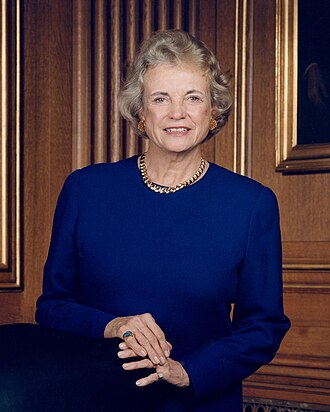 Sandra O'ConnorWrote the majority opinion
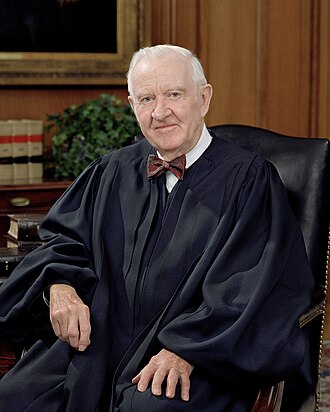 John StevensJoined the majority
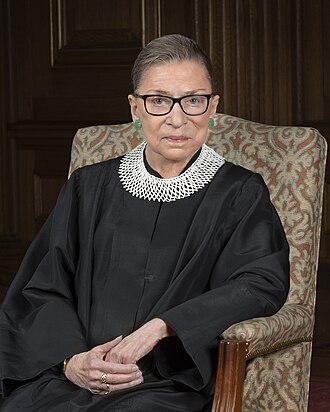 Ruth GinsburgJoined the majority
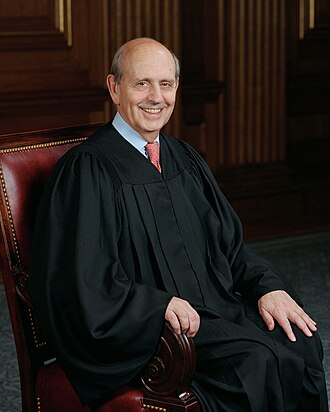 Stephen BreyerJoined the majority
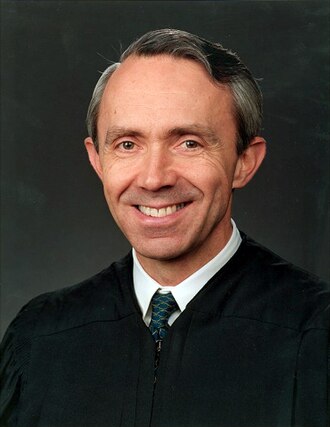 David SouterJoined the majority
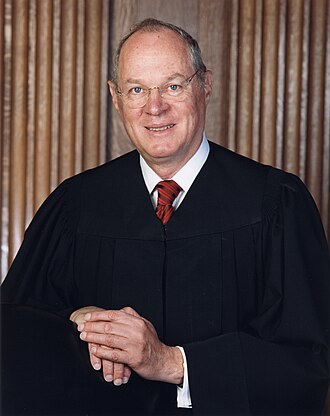 Anthony KennedyJoined the majority
Dissent(3)
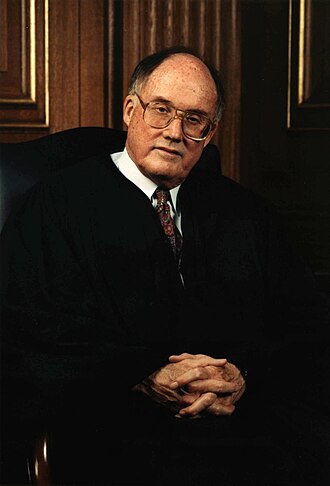 William RehnquistWrote a dissent
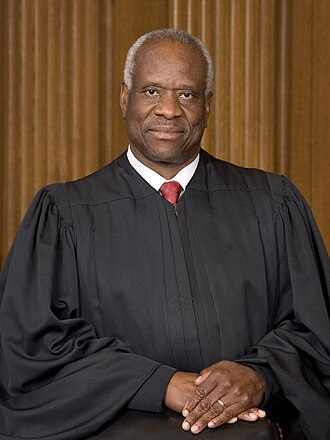 Clarence ThomasWrote a dissent
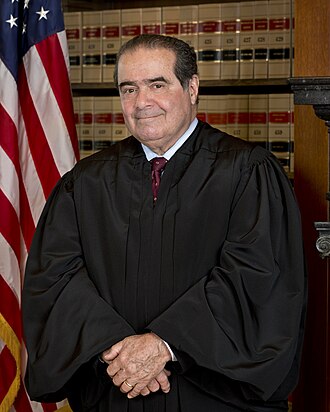 Antonin ScaliaJoined a dissent
Data notes
Each justice’s vote and what they wrote are from the justice-centered file of the Supreme Court Database. “Wrote a concurrence” means the justice sided with the majority and wrote separately; a justice who dissented in part is counted on the side they took overall. A justice who wrote nothing is listed as joining their side.
Positions are each justice’s Martin–Quinn score for the case’s term, the same scores as the Ideology page: negative is more liberal, positive more conservative. A score sums up a justice’s votes across the whole term, so it says where they usually sit, not why they voted as they did here. The median line is the Court’s median justice that term.
The parties
Who brought the case to the Court, who answered it, and how it got there.
- Petitioner
- City of Indianapolis, et al.City, town, township, village, or borough government or governmental unit (Indiana)
- Respondent
- James Edmond et al.Private person
- Reached the Court by
- Certiorari (the Court chose to hear it)
Data notes
The names are the two sides of the case’s title. The description under each is the Supreme Court Database’s category for that party, in its own wording. The petitioner is the side that asked the Supreme Court to review the decision below. “Why it was taken” appears only when the majority opinion says lower courts disagreed or were unsure about the question; reasons that would fit any case (“to resolve the question presented”, “an important question”) are left out.
The law at issue
The law the Court was asked to apply, and the kind of power it used to decide.
- Provision
- Fourth Amendment
- Kind of law
- Constitutional Amendment
- Decided by
- Judicial review (state level)
- Struck down
- A local ordinance, as unconstitutional
Data notes
The Supreme Court Database codes the main constitutional provision, statute or court rule each case turned on, and the basis of the decision: judicial review of a federal or state law, interpreting a statute, supervising the lower courts, and so on. A case can rest on more than one. “Overruled” counts only where the majority opinion says so.
Timeline
What happened at the Court and how the case got there, newest first.
- Nov 28, 2000DecidedDecided · Decided 6–3: affirmed. City of Indianapolis, et al. lost.
- Oct 3, 2000ArguedArgued · Oral argument before the Court.
- Not datedTaken upTaken up · The Supreme Court agreed to hear the case (certiorari).
- Not datedCourt belowCourt below · Decided by the U.S. Court of Appeals, Seventh Circuit: reversed.
- Not datedBeganBegan · The case began in the Indiana Southern U.S. District Court.
Data notes
From the Supreme Court Database: the court the case began in, the court whose decision the Supreme Court reviewed and what that court did, how the case came to the Court, and the dates of argument and decision. The database does not date the steps in the lower courts. Court names are the database’s.
Other decisions on the same issue
70 other argued cases since 1946 on search and seizure, vehicles, newest first.
- Kansas v. Glover140 S. Ct. 1183Apr 6, 2020 · 140 S. Ct. 1183Criminal procedure8–18–1 band
- Collins v. Virginia138 S. Ct. 1663May 29, 2018 · 138 S. Ct. 1663Criminal procedure8–18–1 band
- Byrd v. United States138 S. Ct. 1518May 14, 2018 · 138 S. Ct. 1518Criminal procedure9–0Unanimous band
- Rodriguez v. United States575 U.S. 348Apr 21, 2015 · 575 U.S. 348Criminal procedure6–36–3 band
- Heien v. North Carolina574 U.S. 54Dec 15, 2014 · 574 U.S. 54Criminal procedure8–18–1 band
- Prado Navarette v. California572 U.S. 393Apr 22, 2014 · 572 U.S. 393Criminal procedure5–45–4 band
- United States, Petitioner v. Antoine JonesLandmark · Fourth Amendment rights565 U.S. 400Jan 23, 2012 · 565 U.S. 400Criminal procedureLandmark · Fourth Amendment rights9–0Unanimous band
- Willie Gene Davis, Petitioner v. United States564 U.S. 229Jun 16, 2011 · 564 U.S. 229Criminal procedure7–27–2 band
- Arizona v. Rodney Joseph Gant556 U.S. 332Apr 21, 2009 · 556 U.S. 332Criminal procedure5–45–4 band
- Arizona v. Lemon Montrea Johnson555 U.S. 323Jan 26, 2009 · 555 U.S. 323Criminal procedure9–0Unanimous band
- Bruce Edward Brendlin v. California551 U.S. 249Jun 18, 2007 · 551 U.S. 249Criminal procedure9–0Unanimous band
- Timothy Scott v. Victor Harris550 U.S. 372Apr 30, 2007 · 550 U.S. 372Criminal procedure8–18–1 band
- Illinois v. Roy I. Caballes543 U.S. 405Jan 24, 2005 · 543 U.S. 405Criminal procedure6–27–2 band
- Marcus Thornton v. United States541 U.S. 615May 24, 2004 · 541 U.S. 615Criminal procedure7–27–2 band
- United States v. Manuel Flores-Montano541 U.S. 149Mar 30, 2004 · 541 U.S. 149Criminal procedure9–0Unanimous band
- Illinois v. Robert S. Lidster540 U.S. 419Jan 13, 2004 · 540 U.S. 419Criminal procedure6–36–3 band
- Maryland v. Joseph Jermaine Pringle540 U.S. 366Dec 15, 2003 · 540 U.S. 366Criminal procedure9–0Unanimous band
- Gail Atwater, et al. v. City of Lago Vista et al.532 U.S. 318Apr 24, 2001 · 532 U.S. 318Criminal procedure5–45–4 band
- Florida v. Tyvessel Tyvorus White526 U.S. 559May 17, 1999 · 526 U.S. 559Criminal procedure7–27–2 band
- Wyoming v. Sandra Houghton526 U.S. 295Apr 5, 1999 · 526 U.S. 295Criminal procedure6–36–3 band
- Patrick Knowles v. Iowa525 U.S. 113Dec 8, 1998 · 525 U.S. 113Criminal procedure9–0Unanimous band
- Maryland v. Jerry Lee Wilson519 U.S. 408Feb 19, 1997 · 519 U.S. 408Criminal procedure7–27–2 band
- Ohio v. Robert D. RobinetteLandmark · Fourth Amendment rights519 U.S. 33Nov 18, 1996 · 519 U.S. 33Criminal procedureLandmark · Fourth Amendment rights8–18–1 band
- Michael A. Whren and James L. Brown v. United States517 U.S. 806Jun 10, 1996 · 517 U.S. 806Criminal procedure9–0Unanimous band
- Arizona v. Isaac Evans514 U.S. 1Mar 1, 1995 · 514 U.S. 1Criminal procedure7–27–2 band
- United States v. Padilla508 U.S. 77May 3, 1993 · 508 U.S. 77Criminal procedure9–0Unanimous band
- Florida v. Bostick501 U.S. 429Jun 20, 1991 · 501 U.S. 429Criminal procedure6–36–3 band
- California v. Charles Steven Acevedo500 U.S. 565May 30, 1991 · 500 U.S. 565Criminal procedure6–36–3 band
- Florida v. Luz Piedad Jimeno et al.500 U.S. 248May 23, 1991 · 500 U.S. 248Criminal procedure7–27–2 band
- Michigan Department of State Police, et al. v. Rick Sitz, et al.496 U.S. 444Jun 14, 1990 · 496 U.S. 444Criminal procedure6–36–3 band
- Alabama v. Vanessa Rose White496 U.S. 325Jun 11, 1990 · 496 U.S. 325Criminal procedure6–36–3 band
- Florida v. Wells495 U.S. 1Apr 18, 1990 · 495 U.S. 1Criminal procedure9–0Unanimous band
- Brower, Individually and As Administrator of the Estate of Caldwell (Brower), et al. v. County of Inyo et al.489 U.S. 593Mar 21, 1989 · 489 U.S. 593Criminal procedure9–0Unanimous band
- Colorado v. Bertine479 U.S. 367Jan 14, 1987 · 479 U.S. 367Criminal procedure7–27–2 band
- New York v. Class475 U.S. 106Feb 25, 1986 · 475 U.S. 106Criminal procedure5–45–4 band
- California v. Carney471 U.S. 386May 13, 1985 · 471 U.S. 386Criminal procedure6–36–3 band
- Oklahoma v. Timothy R. Castleberry and Nicholas Raineri471 U.S. 146Apr 1, 1985 · 471 U.S. 146Criminal procedure4–45–4 band
- United States v. Johns et al.469 U.S. 478Jan 21, 1985 · 469 U.S. 478Criminal procedure7–27–2 band
- Michigan v. Long463 U.S. 1032Jul 6, 1983 · 463 U.S. 1032Criminal procedure6–36–3 band
- Texas v. Brown460 U.S. 730Apr 19, 1983 · 460 U.S. 730Criminal procedure9–0Unanimous band
- United States v. Ross456 U.S. 798Jun 1, 1982 · 456 U.S. 798Criminal procedure6–36–3 band
- New York v. Belton453 U.S. 454Jul 1, 1981 · 453 U.S. 454Criminal procedure6–36–3 band
- Robbins v. California453 U.S. 420Jul 1, 1981 · 453 U.S. 420Criminal procedure6–36–3 band
- United States v. Cortez et al.449 U.S. 411Jan 21, 1981 · 449 U.S. 411Criminal procedure9–0Unanimous band
- Arkansas v. Sanders442 U.S. 753Jun 20, 1979 · 442 U.S. 753Criminal procedure7–27–2 band
- Delaware v. Prouse440 U.S. 648Mar 27, 1979 · 440 U.S. 648Criminal procedure8–18–1 band
- Massachusetts v. White439 U.S. 280Dec 11, 1978 · 439 U.S. 280Criminal procedure4–45–4 band
- Rakas et al. v. Illinois439 U.S. 128Dec 5, 1978 · 439 U.S. 128Criminal procedure5–45–4 band
- United States v. Chadwick et al.433 U.S. 1Jun 21, 1977 · 433 U.S. 1Criminal procedure7–27–2 band
- United States v. Martinez-Fuerte et al.428 U.S. 543Jul 6, 1976 · 428 U.S. 543Criminal procedure7–27–2 band
- South Dakota v. Opperman428 U.S. 364Jul 6, 1976 · 428 U.S. 364Criminal procedure5–45–4 band
- United States v. Watson423 U.S. 411Jan 26, 1976 · 423 U.S. 411Criminal procedure6–27–2 band
- United States v. Ortiz422 U.S. 891Jun 30, 1975 · 422 U.S. 891Criminal procedure9–0Unanimous band
- United States v. Brignoni-Ponce422 U.S. 873Jun 30, 1975 · 422 U.S. 873Criminal procedure9–0Unanimous band
- Cardwell, Warden v. Lewis417 U.S. 583Jun 17, 1974 · 417 U.S. 583Criminal procedure5–45–4 band
- Gustafson v. Florida414 U.S. 260Dec 11, 1973 · 414 U.S. 260Criminal procedure6–36–3 band
- United States v. Robinson414 U.S. 218Dec 11, 1973 · 414 U.S. 218Criminal procedure6–36–3 band
- Cady, Warden v. Dombrowski413 U.S. 433Jun 21, 1973 · 413 U.S. 433Criminal procedure5–45–4 band
- Almeida-Sanchez v. United States413 U.S. 266Jun 21, 1973 · 413 U.S. 266Criminal procedure5–45–4 band
- Schneckloth, Conservation Center Superintendent v. Bustamonte412 U.S. 218May 29, 1973 · 412 U.S. 218Criminal procedure6–36–3 band
- Adams, Warden v. Williams407 U.S. 143Jun 12, 1972 · 407 U.S. 143Criminal procedure6–36–3 band
- Coolidge v. New Hampshire403 U.S. 443Jun 21, 1971 · 403 U.S. 443Criminal procedure5–45–4 band
- Whiteley v. Warden, Wyoming State Penitentiary401 U.S. 560Mar 29, 1971 · 401 U.S. 560Criminal procedure6–36–3 band
- Harris v. United States390 U.S. 234Mar 5, 1968 · 390 U.S. 234Criminal procedure8–0Unanimous band
- Cooper v. California386 U.S. 58Feb 20, 1967 · 386 U.S. 58Criminal procedure5–45–4 band
- One 1958 Plymouth Sedan v. Pennsylvania380 U.S. 693Apr 29, 1965 · 380 U.S. 693Criminal procedure9–0Unanimous band
- Preston v. United States376 U.S. 364Mar 23, 1964 · 376 U.S. 364Criminal procedure9–0Unanimous band
- Fahy v. Connecticut375 U.S. 85Dec 2, 1963 · 375 U.S. 85Criminal procedure5–45–4 band
- Rios v. United States364 U.S. 253Jun 27, 1960 · 364 U.S. 253Criminal procedure5–45–4 band
- Brinegar v. United States338 U.S. 160Jun 27, 1949 · 338 U.S. 160Criminal procedure6–36–3 band
Data notes
Every other orally argued case with a clear vote, from the 1946 term on, that the Supreme Court Database files under the same issue as this one. The database gives each case one issue from a list of about 270 (abortion, search and seizure of vehicles, the death penalty, and so on), whatever law it turned on.
Official record
Read the full opinion on Justia, the argument audio on Oyez and Wikipedia. Case data from the Supreme Court Database, Version 2026 Release 01, through the 2025 term.