Tommy Olmstead, Commissioner, Georgia Department of Human Resources, et al. v. L. C., by Jonathan Zimring, Guardian Ad Litem and Next Friend, et al.
The Court held that under the Americans with Disabilities Act, people with mental disabilities have the right to live in the community rather than institutions if professionals deem it appropriate, they do not oppose it, and it can be reasonably accommodated.· AI-written
527 U.S. 581 · No. 98-536 · 1998 term · Rehnquist Court
Decided Jun 22, 1999 · argued Apr 21, 1999
Civil rights · Handicapped, rights of: under Rehabilitation, Americans with Disabilities Act, and related statutes
Majority opinion: Ruth Ginsburg
The voteMajorityDissent
6–36 in the majority, 3 in dissent
3 dissents (6–3)
Affirmed and reversed (or vacated) in part and remanded. Tommy Olmstead, Commissioner, Georgia Department of Human Resources, et al. lost.
What this ruling means
Affirmed in part, reversed in part and remanded: the Supreme Court upheld part of the decision of the U.S. Court of Appeals, Eleventh Circuit, overturned or set aside the rest, and sent the case back for further proceedings that follow its ruling.
Tommy Olmstead, Commissioner, Georgia Department of Human Resources, et al. was the petitioner, the side that asked the Supreme Court to review the case. “Lost” means the Court did not give that side the result it asked for.
From the Supreme Court Database. A justice who agreed with the result but not the reasoning counts in the majority.
Summary
The opening of the case’s Wikipedia article: what the case was about and what the Court held.
Olmstead v. L.C., 527 U.S. 581 (1999), is a United States Supreme Court case regarding discrimination against people with mental disabilities. The Supreme Court held that under the Americans with Disabilities Act, individuals with mental disabilities have the right to live in the community rather than in institutions if, in the words of the opinion of the Court, "the State's treatment professionals have determined that community placement is appropriate, the transfer from institutional care to a less restrictive setting is not opposed by the affected individual, and the placement can be reasonably accommodated, taking into account the resources available to the State and the needs of others with mental disabilities." The case was brought by the Atlanta Legal Aid Society on behalf of Lois Curtis.
Data notes
The text is Wikipedia’s (CC BY-SA 4.0), matched to the case by its citation, docket number or name and year, and is not checked against the opinion. The site keeps the article’s opening section, ending on its last full sentence. The one-sentence summary under the title is the Decisions list’s: Wikipedia’s own ruling sentence, or, tagged “AI-written”, one Claude wrote from this opening.
How the justices voted
Each justice who took part, placed by their Martin–Quinn ideology score for the 1998 term. Filled: the 6 in the majority. Hollow: the 3 in dissent. Colour is the party of the president who appointed them.
Majority(6)
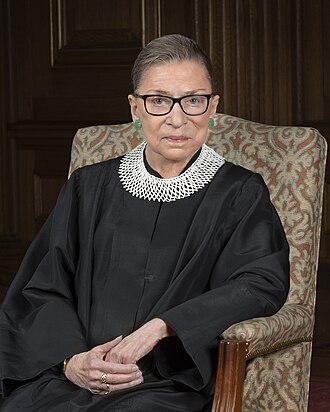 Ruth GinsburgWrote the majority opinion
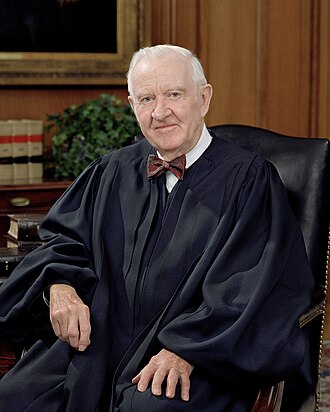 John StevensWrote a concurrence
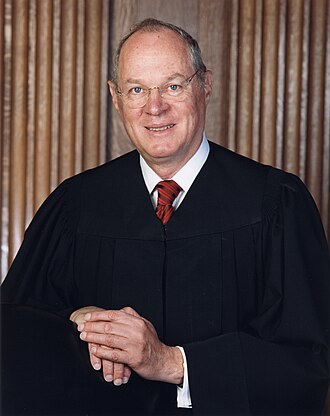 Anthony KennedyWrote a concurrence
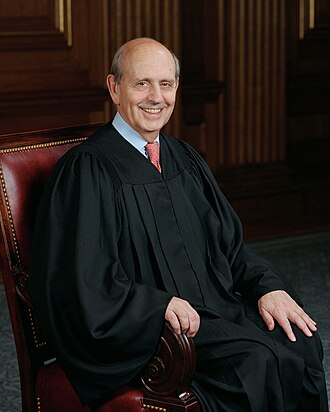 Stephen BreyerJoined the majority
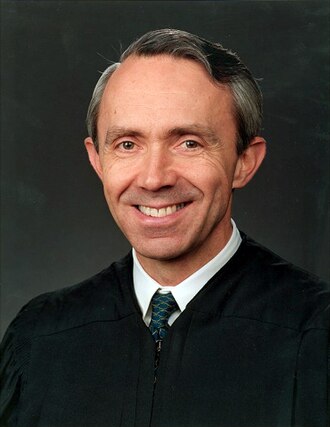 David SouterJoined the majority
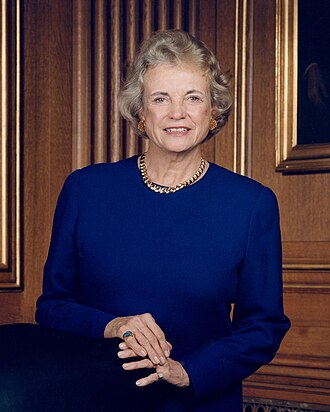 Sandra O'ConnorJoined the majority
Dissent(3)
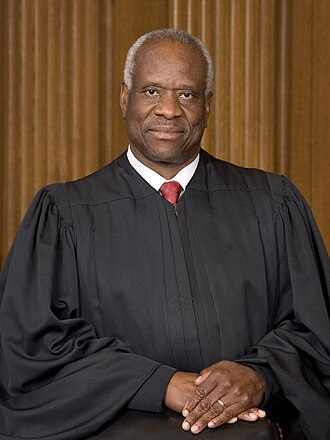 Clarence ThomasWrote a dissent
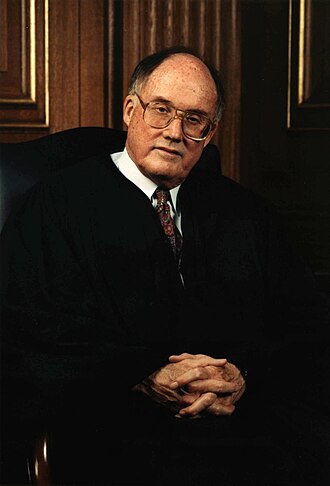 William RehnquistJoined a dissent
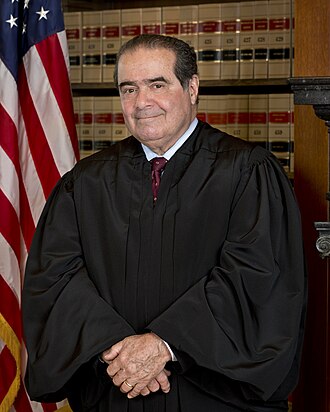 Antonin ScaliaJoined a dissent
Data notes
Each justice’s vote and what they wrote are from the justice-centered file of the Supreme Court Database. “Wrote a concurrence” means the justice sided with the majority and wrote separately; a justice who dissented in part is counted on the side they took overall. A justice who wrote nothing is listed as joining their side.
Positions are each justice’s Martin–Quinn score for the case’s term, the same scores as the Ideology page: negative is more liberal, positive more conservative. A score sums up a justice’s votes across the whole term, so it says where they usually sit, not why they voted as they did here. The median line is the Court’s median justice that term.
The parties
Who brought the case to the Court, who answered it, and how it got there.
- Petitioner
- Tommy Olmstead, Commissioner, Georgia Department of Human Resources, et al.Governmental official, or an official of an agency established under an interstate compact (Georgia)
- Respondent
- L. C., by Jonathan Zimring, Guardian Ad Litem and Next Friend, et al.Retarded person, or mental incompetent
- Reached the Court by
- Certiorari (the Court chose to hear it)
Data notes
The names are the two sides of the case’s title. The description under each is the Supreme Court Database’s category for that party, in its own wording. The petitioner is the side that asked the Supreme Court to review the decision below. “Why it was taken” appears only when the majority opinion says lower courts disagreed or were unsure about the question; reasons that would fit any case (“to resolve the question presented”, “an important question”) are left out.
The law at issue
The law the Court was asked to apply, and the kind of power it used to decide.
- Provision
- Americans with Disabilities Act
- Kind of law
- Federal Statute
- Decided by
- Statutory construction
Data notes
The Supreme Court Database codes the main constitutional provision, statute or court rule each case turned on, and the basis of the decision: judicial review of a federal or state law, interpreting a statute, supervising the lower courts, and so on. A case can rest on more than one. “Overruled” counts only where the majority opinion says so.
Timeline
What happened at the Court and how the case got there, newest first.
- Jun 22, 1999DecidedDecided · Decided 6–3: affirmed and reversed (or vacated) in part and remanded. Tommy Olmstead, Commissioner, Georgia Department of Human Resources, et al. lost.
- Apr 21, 1999ArguedArgued · Oral argument before the Court.
- Not datedTaken upTaken up · The Supreme Court agreed to hear the case (certiorari).
- Not datedCourt belowCourt below · Decided by the U.S. Court of Appeals, Eleventh Circuit: affirmed.
- Not datedBeganBegan · The case began in the Georgia Northern U.S. District Court.
Data notes
From the Supreme Court Database: the court the case began in, the court whose decision the Supreme Court reviewed and what that court did, how the case came to the Court, and the dates of argument and decision. The database does not date the steps in the lower courts. Court names are the database’s.
Other decisions on the same issue
40 other argued cases since 1946 on handicapped, rights of: under Rehabilitation, Americans with Disabilities Act, and related statutes, newest first.
- Stanley v. City of Sanford, Florida145 S. Ct. 2058Jun 20, 2025 · 145 S. Ct. 2058Civil rights7–27–2 band
- A.J.T. v. Osseo Area Schools, Independent School District No. 279145 S. Ct. 1647Jun 12, 2025 · 145 S. Ct. 1647Civil rights9–0Unanimous band
- Perez v. Sturgis Public Schools598 U.S. 142Mar 21, 2023 · 598 U.S. 142Civil rights9–0Unanimous band
- Cummings v. Premier Rehab Keller, P.L.L.C.142 S. Ct. 1562Apr 28, 2022 · 142 S. Ct. 1562Civil rights6–36–3 band
- Endrew F. v. Douglas Cnty. Sch. Dist. Re-1137 S. Ct. 988Mar 22, 2017 · 137 S. Ct. 988Civil rights8–0Unanimous band
- Fry v. Napoleon Community Schools137 S. Ct. 743Feb 22, 2017 · 137 S. Ct. 743Civil rights8–0Unanimous band
- City and County of San Francisco, California v. Sheehan575 U.S. 600May 18, 2015 · 575 U.S. 600Civil rights8–0Unanimous band
- Forest Grove School District v. T. A.557 U.S. 230Jun 22, 2009 · 557 U.S. 230Civil rights6–36–3 band
- Board of Education of the City School District of the City of New York v. Tom F., on Behalf of Gilbert F., a Minor Child552 U.S. 1Oct 10, 2007 · 552 U.S. 1Civil rights4–45–4 band
- Schaffer, a Minor, by His Parents and Next Friends, Schaffer, et vir, et al. v. Weast, Superintendent, Montgomery County Public Schools, et al.546 U.S. 49Nov 14, 2005 · 546 U.S. 49Civil rights6–27–2 band
- Douglas Spector, et al. v. Norwegian Cruise Line Ltd.545 U.S. 119Jun 6, 2005 · 545 U.S. 119Civil rights6–36–3 band
- Tennessee v. George Lane et al.541 U.S. 509May 17, 2004 · 541 U.S. 509Civil rights5–45–4 band
- Raytheon Company v. Joel Hernandez540 U.S. 44Dec 2, 2003 · 540 U.S. 44Civil rights7–0Unanimous band
- Jo Anne B. Barnhart, Commissioner of Social Security v. Pauline Thomas540 U.S. 20Nov 12, 2003 · 540 U.S. 20Civil rights9–0Unanimous band
- Chevron U.S.A. Inc. v. Mario Echazabal536 U.S. 73Jun 10, 2002 · 536 U.S. 73Civil rights9–0Unanimous band
- US Airways, Inc. v. Robert Barnett535 U.S. 391Apr 29, 2002 · 535 U.S. 391Civil rights7–27–2 band
- Jo Anne B. Barnhart, Commissioner of Social Security v. Cleveland B. Walton535 U.S. 212Mar 27, 2002 · 535 U.S. 212Civil rights9–0Unanimous band
- Toyota Motor Manufacturing, Kentucky, Inc. v. Ella Williams534 U.S. 184Jan 8, 2002 · 534 U.S. 184Civil rights9–0Unanimous band
- PGA Tour, Inc. v. Casey Martin532 U.S. 661May 29, 2001 · 532 U.S. 661Civil rights7–27–2 band
- Albertson's, Inc. v. Hallie Kirkingburg527 U.S. 555Jun 22, 1999 · 527 U.S. 555Civil rights7–27–2 band
- Vaughn L. Murphy v. United Parcel Service527 U.S. 516Jun 22, 1999 · 527 U.S. 516Civil rights7–27–2 band
- Karen Sutton and Kimberly Hinton v. United Air Lines, Inc.527 U.S. 471Jun 22, 1999 · 527 U.S. 471Civil rights7–27–2 band
- Carolyn C. Cleveland v. Policy Management Systems Corporation et al.526 U.S. 795May 24, 1999 · 526 U.S. 795Civil rights9–0Unanimous band
- Cedar Rapids Community School District v. Garret F., a Minor by His Mother and Next Friend, Charlene F.526 U.S. 66Mar 3, 1999 · 526 U.S. 66Civil rights7–27–2 band
- Randon Bragdon v. Sidney Abbott, et al.524 U.S. 624Jun 25, 1998 · 524 U.S. 624Civil rights5–45–4 band
- Pennsylvania Department of Corrections, et al. v. Ronald R. Yeskey524 U.S. 206Jun 15, 1998 · 524 U.S. 206Civil rights9–0Unanimous band
- City of Edmonds v. Oxford House, Inc., et al.514 U.S. 725May 15, 1995 · 514 U.S. 725Civil rights6–36–3 band
- Florence County School District Four, et al. v. Shannon Carter, a Minor by and Through Her Father, and Next Friend, Emory D. Carter510 U.S. 7Nov 9, 1993 · 510 U.S. 7Civil rights9–0Unanimous band
- Dellmuth, Acting Secretary of Education of Pennsylvania v. Muth et al.491 U.S. 223Jun 15, 1989 · 491 U.S. 223Civil rights5–45–4 band
- Pittston Coal Group, et al. v. Sebben, James, et al.488 U.S. 105Dec 6, 1988 · 488 U.S. 105Civil rights5–45–4 band
- Honig, California Superintendent of Public Instruction v. Doe et al.484 U.S. 305Jan 20, 1988 · 484 U.S. 305Civil rights6–27–2 band
- School Board of Nassau County, Florida, et al. v. Arline480 U.S. 273Mar 3, 1987 · 480 U.S. 273Civil rights7–27–2 band
- United States Department of Transportation et al. v. Paralyzed Veterans of America et al.477 U.S. 597Jun 27, 1986 · 477 U.S. 597Civil rights6–36–3 band
- Bowen, Secretary of Health and Human Services v. American Hospital Association et al.476 U.S. 610Jun 9, 1986 · 476 U.S. 610Civil rights5–36–3 band
- Bowen, Secretary of Health and Human Services, et al. v. City of New York et al.476 U.S. 467Jun 2, 1986 · 476 U.S. 467Civil rights9–0Unanimous band
- School Committee of the Town of Burlington, Massachusetts, et al. v. Department of Education of Massachusetts et al.471 U.S. 359Apr 29, 1985 · 471 U.S. 359Civil rights9–0Unanimous band
- Alexander, Governor of Tennessee, et al. v. Choate et al.469 U.S. 287Jan 9, 1985 · 469 U.S. 287Civil rights9–0Unanimous band
- Irving Independent School District v. Tatro et ux., Individually and As Next Friends of Tatro, a Minor468 U.S. 883Jul 5, 1984 · 468 U.S. 883Civil rights9–0Unanimous band
- Board of Education of the Hendrick Hudson Central School District, Westchester County, et al. v. Rowley, by Her Parents, Rowley et ux.458 U.S. 176Jun 28, 1982 · 458 U.S. 176Civil rights6–36–3 band
- Pennhurst State School and Hospital et al. v. Halderman et al.451 U.S. 1Apr 20, 1981 · 451 U.S. 1Civil rights6–36–3 band
Data notes
Every other orally argued case with a clear vote, from the 1946 term on, that the Supreme Court Database files under the same issue as this one. The database gives each case one issue from a list of about 270 (abortion, search and seizure of vehicles, the death penalty, and so on), whatever law it turned on.
Official record
Read the full opinion on Justia, the argument audio on Oyez and Wikipedia. Case data from the Supreme Court Database, Version 2026 Release 01, through the 2025 term.